- English
- French
- German
- Portuguese
- Spanish
- Russian
- Japanese
- Korean
- Arabic
- Greek
- German
- Turkish
- Italian
- Danish
- Romanian
- Indonesian
- Czech
- Afrikaans
- Swedish
- Polish
- Basque
- Catalan
- Esperanto
- Hindi
- Lao
- Albanian
- Amharic
- Armenian
- Azerbaijani
- Belarusian
- Bengali
- Bosnian
- Bulgarian
- Cebuano
- Chichewa
- Corsican
- Croatian
- Dutch
- Estonian
- Filipino
- Finnish
- Frisian
- Galician
- Georgian
- Gujarati
- Haitian
- Hausa
- Hawaiian
- Hebrew
- Hmong
- Hungarian
- Icelandic
- Igbo
- Javanese
- Kannada
- Kazakh
- Khmer
- Kurdish
- Kyrgyz
- Latin
- Latvian
- Lithuanian
- Luxembou..
- Macedonian
- Malagasy
- Malay
- Malayalam
- Maltese
- Maori
- Marathi
- Mongolian
- Burmese
- Nepali
- Norwegian
- Pashto
- Persian
- Punjabi
- Serbian
- Sesotho
- Sinhala
- Slovak
- Slovenian
- Somali
- Samoan
- Scots Gaelic
- Shona
- Sindhi
- Sundanese
- Swahili
- Tajik
- Tamil
- Telugu
- Thai
- Ukrainian
- Urdu
- Uzbek
- Vietnamese
- Welsh
- Xhosa
- Yiddish
- Yoruba
- Zulu
How Does a Straight Zirconia Crucible Resist Thermal Shock? Understanding Its Unique Properties
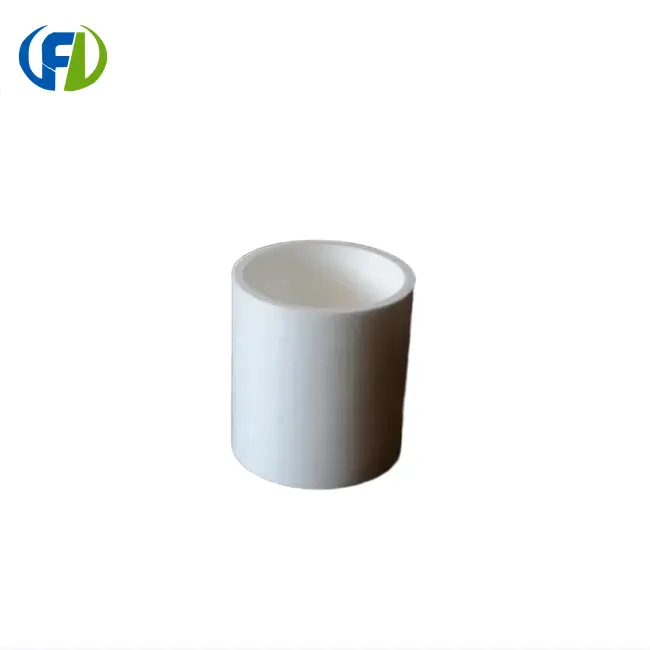
A Straight Zirconia Crucible can handle thermal shock because it has a low thermal conductivity, a stable crystal structure, and a controlled thermal expansion rate. When the temperature of a material changes quickly, the microstructure—which is usually fixed with Yttria or Magnesia—keeps the phases from changing, which would otherwise cause catastrophic breaking. The straight cylinder shape makes sure that the heat is spread evenly across the vessel walls, which reduces the localized stress concentrations that usually break down regular ceramics. Because zirconia is naturally strong and flexible, it is essential for high-temperature metalworking processes that need to deal with quick changes in temperature.
Understanding Thermal Shock in Crucibles
When working with high temperatures, thermal shock is one of the most difficult ways for things to fail. When the temperature of a crucible changes quickly, like when it's being heated up quickly, cooled down quickly, or exposed to liquid metal, uneven expansion and contraction cause stresses inside the crucible. These forces build up at weak spots in the structure, spreading tiny cracks that threaten the stability of the vessel. When making military parts or refining valuable metals, crucible failure in the middle of the process can cause expensive material loss, damage to equipment, and delays in production. Normal materials have trouble with this because their thermal qualities can't handle the tiny changes in size that happen in milliseconds when temperatures rise and fall.
Why Conventional Crucibles Fail Under Thermal Stress
Even though they are cheap, alumina crucibles have high thermal expansion rates and low thermal conductivity. This mix makes uneven temperature differences during heating processes, which causes internal strain that shows up as cracks after repeated use. Even though graphite vessels carry heat well, they are not chemically harmless when working with reactive melts and break down quickly in oxidizing environments above 600°C. Silicon carbide options are better at withstanding shocks than alumina, but they can become contaminated in very pure uses. Because of these problems with materials, companies that make aircraft and semiconductor equipment are turning to improved ceramic options that work the same way after thousands of thermal cycles.
The Critical Role of Material Selection
Choosing the right crucible materials has a direct effect on how well the process runs and how well the product turns out. When vacuum induction melting superalloys, small amounts of crucible degradation change the alloy's chemistry, which hurts the performance of the turbine blades. For chemical research labs that use XRF to prepare samples, they need containers that can handle flux corrosion at 1050°C without letting in any elemental influence. Understanding these application-specific needs helps buying teams look at things in a way that goes beyond just cost. When you figure out the total cost of ownership, which includes substitute costs, downtime costs, and quality control costs related to material flaws, you can see what the real value is.
Unique Properties of Straight Zirconia Crucibles That Resist Thermal Shock
Straight Zirconia Crucible vessels are very resistant to temperature shock because their crystalline structure is based on basic material science concepts. At certain temperatures, zirconium dioxide (ZrO₂) changes phases if it isn't supported with oxides like Yttria (Y₂O₃) or Magnesia (MgO). This process of stabilization makes a partly stabilized zirconia (PSZ) or fully stabilized cubic structure that stays stable in size even when the temperature in the Straight Zirconia Crucible is very high or very low.
Low Thermal Conductivity as a Protective Mechanism
The heat conductivity of zirconia is about 80% less than that of alumina and a lot less than that of silicon carbide. Even though it seems odd, this trait makes it more resistant to thermal shock. When the temperature rises quickly, lower conductivity means that heat moves more slowly through the vessel walls. This lowers the temperature difference between the inside and outside surfaces. This steady spread of temperatures stops the sharp thermal stress peaks that cause cracks to start spreading in materials with higher conductivity. This property lets zirconia crucibles slowly absorb thermal energy, allowing them to handle expansion loads through micro-deformation instead of breaking into brittle pieces during plasma arc melting or induction heating cycles. Data from continuous casting operations show that Yttria-stabilized zirconia crucibles can handle temperature increases of 200°C per hour without cracking on the surface, which is a rate that would break normal alumina vessels.
Chemical Inertness and Resistance to Corrosion
In addition to its thermal qualities, zirconia is chemically stable, which stops the breakdown processes that make thermal shock damage worse. Unlike alumina, which reacts with basic fluxes and graphite, which oxidizes above 600°C in air, zirconia doesn't react with molten platinum group metals, lithium tetraborate fluxes, or harsh chemical conditions up to 2200°C. This lack of activity is very important in molecular chemistry. Any chemical reaction between the crucible material and the sample causes measurement mistakes when geological samples are being prepared for XRF analysis. Zirconia doesn't mix with other things, so it keeps samples pure. This makes it the best material for mining labs that do trace element analysis, where parts-per-million accuracy decides how much ore is worth.
Straight-Wall Geometry Advantages
In addition to looking good, the circular straight-wall shape makes a real difference in how well it keeps heat in. In contrast to tapered crucibles, the wall width is the same from base to rim, which provides an even spread of thermal mass. This shape encourages even electromagnetic coupling in induction heating systems, getting rid of hot spots that speed up the breakdown of heat in certain areas. When the Czochralski method is used for crystal growth, manufacturing experts like this design trait. The straight shape makes it easier to control the temperature gradient precisely, which is needed to pull big oxide crystals. The even wall section supports steady solidification rates, which lowers the chance of defects forming in expensive semiconductor wafers.
Comparison: Straight Zirconia Crucible vs Alternative Crucible Materials
To rate crucible materials, you have to look at how well they work in a number of different operating situations. The starting prices of buying them are different, but you can tell they work differently by how long they last, how well they keep contaminants out, and how much maintenance they need. A Straight Zirconia Crucible provides the highest performance levels in these categories.
Zirconia vs Alumina Crucibles
Alumina (Al₂O₃) crucibles are the most common type used in laboratories because they are cheaper, but they don't work as well in harsh thermal conditions. The thermal expansion coefficient of alumina is about 8.0 × 10⁻⁶/°C, while zirconia's is 10.5 × 10⁻⁶/°C. However, because alumina is a better conductor of heat, its internal temperature slopes are greater. Because of this paradox, alumina is under more heat stress even though it expands less. Mechanical tests show that zirconia's bending strength stays above 900 MPa even after a heat cycle, while alumina's strength drops below 300 MPa after the same amount of time. In real life, military Straight Zirconia Crucible metallurgists who melt nickel-based superalloys find that alumina crucibles only last 15 to 25 cycles before they need to be replaced, while zirconia vessels usually last more than 200 cycles in the same circumstances.
Zirconia vs Graphite Crucibles
Because it is easy to work with and conducts heat well, graphite is often used for quick melting tasks. Its weak point is that it is easily oxidized and reacts with chemicals. Graphite burns at temperatures above 600°C in oxygen-filled air, so it needs to be kept in an inert gas setting. Graphite adds carbon to reactive metals like titanium or zirconium when they are melted, which changes the qualities of the mixture. Zirconia completely gets around these problems. Medical device companies that make titanium knee implants can't stand it when carbon gets into the materials and makes them less biocompatible. When one implant manufacturer switched from graphite to zirconia crucibles, rejection rates caused by carbon-induced embrittlement went away. This saved them about $340,000 a year in wasted inventory.
Cost-Benefit Analysis for Procurement Decisions
Straight zirconia crucibles are very expensive—usually three to five times as much as similar alumina jars. When you look at operating costs, this difference gets a lot smaller. Think about a company that makes electronic materials and does ongoing batch synthesis: Because it cracks when heated, an alumina crucible that costs $180 needs to be replaced every 30 rounds. At 400 rounds per year, the total use is 13 units, which costs $2,340 plus the cost of downtime for changeovers. A zirconia crucible that costs $650 can withstand 250 rounds, so you only need to buy two of them each year, which adds up to $1,300. The zirconia option cuts costs by 44% and cuts down on production stops by 85%. These numbers don't include the perks of quality control. Stable zirconia tanks reduce contamination, which lowers material refusal rates. This raises yield percentages, which has a direct effect on profits in high-value industrial sectors.
Practical Procurement Guide for Straight Zirconia Crucibles
To find a Straight Zirconia Crucible, you need to know the specifications that affect performance and find providers who can offer quality products on a regular basis. In the aerospace, electronics, and research industries, procurement managers have to look at more than just the written specs.
Critical Specification Parameters
When choosing zirconia crucibles, the quality of the material is the most important thing. Ultra-high pure types with 99.5% or more ZrO₂ keep trace elements to a minimum in sensitive uses. Choosing the right stable oxide, like Yttria, Magnesia, or Calcia, affects how well the material resists thermal shock and what its highest working temperature is. Yttria-stabilized tetragonal zirconia polycrystal (Y-TZP) has better mechanical strength for precise melting, while Magnesia-stabilized versions work best in places where temperatures change quickly. In mechanical production systems, limits for dimensions are very important. For good electromagnetic coupling, the walls of crucibles that fit induction coil arrays must be straight within ±0.1mm. If the variations go beyond this range, they cause uneven heating patterns that cancel out zirconia's natural thermal benefits.
Quality Certifications and Testing Standards
Material certificates of analysis (COA) from reputable producers show the chemical makeup of the product using X-ray fluorescence spectroscopy. X-ray diffraction study of the phase makeup shows the correct stabilization ratios, a Straight Zirconia Crucible, which stop the material from cracking too slowly because of the presence of a monoclinic phase. Using Archimedes' principle to measure density makes sure that open porosity stays below 0.5%, which protects the integrity of the melt containment. We use a four-step process to make sure the quality of our products: a coordinate measuring machine for measurement checking, a dye penetrant test for surface flaws, and an ultrasound test for flaws below the surface that can't be seen with the naked eye. These rules make sure that every crucible that leaves our Baoji plant meets aerospace-grade quality standards before it is sent to other countries.
Wholesale Purchasing Strategies
For large purchases, there are chances to save a lot of money. Setting up blanket purchase deals with manufacturers protects prices and ensures a steady supply for planning production. When you buy more than 50 units at once, you can usually get 15–25% off the price per unit, which helps high-volume businesses save money. When looking at providers, make sure you check their product depth and manufacturing ability. Custom-sized zirconia crucibles can take anywhere from 4 to 8 weeks to make, based on how complicated they are. Working with providers to keep standard setups in stock cuts down on the time it takes to buy replacements when they are needed right away.
How to Maximize the Performance and Lifespan of Straight Zirconia Crucibles
The service life of a Straight Zirconia Crucible can be greatly increased by following the right handling and operation procedures. Even the best materials break early if they are not handled properly when it comes to heat or force.
Recommended Heating and Cooling Protocols
Controlled temperature ramp rates keep people from getting thermal shock when they are first heating up. We suggest raising the temperature of the furnace by 150–200°C every hour until it reaches 1100°C. This is especially important for crucibles with diameters greater than 100mm. This method lets even heat pass through the vessel walls, which lowers the stress of differential expansion. Cooling procedures are just as important. If you leave crucibles to cool down naturally in the furnace room after melting, they won't get heat shock from being taken out too soon and put in air. To keep the surface from cracking from fast shrinkage, forced air cooling should only happen after the temperature of the crucible falls below 400°C.
Best Practices for Maintenance and Handling
Using a magnifying glass or a dye penetrant, check the crucible's sides for tiny cracks between melting cycles. Finding tiny flaws early on keeps activities from failing disastrously later on. Instead of mechanical scraping, which damages the surface and makes it worse when heated, use the right chemical agents to get rid of any leftover metal or flux buildup. The way something is stored affects how stable it is over time. When zirconia is exposed to water for a long time, it can break down at low temperatures. Keep extra crucibles in climate-controlled areas with desiccants to keep the relative humidity below 40%. This safety measure stops chemical aging, which weakens the crucible's structure, before it is used.
Common Operational Mistakes to Avoid
Do not expose cold zirconia crucibles to direct flames or heat from high-temperature elements that shine on them. This limited heating makes huge differences in temperature that are too big for the material to handle. Always slowly heat up empty crucibles before adding liquid metal or charging them with cold material. Do not fill crucibles more than 80% of the way to the top. When molten metal is heated, it can expand, which can lead to overflow that thermally shocks the outside surfaces and starts cracks. Keeping the freeboard level enough stops this problem and lets you work safely with the material while filling.
Conclusion
A Straight Zirconia Crucible is the best at resisting thermal shock because it doesn't conduct heat well, is chemically neutral, and has the best shape. The cost of the original investment is higher than other options, but the practical benefits—longer life, clean processing, and less downtime—make up for it in demanding industrial uses. By knowing the properties of the materials, following the right handling procedures, and only buying from quality-certified manufacturers, you can be sure that these advanced ceramic vessels will work reliably for thousands of thermal cycles. This supports production excellence in areas like aerospace manufacturing, semiconductor processing, and analytical chemistry.
FAQ
1. What maximum temperature can a straight zirconia crucible withstand?
Yttria-stabilized zirconia crucibles can safely work nonstop at temperatures up to 2200°C in vacuum or neutral atmospheres. Short trips up to 2400°C are allowed without damaging the structure. Magnesia-stabilized versions work best below 1800°C and are better at handling heat shock for fast bicycle uses.
2. How does the cost of zirconia compare to alumina crucibles?
At first, zirconia crucibles usually cost three to five times more than alumina pots that are the same size. Lifecycle cost analysis shows that zirconia saves between 40 and 60 percent because it lasts longer, needs to be replaced less often, and causes less quality loss due to contamination in precision applications.
3. Can zirconia crucibles be customized for specific applications?
Customization choices include custom sizes, specific stabilizer mixes, and specific surface finish requirements. We can meet special requests for sizes so that they can be used with automatic handling systems, and we can change the thickness of the walls to meet specific heat management needs.
4. What certifications should I request when purchasing?
Ask for material certificates of analysis that show the chemical make-up, X-ray diffraction phase analysis that proves the quality of stabilization, density measures that prove the level of porosity, and dimensional inspection records. These approvals make sure that materials can be tracked and that performance is always the same.
Partner with Freelong for Premium Straight Zirconia Crucible Solutions
Baoji Freelong New Material Technology Development has the best Straight Zirconia Crucible options on hand to meet your high-temperature industrial needs. As a company that makes these vessels in China's Titanium Valley, we use our decades of experience with hard metals to make vessels that meet the strictest requirements for research, aircraft, and semiconductors.
Our tech team works directly with clients to figure out the best way to set up crucibles in different thermal conditions. Freelong offers quick technical support and low wholesale prices, no matter if you need small batches of custom sizes for lab work or large amounts to support ongoing production. We keep a large stock of basic configurations so that we can quickly meet your needs, and our advanced manufacturing skills allow us to meet your specific needs.
Quality guarantee can't be changed. Before it is shipped, every crucible goes through a lot of tests, such as phase makeup analysis, porosity proof, and non-destructive examination. Our global supply chain works with partners in the US, Germany, Australia, and all over Europe to make sure they get their orders on time and with all the necessary paperwork.
Email our application experts at jenny@bjfreelong.com to talk about the problems you're having with heat processing. As part of our custom buying solutions, we'll suggest the best zirconia formulation, give you full technical specs, and make sure they fit your business needs and budget. You can look at all of our high-performance refractory products at frlmetal.com.
References
1. Carter, C.B., and Norton, M.G. (2013). Ceramic Materials: Science and Engineering. Springer Science & Business Media.
2. Hannink, R.H., Kelly, P.M., and Muddle, B.C. (2000). "Transformation Toughening in Zirconia-Containing Ceramics." Journal of the American Ceramic Society, 83(3), 461-487.
3. Kingery, W.D., Bowen, H.K., and Uhlmann, D.R. (1976). Introduction to Ceramics. John Wiley & Sons.
4. Richerson, D.W., and Lee, W.E. (2018). Modern Ceramic Engineering: Properties, Processing, and Use in Design. CRC Press.
5. Stevens, R. (1986). Zirconia and Zirconia Ceramics. Magnesium Elektron Publication No. 113.
6. Green, D.J., Hannink, R.H., and Swain, M.V. (1989). Transformation Toughening of Ceramics. CRC Press.

_1745906707133.webp)
_1768380611354.png)
Learn about our latest products and discounts through SMS or email