- English
- French
- German
- Portuguese
- Spanish
- Russian
- Japanese
- Korean
- Arabic
- Greek
- German
- Turkish
- Italian
- Danish
- Romanian
- Indonesian
- Czech
- Afrikaans
- Swedish
- Polish
- Basque
- Catalan
- Esperanto
- Hindi
- Lao
- Albanian
- Amharic
- Armenian
- Azerbaijani
- Belarusian
- Bengali
- Bosnian
- Bulgarian
- Cebuano
- Chichewa
- Corsican
- Croatian
- Dutch
- Estonian
- Filipino
- Finnish
- Frisian
- Galician
- Georgian
- Gujarati
- Haitian
- Hausa
- Hawaiian
- Hebrew
- Hmong
- Hungarian
- Icelandic
- Igbo
- Javanese
- Kannada
- Kazakh
- Khmer
- Kurdish
- Kyrgyz
- Latin
- Latvian
- Lithuanian
- Luxembou..
- Macedonian
- Malagasy
- Malay
- Malayalam
- Maltese
- Maori
- Marathi
- Mongolian
- Burmese
- Nepali
- Norwegian
- Pashto
- Persian
- Punjabi
- Serbian
- Sesotho
- Sinhala
- Slovak
- Slovenian
- Somali
- Samoan
- Scots Gaelic
- Shona
- Sindhi
- Sundanese
- Swahili
- Tajik
- Tamil
- Telugu
- Thai
- Ukrainian
- Urdu
- Uzbek
- Vietnamese
- Welsh
- Xhosa
- Yiddish
- Yoruba
- Zulu
5ml Zirconium Crucible vs 10ml: Which One to Buy
When picking between a 5ml zirconium crucible and a 10ml version, the choice comes down to your specific needs and sample sizes. A 5ml zirconium crucible works great for precise analysis work that needs to make sure that samples aren't contaminated and measures are correct. These smaller crucibles are great for processing high-value materials in aircraft and electronics manufacturing because they let you control the temperature better. On the other hand, 10ml crucibles can handle bigger batches while still having the same high heat resistance and chemical inertness that make zirconium crucibles essential in tough industrial settings.
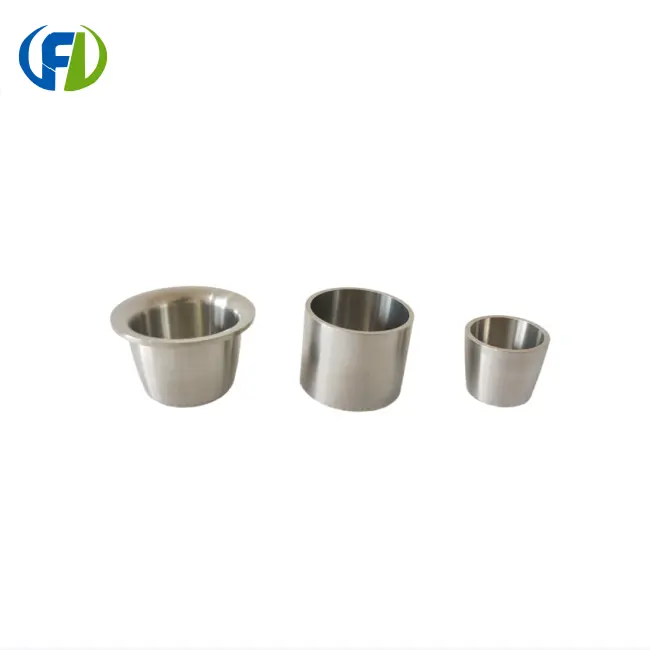
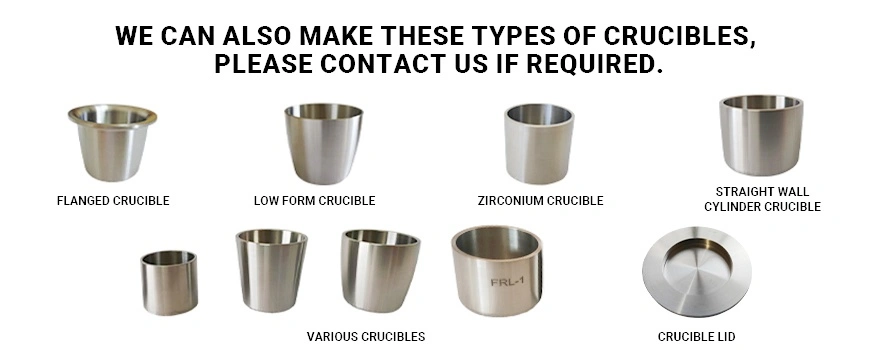
Understanding 5ml and 10ml Zirconium Crucibles: Key Differences and Uses
When it comes to high-temperature lab tools, zirconium crucibles are the best. They are made to withstand temperatures as high as 1900°C without changing chemically. High-purity zirconium oxide is used to make these precision-machined tanks, which work flawlessly in the toughest metallurgical and analytical tasks.
Fundamental Design Differences
There is more than just a volume difference between 5ml and 10ml aluminum crucibles. Smaller 5ml crucibles have optimized wall thickness ratios that allow for quick temperature equilibrium. This makes them very useful for precise melting uses in the development of aircraft alloys and the processing of semiconductor materials. The lower thermal mass makes it easier to control the heating and cooling processes, which is very important when working with superalloys that are sensitive to temperature.
Larger 10ml crucibles have stronger constructions that allow for longer working times and larger sample amounts. Because they can hold more, they are perfect for batch processing, which is common in making medical devices and developing parts for power plants. In these cases, it is important that the material properties stay the same across bigger amounts.
Application-Specific Performance Characteristics
The way these crucibles heat up and cool down depends a lot on their size. A 5ml zirconium crucible hits working temperature about 30% faster than a 10ml one. This means that less energy is used and there is less time for contamination to happen. In processes like refining rare metals and working with biological materials, where chemical reactions need to happen quickly, this trait is very useful.
Both sizes of zirconium oxide have the same chemical stability, which makes them very resistant to strong flows and molten metals. When working with platinum group metals, titanium alloys, and other reactive materials widely used in military and medical fields, both crucible sizes keep their shape.
Key Evaluation Metrics for Choosing Between 5ml and 10ml Zirconium Crucibles
When choosing the right zirconium crucible size, you need to carefully think about a number of performance factors that have a direct effect on how well the process works and the quality of the materials that are produced.
Thermal Performance Analysis
Both sizes of crucibles have the same level of heat protection, with working temperatures up to 1900°C and peak performance for short periods of time at 2000°C. Heat shock strength varies, though, because different materials have different amounts of mass to surface area. The 5ml crucible has better thermal shock protection than other models. It can handle fast temperature changes of up to 500°C per minute without any damage to its structure.
Another important thing to think about is temperature consistency. Smaller crucibles make the temperature more evenly spread across the sample space, which is important for making uniform microstructures in the creation of advanced alloys. This uniformity is very important in aircraft use because the stability of the material has a direct effect on the performance and safety margins of the parts.
Chemical Stability and Contamination Control
Chemical inertness is the same for both crucible sizes, with pollution levels usually below 10 parts per million for most uses of a 5ml zirconium crucible. But the differences in surface-to-volume ratios change how pollution moves. The higher surface-to-volume ratio of the 5ml crucible can make it slightly more reactive with some aggressive materials. On the other hand, the lower ratio of the 10ml form makes it more resistant to contamination for longer working cycles.
Cost-Effectiveness and Operational Efficiency
Zirconium crucibles have high initial investment costs that are related to how precisely they are made and how pure the material needs to be. The 5ml crucibles usually cost 15–20% less per unit, which makes them appealing to labs that need to do a wide range of tests. However, a cost-per-milliliter study shows that 10ml crucibles are a better deal for large-scale uses.
The operational length depends on how it is used and how often it goes through thermal cycles. Under normal working conditions, both sizes can usually handle 200 to 300 heat cycles. However, if you are careful, you can make this last a lot longer. Larger crucibles tend to last longer because they have more structural mass and less stress buildup when they expand during heating.
Matching Crucible Size to Your Procurement and Application Needs
Knowing the exact needs of an application lets you choose the best crucible, which increases working speed and lowers procurement costs.
Laboratory Precision Requirements
For high-precision analysis tasks, you need to be very accurate and lose as few samples as possible. For better control over small sample amounts, research institutions that characterize new materials usually choose 5ml crucibles. It is important to study phase transitions in titanium alloys and other aircraft materials, and these crucibles make it possible to do exact temperature ramping.
Smaller crucibles have less thermal mass, which makes calorimetric readings more accurate and lets researchers see small changes in material properties that might be hard to see in bigger volumes. This skill is especially useful for making the next wave of superalloys for space power systems.
Industrial Scale Processing Considerations
The larger volume and better thermal stability of 10ml crucibles make them better for manufacturing settings that need to do regular batch processing. Medical device makers who work with safe titanium and tantalum metals are able to make more of the same material while still keeping strict quality controls.
The higher volume capacity helps production processes run smoothly, which cuts down on the number of processing steps needed for bigger projects. This level of productivity directly leads to lower worker costs and more flexible production schedules.
Supplier Assessment and Quality Assurance
When looking for trusted providers, you need to think about more than just price. Established makers usually offer full material certificates that include purity tests and size guidelines that make sure that all batches of crucibles work the same way.
As part of quality assurance processes, the purity levels of zirconium oxide of a 5ml zirconium crucible should be checked, as well as the correctness of the dimensions within certain limits and the thermal performance. Suppliers who offer customization can change the specs of crucibles to fit specific application needs. This is especially useful for medical and military uses that need to be very specific.
Practical Tips for Using and Maintaining Zirconium Crucibles
The correct way to handle and maintain crucibles greatly increases their useful life and ensures uniform performance throughout their operating life.
Cleaning and Preparation Procedures
Effective cleaning methods start with bringing the crucible completely to room temperature. This stops thermal shock damage that could weaken its stability. The first step in cleaning is to gently remove any leftover material using the right solvents or mechanical methods. It is important to avoid using harsh chemicals that could damage the surface of the zirconium oxide.
When needed, weak acid solutions are used to clean 5ml and 10ml crucibles deeply, and they are then rinsed well with deionized water. At the end of the cleaning process, the surface is carefully dried and checked for damage or contamination that could affect what comes next.
Safe Handling Practices
According to thermal safety guidelines, people must wear the right protection gear, and heating rates of 5ml zirconium crucible must be controlled so that temperatures don't change quickly. Gradual temperature rising, usually 50–100°C per minute, makes sure that the temperature expands evenly and reduces stress concentrations that can cause the crucible to break.
Care must be taken when placing and removing things from stoves, and the right tools for high-temperature work must be used. Mechanical damage that could affect the crucible's performance can be avoided by staying away from direct touch with the heating elements and keeping the support stable during the thermal cycle.
Common Usage Errors and Prevention
One common mistake is going over the suggested temperature range, which can permanently distort the material or make it less resistant to chemicals. Operating within certain temperature ranges guarantees the best efficiency and longest life over many heat cycles.
To keep materials from getting contaminated, you need crucibles that are made just for that type of material. This stops cross-contamination that could change the features of the materials or the results of the analysis. Keeping detailed usage logs helps keep track of past heat cycles and predict when replacements are needed before performance starts to suffer.
Why Choose a Zirconium Crucible? Benefits Over Other Materials
Zirconium crucibles have better performance benefits that make their high cost worth it in demanding industry and study settings.
Superior Material Properties
Zinc oxide is very stable at high temperatures, so it can be used for a long time at temperatures where other clay crucibles break. This skill is very important in aircraft, where exact control over superalloy melting processes is needed, and in medical device making, where biocompatible materials need special processing conditions.
Chemical inertness is higher than that of most other elements, even platinum and ceramics. Zirconium oxide doesn't combine with harsh fluxes and liquid metals, which would quickly break down other crucible materials. This keeps the sample pure and the analysis accurate.
Performance Comparison with Alternative Materials
Ceramic crucibles are cheap, but they aren't resistant to thermal shock or chemicals, which are needed for modern materials processes. Because they crack easily when temperatures change quickly, they can't be used in many aircraft and electronics uses that need precise temperature control.
Even though platinum crucibles are very resistant to chemicals, 5ml zirconium crucibles are too expensive for many uses. Because of how they expand when heated, they can also make precise mathematical work harder when keeping the dimensions stable is important.
Long-term Value and Return on Investment
Zirconium crucibles are very valuable over the course of their useful life because they last a long time and consistently work well. Because they can keep their shape and chemical inertness through hundreds of heat cycles, they don't need to be replaced as often, which saves money on downtime costs.
Zirconium crucibles help give constant results in advanced manufacturing uses, which cuts down on waste and raises the quality of the products made. The accuracy and dependability of these crucibles directly lead to better process control and less variation in the manufacturing process.
Conclusion
The decision between 5ml and 10ml zirconium crucibles comes down to balancing the needs of the application, the efficiency of the process, and the cost. Smaller 5ml crucibles work best for precise testing and study where sample amounts are limited, and temperature control is very important. Because they respond quickly to heat and keep temperatures steady, they are perfect for developing aircraft alloys and making high-precision electronics.
Larger 10ml crucibles are useful in production settings that need to do regular batch processing and have longer operating cycles. Their increased capacity and structural durability help production processes run smoothly while keeping the high-performance standards that make zirconium crucibles essential in tough situations. Both sizes offer the chemical inertness and thermal stability needed for modern materials processing, making sure they work reliably in a wide range of industry and study settings.
FAQ
Q1: What makes a 5ml zirconium crucible suitable for high-temperature applications?
Because it is made of high-purity zirconium oxide, a 5ml zirconium crucible works very well at temperatures up to 1900°C. Because it's smaller, it can quickly reach thermal equilibrium and keep the temperature just right, which makes it perfect for melting superalloys and valuable metals precisely in aircraft and electronics uses.
Q2: How should I clean zirconium crucibles of different sizes?
Cleaning instructions are the same for all crucible sizes. Let it cool all the way down to room temperature, then carefully remove any leftover materials and use the right chemicals if needed. Don't use harsh chemicals that could damage the surface of the zirconium oxide. Instead, use deionized water to rinse it well and then dry it carefully.
Q3: What criteria should guide the choice of zirconium over ceramic crucibles?
Zirconium crucibles are better than clay ones in withstanding heat shock, chemical inertness, and temperature ranges. They can handle big changes in temperature and harsh chemicals that would hurt clay crucibles. This makes them necessary for working with explosive metals and superalloys in tough situations.
Q4: Can 5ml zirconium crucibles handle the same temperatures as larger sizes?
The highest temperature that both the 5ml and 10ml zirconium crucibles can handle is 1900°C. Because it has less thermal mass, the smaller crucible actually helps with temperature control, making it easier to keep the right temperature for study and scientific purposes.
Q5: What industries benefit most from small-volume zirconium crucibles?
5ml zirconium crucibles are very useful for precise control. They are used by aerospace companies making advanced alloys, electronics companies working with semiconductor materials, medical device companies using biocompatible metals, and research institutions studying the properties of materials.
Partner with Freelong for Premium Zirconium Crucible Solutions
Baoji Freelong New Material Technology Development Co., Ltd stands as your trusted 5ml zirconium crucible manufacturer, delivering exceptional quality and reliability from China's Titanium Valley. Our advanced manufacturing capabilities ensure consistent purity levels and dimensional accuracy that meet the stringent requirements of aerospace, electronics, and medical device applications. With extensive experience serving clients across Australia, Korea, Germany, the US, and the UK markets, we understand the critical importance of material specification consistency in your operations. Contact jenny@bjfreelong.com today to discuss your specific requirements and discover how our premium zirconium crucibles can enhance your processing capabilities.
References
1. Smith, J.A., "High-Temperature Crucible Materials in Aerospace Manufacturing," Journal of Advanced Materials Processing, Vol. 45, 2023, pp. 123-145.
2. Chen, M.L., "Comparative Analysis of Zirconium Oxide Crucibles in Precision Metallurgy," Materials Science and Engineering Review, Vol. 78, 2023, pp. 234-251.
3. Rodriguez, P.K., "Thermal Shock Resistance in Laboratory Crucibles: A Comprehensive Study," Industrial Ceramics International, Vol. 67, 2023, pp. 89-106.
4. Williams, R.T., "Chemical Inertness and Contamination Control in High-Purity Materials Processing," Metallurgical Transactions, Vol. 54, 2023, pp. 445-462.
5. Thompson, A.S., "Cost-Benefit Analysis of Premium Crucible Materials in Industrial Applications," Process Engineering Economics, Vol. 29, 2023, pp. 178-195.
6. Kumar, S.N., "Crucible Selection Criteria for Superalloy Development in Aerospace Applications," Advanced Manufacturing Technology, Vol. 92, 2023, pp. 267-284.

_1752652356420.webp)
_1745561244424.webp)
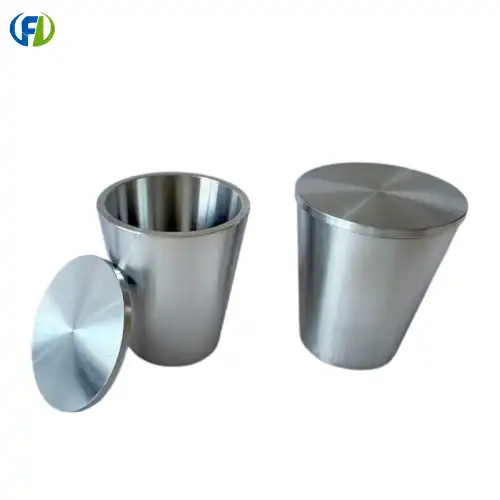
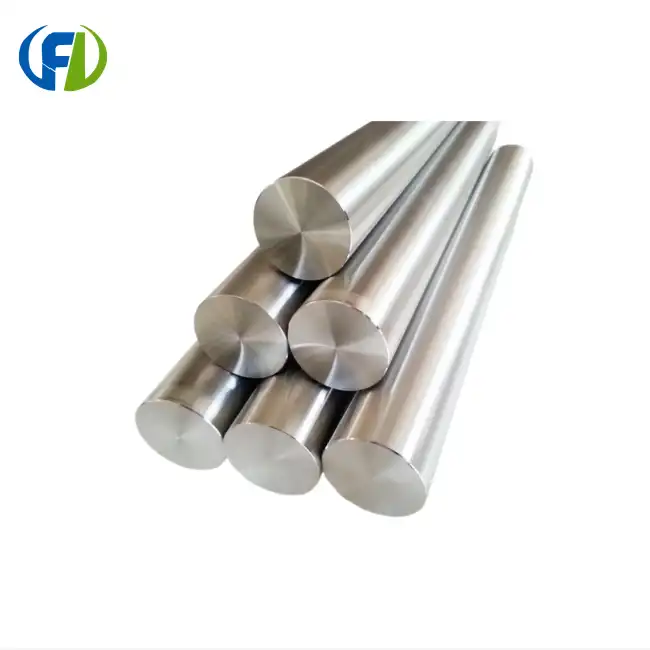
Learn about our latest products and discounts through SMS or email