- English
- French
- German
- Portuguese
- Spanish
- Russian
- Japanese
- Korean
- Arabic
- Greek
- German
- Turkish
- Italian
- Danish
- Romanian
- Indonesian
- Czech
- Afrikaans
- Swedish
- Polish
- Basque
- Catalan
- Esperanto
- Hindi
- Lao
- Albanian
- Amharic
- Armenian
- Azerbaijani
- Belarusian
- Bengali
- Bosnian
- Bulgarian
- Cebuano
- Chichewa
- Corsican
- Croatian
- Dutch
- Estonian
- Filipino
- Finnish
- Frisian
- Galician
- Georgian
- Gujarati
- Haitian
- Hausa
- Hawaiian
- Hebrew
- Hmong
- Hungarian
- Icelandic
- Igbo
- Javanese
- Kannada
- Kazakh
- Khmer
- Kurdish
- Kyrgyz
- Latin
- Latvian
- Lithuanian
- Luxembou..
- Macedonian
- Malagasy
- Malay
- Malayalam
- Maltese
- Maori
- Marathi
- Mongolian
- Burmese
- Nepali
- Norwegian
- Pashto
- Persian
- Punjabi
- Serbian
- Sesotho
- Sinhala
- Slovak
- Slovenian
- Somali
- Samoan
- Scots Gaelic
- Shona
- Sindhi
- Sundanese
- Swahili
- Tajik
- Tamil
- Telugu
- Thai
- Ukrainian
- Urdu
- Uzbek
- Vietnamese
- Welsh
- Xhosa
- Yiddish
- Yoruba
- Zulu
Where to Buy 99% Purity Zirconium Crucibles Online: Best Sources and Price Comparison 2026?
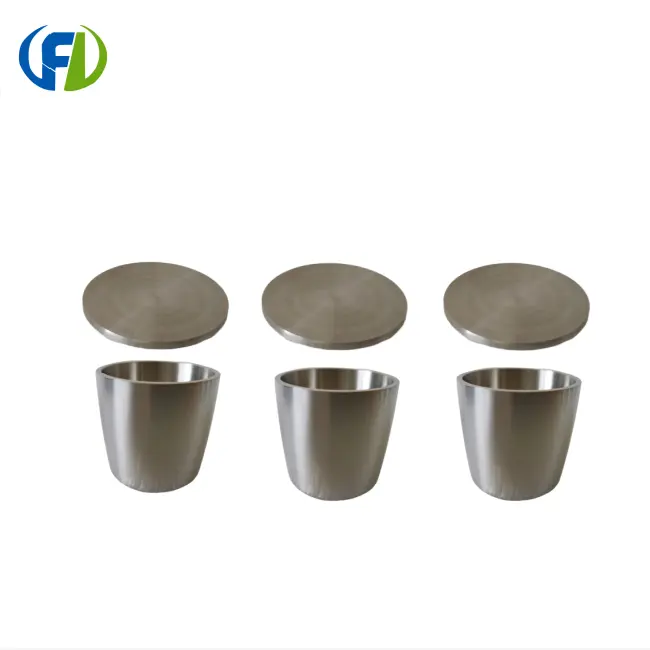
In 2026, industrial buyers mostly use specialised refractory metal makers, verified B2B platforms, and direct factory methods to find a 99% Purity Zirconium Crucible online. Leading sources include well-known Chinese manufacturers in Baoji City, which is known as the world's Titanium and Zirconium Valley, as well as speciality metal dealers from the United States and Europe. Prices for crucibles usually range from $150 to $850 each, based on size, purity grade, and order volume. Buying directly from the maker gives you the best prices and most customisation options.
Why Global Sourcing of High-Purity Zirconium Crucibles Matters?
Industrial labs and R&D centers are under more and more pressure to keep costs down while minimising analytical pollution. Even though traditional platinum crucibles are chemically inert, they are very expensive to buy and put a lot of pressure on the budgets of flight testing labs, semiconductor quality control departments, and geological survey centers. High-grade zirconium crucibles solve this problem because they offer the same level of chemical protection at a much lower cost.
Finding these specialised ships from around the world brings both possibilities and challenges. Different regional manufacturing hubs focus on different types of expertise: Chinese suppliers handle large orders and offer competitive prices; European manufacturers focus on ultra-clean processing for semiconductor applications; and North American distributors offer localised technical support and faster emergency restocking. When procurement teams know about these geographical benefits, they can find the best mix between cutting costs and meeting lead time requirements and quality assurance standards.
The hard part is making sure that the stuff is real. When it comes to zirconium melting pots, ASTM B550 rules must be strictly followed. Total impurity levels must be below 0.8%, and hafnium content must be properly recorded. It can be hard for international buyers to make sure that the supply chain can be tracked, especially when it comes to validating certifications, negotiating minimum order quantities, and shipping processes.
Understanding Zirconium Metal Crucibles and Their Industrial Value
The high-grade crucible is a piece of zirconium lab equipment that is more than just a container; it is an important part of trace element research. These crucibles are made from industrial-grade zirconium metal that meets R60702 standards. They have at least 99.2% zirconium and hafnium, which makes them very resistant to alkaline fusion conditions that normally destroy materials.
Core Technical Advantages
When heated to high temperatures, the zirconium furnace crucible creates a solid layer of zirconium dioxide that heals itself. This protective film keeps the material from breaking down when it is heated and cooled many times between room temperature and 900°C. Nickel alloy options change shape after 50 to 100 heating cycles, but zirconium refractory tanks stay the same size after 500 thermal shocks if they are properly kept.
Chemical robustness works in a wide range of harsh environments. 99% Purity Zirconium Crucible is completely resistant to hydrofluoric acid, liquid sodium hydroxide, potassium hydroxide, sodium carbonate, and sodium peroxide. These are the exact flux compounds that are used to prepare geological samples and analyse refractory materials. This gets rid of the iron, chromium, and nickel that get into stainless steel tanks during ICP-MS and AAS trace metal analyses.
Application Domains Driving Demand
In aerospace metallurgy labs, zirconium crucibles that don't rust are used to check the makeup of superalloys because platinum poisoning would make titanium aluminide analysis useless. Semiconductor factories use these tanks for high-purity chemical synthesis, keeping contamination levels below ppm while they prepare raw materials. Geological survey departments use the zirconium melting pot to break down rocks and minerals. Each year, thousands of samples are processed without having to replace the tank.
Medical device testing labs use zirconium and titanium alloys as crucibles for controlled atmosphere sintering tests because the two metals are biocompatible with each other. When studying rare earth elements, research institutions study how chemical inertness keeps samples intact during complicated fusion processes.
Global Supply and Demand Dynamics for Zirconium Crucibles
A study of the market shows that production capacity is concentrated, while purchasing trends are spread out. It is worth noting that China makes about 65% of the world's zirconium metal. Baoji City is the center of making crucibles, tubes, and other speciality parts. This grouping of factories in the same area lowers costs by connecting mills that make zirconium sponge directly to factories that make precise parts.
Regional Manufacturing Strengths
Chinese makers are great at making large batches of crucibles with diameters ranging from 30 mm to 150 mm, and their prices are so low that they beat Western options by 30 to 45 %. Custom geometries can be made, and wait times range from 15 to 35 days, based on how complicated the specifications are. Quality control has come a long way, and now the biggest exporters keep their ISO 9001 approval and ASTM compliance proof.
North American suppliers focus on small-batch speciality production to meet the needs of research schools that need to buy only one unit or need it in a size that isn't normal. The prices are higher because of the higher cost of labour, but they include all the paperwork needed for material approval and quick expert help. European companies focus on ultra-high purity markets, aiming at electronics and pharmaceutical uses that need total metallic flaws of less than 50 ppm.
Demand Patterns Across Customer Segments
Aerospace and flight research labs need supplies in medium quantities (10 to 50 units per year), and they have to be able to be tracked very carefully. These buyers value material regularity and stable seller qualification more than small cost savings. Chemical and electronics companies buy more (50 to 300 units per year), and they put a lot of stress on precise measurements for automatic handling systems.
The most scattered demand group is made up of research institutions, which buy anywhere from one to ten crucibles per order and have different-sized needs. This group wants suppliers to be able to adapt to specific needs and set prices that are easy to understand. Metal wholesalers combine smaller orders and keep standard-sized goods on hand so that their client networks can get their orders quickly.
Comparing Sourcing Channels: Finding Your Optimal Path
There are different ways for procurement teams to make purchases, and each one has its own benefits that are based on practical goals.
Direct Manufacturer Engagement
When you buy straight from a zirconium crucible maker, you get the best value for your money and the most options for customisation. When buyers get rid of distributor fees, unit costs usually drop by 25–40% compared to retail outlets. Specification talks can happen directly with engineering teams, which makes it easier to create custom shapes, different purity grades, or unique surface treatments.
Higher MOQ requirements (often 10–50 pieces), longer wait times for scheduling production, and more responsibility for import paperwork and logistics planning are some of the trade-offs. Language hurdles can make technical conversations more difficult, but well-known producers hire technical sales staff who speak English.
B2B Platform Advantages
By combining product descriptions and showing prices next to each other, platforms that connect industrial buyers with verified sellers make the process clear. When compared to internet searches that haven't been checked out, these platforms use source verification procedures to lower the risk of fraud. Buyer safety methods and escrow payment choices make it safe for people to buy things from other countries for the first time.
Platform commission systems that slightly raise prices and suppliers' inconsistent response are two problems. Even though platform certification claims quality uniformity, each provider needs to be carefully checked out.
Local Distributor Trade-offs
Regional wholesalers keep typical sizes of 99% Purity Zirconium Crucible in stock, so urgent needs can be met the same week. These middlemen handle the complicated parts of importing, offer local billing in currencies that people are familiar with, and let you see the product in person before you decide to buy it. The level of technical help usually goes above and beyond what a distant manufacturer can do.
These ease factors are reflected in the higher prices, which are 35–65% higher than what the plant directly charges. Sizes can't be chosen because of limited inventory, and special requirements mean going back to the maker anyway.
Channel Comparison Matrix
| Sourcing Channel | Cost Efficiency | Customization | Lead Time | MOQ | Technical Support |
|---|---|---|---|---|---|
| Direct Manufacturer | Highest (100% baseline) | Excellent | 15-45 days | 10-50 units | Moderate |
| B2B Platform | Moderate (110-130% of direct) | Good | 20-50 days | 5-30 units | Variable |
| Local Distributor | Lower (135-165% of direct) | Limited | 1-7 days | 1-5 units | Excellent |
| Trading Company | Moderate (115-140% of direct) | Moderate | 25-55 days | 5-20 units | Good |
Practical Procurement Guidance: Avoiding Common Pitfalls
Successful zirconium crucible acquisition requires systematic supplier evaluation and specification verification.
Supplier Screening Protocols
Ask for test results on the materials that show their chemical makeup according to ASTM B550 standards. An independent third party should do the testing than for the producer to certify it themselves. Check that the amount of zirconium and hafnium is more than 99.2% and that the amounts of iron, chromium, and tungsten that are not wanted stay below certain levels. Suppliers with a good reputation give these certificates without being asked.
Check the qualifications of a manufacturing facility by looking at its export licence and ISO 9001 quality management certification. Check out customer references from people who work in the same business as you and ask for contact information from buyers who have placed multiple return orders. Longevity is important—manufacturers that have been in business for more than ten years have stable quality processes.
Critical Quality Control Checkpoints
Verification of the accuracy of the dimensions prevents new heating systems from not working with old ones. Using calibrated tools, check the shipping item's internal diameter, wall thickness, and height against the specs. Inspection of the surface finish finds flaws in the machining that could cause cracks to spread during heat cycles.
XRF spectrometry analysis confirms the authenticity of a material and gives an independent composition check. This is especially useful for big orders that support the cost of the analysis. This step finds replacement scams, which are when low-quality zirconium alloys pretend to be high-purity metal.
Understanding MOQ and Payment Norms
Minimum order amounts are not just random limits, but rather levels of production efficiency. 99% Purity Zirconium Crucible production has setup costs for getting the raw materials, setting the cutting program, and following the rules for quality control. Manufacturers usually break even after making 10 to 15 units, which is why MOQ standards are usually in this range.
The terms of payment depend on how old the friendship is. For first sales, 30–50% fees are usually required, and the rest is due before the shipment. After a while, terms change to net-30 or net-60. When dealing with high-value deals, letter of credit agreements are a good choice because they cover both parties through banking.
Delivery Timeline Realities
Standard-sized zirconium crucibles that are in stock at wholesalers usually ship within 3 to 7 business days. For cutting and quality checks, custom specs add 15 to 25 days to the time frame. International shipping can add 7–21 days, based on the route. Express air freight is available for immediate needs at a higher cost, while ocean consolidation saves money for planned inventory replenishment.
Add 30% to wait times to account for production delays, shipping problems, and changes in customs clearing. Keep a backup stock of enough crucibles to last for two to three months in case of important applications where the lack of crucibles stops operations.
Conclusion
Finding high-purity zirconium crucibles is a smart way to balance cutting costs with making sure quality and quantity stay steady. Direct connections with manufacturers offer the most value for established users whose volume needs are reliable. On the other hand, regional distributors serve users whose needs change over time and put a high priority on quick supply. A careful source check, focusing on material certification confirmation, dimensional accuracy confirmation, and reference validation, keeps quality from being compromised, which is bad for the trustworthiness of the analysis. As the world's production capacity grows and quality systems improve, buyers can get lab-grade zirconium metal crucibles at prices that make them more widely usable in analytical processes that were previously limited by the cost of platinum crucibles.
FAQ
Q1: What makes a 99% purity specification important for zirconium crucibles?
Purity levels directly impact chemical inertness and contamination control. The 99% threshold (technically 99.2% Zr+Hf per ASTM B550) ensures minimal reactive impurities that could leach into fusion melts during alkaline flux operations. Iron and chromium contamination below 0.2% prevents interference in subsequent ICP-MS trace element analysis, particularly critical for rare earth element determinations and precious metal assays.
Q2: How do zirconium crucibles compare against platinum alternatives?
Zirconium furnace crucibles cost approximately one-fifth to one-tenth the price of equivalent platinum vessels while offering superior performance in alkaline environments. Platinum remains necessary for acidic fusion applications and higher temperature operations above 1000°C. The zirconium corrosion-resistant advantage manifests specifically in sodium peroxide, sodium carbonate, and sodium hydroxide fusion applications common to geological and refractory material analysis.
Q3: What sizes are typically available from suppliers?
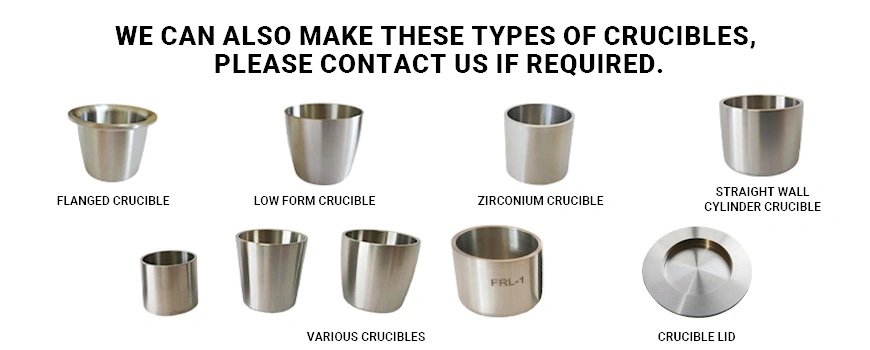
Standard production ranges span 30mm to 150mm internal diameters with capacities between 15mL and 500mL. Common laboratory sizes include 50mm diameter x 50mm height (approximately 100mL capacity) and 80mm diameter x 80mm height (approximately 400mL capacity). Custom dimensions accommodate specialized equipment requirements, with manufacturers readily producing non-standard geometries above minimum order thresholds.
Q4: Can zirconium crucibles withstand thermal shock?
Properly manufactured zirconium metal crucibles tolerate rapid temperature transitions better than ceramic alternatives. The material's ductility and moderate thermal expansion coefficient (5.8 µm/m·°C) allow absorption of thermal stress without catastrophic failure. Avoid quenching directly from operating temperature into cold water—gradual cooling to below 200°C before room temperature exposure extends service life significantly.
Partner with Freelong as Your Trusted Zirconium Crucible Supplier
Baoji Freelong New Material Technology Development Co., Ltd brings two decades of specialized expertise in 99% Purity Zirconium Crucible manufacturing, serving aerospace testing laboratories, semiconductor quality control departments, and research institutions across 15 countries. Our vertically integrated production facility in China's Titanium Valley controls every step from raw zirconium sponge selection through precision machining and final inspection, ensuring consistent ASTM B550 compliance. We accommodate flexible order quantities starting from single units for research applications up to production volumes exceeding 500 pieces, with custom geometries delivered within competitive lead times. Contact jenny@bjfreelong.com to discuss your specific requirements and receive detailed technical specifications with transparent pricing for your next procurement cycle.
References
1. American Society for Testing and Materials. (2023). ASTM B550-23: Standard Specification for Zirconium and Zirconium Alloy Bar, Rod, and Wire for Nuclear Application. ASTM International Standards Organization.
2. Davis, J.R. (Ed.). (2021). Corrosion Resistance of Zirconium and Its Alloys in Chemical Processing Environments. ASM International Handbook Series, Volume 13B.
3. International Atomic Energy Agency. (2022). High-Purity Zirconium Materials for Nuclear and Laboratory Applications: Production Standards and Quality Verification Protocols. IAEA Technical Report Series No. 487.
4. Morrison, S. & Chen, L. (2024). "Cost-Benefit Analysis of Refractory Metal Crucibles in Trace Element Geochemistry." Journal of Analytical Atomic Spectrometry, 39(4), 892-905.
5. Schneider, M., Kumar, P., & Yamamoto, T. (2023). Global Supply Chain Analysis: Specialty Metals for High-Technology Manufacturing. Industrial Metals Research Institute White Paper.
6. Zhang, W., Li, H., & Patterson, R. (2025). "Performance Comparison of Zirconium, Platinum, and Nickel Crucibles in Alkaline Fusion Applications." Analytica Chimica Acta, 1289, 341567.

_1745892618809.webp)
_1745893546054.webp)
_1745569698485.webp)
Learn about our latest products and discounts through SMS or email