- English
- French
- German
- Portuguese
- Spanish
- Russian
- Japanese
- Korean
- Arabic
- Greek
- German
- Turkish
- Italian
- Danish
- Romanian
- Indonesian
- Czech
- Afrikaans
- Swedish
- Polish
- Basque
- Catalan
- Esperanto
- Hindi
- Lao
- Albanian
- Amharic
- Armenian
- Azerbaijani
- Belarusian
- Bengali
- Bosnian
- Bulgarian
- Cebuano
- Chichewa
- Corsican
- Croatian
- Dutch
- Estonian
- Filipino
- Finnish
- Frisian
- Galician
- Georgian
- Gujarati
- Haitian
- Hausa
- Hawaiian
- Hebrew
- Hmong
- Hungarian
- Icelandic
- Igbo
- Javanese
- Kannada
- Kazakh
- Khmer
- Kurdish
- Kyrgyz
- Latin
- Latvian
- Lithuanian
- Luxembou..
- Macedonian
- Malagasy
- Malay
- Malayalam
- Maltese
- Maori
- Marathi
- Mongolian
- Burmese
- Nepali
- Norwegian
- Pashto
- Persian
- Punjabi
- Serbian
- Sesotho
- Sinhala
- Slovak
- Slovenian
- Somali
- Samoan
- Scots Gaelic
- Shona
- Sindhi
- Sundanese
- Swahili
- Tajik
- Tamil
- Telugu
- Thai
- Ukrainian
- Urdu
- Uzbek
- Vietnamese
- Welsh
- Xhosa
- Yiddish
- Yoruba
- Zulu
Best Welding Techniques for TA1 Titanium Plates: Expert Recommendations
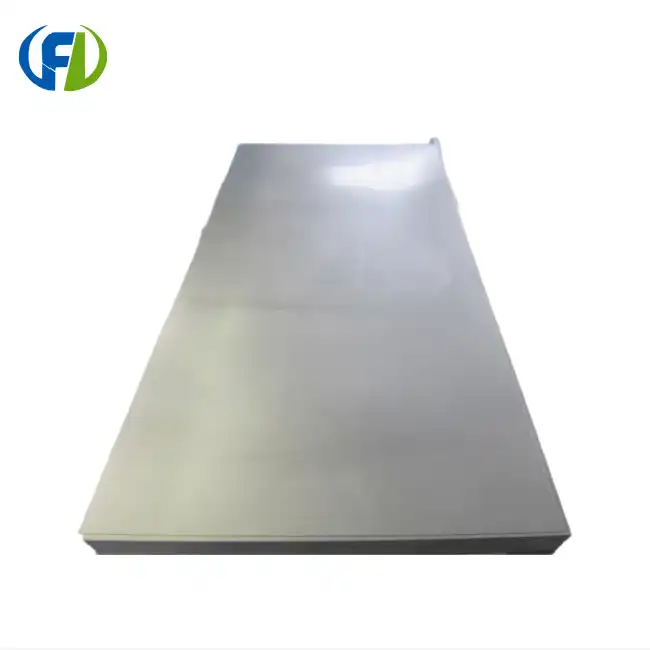
To make uniform, high-quality joints when welding commercially pure titanium, you need to be very careful and know what you're doing. TIG (Tungsten Inert Gas) welding with strict inert gas protection is the best way to join the TA1 Titanium Plate. Ultra-high-quality argon is usually used to keep oxygen and nitrogen from getting into the weld. This method keeps TA1's great flexibility and resistance to rust while keeping the structure strong. Plasma arc welding and laser welding are more advanced ways to join metal parts together quickly and with complicated shapes. To weld something successfully, you need to carefully control the environment, prepare the surface before the join, and strictly follow the heat input parameters to keep the material's excellent formability.
Introduction
TA1 titanium plates are the purest titanium material that can be bought for use in current making. These plates are used in advanced electronics, medical implants, aerospace structures, and tools for handling chemicals. They have a unique resistance to corrosion and a great strength-to-weight ratio. On the other hand, bad welding techniques can completely ruin the benefits of the TA1 Titanium Plate. When welding, contamination causes weak joints, less resistance to rust, and catastrophic failure in serious situations.
We know what's at stake for purchasing managers and manufacturing engineers who choose the materials that are used on mission-critical projects. This guide tells you how to weld commercially pure titanium like a pro. It will help you avoid mistakes that cost a lot of money, improve the quality of your joints, and make smart choices about where to get TA1 plates. The welding methods we'll talk about here will have a direct effect on the performance of your product and the success of your project, whether you're making parts for airplanes, chemical labs, or biomedical devices.
Understanding TA1 Titanium Plates for Welding Applications
What Makes TA1 Titanium Unique
TA1 Titanium Plate is a highly pure titanium that is very pure and meets ASTM Grade 1 standards, having at least 99.5% titanium content. This pure alpha-phase titanium material is different from stronger titanium alloys because it values maximum flexibility and formability over tensile strength. The substance is very resistant to corrosion in oxidizing conditions, such as nitric acid, wet chlorine, and saltwater up to 260°C. This means that it is almost impossible for pitting and stress corrosion cracking to happen.
Material Properties Critical to Welding
The mechanical properties of fully pure titanium have a lot to do with how it welds. Up to about 300°C, TA1 keeps its structure stable. Above that temperature, rust speeds up, and the material's tensile properties decrease. It's hard to work with distortion and leftover stress when it cools because it has a high thermal expansion rate. The fact that the material isn't magnetic makes it perfect for electronics and medical equipment that works with MRIs. However, because it reacts quickly at high temperatures, it needs to be protected from air gases during welding.
Industry Applications Requiring Precision Welding
Welded TA1 structures are used in chemical processing plants for reactor tanks and heat exchanger parts where harsh media would break down other alloys. Welded titanium parts are used by aerospace makers in aircraft structures and hydraulic systems to reduce weight, which directly leads to better fuel economy. Precision welding is used by medical device companies to make internal devices like vascular tubes and orthopedic implants. Joint quality directly impacts patient safety. In each case, the quality of the weld decides whether the part meets strict performance standards or fails too soon when it's put through its paces.
Challenges and Considerations in Welding TA1 Titanium Plates
Contamination Control as the Primary Challenge
When forging commercially pure titanium, controlling atmospheric contamination is critical. TA1 Titanium Plate readily absorbs oxygen, nitrogen, and hydrogen from the air when heated above 400°C. Oxygen uptake forms a hard alpha-case layer on the weld surface, while nitrogen creates brittle titanium nitride compounds that reduce ductility. Even trace amounts of moisture can introduce hydrogen, which leads to delayed cracking and embrittlement. If the weld surface turns yellow or blue, it indicates mechanical properties have been compromised by oxidation, whereas a silver appearance shows the shielding gas is performing effectively.
Thermal Management and Distortion
The temperature expansion rate of TA1 is about 30% higher than that of stainless steel. This makes it very hard to weld without distortion. At the weld joint and heat-affected zone, residual forces build up and could cause cracks to form when the metal is put through service loads. Care must be taken to control the heat input so that the heat-affected zone is as small as possible while still letting enough heat through. Too much heat makes the grain structure bigger in the joint zone, which makes the metal less flexible and resistant to wear. To keep big parts from warping, it's important to plan the fixturing and welding sequences correctly.
Quality Standards and Certification Requirements
Industries around the world that use titanium materials have to follow strict quality standards. ASTM B265 says what titanium plate goods must be made of and what their mechanical properties must be. The AWS D1.9 code sets the rules for structure welding on titanium and titanium alloys. For aerospace uses, you also need to meet AMS standards and pass qualification tests specific to your business. Medical device makers have to show that they follow ISO 13485 and FDA rules, which include showing that all of their materials are fully traceable and that they know how to do the welding process. These licensing standards affect more than just the prices of materials; they also affect how suppliers are chosen and how much the whole project costs.
Best Welding Techniques for TA1 Titanium Plates
TIG Welding as the Industry Standard
Tungsten Inert Gas welding is the most common way to make titanium parts because it gives you great control over the heat input and full inert gas safety. An electrode made of non-consumable tungsten is used to make the arc, and ultra-high purity argon (99.998% minimum) keeps the molten weld pool clean from airborne particles. To protect the cooled weld bead until it drops below 400°C, we suggest putting up 150–200 mm long trailing screens behind the torch. Back purging with argon shields the weld's root side, which is especially important for through-penetration joints in pipes and pressure tanks.
The following welding parameters optimize results for TA1 material: direct current electrode negative (DCEN) polarity provides stable arc characteristics and efficient heat transfer; travel speeds between 150-250mm per minute balance penetration with heat-affected zone minimization; amperage selection based on material thickness typically ranges from 70-150 amps for plates between 1.5-6mm thick; thorium-free tungsten electrodes eliminate radioactive material handling concerns while maintaining excellent arc starting and stability characteristics. These factors need to be changed depending on the shape of the joint, but they are a good place to start when developing a process.
Plasma Arc Welding for Enhanced Productivity
Plasma arc welding is better than TIG welding when making titanium plates that are heavier or when the speed of production is important. The plasma spark that is compressed has a higher energy density, which lets it go deeper with less heat. Plates with a thickness between 3 and 8 mm are less likely to warp because of this feature. The keyhole welding mode lets you do full penetration welds in a single pass through materials up to 6 mm thick, so you don't have to prepare the grooves or make multiple passes. But PAW equipment costs a lot more than TIG systems, and operators need more skills because process control is more complicated.
Laser Welding Technology for Precision Applications
The latest technology in high-precision titanium production is laser beam welding, which is used to put together medical devices and aircraft parts. The very focused heat source makes narrow join beads with few heat-affected zones. This keeps thin-section materials from warping almost completely. Fiber laser systems can join 3–5 times faster than TIG welding, and the results look better and are more accurate in terms of size and shape. The technology works great for joining thin TA1 sheets that are less than 2 mm thick or for welding heat-sensitive systems that have electrical parts or nearby polymer materials.
Shielding Gas Selection and Quality
In titanium manufacturing, the quality of the weld is directly related to how pure the argon is. Industrial-grade argon that is 99.9% pure is not good enough for important uses. Ultra-high purity argon, which is at least 99.998% pure, gets rid of the tiny amounts of oxygen and water that can contaminate a weld. Adding up to 25% helium can make the penetration depth and trip speed better, but most uses still use pure argon. Gas flow rates of 15-20 liters per minute for the main torch shielding, 10-15 liters per minute for the following shields, and 8–12 liters per minute for back purging make sure that the whole system is protected during the whole thermal cycle.
Comparing Welding Methods: TA1 Titanium Plate vs Other Materials
TA1 versus TA2 Grade Titanium
Both grades are commercially pure titanium, but the TA1 Titanium Plate is purer and has less intermediate element content than TA2 (Grade 2). Because of this change in makeup, TA1 has better ductility and formability but a little lower tensile strength. When welding, TA1 needs more careful parameter control because its lower strength means it can't handle heat-affected zone weakening as well. When you fit things together and tack-weld them, TA1 is more flexible, which lowers the chance that it will crack from restriction loads. Both grades need the same methods for shielding gases and steps to stop pollution.
Titanium versus Stainless Steel Welding
Titanium and stainless steel welding both use TIG methods with inert gas protection, so they look a lot alike at first glance. But there are important gaps. Stainless steel can handle much higher temperatures without becoming weak, and a short contact with air during welding can cause oxidation that looks bad but rarely affects its mechanical qualities. Titanium is volatile at high temperatures, so even seconds of poor protection can cause contamination that is not acceptable. The thermal conductivity of stainless steel is about twice that of titanium, so different ways of applying heat are needed to get the same level of entry. Because of these changes in the way metals are made, producers can't just use the same welding techniques for titanium without getting re-qualified first.
Aluminum Welding Comparisons
When soldering, both aluminum and titanium need to be protected by inert gas, but their temperature properties are very different. Because aluminum is about six times more thermally conductive than titanium, it needs a lot more heat to fuse. When aluminum makes an oxide layer that is resistant to cleaning, it needs to be cathodically cleaned through AC welding or special DC electrode positive methods. Titanium welding, on the other hand, always uses DCEN polarity. The difference in prices between materials leads to various economic choices that affect both effectiveness and the use of materials. Titanium's higher cost is worth it in aircraft uses where aluminum cannot meet performance standards because it is stronger for its weight.
Procurement and Supplier Considerations for Welding TA1 Titanium Plates
Evaluating Supplier Capabilities and Certifications
When looking for a good TA1 Titanium Plate provider, you need to do more than just compare prices. Quality guarantee starts with material certifications that show they meet ASTM B265 standards. Suppliers should give mill test results that show the chemical makeup, mechanical qualities, and how the product can be tracked back to the original melt batches. Certifications from outside groups, like AS9100 for aircraft uses, ISO 13485 for medical devices, or PED compliance for pressure equipment, show that a quality management system is mature. We suggest getting references from customers in similar fields and looking into the supplier's expert help.
Custom Processing Services That Add Value
Value-added handling services from suppliers can make the completion of your project much easier. Cutting precisely to specific sizes cuts down on waste and gets rid of the need for extra grinding. Some sellers offer edge preparation services that include grinding or machining weld bevels to your exact specs and making sure the parts fit together perfectly. Surface treatment options like pickling and passivation get rid of layers of contamination and improve the quality of the weld. Pre-qualified welding process specs that are made to fit the needs of your application speed up the start of production and lower the costs of qualification. With these services, a basic material provider can become a strategic partner in production.
International Procurement Considerations
When getting titanium parts from around the world, you need to pay close attention to processes, paperwork, and legal issues. Shipping costs for heavy metal plates make up a big part of the total landing cost, which is why volume consolidation is important from an economic point of view. Customs rules must be followed in both the country of origin and the country of exit for export documents like business invoices, packing lists, and certificates of origin. Material certifications need to be translated into English and may need to be notarized in some places. Lead times for foreign orders can be anywhere from 4 to 8 weeks, based on where the goods are coming from and how they are being shipped. Having long-term relationships with suppliers who have experience exporting cuts down on mistakes in paperwork and delays at customs that throw off production plans.
Pricing Structure and Volume Considerations
Titanium prices depend on the world material markets, the difficulty of making it, and the specifics of the order. The base price is the current market price for titanium sponge, plus extra costs for turning it into mill goods. Extra costs are added for tight thickness tolerances, special surface finishes, or dimensions that aren't normal. Volume discounts become important when you buy more than 500 kg, and you can get big savings for contracts that include more than one ton. Strategies for buying things should weigh the costs of keeping stockpiles against the benefits of buying in bulk. Long-term supply deals can lock in good prices and make sure that materials are available when the market is tight. We recommend building relationships with suppliers who can accommodate flexible order quantities that match your real consumption trends instead of requiring minimum quantities that lead to too much inventory.
Conclusion
Learning how to solder the TA1 Titanium Plate has a direct effect on the quality of the finished product, the cost of the project, and its long-term performance in tough industrial settings. The standard for TIG welding with ultra-high purity argon shielding is still argon shielding, but plasma arc and laser welding technologies have strong benefits in some situations. To be successful, you need to know what makes the material special, keep contaminants under tight control, and carefully manage the heat input. Comparing the ways that different materials are welded shows why titanium needs specialized knowledge instead of adapting common methods. Your buying process will work better if you choose suppliers strategically, taking into account things like licenses, value-added services, and total landed costs. The information in this article gives purchasing and manufacturing experts the tools they need to make technically sound choices that improve the quality of production and guarantee reliable performance throughout the lifecycle of a product.
FAQ
1. Can the TA1 Titanium Plate be welded using conventional MIG equipment?
Most of the time, MIG welding is not a good idea for commercially pure titanium because it is hard to keep enough shielding gas covering with this method. Higher trip speeds and a wire electrode that wears out quickly make gas flow patterns that are rough, which lets pollution into the air. For important titanium uses, TIG welding gives you better control and protection.
2. What filler metal should be used when welding TA1 plates?
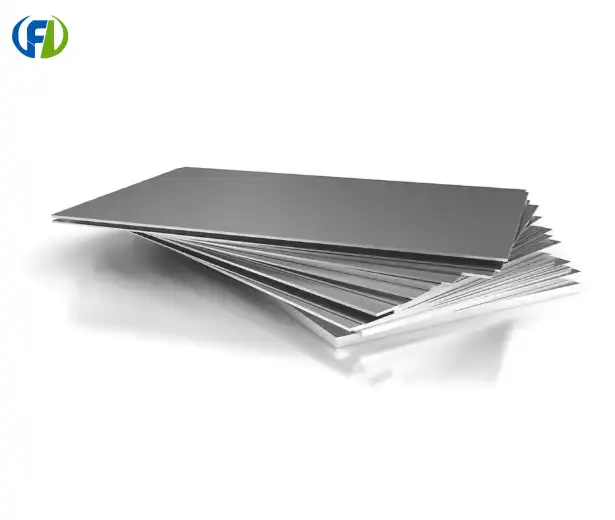
For thin pieces less than 2 mm thick, autogenous welding without filling material works well. AWS A5.16 ERTi-1 filling wire that matches the base metal makeup is good for thicker plates. ERTi-2 filler wire, which has a slightly higher strength, is still suitable and can make the weld seam stronger when connecting the TA1 Titanium Plate to structural parts.
3. How does welding TA1 differ from TA2 in terms of parameter control?
Because TA1 is less strong and purer than TA2, it needs more precise control over how much heat is added. The heat-affected zone of the TA1 material softens more when it gets too hot. Both types require the same standards for shielding gas purity and contamination protection, but TA1 is easier to shape, which lowers the risk of cracking during assembly and fixturing.
Partner with Freelong for Superior TA1 Titanium Plate Solutions
Baoji Freelong New Material Technology Development Co., Ltd delivers premium TA1 Titanium Plate manufactured in China's Titanium Valley with certified quality assurance meeting international ASTM B265 standards. Our company provides comprehensive value-added services, including precision cutting to your specifications, edge preparation for weld-ready delivery, and technical consultation supporting your fabrication projects. Located in Baoji City, we combine decades of specialized expertise in commercially pure titanium production with competitive pricing structures designed for global B2B procurement. Whether you need small research quantities or multi-ton production volumes, our team ensures material consistency, complete traceability, and reliable delivery schedules. Connect with our technical specialists at jenny@bjfreelong.com to discuss your specific application requirements and discover why leading aerospace manufacturers, chemical processors, and medical device companies trust Freelong as their TA1 Titanium Plate supplier.
References
1. American Welding Society. (2020). Structural Welding Code - Titanium (AWS D1.9). Miami: American Welding Society Publications.
2. Boyer, R., Welsch, G., & Collings, E.W. (2019). Materials Properties Handbook: Titanium Alloys. Materials Park: ASM International.
3. Leyens, C., & Peters, M. (2018). Titanium and Titanium Alloys: Fundamentals and Applications. Weinheim: Wiley-VCH Publications.
4. Liu, S. & Olson, D.L. (2021). Welding Metallurgy and Weldability of Reactive Metals. New York: Springer Materials Science Series.
5. Schutz, R.W. & Watkins, H.B. (2017). "Recent Developments in Titanium Alloy Application in the Chemical Process Industry." Materials Science and Engineering Reports, Vol. 243, pp. 1134-1150.
6. Zhang, Y., Feng, J.C., & Li, H. (2022). Advanced Welding Technologies for Aerospace Titanium Structures. Beijing: China Machine Press Technical Publications.

_1756282117133.png)
_1754641736946.png)
_1748230165875.webp)
Learn about our latest products and discounts through SMS or email