- English
- French
- German
- Portuguese
- Spanish
- Russian
- Japanese
- Korean
- Arabic
- Greek
- German
- Turkish
- Italian
- Danish
- Romanian
- Indonesian
- Czech
- Afrikaans
- Swedish
- Polish
- Basque
- Catalan
- Esperanto
- Hindi
- Lao
- Albanian
- Amharic
- Armenian
- Azerbaijani
- Belarusian
- Bengali
- Bosnian
- Bulgarian
- Cebuano
- Chichewa
- Corsican
- Croatian
- Dutch
- Estonian
- Filipino
- Finnish
- Frisian
- Galician
- Georgian
- Gujarati
- Haitian
- Hausa
- Hawaiian
- Hebrew
- Hmong
- Hungarian
- Icelandic
- Igbo
- Javanese
- Kannada
- Kazakh
- Khmer
- Kurdish
- Kyrgyz
- Latin
- Latvian
- Lithuanian
- Luxembou..
- Macedonian
- Malagasy
- Malay
- Malayalam
- Maltese
- Maori
- Marathi
- Mongolian
- Burmese
- Nepali
- Norwegian
- Pashto
- Persian
- Punjabi
- Serbian
- Sesotho
- Sinhala
- Slovak
- Slovenian
- Somali
- Samoan
- Scots Gaelic
- Shona
- Sindhi
- Sundanese
- Swahili
- Tajik
- Tamil
- Telugu
- Thai
- Ukrainian
- Urdu
- Uzbek
- Vietnamese
- Welsh
- Xhosa
- Yiddish
- Yoruba
- Zulu
Can a 2mm Thick Zirconium Crucible Last Longer?
It is clear that a 2mm thick zirconium crucible lasts longer than smaller ones. The strengthened 2mm wall thickness gives the structure the room it needs to slowly wear away during harsh alkaline fusions and high-temperature cycles. The 2mm shape is stiffer and more resistant to wear than the usual 0.8mm or 1.0mm sizes, which break early due to thermal deformation and mechanical stress. Better longevity means a longer operating lifetime. This is especially important for high-throughput analytical labs that do a lot of sodium peroxide or carbonate fusions, where the integrity of the vessel affects both how much it costs and how accurately the results are analysed.
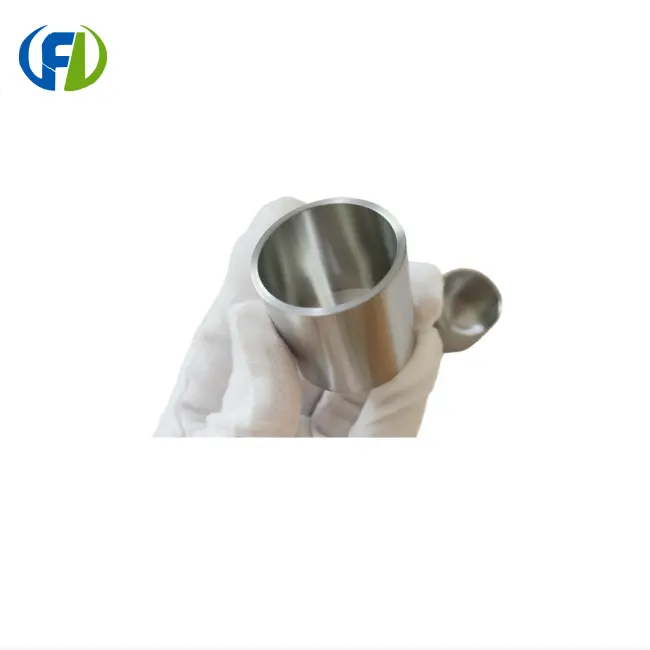
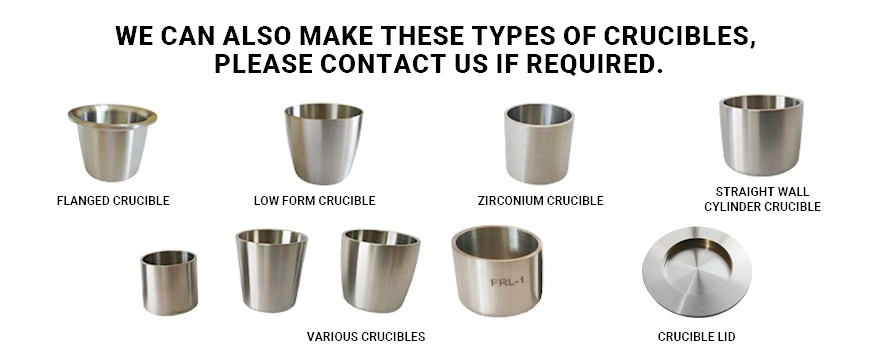
Understanding the 2mm Thick Zirconium Crucible
The 2mm thick zirconium crucible is a big step forward in materials science applications when it comes to lab tanks made to withstand harsh circumstances. This vessel is usually made from Zirconium 702 (UNS R60702) and meets ASTM B550/B551 standards. Its walls are all 2.0 millimeters thick, which was picked on purpose to meet important industrial tasks.
What Defines This Specialised Laboratory Vessel?
The 2 mm thick zirconium crucible is a strong device made for analysis of fusion processes that are very demanding. Its design solves three major problems that purchasing managers in metallurgy, geochemical exploration, and electronics manufacturing face on a regular basis: stopping thermal deformation during rapid heating cycles; superior resistance to corrosive alkaline environments where normal materials fail; and superior performance at a lower cost compared to platinum vessels that can cost ten times more.
The makeup of the material usually keeps purity levels of Zr + Hf above 99.2%, making sure that there isn't much contamination from minor elements. This is an important thing to keep in mind for sensitive gravimetric analysis and ICP-MS sample preparation. This level of chemical cleanliness has a direct effect on the accuracy of the analysis, especially when samples are being prepared for XRF bead analysis or atomic absorption spectroscopy.
Key Material Properties That Matter
Zirconium crucibles with walls that are 2mm thick have physical properties that make them useful in commercial settings. With a density of about 6.51 g/cm³ and a melting point of 1855°C, these tanks can work at temperatures up to 900°C for short periods of time without damage to their structure. The thermal conductivity of about 22 W/(m·K) makes sure that heat is spread evenly across the strengthened profile. This stops hot spots that happen in thinner designs and causes them to fail early.
Chemical protection is one of the most important qualities. It is very resistant to hydrochloric acid, sulphuric acid, nitric acid, and most other chemical acids. What makes zirconium unique is that it is very resistant to liquid alkalis, such as potassium hydroxide, sodium hydroxide, and the very strong mixtures of sodium peroxide and sodium carbonate that are used in fusion chemistry. This toughness comes from an effective self-healing oxide layer that makes the surface almost impossible for chemicals to attack, except for hydrofluoric acid.
Typical Working Environments
The industries that use these crucibles have to work in tough environments. Geochemical labs that work with refractory materials like chromite, zircon, and rutile depend on the 2mm wall thickness to survive the strong exothermic reactions that happen during peroxide fusions. Metallurgical testing labs use them to dissolve superalloys and steel samples with alkali hydroxides. Nickel or iron crucibles would taint the results of the analysis if they got on them. Automated XRF bead preparation systems work better because they can handle high temperatures without phosphate or borate melt adhesion, which keeps sample batches from getting contaminated with each other.
Durability and Lifespan of 2mm Thick Zirconium Crucibles
To figure out what the expected service life is, you have to look at how the design specs are translated into real-world performance. The increased wall thickness of the 2mm thick zirconium crucible is directly linked to longer operating longevity through a number of different processes.
How Thickness Impacts Wear Resistance?
The 2mm diameter acts as a backup when it is used over and over again. Molten alkalis rub against the vessel walls during each fusion cycle, wearing away the surface on a microscopic level. Thinner crucibles—usually 0.6mm to 1.0mm—achieve critical thickness loss very quickly after 20 to 30 forceful fusion cycles. This causes the structure to become weak and could fail catastrophically. However, the 2mm standard lets the material wear away slowly over 80 to 120 cycles before it needs to be replaced, though this depends on the conditions of the fusion and the repair procedures.
When working with samples that have been treated with sodium peroxide at high temperatures, this wear protection is very helpful. Because peroxide decomposition gives off heat, it causes localised thermal stress that speeds up the breakdown of materials. Having thicker walls absorbs this stress without affecting the structure of the tank, keeping the crucible's dimensions stable over its long service life.
Operational Conditions Affecting Longevity
The frequency of temperature changes has a big effect on longevity. When temperatures rise above 50°C per minute and then drop just as quickly, it can cause thermal shock in some materials. But zirconium's low coefficient of thermal expansion makes these extreme changes possible. This natural flexibility is increased by the 2mm width, which better spreads out temperature differences than smaller profiles.
Another important factor is the amount of chemical exposure. When something is constantly in touch with liquid sodium peroxide at 600°C, the conditions are more hostile than when sodium carbonate fuses on and off at 400°C. The bigger wall design keeps the protected oxide layer regenerating even when attacked for a long time, while thinner wall designs allow the oxide to break through and speed up base metal corrosion.
Maintenance Best Practices
When you handle crucibles the right way, they last a lot longer. Thermal shock damage can be avoided by letting the system cool down slowly after each fusion cycle. Instead of metal tools that scratch the protective oxide layer, soft brushes should be used for mechanical cleaning. Periodic light sanding with fine grit removes oxide buildup without removing too much material. The 2mm thickness allows this to be done over and over again during repair processes.
When things are stored in places with controlled humidity, air rusting doesn't happen during downtime. When dealing with hands, mechanical denting can be avoided by putting pressure on the reinforced rim areas instead of the sides. With these simple rules and the 2mm construction's natural longevity, they usually last 18 to 24 months of useful service in analytical labs that do a lot of work.
Thickness Comparison: Trade-offs and Selection
When you compare 1mm, 2mm, and 3mm choices, you can learn about important buying factors. The 1mm version moves heat faster and costs less, but it's not as durable, so it can only be used in low-intensity situations with light flux ratios. The 3mm choice lasts the longest, but it's much more expensive and less thermally efficient, so it's only good for specific uses that need the longest reliability.
In most manufacturing settings, the 2mm standard is the best middle ground. It has the right amount of heat transfer rates for efficient fusion processes and the right amount of sturdiness for long-term, cost-effective use. Because of this balance, it is the best option for buying leaders who want to cut costs without lowering the standard of analysis or slowing down the lab.
Procurement Considerations for 2mm Thick Zirconium Crucibles
To get high-performance crucibles, you need to do smart supplier reviews and know how the market works. A good buying process for a 2mm thick zirconium crucible strikes a balance between quality control and lowering costs.
Identifying Trustworthy Suppliers
Quality approvals are important for making sure that material specs are met. Material test records (MTRs) from reputable makers show the chemical makeup, mechanical qualities, and compliance with ASTM standards of the product. Professionals in charge of buying things should give preference to sellers who can be fully tracked from where the raw materials come from to the final review.
The site of a factory affects both the consistency of quality and the dependability of the supply chain. Suppliers who work close to where the raw materials come from often get better prices without sacrificing quality. In China's Baoji City, which is known as the "Titanium Valley", there is a lot of skill in grinding and making things out of zirconium. Firms that have been around for a while in this area usually keep up quality systems that meet international standards for buying, while also keeping prices low.
There is a strong link between operating experience, customer feedback, and brand reliability. Precision metal manufacturing skills, including a 2mm thick zirconium crucible, have been shown by suppliers to the semiconductor, medical device, and aircraft businesses. By asking for customer examples and reading case studies, you can get a good idea of how well a company does in tough situations.
Market Pricing and Customisation Options
Prices for standard 2mm zirconium crucibles range from average to high-end, based on their size, capacity, and order number. Buying in bulk often gets you discounts of 15–25%, which makes volume agreements a good deal for places with a lot of work to do. Buying choices should compare unit cost to total cost of ownership, which includes how long the item is expected to last and how often it needs to be replaced.
Being able to customise adds a lot of value to specific apps. Process improvement is possible when manufacturers can make non-standard sizes, special capacities, or changed geometries. Having the option to choose rim shapes, wall thicknesses, or built-in handle features can make operations run much more smoothly.
Logistics and Supply Chain Management
Lead times vary a lot depending on how much inventory is available and how much customization is needed. Most standard setups ship within two to three weeks. Custom orders, on the other hand, may need six to eight weeks to be made and checked for quality. This can take an extra one to three weeks based on where the package is going and how long it takes to clear customs.
Supply breakdown risks can be reduced by building relationships with providers who offer stable inventory positions. Using procurement strategies that include safety stock levels and storing prices to keep operations going even when the supply chain changes is important. In settings where production is always changing, suppliers who offer flexible order numbers and quick responses are operationally advantageous.
Maximising the Value of Your 2 mm Thick Zirconium Crucible
To turn the features of a material into practical benefits, you need to know what the application needs and put in place the right use strategies for your 2mm thick zirconium crucible.
Real-World Industry Applications
Zirconium crucibles are used a lot to prepare samples in geochemical laboratories that do mineral research. When working with chromite ores using sodium peroxide fusion, which creates very high temperatures and harsh chemical conditions, a 2mm diameter is necessary. Increasing the lifespan of the crucible directly lowers running costs while keeping the analytical accuracy needed for evaluating resources.
These tanks are used for alkaline decomposition processes in metallurgical testing labs that look at superalloy compositions. Accurate measurement of trace elements is possible when high-nickel and cobalt-containing metals can be processed without contaminating the crucible. After switching from thin-walled options to 2mm ones, one aerospace maker saw a 40% drop in the cost of preparing samples. This was because the average lifespan of the crucibles increased from 6 months to 18 months.
The making of XRF beads is another very useful use. The temperature stability and chemical resistance of 2mm zirconium crucibles are huge benefits for constant automated fusion systems. Consistent heat distribution stops flux binding problems that happen with smaller vessels. This means that there is no need for crucible cleaning downtime, and contamination from one sample to the next is kept below detection limits.
Emerging Technology Trends
New discoveries in material science keep making zirconium crucibles, such as the 2mm thick zirconium crucible, work better. Controlling the fine structure of the grains during production improves their mechanical properties without changing their chemical makeup. These changes to the microstructure make it more resistant to thermal shock and increase the wear life during temperature cycles.
Crucibles with tighter size limits and more uniform wall thickness are made using advanced manufacturing methods, such as precision forming and controlled atmosphere heat treatment. These changes make the temperature performance more consistent and lessen the performance difference between units. This is very important for automated systems with multiple stations that need all the crucibles to behave the same way.
New developments in surface cleaning show hope for making things last even longer. Controlled oxidation processes make defensive layers that are stronger and heal better after being exposed to chemicals. Although they are still in the study phase, these treatments may eventually add another 20 to 30 per cent to the already amazing longevity of 2 mm configurations.
Conclusion
The question of whether 2 mm-thick zirconium crucibles last longer is answered definitively by both basic material science concepts and real-world operating experience. The reinforced wall design gives it a significantly longer service life than thinner options, usually lasting 80 to 120 aggressive fusion cycles compared to 20 to 30 for normal gauges. This longevity comes from a number of things, including better wear resistance thanks to a thin layer that is used as a sacrifice, better thermal stress distribution that stops warping, and structural integrity that keeps the protective oxide layer working properly for longer periods of time. When purchasing, professionals look at different crucible choices. The 2mm standard offers the best mix of performance, longevity, and cost-effectiveness for demanding uses in geochemical analysis, metallurgical testing, and materials evaluation.
FAQ
1. Does a 2mm thickness improve thermal resistance?
The 2 mm wall thickness improves heat stability rather than the highest temperature that it can handle. All grades of zirconium have melting points around 1855°C, but the thicker shape spreads temperature differences more evenly when it is heated and cooled. This even spread of heat stops hot spots from forming and lowers the risk of thermal shock during sudden changes in temperature, which can happen when moving crucibles from the oven to the cooling station. In real life, this means that the structure stays strong even after repeated thermal cycles that would bend weaker vessels.
2. What safety precautions should be taken when using zirconium crucibles with corrosive chemicals?
Zirconium is very resistant to most acids and alkaline substances. However, hydrofluoric acid is one of the few that it really doesn't like, and it quickly attacks it, causing dangerous reactions. Always make sure that chemicals can be mixed before using them. When working with molten fluxes, it is still important to wear the right safety gear, like face masks, heat-resistant gloves, and protective clothing. Because sodium peroxide fusion gives off heat, it needs to be heated at controlled rates and have enough air flow. Even though zirconium is chemically stable, standard safety rules for working with high temperatures and toxic materials always apply.
3. What is the average lifespan in typical laboratory conditions?
Service life depends on how often it is used and how well it is maintained. Under normal conditions, involving sodium carbonate fusion at 400–500°C and following the right handling procedures, 2mm zirconium crucibles usually last 18–24 months in places that process 50–100 samples every week. High-intensity activities at 600°C using sodium peroxide may shorten the lifespan to 12 to 15 months, but it is still much longer than thin-walled options. Recommended care methods, such as slowly cooling, gentle cleaning, and regular polishing, constantly increase operational life toward the upper range of these goals.
Partner with a Trusted 2mm Thick Zirconium Crucible Supplier
To get reliable, high-performance lab tanks, you need to work with experienced makers who are dedicated to providing the best quality and service. Baoji Freelong New Material Technology Development Co., Ltd. is in China's Titanium Valley and makes 2mm thick zirconium crucibles and other refractory metal goods with great accuracy for demanding analysis uses all over the world. Our zirconium crucibles are 2mm thick and strictly follow ASTM B550/B551 standards. They are durable and chemically resistant, which is what your processes need. We have long-term relationships with research, chemical processing, and aircraft institutions in Australia, Korea, Germany, the US, and other countries around the world. We promise that your buying experience will meet the highest professional standards thanks to our dedication to quality assurance and quick customer service. Email jenny@bjfreelong.com to talk about your unique needs and find out how our technical knowledge and production skills can help you improve the way you do your analysis.
References
1. ASTM International. (2019). ASTM B550-17: Standard Specification for Zirconium and Zirconium Alloy Strip, Sheet, and Plate. West Conshohocken, PA: ASTM International.
2. Reed, T.B. (2018). Fusion Methods in Sample Preparation for Elemental Analysis: Chemistry, Materials Selection, and Practical Application. Boston: Academic Press.
3. Garverick, L. (2017). Corrosion in the Petrochemical Industry: Second Edition. Materials Park, OH: ASM International.
4. Thompson, M. & Walsh, J.N. (2020). Handbook of Inductively Coupled Plasma Spectrometry: Fourth Edition. London: Springer Publishing.
5. Lütjering, G. & Williams, J.C. (2016). Engineering Materials and Processes: Titanium and Zirconium. Berlin: Springer-Verlag.
6. Cox, B. (2015). Zirconium: Physico-Chemical Properties of its Compounds and Alloys in Industrial Applications. International Atomic Energy Agency Technical Reports Series No. 368.

_1767939158659.png)
_1745476094548.webp)
Learn about our latest products and discounts through SMS or email