- English
- French
- German
- Portuguese
- Spanish
- Russian
- Japanese
- Korean
- Arabic
- Greek
- German
- Turkish
- Italian
- Danish
- Romanian
- Indonesian
- Czech
- Afrikaans
- Swedish
- Polish
- Basque
- Catalan
- Esperanto
- Hindi
- Lao
- Albanian
- Amharic
- Armenian
- Azerbaijani
- Belarusian
- Bengali
- Bosnian
- Bulgarian
- Cebuano
- Chichewa
- Corsican
- Croatian
- Dutch
- Estonian
- Filipino
- Finnish
- Frisian
- Galician
- Georgian
- Gujarati
- Haitian
- Hausa
- Hawaiian
- Hebrew
- Hmong
- Hungarian
- Icelandic
- Igbo
- Javanese
- Kannada
- Kazakh
- Khmer
- Kurdish
- Kyrgyz
- Latin
- Latvian
- Lithuanian
- Luxembou..
- Macedonian
- Malagasy
- Malay
- Malayalam
- Maltese
- Maori
- Marathi
- Mongolian
- Burmese
- Nepali
- Norwegian
- Pashto
- Persian
- Punjabi
- Serbian
- Sesotho
- Sinhala
- Slovak
- Slovenian
- Somali
- Samoan
- Scots Gaelic
- Shona
- Sindhi
- Sundanese
- Swahili
- Tajik
- Tamil
- Telugu
- Thai
- Ukrainian
- Urdu
- Uzbek
- Vietnamese
- Welsh
- Xhosa
- Yiddish
- Yoruba
- Zulu
Best 702 Zirconium Crucible With Flange for Vacuum Use
In the chemical, electronics, and military industries, the 702 Zirconium Crucible with Flange has been used for years to find precise materials for high-temperature vacuum processing. This special tank is made of commercially pure zirconium (UNS R60702) and has an integrated flange design that seals completely, resists rust very well, and keeps its shape when other materials fail. It's important to know what makes this type of crucible different, as requirements for material cleanliness and process stability get stricter.
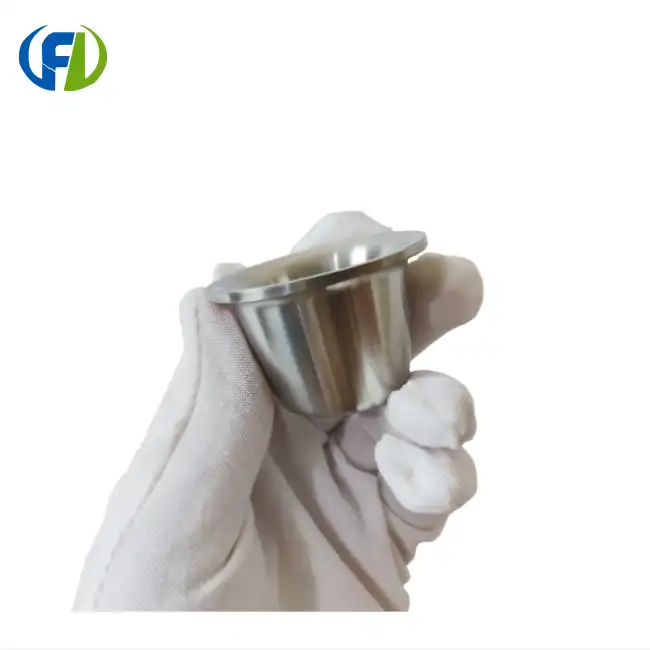
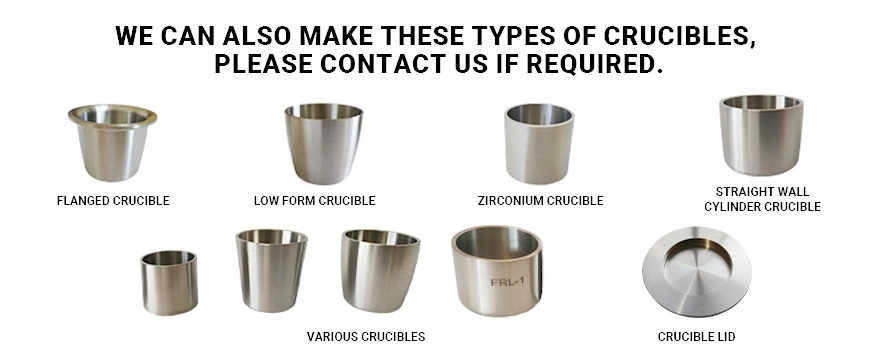
Understanding the 702 Zirconium Crucible With Flange: Specifications and Benefits
Engineers face certain problems when vacuum processing, and the design intelligence behind 702 Zirconium Crucibles with Flange units solves those problems. We make these crucibles to meet strict ASTM B550/B551 standards at Baoji Freelong New Material Technology Development Co., Ltd. This makes sure that every unit works the same way in tough conditions.
Core Material Properties That Matter
The materials that make up a high-performance furnace are what make it work. Our 702 Zirconium Crucible With Flange units are made from the UNS R60702 metal, which naturally has about 4.5% hafnium and a Zr+Hf content of over 99.2%. This mix makes an oxide layer that can repair itself and stand up to harsh chemical conditions, such as hot hydrochloric acid, sulphuric acid that is up to 70% concentrated, and caustic alkaline solutions. The material has a density of 6.51 g/cm³ and a melting point close to 1852°C. This lets it work for a long time in vacuum environments where ceramic options would break or degrade when heated and cooled.
The thermal conductivity is about 22 W/m·K, which makes it easy for heat to be spread evenly throughout the crucible body. The relatively low thermal expansion rate of 5.8 µm/m·°C keeps changes in size to a minimum as temperatures change. This protects the integrity of the vacuum seal and lowers the risk of thermal shock. In silicon wafer processing and rare earth polishing, these physical factors directly affect how reliably the machines work.
Why Flange Design Changes Everything
A regular beaker can be turned into a precision vacuum part by adding a ring to it. The flange surface is machined to tight tolerances according to ISO 2768-m standards. It is flat within 0.05 mm of variation, making it a safe place for O-ring or elastomer seals to sit. Because of this technical detail, the 702 Zirconium Crucible With Flange can be used as a containment box inside bigger vacuum furnace systems. This keeps volatile off-gassing from getting on the heating elements or other equipment nearby.
Flange coupling is especially helpful for automated labs. Robotic handling systems can grab the rim without touching the body of the crucible, so there is no chance of pollution during sample transfer. Suspension mounting through the joint keeps the bottom from touching the furnace surfaces directly. This keeps the sample from getting hot spots and makes the temperature more even across the whole thing. All of these benefits add up to measured gains in process efficiency and equipment life.
Applications Driving Demand
During thin-film deposition processes, where the purity of the material decides the quality of the result, semiconductor makers use 702 Zirconium Crucible With Flange vessels. The chemical inertness of the crucible stops trace metal contamination that would damage the electronic qualities of the final devices. Chemical synthesis plants use these containers for harsh reactions with mineral acids, since platinum is too expensive and stainless steel rusts too quickly. Zirconium crucibles are the standard in analytical chemistry labs that do sodium peroxide fusions because the material can handle the highly oxidising climate, and the flange makes it easy to clamp the crucible securely in automatic fusion equipment.
For heating and reducing rare earth oxides, processing plants that deal with rare earths use flanged crucibles with bigger capacities. The fact that hot products don't stick to zirconium walls makes yield recovery rates better, which has a direct effect on the costs of production. Manufacturers of aerospace parts that use vacuum heat treatment cycles rely on the crucible's stability in terms of size to get uniform metalworking results from one production run to the next.
How to Use and Maintain Your 702 Zirconium Crucible With Flange for Optimal Performance?
The life of machinery and the regularity of the process are directly affected by how it is handled and maintained. Our experience making and providing these parts has taught us the best ways to do things that make the 702 Zirconium Crucible with Flange last a lot longer.
Installation and Handling Guidelines
Before putting in a new crucible, look at the sealed surface of the flange under good lighting for any machining lines, scratches, or particles that could weaken the vacuum. Clean the surface with lint-free wipes that have been wet with isopropyl alcohol. Let the alcohol evaporate completely before putting the parts together. Choose seal materials that can handle the temperatures and chemicals in your process. Viton elastomers work well up to 200°C, while graphite or metal gaskets can handle higher temps.
When putting flange bolts or clamps into vacuum systems, tighten them to the manufacturer's specs by turning them clockwise. This will spread the load out evenly. If you tighten it too much, the flange could bend, or the seal could come out, and if you tighten it too little, leak paths can form. Place the crucible so that it doesn't touch the heating elements directly. Leave at least 5 mm of space between them to avoid burning in one area. Hold the crucible's weight through the opening instead of letting the bottom rest on the furnace's sides. This will keep the sample at the same temperature all over.
When working with zirconium crucibles, keep in mind that the material is very resistant to chemicals, but blunt force can break or damage the edges. If you want to spread the force over a larger area, use crucible tongs with cushion tips. If you drop or hit the crucible on a hard surface, the flange-covering surface will break and need to be replaced or fixed, which will cost a lot of money.
Maintenance Protocols for Extended Service
Cleaning on a regular basis stops buildup from happening, which could hurt temperature performance or spread contamination to later runs. Once it has cooled to room temperature, use warm water and light dishwashing solutions to get rid of any leftovers. For stubborn layers, you may need to soak them in diluted hydrochloric acid (10–15%), which zirconium easily avoids. Instead of rough scrubbing pads or wire brushes that damage the surface, use soft cloths or nylon brushes to clean mechanically.
Re-passivation brings back the protective oxide layer if the inside surface turns black or darker due to reduction processes. Heat the empty crucible in air at 400°C for two to three hours. This will expose the ZrO₂ surface film to oxygen, which will rebuild it. This easy process renews resistance to chemicals and often adds years to the useful life. Every three months, look closely at the flange sealing surface to see if there are any rust pits, damage from gasket materials, or changes in the surface roughness. Using dial markers to measure flatness helps find deformation before it causes problems with seals during operation.
Troubleshooting Common Issues
When vacuum leaks are found at the crucible flange, they are usually caused by a damaged gasket, a deformed flange, or particles getting on the closing surfaces. Using helium mass spectrometers to check for leaks on a regular basis helps find the exact place where the failure happened. Replace gaskets when the service life for that material says to. For example, elastomers that are subject to high temperatures break down faster than graphite options. Re-machine distorted flanges to get them back to the original flatness specs, but crucibles will need to be replaced later if too much material is removed.
When crucibles go through fast temperature changes that are too big for the material, thermal shock cracks can form. Zirconium is better at withstanding thermal shock than ceramics, but it can crack if it heats or cools faster than 50°C per minute between 300°C and 600°C. Set the temperature controls in the furnace to rise slowly, especially when the temperature goes above 550°C, which is the point at which zirconium oxidation speeds up in air. By getting rid of oxidation strains, inert gas purging or vacuum atmospheres make the thermal cycle go faster.
Problems with contamination show up as unwanted particles in treated materials. Check that the crucible wasn't used with chemicals that don't mix—some compounds make intermetallic phases with zirconium that don't go away with normal cleaning. Cross-contamination is not a problem in high-purity uses because there are dedicated crucibles for each process. Examine contamination patterns using ICP-MS to tell the difference between impurities that come from the furnace and those that come from other parts of the system.
Procurement Guide: Purchasing 702 Zirconium Crucibles With Flange
To find the right provider, you need to look at both their professional skills and their pricing. Quality materials, the ability to make changes, and the dependability of the supply chain are all important in the right relationship for sourcing the 702 Zirconium Crucible with Flange.
Identifying Qualified Suppliers
Third-party certifications from reputable makers show that their products meet world standards. While ISO 9001 certification for quality management means that processes are controlled in a planned way, ISO/IEC 17025 certification for laboratories gives even more proof that tests are done correctly. For each production lot, suppliers should easily give material certificates that show the chemical make-up through ICP-OES analysis, as well as the results of mechanical property tests and dimensional inspection records.
When customising is needed, the ability to make things is very important. Check to see if possible providers have in-house machining and making tools that can make flanges that fit your application's needs. OEM relationships with aircraft or semiconductor companies show that the company has the technical know-how to meet strict requirements. Ask customers in related fields for references, and then check in to see how happy they are with the product quality and how quickly they can get help from expert support.
Ordering Considerations and Lead Times
Standard crucible setups keep supplies on hand so that orders can be filled quickly; for popular sizes, shipping usually takes 7–14 days. Custom requirements with non-standard sizes, unique flange designs, or improved surface finishes need between 4 and 8 weeks to manufacture, based on how complicated they are. When making purchases, these dates should be taken into account, especially when helping with the start-up of a new production line or the planned shutdown of a repair area.
Through progressive discounts, volume price systems reward customers who make bigger purchases. Annual supply deals that predict needs help sellers plan production more efficiently, which often results in cost savings of 15 to 25 per cent compared to buying on the spot. Concerns about wait times are eliminated by consignment inventory arrangements in which providers keep stock at customer sites. This saves working capital, but minimum yearly amounts usually start around 50 to 100 units, based on the size of the crucible.
Shipping and Packaging Standards
Crucibles must be packed so that they don't get damaged by impacts during foreign shipping and so that the surface doesn't get dirty. Good providers cover each crucible individually in protective film, put them in rigid boxes with foam inserts, and palletise the packages so that they can be moved by forklift. Moisture protection bags with desiccant sachets protect ship freight from being exposed to humidity.
Material certifications, dimensional inspection records, and handling directions in the customer's language should all be included with orders. Declarements for dangerous materials make it clear that zirconium metal doesn't pose many shipping risks normally, but fine zirconium powder (which isn't in finished crucibles) needs to be handled in a certain way. Clear business invoices and certificates of origin make it easier to get goods through customs, which cuts down on wait times at the border.
Why Choose 702 Zirconium Crucibles With Flange for Your Vacuum Applications?
Strategically choosing materials gives you a competitive edge by making it easier to control the process, lowering the risk of contamination, and making tools last longer. 702 Zirconium Crucible With Flange units with built-in flanges offer specific advantages that add up to real gains in operations.
Because the material is so resistant to corrosion, there is no way for contaminants to get into the product, which is important for electronics and medicinal uses. When working with reactive chemicals or valuable materials, the costs of pollution are much higher than any extra money spent on zirconium over other materials. Manufacturers of aerospace parts say that switching from ceramic to zirconium crucibles for vacuum heat treatment processes cuts the rate of rejection by more than 40%. This is because there were no longer any contamination events.
Extreme durability means that parts don't need to be serviced as often, and costs for upkeep go down. Because zirconium is resistant to both high temperatures and chemicals, crucibles made of it can often be used for three to five years in difficult situations where clay alternatives need to be replaced every year. This makes buying things easier, cuts down on output stops for equipment changes, and lowers the total cost of ownership, even though the original investment was higher.
The flange shape helps keep the pressure intact, which makes process control more precise. Chamber base pressures in the 10⁻⁷ torr range are reached by semiconductor makers. This supports deposition processes that need very clean conditions. Chemical synthesis operations keep the atmosphere at exact levels, which stops oxidation or moisture contact that could lower reaction rates. Better process control directly raises the quality of the product and makes it more consistent from batch to batch.
New ideas in crucible design are focusing on making them more environmentally friendly and using better ways to make them. Using additive manufacturing lets you make complicated internal shapes that improve heat distribution while using less material. Surface covering technologies that are still being worked on promise to make surfaces even more resistant to chemicals for even harsher conditions. As businesses move toward cleaner science and the circular economy, the fact that zirconium crucibles can be recycled makes them a better choice than disposable ones.
Conclusion
Selecting the optimal crucible for vacuum applications requires balancing technical performance against commercial considerations. The 702 Zirconium Crucible With Flange has been shown to work reliably in high-temperature, corrosive conditions where the quality of the material is key to success. Its built-in flange design allows for hermetic closing, which is necessary for controlled atmospheres. Zirconium's high chemical resistance protects process purity in demanding uses like making semiconductors and refining rare earths. Even though they cost more, zirconium solutions are always the best choice when lifetime costs, contamination risks, and operating freedom are taken into account. Partnering with qualified suppliers offering material certifications, customisation options, and quick expert support maximises the value these specialised components deliver to your operations.
FAQ
1. What distinguishes flanged designs from standard zirconium crucibles?
The built-in lip has a precision-machined closing surface that lets vacuum systems close tightly. Standard crucibles don't have this feature, so they need to be supported from the outside and can't keep out the weather. Flanged versions work as containment tanks that stop volatile off-gassing contamination and allow robotic handling by holding the rim.
2. How does flange integration improve vacuum sealing and durability?
Machined flatness within 0.05 mm tolerances makes gasket seats for O-rings or rubber seals that work well, keeping the vacuum tight up to 10⁻⁷ torr. During tightening, the flange spreads out the mechanical loads so that stress doesn't build up in one place and damage the crucible body. Suspension installation through the joint keeps the bottom from touching the heating elements, which lowers thermal stress and makes the product last longer.
3. What are typical lead times and minimum order quantities for bulk purchases?
Standard configurations can be shipped in 7–14 days, with a minimum order of one unit. Custom configurations, on the other hand, take 4–8 weeks, based on how complicated they are. Customers who commit to buying more than 50 units per year usually get savings ranging from 15% to 25%. Annual supply deals let high-volume users make the best use of their production schedules and possible exchange inventory arrangements.
Partner With Freelong: Your Trusted 702 Zirconium Crucible With Flange Manufacturer
Baoji Freelong New Material Technology Development Co., Ltd combines decades of metallurgical expertise with ISO-certified quality systems, delivering precision-engineered zirconium crucibles that meet the exacting standards of aerospace, semiconductor, and chemical industries worldwide. Our location in China's Titanium Valley provides unmatched access to high-quality materials and the ability to make unique things. Whether you require standard configurations for immediate delivery or custom-engineered solutions addressing unique process problems, our technical team collaborates closely to ensure specifications align precisely with your application needs. We maintain rigorous quality control throughout the whole production process. For each unit, we do PMI verification, measurement CMM inspection, and NDT testing. Reach out to jenny@bjfreelong.com to talk to our engineering team about your needs, get full technical datasheets, or get cheap quotes for large orders. We are a trusted 702 Zirconium Crucible With Flange supplier with users in six countries, and we want to be your long-term partner for mission-critical materials.
References
1. ASTM International. "Standard Specification for Zirconium and Zirconium Alloy Ingots for Nuclear Application" (ASTM B350/B350M-20). West Conshohocken, PA: ASTM International, 2020.
2. Chandler, H. E., ed. "Heat Treater's Guide: Practices and Procedures for Nonferrous Alloys." Materials Park, OH: ASM International, 1996.
3. Lide, David R., ed. "CRC Handbook of Chemistry and Physics, 95th Edition." Boca Raton, FL: CRC Press, 2014.
4. Massalski, Thaddeus B., ed. "Binary Alloy Phase Diagrams, 2nd Edition, Vol. 3." Materials Park, OH: ASM International, 1990.
5. Roskill Information Services. "Zirconium: Global Industry, Markets & Outlook 2023." London: Roskill, 2023.
6. Trethewey, Kenneth R. and Chamberlain, John. "Corrosion for Science and Engineering, 2nd Edition." Harlow, UK: Longman Scientific & Technical, 1995.

_1774405059438.png)
_1745829443030.webp)
Learn about our latest products and discounts through SMS or email