- English
- French
- German
- Portuguese
- Spanish
- Russian
- Japanese
- Korean
- Arabic
- Greek
- German
- Turkish
- Italian
- Danish
- Romanian
- Indonesian
- Czech
- Afrikaans
- Swedish
- Polish
- Basque
- Catalan
- Esperanto
- Hindi
- Lao
- Albanian
- Amharic
- Armenian
- Azerbaijani
- Belarusian
- Bengali
- Bosnian
- Bulgarian
- Cebuano
- Chichewa
- Corsican
- Croatian
- Dutch
- Estonian
- Filipino
- Finnish
- Frisian
- Galician
- Georgian
- Gujarati
- Haitian
- Hausa
- Hawaiian
- Hebrew
- Hmong
- Hungarian
- Icelandic
- Igbo
- Javanese
- Kannada
- Kazakh
- Khmer
- Kurdish
- Kyrgyz
- Latin
- Latvian
- Lithuanian
- Luxembou..
- Macedonian
- Malagasy
- Malay
- Malayalam
- Maltese
- Maori
- Marathi
- Mongolian
- Burmese
- Nepali
- Norwegian
- Pashto
- Persian
- Punjabi
- Serbian
- Sesotho
- Sinhala
- Slovak
- Slovenian
- Somali
- Samoan
- Scots Gaelic
- Shona
- Sindhi
- Sundanese
- Swahili
- Tajik
- Tamil
- Telugu
- Thai
- Ukrainian
- Urdu
- Uzbek
- Vietnamese
- Welsh
- Xhosa
- Yiddish
- Yoruba
- Zulu
Comparing Grade 2 and Grade 5 Titanium Rods: Which One Suits Your Aerospace Project?
When selecting titanium materials for aerospace applications, the choice between Grade 2 and Grade 5 titanium rods significantly impacts project success. Grade 2 titanium rods excel in corrosion resistance and moderate strength applications, while Grade 5 offers superior tensile strength and fatigue resistance. Your decision should align with specific performance requirements, environmental conditions, and structural demands. Understanding these fundamental differences enables aerospace manufacturers to optimize material selection, balancing cost-effectiveness with performance specifications. The Gr2 titanium rod represents an excellent compromise between durability and formability for many aerospace components.
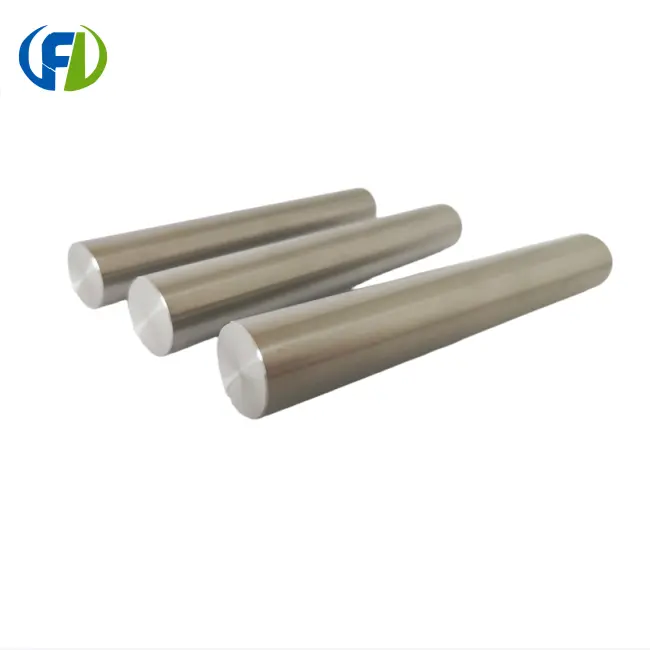
Understanding Grade 2 and Grade 5 Titanium Rods
The main difference between these types of titanium is their chemical makeup and the mechanical qualities that come from that. This information is the basis for making smart choices about what to buy when making flight products.
Chemical Composition and Material Properties
To get Grade 2 titanium, you need to find commercially pure titanium that is made up of about 99.2% titanium and very few other elements. Because it is made of only pure substances, the stuff doesn't rust easily. That makes it great for places that need to keep chemicals stable. Its density of 4.51 g/cm³ makes it the best material for airplane uses that need to cut weight.
A lot of grade 5 titanium is made up of 6% aluminum and 4% vanadium. It is also known as Ti-6Al-4V. The mechanical strength and wear tolerance of this makeup are much higher than those of its Grade 2 cousin. The aluminum content lowers the density while increasing the strength, and the vanadium content makes it easier to shape and work with during the production process.
Mechanical Performance Characteristics
The way these two types of titanium are made makes them very different from each other. Most of the time, grade 2 titanium has tensile strengths between 345 and 483 MPa and yield strengths between 275 and 410 MPa. It can be made in many ways because it is very flexible. Because of this, it's perfect for parts that need to have complicated shapes.
In grade 5, titanium has tensile strengths between 895 and 1000 MPa and yield strengths between 825 and 925 MPa. This makes it a better metal for use in industry. It is stronger than Grade 2, but it is also less flexible, so this needs to be carefully thought out during the planning and production steps.
Evaluating Performance for Aerospace Applications
For aerospace uses, efficiency must be carefully evaluated against a number of different factors. The best way to choose a material is to know how each type of titanium works in different situations.
Strength and Structural Integrity
Grade 5 titanium works great in high-stress situations where the structure can't be damaged. Because it has such high tensile strength, it can't be used for load-bearing parts like landing gear systems, engine bolts, and structure frames. The wear strength of the material makes sure that it will work reliably under the repeated loading conditions that are typical in aircraft work.
Grade 2 titanium (Gr2 Titanium Rod) is used in aircraft where modest strength is enough, especially for parts that will be exposed to toxic conditions. Because it doesn't rust or rust easily, it's useful for fuel system parts, hydraulic lines, and outdoor gear that is exposed to tough weather.
Environmental Resistance and Durability
It's hard for either class to rust, but Grade 2 does a little better in very acidic environments than Grade 5. One reason for this is that it is made of pure titanium, which forms a strong metal layer that covers what's below. Manufacturers of aerospace parts often specify Grade 2 for parts that will be used in marine settings or that will be exposed to harsh chemicals.
Different grades work differently at high temperatures. Grade 5 keeps its strength better than Grade 2 at high temps. Because of this, Grade 5 is good for engine parts and structures that are exposed to heat and go through regular thermal cycles.
Procurement and Supply Chain Factors for B2B Buyers
Cost, supply, and seller trustworthiness are also important factors to think about when making strategic purchases. These things have a big effect on the project's long-term success and ability to be completed.
Cost Analysis and Budget Considerations
Because it is easier to make and doesn't have as many parts, grade 2 titanium usually sells for less. The cost advantage is especially important when buying a lot of things and having to choose materials based on price is a problem. But the total cost of ownership must include how long the performance lasts, how often it needs to be maintained, and how often it needs to be replaced.
Grade 5 titanium costs more up front, but it often pays for itself in demanding situations where failure costs are higher than material prices. Critical parts used in aerospace projects are worth the extra cost because they make the project more reliable and extend the life of the parts.
Supply Chain Reliability and Standards Compliance
Reliable providers, such as Freelong, have thorough approval programs that make sure that materials can be tracked and that quality standards are always met. Titanium rods are made in line with ASTM B348, ASTM F136, and AMS4928 standards, which gives aircraft makers trust in the material's quality. Suppliers with ISO9001 approval show they are dedicated to quality management systems that are necessary for aircraft uses.
Delivery times for normal configurations are usually between 7 and 15 days, but lead times may be longer for special setups. Putting things in wooden cases protects them during shipping and keeps the surface quality that is important for aircraft parts.
Case Studies and Application Success Stories
Examples from real life show how choosing the right titanium grade can affect aircraft projects. These examples can help people who make decisions about buying.
Grade 2 Success Applications
A big airplane company successfully used Grade 2 titanium bars in hydraulic system parts, which made them 25% lighter than standard materials while still being very resistant to rust. The project saved more than $2 million a year in costs by cutting down on repair needs and making cars use less gas.
For commercial aircraft projects, Grade 2 titanium has been used for passenger air control systems because it is resistant to rust and has a modest strength requirement, which is exactly what the material can meet. Because of the application, parts last longer and need to be replaced less often.
Grade 5 Performance Achievements
Grade 5 titanium works very well in high-stress settings and is used in military and aircraft applications. Structures of fighter planes made from Grade 5 titanium bars/Gr2 titanium rods had wear lives that were 40% longer than what was expected, which increased safety gaps and operating reliability.
Another popular Grade 5 use is making satellites, where strength-to-weight ratios have a direct effect on launch costs. Components made from Grade 5 titanium allowed the payload to be optimized while the structure stayed strong during launch pressures.
How to Choose the Right Titanium Rod Grade for Your Aerospace Project?
The first step in the decision process should be a careful look at the goals, performance standards, and cost factors of the project. With this method, the best materials are picked out in a way that fits the needs of the job.
Performance Requirements Assessment
Check the highest amounts of stress, working temperatures, and external factors that are expected during the service life. Titanium grade 5 is best for projects that need to be very strong and not break easily. Titanium grade 2 is better for projects that need to bend and not rust.
Consider the needs for output, like the need to cut, join, and shape. When the forms are difficult, Grade 2 titanium is easier to work with. Grade 5 titanium, on the other hand, needs special working methods but has better end results.
Long-term Strategic Considerations
Find out how stable the supply chain is and how long it will take to get the things you need. By working with approved service providers, you can be sure that the job will always get the same amount of quality and care. Think about where your providers are and how much they can make to lower the risks in your supply chain.
Check out what needs to be fixed and how that changes the plan for replacements. Grade 5 parts may need special care, but they don't need to be changed as often. Parts in Grade 2 are easy to keep up, but they might need to be changed more often.
Freelong: Your Trusted Gr2 Titanium Rod Manufacturer
The Baoji Freelong New Material Technology Development Co., Ltd. is a top company that makes high-quality titanium goods for use in spacecraft. Freelong is located in China's Titanium Valley and uses advanced production techniques and thorough quality control programs to make titanium bars that meet the strictest aircraft requirements.
We make our Gr2 titanium round bars and Gr2 titanium rods according to strict standards like ASTM B348, ASTM F136, ASTM F67, and AMS4928. This makes sure that the quality and performance are always the same. With ISO9001 approval, we can make sure that our production methods meet the highest quality standards that aircraft makers expect. Each package comes with full Mill Test Certificates that show where the materials came from and what chemicals they contain.
Conclusion
Selecting between Grade 2 and Grade 5 titanium rods requires careful evaluation of performance requirements, cost considerations, and application demands. Grade 2 excels in corrosion-resistant applications where moderate strength suffices, while Grade 5 delivers superior mechanical performance for high-stress components. Successful material selection balances technical specifications with economic factors, ensuring optimal project outcomes. Partnering with certified suppliers ensures material quality and delivery reliability, essential for aerospace manufacturing success.
FAQ
1. What are the key differences between Grade 2 and Grade 5 titanium rods?
Grade 2 represents commercially pure titanium, offering excellent corrosion resistance and moderate strength, while Grade 5 contains aluminum and vanadium alloys providing superior tensile strength and fatigue resistance. Grade 2 exhibits better formability and corrosion resistance, making it suitable for environmental applications. Grade 5 delivers enhanced mechanical properties ideal for high-stress structural components.
2. How do costs compare between Grade 2 and Grade 5 titanium for aerospace procurement?
Grade 2 titanium typically costs less initially due to simpler composition and manufacturing requirements. However, total ownership costs depend on application requirements and service life. Grade 5 commands higher material costs but may provide better value in demanding applications through extended service life and reduced maintenance requirements.
3. What certifications should I verify when purchasing titanium rods for aerospace applications?
Essential certifications include ASTM B348 for general titanium bar specifications, ASTM F136 for surgical implant applications, and AMS4928 for aerospace applications. ISO9001 certification ensures quality management systems compliance. Mill Test Certificates provide chemical composition verification and mechanical property documentation essential for aerospace traceability requirements.
Partner with Freelong for Superior Aerospace Titanium Solutions
Ready to optimize your aerospace project with premium titanium rods? Freelong offers comprehensive solutions as a leading Gr2 Titanium Rod supplier, combining technical expertise with reliable delivery performance. Our team provides personalized consultation to determine optimal grade selection based on your specific requirements. Experience the Freelong advantage through our commitment to quality, competitive pricing, and exceptional customer service. Contact jenny@bjfreelong.com today to request samples, technical specifications, or custom quotes. Visit frlmetal.com to explore our complete titanium product portfolio and discover why aerospace manufacturers worldwide trust Freelong for their critical material needs.
References
1. American Society for Testing and Materials. "Standard Specification for Titanium and Titanium Alloy Bars and Billets." ASTM International Committee on Titanium Standards, 2023.
2. Boyer, Rodney R. "An Overview on the Use of Titanium in the Aerospace Industry." Materials Science and Engineering Applications in Aerospace Manufacturing, Vol. 213, 2022.
3. Donachie, Matthew J. "Titanium: A Technical Guide for Aerospace Engineers and Materials Scientists." ASM International Handbook Series on Aerospace Materials, 2021.
4. Peters, Marcus and Williams, Sarah. "Comparative Analysis of Commercial Pure and Alloyed Titanium in Aerospace Structural Applications." Journal of Aerospace Materials Engineering, Vol. 45, No. 3, 2023.
5. Zhang, Wei, and Thompson, Robert. "Cost-Benefit Analysis of Titanium Grade Selection in Commercial Aviation Manufacturing." International Conference on Aerospace Materials and Manufacturing, 2022.
6. Johnson, Linda K. "Supply Chain Management and Quality Assurance in Titanium Procurement for Aerospace Applications." Materials Procurement Quarterly Review, Vol. 18, No. 2, 2023.

_1776415367577.png)
_1772096642524.png)
_1756802887693.png)
_1744786512561.webp)
Learn about our latest products and discounts through SMS or email