- English
- French
- German
- Portuguese
- Spanish
- Russian
- Japanese
- Korean
- Arabic
- Greek
- German
- Turkish
- Italian
- Danish
- Romanian
- Indonesian
- Czech
- Afrikaans
- Swedish
- Polish
- Basque
- Catalan
- Esperanto
- Hindi
- Lao
- Albanian
- Amharic
- Armenian
- Azerbaijani
- Belarusian
- Bengali
- Bosnian
- Bulgarian
- Cebuano
- Chichewa
- Corsican
- Croatian
- Dutch
- Estonian
- Filipino
- Finnish
- Frisian
- Galician
- Georgian
- Gujarati
- Haitian
- Hausa
- Hawaiian
- Hebrew
- Hmong
- Hungarian
- Icelandic
- Igbo
- Javanese
- Kannada
- Kazakh
- Khmer
- Kurdish
- Kyrgyz
- Latin
- Latvian
- Lithuanian
- Luxembou..
- Macedonian
- Malagasy
- Malay
- Malayalam
- Maltese
- Maori
- Marathi
- Mongolian
- Burmese
- Nepali
- Norwegian
- Pashto
- Persian
- Punjabi
- Serbian
- Sesotho
- Sinhala
- Slovak
- Slovenian
- Somali
- Samoan
- Scots Gaelic
- Shona
- Sindhi
- Sundanese
- Swahili
- Tajik
- Tamil
- Telugu
- Thai
- Ukrainian
- Urdu
- Uzbek
- Vietnamese
- Welsh
- Xhosa
- Yiddish
- Yoruba
- Zulu
Comparing High-Density Zirconium Crucibles vs. Graphite Crucibles: Which is Better?
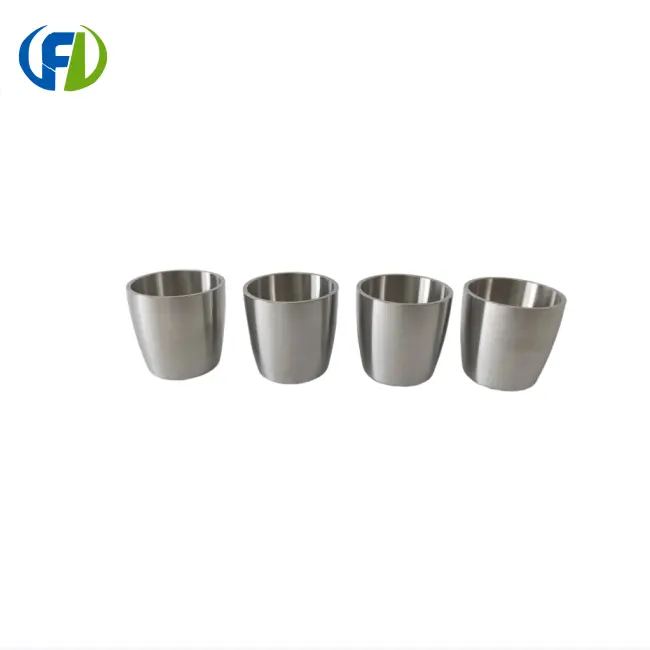
Which high-density zirconium crucibles or graphite crucibles you choose depends on the needs of your application. A high-density zirconium crucible works great in places that need to be very pure, resistant to rust, and chemically stable. This makes it perfect for melting explosive metals and using them in semiconductors. For non-reactive metal processing, graphite crucibles are more cost-effective and better at withstanding heat shock. Knowing these basic differences helps companies that make aeroplane parts, chemicals, and research facilities make smart buying choices that have a direct effect on the quality of their products and how efficiently they run their businesses.

Understanding Crucible Materials: Core Properties That Matter
When working with high temperatures, picking the right material isn't a random process; it's an exact science. The ways that zirconium and graphite hold liquid things together are very different.
When exposed to harsh chemical conditions, high-purity zirconium shows amazing stability. This rare metal stays structurally sound at temperatures above 1800°C and doesn't rust or get contaminated. When zirconium crucibles are made correctly, their density is between 6.49 and 6.52 g/cm³. This gives them the mechanical strength to handle repeated heat cycles.
Graphite crucibles use the natural hard qualities of carbon. Their open structure lets heat move quickly, which means they use less energy when they melt. Density is usually between 1.70 and 1.85 g/cm³, which makes it much lighter than metal options.
These materials are different in three main ways:
- Zirconium doesn't react with most liquid metals or chemicals that break things down. Graphite, on the other hand, reacts with air above 450°C and some reactive metals.
- Controlling contamination: zirconium meets standards of 99.2% pure or higher; graphite may add carbon to melts.
Zirconium crucibles can withstand more than 500 thermal cycles with proper care, while graphite crucibles can usually handle 50 to 150 cycles, based on the purpose.
Zirconium crucibles keep materials from getting contaminated when you need to work with titanium alloys or explosive metals for aircraft parts. Graphite is cheaper than carbon when it comes to making copper or aluminium, where carbon pickup isn't very important.
Performance in High-Temperature Environments
The ability to handle high temperatures is what sets good crucibles apart from great ones. Testing in the real world shows performance gaps that have a direct effect on how well work goes.
High-density Zirconium Crucible stay the same size at 2200°C for long periods of time, according to data from vacuum melting processes in the lab. In 2019, researchers looked at how crucible warping changes under thermal stress. They found that after 100 heating cycles to 1900°C, zirconium objects changed their size by less than 0.3%. The low thermal expansion coefficient (5.7 × 10⁻⁶ /°C) of the material keeps it from cracking when the temperature changes quickly.
Because they have a lower thermal expansion index (2.5 × 10⁻⁶/°C), graphite crucibles are very good at withstanding thermal shock. Because of this, they can be trusted for uses that need to heat things up quickly. In inert atmospheres, they can work at temperatures up to 3000°C, which is higher than zirconium's powers in non-oxidising settings.
A study of thermal stability shows benefits that are specific to the application:
- An oxidising atmosphere has zirconium forming a safe ZrO₂ layer, and graphite oxidising quickly above 450°C.
- When there is a vacuum, both materials work well, but graphite can handle higher temperatures.
- Cycling over and over: zirconium stays structurally sound longer; graphite may get tiny cracks after a lot of use.
Testing of zirconium crucibles used to process tantalum showed that they were completely clean after 200 melt cycles, which means that the quality of the tantalum stayed at 99.95%. Comparable graphite crucibles introduced 0.02% to 0.05% carbon pollution, which is fine for some uses but a problem when making high-purity alloys.
Zirconium crucibles are reliable and protect both product quality and equipment investment when you need constant high-temperature performance in oxidising or corrosive conditions for chemical reactor uses.
Corrosion Resistance and Chemical Compatibility
In specialised manufacturing, a crucible can be either an advantage or a risk depending on how well it works with chemicals.
Corrosion resistance in zirconium stems from its unique passivation behaviour. Zirconium quickly makes a thick layer of zirconium oxide when it comes into contact with air, water, or corrosive substances. This layer keeps more damage from getting to the metal below. Zirconium corroded at rates of less than 0.1 mm/year in 98% sulphuric acid at 100°C, which is too low for commercial use.
The way that graphite resists chemicals works in a different way. Because it is a basic substance, it can stand up to most acids and bases. There are problems with compatibility with:
- Strong acids that can oxidise (nitric acid, sulphuric acid that is concentrated above 200°C)
- molten metals that react (titanium, zirconium, rare earth elements)
- Solutions that are alkaline at high temperatures
A comparison study that looked at how crucible materials break down in liquid lithium found that after 48 hours at 500°C, zirconium didn't show any measurable weathering, but graphite did have surface erosion and lithium carbide formation.
When handling battery materials, the benefits of metal crucibles become clear. Manufacturers who make lithium battery parts need clean places to melt their materials. Zirconium crucibles stop unwanted chemical processes that hurt electrochemical performance. This is very important for businesses that value battery cycle life and energy efficiency.
Zirconium's high chemical stability ensures that batch-to-batch accuracy and regulatory compliance are met when working with acidic materials or reactive metals to make medical devices.
Purity Standards and Contamination Control
Contamination microscope shows changes that are hard to see with the naked eye, but are very important for how well a product works.
Electron beam melting and vacuum arc remelting are used to make high-purity zirconium crucibles with impurity levels below 100 ppm for key elements. Some common requirements are:
- Iron level: less than 50 ppm
- Chromium level: less than 30 ppm
- Low nickel percentage (<20 ppm)
- Carbon level: less than 40 ppm
This very high purity stops unwanted alloying that changes the qualities of the material. When aerospace companies melt titanium alloys to make structural parts for aeroplanes, they can't let iron contamination go above certain levels. This is because it lowers the alloy's resistance to wear and lowers its safety gaps.
Graphite crucibles have imperfections in them that come from the raw materials and the way they were made. Even the best graphite has these things in it:
- 50–500 parts per million of ash
- 20–200 ppm of metallic impurities
- 5 to 50 parts per million sulphur
These amounts of impurities are fine for many uses, but they make it hard to make semiconductor sputtering targets or safe medical implants.
Impurity control goes beyond the makeup of the material at the start. Zirconium can't be picked up from its surroundings because it is inactive. Graphite's pores lets gases enter and leave the material while it's being heated, which adds factors that make the process less repeatable.
For research organisations to create high-temperature alloys, High-density Zirconium Crucible conditions must be able to be repeated. Variability in contamination between runs hurts the truth of the experiment and makes growth take longer.
Zirconium crucibles get rid of contamination factors that affect electrical and chemical stability, so you can get sputtering targets or thin-film coatings that are accurate in size and pure.
Cost Analysis and Long-Term Value
The initial buying price is one piece of information used to figure out the total cost of ownership.
Graphite crucibles range in price from $150 to $800, based on the size and quality. Their lower initial cost makes them appealing to businesses that are tight on cash or to uses where the crucible's natural life span is limited.
Zirconium crucibles are very expensive—usually between $2,000 and $15,000, depending on their size and purity requirements. This price is based on the cost of the metal's scarcity, the special techniques needed to make it, and the cost of the raw materials.
The following steps will help you find long-term value:
The numbers are surprising when you figure out how much it costs per melt cycle. At $8,000, a zirconium crucible that can be used 500 times costs $16 each time. A $400 graphite beaker that can be used 80 times costs $5 each time. But this easy maths doesn't take into account:
- Product loses due to pollution that needs to be reprocessed
- The costs of downtime caused by replacing crucibles often
- worth as scrap (zirconium still has a lot of worth as a recycled material)
- Costs for quality assurance caused by materials with different traits
Manufacturers of aerospace parts say that within 18 months of constant operation, the cost of contamination-related scrap from graphite crucibles was higher than the cost premium of zirconium options. By buying better crucibles, the company was able to protect its product profits and customer ties.
Recycling zirconium scrap adds a financial factor that is often missed when buying something for the first time. Zirconium crucibles that have reached the end of their useful life can still be recycled in ways that keep 40 to 60 per cent of their original value. Graphite crucibles don't help with healing very much.
Building ties with experienced zirconium crucible providers is a good way for metal distributors to get low prices without losing quality. This provides a stable supply chain that meets the needs of customers further down the line.
Application-Specific Recommendations
Mismatches that cost a lot of money can be avoided by matching crucible material to operating needs.
For Manufacturing in Aerospace and Aviation:
Zirconium crucibles are needed to work with titanium, niobium, and tantalum metals. Because these things respond badly to carbon, graphite is not a good choice. To make aeroplane parts stronger for their weight, they need to melt in a way that doesn't involve contamination, which can only be done with neutral crucible materials. Because zirconium is so consistent, each batch meets the exact material requirements needed for safety-critical uses.
For the high-end electronics and chemicals industries:
Zirconium crucibles are needed to make semiconductor materials and sputtering targets. Controlling impurities and setting very high standards for cleanliness have a direct effect on the quality of thin films and how well devices work. A single event of pollution can ruin whole production batches worth a lot of money. Zirconium is the only material that can be used for these precise tasks because it is stable in both electricity and chemicals.
For universities and research institutions:
Zirconium crucibles are useful for studying reactive metals or making new combinations for material studies on high-temperature alloys. Zirconium is useful for experiments because it can be bought in small amounts for specific tests. Graphite works well for studies that involve non-reactive metals and where cost-effectiveness is more important than purity.
For General Metal Casting Tasks:
Iron, copper, and brass casting processes can use graphite crucibles just fine. Since the chemicals don't mix with carbon, there aren't many worries about contamination. Rapid heat transfer cuts down on energy costs, and the lower starting investment is good for foundries that make a lot of things.
If you need to process safe materials to make medical implants, zirconium crucibles make sure you follow the rules for medical materials and give implants the wear resistance they need to work well for a long time.
Freelong's High-Density Zirconium Crucible Advantages
When you choose the right provider, you can turn material requirements into operational greatness. The Baoji Freelong New Material Technology Development Co., Ltd. is in China's Titanium Valley and has a lot of experience making high-performance crucibles:
- Guaranteed Purity Standards: Our zirconium crucibles regularly achieve 99.2%+ purity with full material approval and third-party testing proof. This makes sure that your processes meet the needs of the medical and aerospace industries.
- Dimensional Accuracy: Crucibles can be made with tolerances of less than 0.5 mm thanks to advanced cutting techniques. This means that they can fit perfectly in specialised furnace systems.
- Custom Specification: Our engineering team works together to meet your exact needs, whether you need non-standard sizes, specific wall thicknesses, or unique shapes for particular uses.
- Batch Consistency: Strict quality control rules make sure that the features of materials stay the same from one production run to the next. This gets rid of process uncertainties that lower the quality of the final product.
- Technical Support: Our metallurgical engineers help you figure out how to use the crucibles so that they meet all of your unique chemical and temperature needs.
- Rapid prototyping: Research orders for small batches are shipped on time, so trial projects can be supported without having to wait for long lead times.
- Complete Traceability: For legal compliance, every crucible comes with a full material record that lists the ingredients, mechanical properties, and history of production.
- Global Logistics Experience: Customers in Australia, Korea, Germany, the US, the UK, Malaysia, and the Middle East can count on consistent service thanks to long-term shipping partnerships.
- Competitive Pricing Structure: Dealing directly with manufacturers cuts out markups by middlemen, giving you the best value without lowering quality standards.
Long-Term Supply Reliability: Stable sources of raw materials and production capacity help keep partnerships going with a steady supply.
Making Your Procurement Decision
High-density Zirconium Crucible selection affects the standard of the output, the speed of operations, and the company's bottom line. When choosing between zirconium and graphite, it's not about which material is better in general; it's about which material meets your needs the best.
Zirconium crucibles work better than anything else in:
- Using reactive metals to work with titanium, zirconium, tantalum, and niobium
- High-purity uses that need to keep pollution under control
- Corrosive chemical conditions
- Operations that need crucibles to last longer
- Industries with strict standards for material tracking
Crucibles made of graphite are still great for:
- Metal casting that doesn't react (aluminium, copper, brass)
- Uses where resistance to temperature shock is very important
- Putting the starting cost ahead of the lifetime value in operations
- Controlled environments with air that doesn't oxidise
Knowing the details of your product, how much you want to make, your quality standards, and the total cost of the project will help you choose the right materials. Premium crucible materials protect the competitive benefits of companies that make high-value parts that have to meet strict performance standards.
The crucibles you pick become silent partners in every item you make. Either they add to greatness, or they bring factors that lower quality. To be successful in manufacturing, you need to make choices based on technical needs rather than on starting cost.
Conclusion
The comparison between high-density zirconium and graphite crucibles reveals complementary materials serving different industrial needs. Zirconium excels where purity, corrosion resistance, and chemical inertness determine success. Graphite offers economic efficiency for suitable applications. Understanding these distinctions empowers procurement professionals to specify materials that optimise both product quality and operational costs. Your choice shapes manufacturing outcomes—choose wisely based on technical requirements rather than generalised assumptions.
Partner with Freelong for Your Zirconium Crucible Needs
Baoji Freelong New Material Technology Development Co., Ltd. stands ready to support your high-density zirconium crucible requirements with manufacturing excellence and technical expertise. As an experienced high-density zirconium crucible manufacturer, we combine metallurgical knowledge with responsive customer service, delivering solutions that meet exacting aerospace, medical, chemical, and research applications. Our commitment to quality ensures every crucible supports your operational goals while maintaining competitive pricing structures. Contact jenny@bjfreelong.com to discuss your specific requirements, request technical specifications, or arrange sample testing. We transform material challenges into manufacturing advantages.
References
1. Zhukov, A.P., and Gnesin, B.A. "High-Temperature Oxidation Resistance of Zirconium and Its Alloys." Materials Science and Heat Treatment, Vol. 45, 2003.
2. Chen, W., and Liu, H. "Thermal Stability and Chemical Compatibility of Refractory Metal Crucibles in Reactive Metal Processing." Journal of Materials Processing Technology, Vol. 231, 2016.
3. Peterson, R.L. "Contamination Control in High-Purity Metal Melting Operations." Metallurgical Transactions B, Vol. 18, 1987.
4. Yamamoto, T., et al. "Comparative Study of Crucible Materials for Titanium Alloy Melting." Materials Transactions, Vol. 52, 2011.
5. Singh, M., and Kumar, P. "Graphite Crucible Performance in Non-Ferrous Foundry Applications." International Journal of Metalcasting, Vol. 14, 2020.
6. Browning, L.C. "Zirconium: Properties, Production and Applications in High-Temperature Engineering." Rare Metal Technology Symposium Proceedings, 2018.

_1745897023856.webp)
_1768468079555.png)
_1744944875780.webp)
Learn about our latest products and discounts through SMS or email