- English
- French
- German
- Portuguese
- Spanish
- Russian
- Japanese
- Korean
- Arabic
- Greek
- German
- Turkish
- Italian
- Danish
- Romanian
- Indonesian
- Czech
- Afrikaans
- Swedish
- Polish
- Basque
- Catalan
- Esperanto
- Hindi
- Lao
- Albanian
- Amharic
- Armenian
- Azerbaijani
- Belarusian
- Bengali
- Bosnian
- Bulgarian
- Cebuano
- Chichewa
- Corsican
- Croatian
- Dutch
- Estonian
- Filipino
- Finnish
- Frisian
- Galician
- Georgian
- Gujarati
- Haitian
- Hausa
- Hawaiian
- Hebrew
- Hmong
- Hungarian
- Icelandic
- Igbo
- Javanese
- Kannada
- Kazakh
- Khmer
- Kurdish
- Kyrgyz
- Latin
- Latvian
- Lithuanian
- Luxembou..
- Macedonian
- Malagasy
- Malay
- Malayalam
- Maltese
- Maori
- Marathi
- Mongolian
- Burmese
- Nepali
- Norwegian
- Pashto
- Persian
- Punjabi
- Serbian
- Sesotho
- Sinhala
- Slovak
- Slovenian
- Somali
- Samoan
- Scots Gaelic
- Shona
- Sindhi
- Sundanese
- Swahili
- Tajik
- Tamil
- Telugu
- Thai
- Ukrainian
- Urdu
- Uzbek
- Vietnamese
- Welsh
- Xhosa
- Yiddish
- Yoruba
- Zulu
What Is a TA1 Titanium Plate and Its Specifications?
What Are TA1 Titanium Plate Specifications? A minimum of 99.5% pure titanium makes ASTM Grade 1 TA1 Titanium Plate the purest titanium available. An unalloyed titanium plate is suited for cold forming operations like deep drawing and complicated stamping because of its ductility and formability. It performs well at 300°C, resists oxidising corrosion, and is biocompatible. TA1, unlike tougher titanium grades, overcomes the material failure problem during vigorous deformation. When aircraft engineers struggled with fractured titanium components during manufacture, I realised how important material selection is. That interaction helped me grasp why the TA1 Titanium Plate is essential across sectors. This article covers everything about this extraordinary material, from its fundamental features to real-world uses that might change your manufacturing operations.
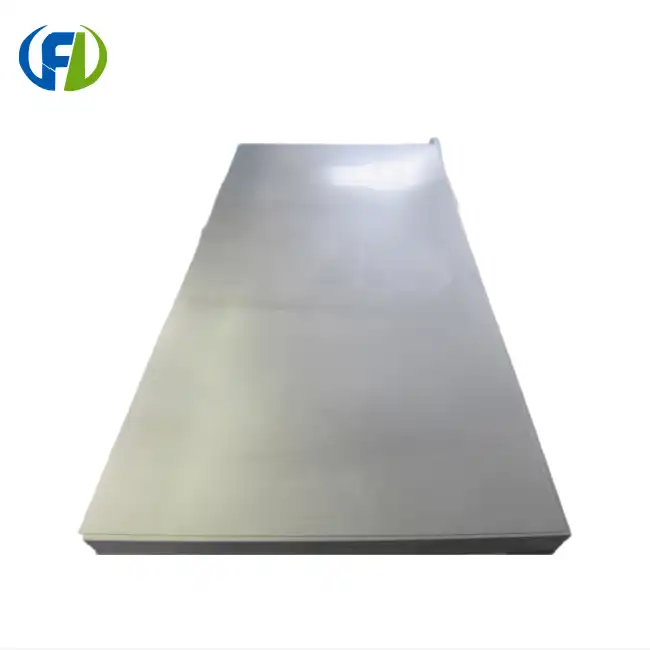
Understanding the Core: What Makes TA1 Titanium Plate Unique?
TA1 is the softest and most ductile commercially pure titanium grade. TA1 is pure for optimal formability, unlike titanium alloys like Ti-6Al-4V, which include aluminium and vanadium for strength. When precise shaping is needed without losing corrosion resistance, this difference is crucial.
The alpha-phase microstructure forms a hexagonal close-packed crystal lattice. This structure lets atoms flow past each other during deformation, so producers may bend, stamp, and draw TA1 without cracking like tougher grades. Its greater ductility over TA2 (Grade 2), which allows up to 0.25% oxygen, is due to its oxygen concentration below 0.18%.
For composition, TA1 has maximum iron (0.20%), carbon (0.08%), nitrogen (0.03%), and hydrogen (0.015%). The stringent controls provide constant mechanical qualities across production batches. Minimum yield strength is 170 MPa, while tensile strength is 240-380 MPa. Elongation usually surpasses 24%, showing amazing flexibility.
This lightweight metal's spontaneous titanium dioxide layer development when exposed to oxygen distinguishes it. Scratched passive film regenerates immediately, protecting against corrosion. TA1 seems unharmed by chloride-rich settings where stainless steels fail catastrophically. Marine engineers found excellent functioning after decades of seawater exposure, proving its chemical resilience.
The Critical Problems TA1 Titanium Plate Solves
Manufacturing teams struggle to find materials that withstand harsh chemicals and fit intricate shapes. Traditional choices need painful tradeoffs. Stainless steel forms well but corrodes in industrial settings. High-strength titanium alloys resist corrosion but break during vigorous forming. This gap is brilliantly bridged by the TA1 Titanium Plate.
In chemical processing, reactors handle boiling acids and caustic solutions. Equipment failures cause downtime, catastrophic discharges, and worker safety issues. These circumstances accelerate standard material degradation, requiring frequent replacements that impede production. TA1 resists nitric acid, moist chlorine, and other oxidising environments, prolonging service life and reducing metal ion contamination.
Medical equipment makers face similar challenges. Implants must stay dormant for years or decades. Any material deterioration might cause immunological reactions or device failure. TA1's fatigue resistance and biocompatibility make it appropriate for vascular stents, bone plates, and dental implants. The substance readily combines with bone tissue, encouraging osseointegration rather than rejection.
Conditions are harsh in desalination. Seawater at high temperatures increases pitting, crevice corrosion, and stress corrosion cracking. Multi-Stage Flash evaporators and reverse osmosis systems used pricey titanium-clad steel plates to survive. A cost-effective alternative to clad materials, pure TA1 plate performs better without bonding integrity issues for essential components.
Core Features and Performance Characteristics That Deliver Value
Attention should be paid to TA1 formability. Materials engineers assess this with Erichsen cupping tests, where TA1 routinely exceeds 11mm. Without intermediate annealing, producers may make hemispherical shapes, deep-drawn cups, and intricate three-dimensional structures. Tooling costs fall as production efficiency rises.
TA1 has a thermal conductivity of around 17 W/m·K at ambient temperature. This characteristic, lower than copper or aluminium, helps heat exchangers reduce thermal shock by controlling heat transport. The material's low thermal expansion coefficient (8.6 × 10⁻⁶/°C) avoids dimensional changes throughout temperature cycles, ensuring pressure vessel seal integrity.
Weldability is another benefit. TIG-welded TA1 joints yield 90-95% base metal strength without heat treatment. During welding and cooling, inert gas shielding is essential. Weld zone contamination from ambient oxygen and nitrogen is prevented by argon atmosphere shielding. Well-done welds match parent material ductility and corrosion resistance.
The non-magnetic nature of industrial-grade titanium avoids electromagnetic interference issues. Electronics makers hide sensitive instrumentation components with TA1. TA1-made surgical devices avoid picture distortion and projectile dangers during MRIs.
Surface treatments increase application choices. Anodising gives architectural elements colourful, abrasion-resistant oxide coatings. Chemical etching improves the adhesive bonding surface roughness. Unlike coatings that delaminate and form localised corrosion cells, these treatments don't affect corrosion protection.
Technical Foundation: The Science Behind Superior Performance
The defensive mechanism needs explanation. Upon contact with oxygen, even in little concentrations, TA1 rapidly bonds with oxygen molecules, generating a dense TiO₂ layer around 1-10 nanometres thick. This oxide is stable from pH 2 to 12, making TA1 acid- and alkali-resistant.
The layer's rutile crystal structure prevents ion movement, making it strong. Dissolving metallic ions in electrolytes causes corrosion. TiO₂ efficiently stops corrosion, decreasing rates to around 0.01 mm per year in saltwater, compared to several millimetres for carbon steel.
Heat treatment greatly affects mechanical characteristics. After controlled heating to 650-750°C, the mill-annealed TA1 Titanium Plate is air-cooled. This procedure optimises grain structure and reduces cold working stresses. Manufacturers that want maximal ductility might demand complete annealing at higher temperatures, sacrificing strength for formability.
TA1 work hardening differs from several structural components. Cold working promotes crystal lattice dislocation multiplication and strength. TA1 remains ductile after substantial deformation. Incremental forming without intermediate anneals reduces manufacturing costs and lead times.
Key Advantages That Set TA1 Apart
Density comparison shows persuasive economics. At 4.51 g/cm³, TA1 is 60% lighter than steel and 40% lighter than copper, while maintaining functional performance. This high strength-to-weight ratio suits aerospace applications. Over decades, even a few kilos of aircraft mass reduction saves fuel.
Measurements of longevity change procurement strategies. Initial material costs surpass conventional metals; TA1's total cost of ownership sometimes is lower. A TA1 chemical reactor may last 20-30 years, but stainless steel counterparts need replacement every 5-7 years. Eliminating downtime, disposal expenses, and replacement labour frequently justifies the premium.
Environmental compatibility goes beyond corrosion. Modern titanium manufacture uses less energy. 100% recyclable material boosts sustainability. Circular economy manufacturers may remelt scrap TA1 without property damage.
Reliable suppliers like those in Baoji City, China's Titanium Valley, offer dependable performance. High-precision production controls eliminate batch-to-batch compositional changes that hinder manufacturing planning. Material certifications improve traceability in regulated sectors by linking chemical and mechanical qualities to ingots.
Considerations and Limitations Worth Understanding
Machinability is difficult. TA1 galls; therefore, cutting tools must be sharp and titanium-specific. Traditional speeds and feeds don't work—slower cutting speeds and greater feed rates work better. Avoid chlorinated coolants to avoid stress corrosion cracking.
Cost perception needs context. Complex extraction and refining methods affect raw material prices. Metallic fabrication efficiency usually outperforms unusual alloys. Material surcharges can be compensated for by manufacturing complicated forms without specialised tools or several processes. Procurement teams should include production costs, not just material prices.
Limitations occur with temperature. TA1 works well up to 300°C; its strength declines dramatically over this point. Titanium alloys containing aluminium precipitates are needed for temperatures exceeding 400°C. Understanding these limits avoids material misuse.
When TA1 encounters different metals in conductive situations, galvanic corrosion is important. Titanium is a cathode with most metals because it is high in the galvanic series. This shields TA1 but increases nearby corrosion. Proper insulation or metal compatibility avoids this.
TA1 Titanium Plate vs. Alternative Materials
Comparing TA1 and TA2 Titanium Sheet shows slight but essential differences. TA2 has somewhat greater interstitial element concentrations than TA1, increasing tensile strength to 340-480 MPa from 240-380 MPa. This 15-20% strength advantage reduces ductility. Formability-focused applications use TA1, whereas structural applications with minor corrosion use TA2.
Titanium alloys like Ti-6Al-4V have 900 MPa tensile strength. This aerospace material dominates weight-reduction and strength-based designs. The material needs solution and ageing heat treatments since formability diminishes significantly. Ti-6Al-4V additive manufacturing has revolutionised complicated part manufacture, yet TA1 is cheaper for simple sheet metal components.
Austenitic stainless steels like 316L resist corrosion moderately at a lesser cost. Stainless steel works well in mild settings. Above 60°C, chloride-containing conditions can cause pitting and crevice corrosion of stainless steel. TA1 Titanium Plate's immunity to these failure types justifies its higher purchasing cost. Marine applications where stainless steel requires costly coatings or cathodic protection systems worsen the performance difference.
In some situations, including hydrochloric and sulphuric acid, zirconium metal resists corrosion. Neutron absorption makes zirconium crucial for nuclear applications. Zirconium costs more than titanium and is less formable than TA1. Materials complement rather than compete.
Industries and Applications Where TA1 Excels
TA1 is used in aerospace engine nacelles, hydraulic tubing, and honeycomb core panels. The industry's weight reduction efforts benefit from corrosion resistance and low density. Every kilogram saved boosts fuel economy and payload, giving commercial aircraft an edge.
The chemical industry uses TA1 for reactor linings, heat exchanger tubes, and aggressive media pipes. Material cleanliness is important in pharmaceutical production because the inert surface avoids drug formulation contamination. Validated, reliable, and regulatory-compliant production systems result from process equipment lifespan.
TA1 is used to make surgical equipment, implantable devices, and prosthetics. The material is biocompatible due to its stable TiO₂ surface layer, which the immune system recognises as harmless. Titanium implants enhance bone repair without side effects, according to orthopaedic specialists.
Desalination plants and offshore platforms use TA1 for seawater-exposed pumps, valves, and pipework. It resists biofouling, cavitation erosion, and temperature variations in these applications. Maintenance intervals are much longer than traditional materials, decreasing remote operational costs.
Research facilities studying advanced materials use TA1 as a baseline. Comparing it to experimental alloys is possible because of its well-characterised characteristics. Specialised vendors offer small batches for lab-scale research without large investments.
Conclusion
TA1 Titanium Plate represents a sophisticated solution for demanding applications where corrosion resistance, formability, and biocompatibility converge. Its unique combination of properties solves critical problems across aerospace, chemical processing, medical devices, and marine engineering. While material costs exceed common metals, lifecycle economics frequently favour TA1 through extended service life and reduced maintenance. Understanding its capabilities and limitations enables informed material selection that optimises both performance and cost-effectiveness. As industries push technological boundaries, TA1 remains an enabling material for innovation.
FAQ
Q1: Can TA1 Titanium Plate withstand cryogenic temperatures?
A: Yes, TA1 actually improves in performance at cryogenic temperatures. Ductility and toughness increase as temperatures drop, making it suitable for liquid nitrogen and liquid oxygen systems. Unlike some steels that become brittle below freezing, titanium maintains excellent impact resistance down to -253°C.
Q2: What thickness ranges are commonly available for TA1 plates?
A: Standard mill production typically ranges from 0.5mm up to 60mm thickness. Thinner gauges (0.5-3mm) suit heat exchangers and chemical processing applications. Medium thicknesses (3-15mm) serve general fabrication needs. Heavy plates (15-60mm) support pressure vessel construction. Custom thicknesses can be arranged for specific project requirements.
Q3: How does TA1 compare to zirconium in chemical resistance?
A: Both metals excel in corrosion resistance, but in different environments. TA1 outperforms in oxidising acids like nitric acid and hot sodium hypochlorite. Zirconium proves superior in reducing acids such as hydrochloric and sulfuric acid. The choice depends on your specific chemical exposure profile and temperature conditions.
Q4: What surface finishes are available for the TA1 Titanium Plate?
A: Common finishes include hot-rolled (scaled surface), pickled (acid-cleaned bright surface), cold-rolled (smooth matte finish), and polished (mirror-like reflective surface). The pickled finish suits most industrial applications, while polished finishes serve architectural and medical device applications requiring aesthetic appeal or ease of cleaning.
Ready to Source Superior TA1 Titanium Plate?
Baoji Freelong New Material Technology Development Co., Ltd stands ready as your trusted TA1 Titanium Plate supplier, bringing decades of expertise from China's Titanium Valley. We understand that aerospace, chemical, and medical applications demand absolute material consistency and comprehensive documentation. Our quality control systems ensure every shipment meets your exact specifications, backed by complete material certifications and test reports. Whether you need standard plates or custom dimensions, our experienced team provides responsive support throughout your procurement process. Contact jenny@bjfreelong.com today to discuss your requirements and discover why leading manufacturers across Australia, Germany, the United States, and beyond rely on Freelong for their critical titanium needs.
References
1. American Society for Testing and Materials. Standard Specification for Unalloyed Titanium for Surgical Implant Applications (UNS R50250, UNS R50400, UNS R50550, UNS R50700). ASTM F67-13.
2. Boyer, R., Welsch, G., and Collings, E.W. Materials Properties Handbook: Titanium Alloys. ASM International, Materials Park, Ohio, 1994.
3. Schutz, R.W. and Thomas, D.E. Corrosion of Titanium and Titanium Alloys. ASM Handbook Volume 13B: Corrosion Materials. ASM International, 2005.
4. Donachie, Matthew J. Titanium: A Technical Guide, 2nd Edition. ASM International, Materials Park, Ohio, 2000.
5. Lütjering, Gerd and Williams, James C. Titanium, 2nd Edition. Springer-Verlag Berlin Heidelberg, 2007.
6. Peters, M., Kumpfert, J., Ward, C.H., and Leyens, C. Titanium Alloys for Aerospace Applications. Advanced Engineering Materials, Volume 5, Issue 6, 2003.

_1767855463337.png)
_1772701480930.png)
_1763520346907.png)
Learn about our latest products and discounts through SMS or email