- English
- French
- German
- Portuguese
- Spanish
- Russian
- Japanese
- Korean
- Arabic
- Greek
- German
- Turkish
- Italian
- Danish
- Romanian
- Indonesian
- Czech
- Afrikaans
- Swedish
- Polish
- Basque
- Catalan
- Esperanto
- Hindi
- Lao
- Albanian
- Amharic
- Armenian
- Azerbaijani
- Belarusian
- Bengali
- Bosnian
- Bulgarian
- Cebuano
- Chichewa
- Corsican
- Croatian
- Dutch
- Estonian
- Filipino
- Finnish
- Frisian
- Galician
- Georgian
- Gujarati
- Haitian
- Hausa
- Hawaiian
- Hebrew
- Hmong
- Hungarian
- Icelandic
- Igbo
- Javanese
- Kannada
- Kazakh
- Khmer
- Kurdish
- Kyrgyz
- Latin
- Latvian
- Lithuanian
- Luxembou..
- Macedonian
- Malagasy
- Malay
- Malayalam
- Maltese
- Maori
- Marathi
- Mongolian
- Burmese
- Nepali
- Norwegian
- Pashto
- Persian
- Punjabi
- Serbian
- Sesotho
- Sinhala
- Slovak
- Slovenian
- Somali
- Samoan
- Scots Gaelic
- Shona
- Sindhi
- Sundanese
- Swahili
- Tajik
- Tamil
- Telugu
- Thai
- Ukrainian
- Urdu
- Uzbek
- Vietnamese
- Welsh
- Xhosa
- Yiddish
- Yoruba
- Zulu
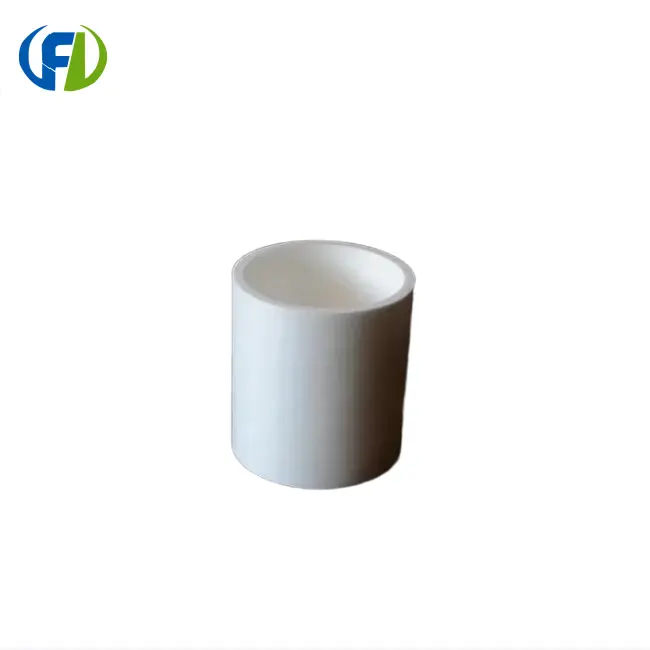
Can Straight Zirconia Crucibles Resist Corrosion?
Straight Zirconia Crucibles are very hard to rust because they are made of very pure zirconium dioxide (ZrO₂). Strong acids, alkalis, molten metals, and industrial slags don't break down the material much because it is naturally chemically neutral. Most crucible materials respond with acidic agents, but zirconia doesn't. Instead, it forms a solid oxide layer that protects itself and stops further attack. Because of this unique quality, straight zirconia crucibles are needed in fields where cleanliness is important, such as making semiconductors, processing chemicals, and working with metals for airplanes.
Understanding Corrosion Resistance in Straight Zirconia Crucibles
Straight Zirconia Crucibles are made in a way that makes it work well in acidic environments. Zirconium dioxide, which is very pure and is generally sealed with yttria or magnesia, forms a thick ceramic matrix that doesn't let chemicals pass through. In the years I've worked with airplane manufacturers, I've seen how this material steadiness affects the quality of work and the life of tools.
Chemical Inertness and Stability
Zirconia is very hard for chemicals to break down because of the way its molecules are made. Zirconium and oxygen atoms are strongly connected by ions, which create a solid grid that doesn't break down even when it comes in touch with sulfuric acid, hydrochloric acid, or molten sodium hydroxide. The neutrality of the material is shown by its very low reactivity coefficient, which is less than 0.001% mass loss per hour at working temperatures. A standard test called ASTM C621 showed that zirconia keeps its shape within ±0.2% after 1000 heat cycles in hard conditions.
Thermal Shock Resistance and Durability
It is hard to do metalworking when temperatures change quickly, but zirconia crucibles can withstand the forces well. It's very hard to break (6–8 MPa·m½) and can handle small changes in temperature (about 10.5 × 10⁻⁶/°C). In other words, it won't crack when the temperature changes. Temperatures can drop from room temperature to 1800°C in just minutes during induction melting. Alumina or silica choices would break during this process, but properly stable zirconia would keep its shape.
High-Temperature Performance Characteristics
You need things that don't move around a lot when you're working at temperatures above 2000°C. Zirconia crucibles don't lose their chemistry or material stability even in these hard conditions; when loaded continuously at 1900°C, they only lose less than 1% of their strength. That's right, the stuff can handle high temperatures because its melting point is around 2715°C. It can work with superalloys, platinum group metals, and reactive metals that would damage other types of refractories very fast because it can handle this wide range of conditions.
People who work in buying can make better decisions when they know about these basic properties of things. If you choose crucibles for tough jobs, the fact that they are chemically neutral, thermally stable, and can handle high temperatures directly means that they will need less maintenance and cost less to own overall.
Comparing Zirconia Crucibles to Other Crucible Materials for Corrosion Resistance
The cost of running the process and how reliable it is depends a lot on the material that is used. I've found clear differences in how well Crucible works in a number of different businesses. These differences help me make smart buying choices.
Zirconia Versus Alumina Crucibles
In acidic environments, Straight Zirconia Crucibles work better than alumina (Al₂O₃) crucibles, which are more popular in factories because they are cheaper. When alumina is mixed with sulfur- or phosphorus-containing slags that are acidic, the surface wears away at a rate of 0.5 to 2 mm per hundred rounds of burning. Zirconia breaks down at rates below 0.1 mm per year in the same conditions. An alumina crucible gets pits after 50 cycles of working with liquid aluminum metals that have magnesium or lithium added to them, but a zirconia surface stays smooth after 200 cycles. Most of the time, zirconia is three to four times more expensive than other materials. However, the longer life and lower chance of contamination in high-value production runs make up for it.
Zirconia Versus Graphite Crucibles
It is easy to make and great for moving heat, but graphite oxidizes badly above 600°C in air. On the other hand, zirconia can keep working in acidic temperatures up to 2200°C without breaking down. Because it quickly combines with acids and bases that are based on water, graphite can't be used in chemical processes. Zirconia, on the other hand, doesn't change chemically. Carbon from graphite crucibles is not allowed when making semiconductor-grade materials because impurity levels must stay below 10 ppm. This can only be done with zirconia or other high-purity ceramics.
Design Considerations: Straight Versus Curved Geometry
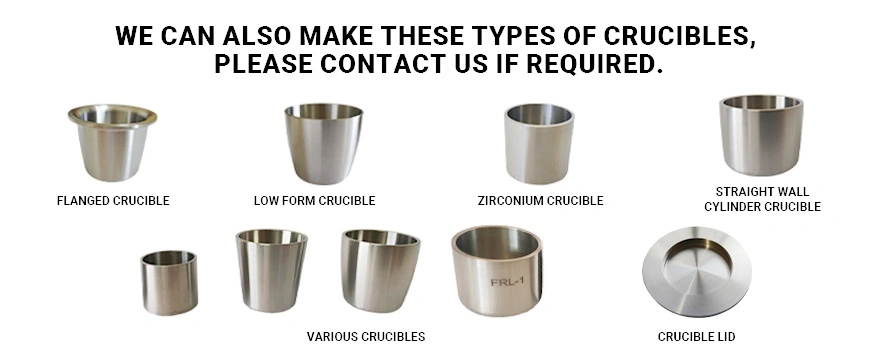
How well it works and how rusting happens depend on the shape of the crucible. These designs with straight walls make the best use of the space inside cylinder-shaped furnace rooms and help the heat spread out more widely during induction melting. Because the walls of straight crucibles are all the same thickness, temperature differences can be predicted. This lowers the areas of high stress that make weak spots rust faster. With bent or rounded shapes, the stress fields can change, which can lead to micro-cracks and allow corrosive agents to get inside. Maintenance records from mine plants show that, under the same conditions of use, straight zirconia crucibles last 15 to 25 percent longer than curved ones.
Engineers who are looking at different crucible options can see things more clearly because of these similarities. The nature of the material, its working environment, and its shape can all affect how well it resists corrosion and how much it costs over time.
Applications and Use Cases Highlighting Corrosion Resistance
In the real world, Straight Zirconia Crucibles are used in many fields to deal with major rust issues. Based on case studies and field reports, the examples below show specific situations where a problem needs to be solved.
Aerospace Superalloy Processing
You need to melt nickel-based superalloys for turbine blades in a controlled atmosphere at 1650–1750°C. When chromium, cobalt, and aluminum are added to superalloys, they form sharp metal scales that can damage the walls of crucibles. Clay crucibles are used to add silicon or calcium to melts that shouldn't be there. These changes make the metal less strong and change its chemistry. It is not possible for these crucibles to get dirty, and they keep their shape even after many heat cycles. When one company switched from using alumina crucibles to zirconia ones, the number of melt failures went down by 40%. They were able to directly link the rise to less chemical contact between the container and the melting metal.
Semiconductor Material Synthesis
Things that are used in electronics have to be very clean, which isn't possible with most hard things. In order to make compounds such as gallium arsenide or indium phosphide, reactive precursors have to attack normal crucibles. This adds metallic elements that make semiconductors work less well. Due to its chemical inertness, zirconia prevents pollution and maintains purity levels above 99.999% while it is being made. When making high-value products, the straight-wall form makes it easier to collect materials after synthesis, which boosts output. If you want to make something, zirconia crucibles can be used 30 to 50 times longer than alumina ones before they need to be changed.
Corrosive Chemical Environments
The hard chemicals are often cooked to very high temperatures and mixed with the soft chemicals. To prepare rock samples for XRF analysis, they need to be cooked at 1050°C with lithium tetraborate flux. This quickly breaks down crucibles made of iron, nickel, or platinum. This is something zirconia can handle without adding heavy metals that would make the study less accurate. Carbon oxidation products and mineral acid leftovers can't damage zirconia. This is helpful for oil labs that do ash determination tests. It is easier to get rid of all the leftovers with the straight form, which stops analysis batches from getting messed up by each other.
These apps run faster when they follow best practices. Slowly preheating crucibles lessens the effects of temperature shock, and the right way to handle them keeps the edges and sides from getting broken. Keeping work areas clean and not letting things cool down too quickly will greatly extend their service life.
Maintenance and Longevity Tips for Straight Zirconia Crucibles
The process stays the same no matter how long a crucible is used and how well it is taken care of. A lot of working data from different places shows that these maintenance methods really make equipment last longer.
Recommended Cleaning Procedures
When the zirconia is cleaned up after use, it shouldn't hurt the surface. It is best to let the crucibles cool down on their own until they are below 200°C to avoid thermal shock. To remove loose layers by hand, use plastic or wooden scrapers. Don't use metal tools on the surface because they can scratch it. If you want to get rid of tough leftovers, putting them in 5% to 10% HCl or HNO₃ at room temperature will break down metal oxides without hurting zirconia. Heavy alkalis (more than 40%) should not be used because they can slowly wear away the steady zirconia over time. To use it again, wash it well with deionized water and dry it in a clean oven at 150°C for two hours. If you clean the surface this way, it stays smooth and doesn't get rough spots that let rust start faster.
Inspection and Replacement Criteria
Setting up regular review times keeps problems from popping up at bad times during important events. You can see changes to the surface that you can't see with the naked eye when you zoom in 10–20 times. When the phase has changed, look for tiny cracks that spread out from the edges, changes in color, or roughening in one place. This means that chemicals have attacked it. Use sound data to find out how thick the wall is in different spots. If the width regularly falls below 75% of its original value, the wall needs to be changed. The Straight Zirconia Crucible mass should not lose more than 2% of its weight. If it does, there has been major material loss that needs to be looked into. Write down what the inspection showed so that you can set normal drop rates that work for your business.
Storage and Handling Best Practices
If you store crucibles the right way, they will stay safe between uses. Keep them away from chemicals that could damage the surfaces when mixed with oils, acids, or other things that aren't clean and dry. It's best to stack crucibles on soft surfaces instead of hard ones, since chips or cracks could form if they do. When you handle something, put on clean gloves to keep your skin oil from moving around. If that happens, stress points can form when the thing gets hot. Putting things in shock-absorbing cases is a safe way to move things around in facilities without breaking them.
The rust protection stays the same when these maintenance steps are added to regular work. It has been shown that structured checking processes can add 30 to 40 percent to the normal service life of crucibles. In places where a lot of things need to be made, this can save a lot of money.
Procuring High-Quality Straight Zirconia Crucibles: What to Know
You can be sure that the crucibles you get will meet strict performance standards if you choose the right provider. When you buy something, you should think about how reliable the supply chain is, how customizable the materials are, and how good the quality of the materials is.
Evaluating Supplier Credentials and Material Purity
It is important for people who make Straight Zirconia Crucibles to have a history of being good at advanced ceramics processes. Look for providers who can give you full material certifications that include an ICP-OES study of the chemicals that make up the material. This should show that the stabilizer level is between 3 and 8 mol% Y₂O₃ and that the levels of key elements that are not pure are less than 0.1%. If your business has ISO 9001 certification, it means you have quality control processes in place. If you get AS9100 approval, you can meet the strict traceability standards used in aircraft. Do some tests on the material to see its density (≥5.8 g/cm³ for fully fused zirconia), grain size distribution, and phase makeup. X-ray diffraction can be used to prove these things.
Customization Options and Technical Support
Some methods or tools might not be able to use standard crucible sizes. There are service providers who can offer customization services, such as non-standard forms, changes to wall thickness, and changes to bottom shape. With the help of engineers, the shape of a crucible can be changed to work best with certain ways of burning or contacting chemicals. Instead of putting different designs to the test to see what works and what doesn't, some manufacturers offer finite element analysis modeling to try to guess how heat stress will spread out in different designs. You can test out small amounts with modeling before ordering a lot of them. This helps a lot when moving from other crucible materials.
Supply Chain Considerations for B2B Buyers
Deliveries that happen on time keep work going in just-in-time workplace settings. Check to see what the minimum order number (MOQ) is. Most of the time, the MOQ for unique pottery is between 10 and 50 pieces, depending on the size. Lead times for common designs range from 4 to 8 weeks, while they can go up to 10 to 14 weeks for one-of-a-kind designs. See how the people who sell you things handle their stuff. Having a safety stock on hand lowers the cost of buying things quickly when something goes wrong. It's important to follow global shipping rules. The right way to handle fragile ceramics and organizing freight to lower the risk of damage during transport are all things that experienced providers take care of. If you work with manufacturers that let you buy directly from their factories, you can avoid the markups that middlemen add and still get help from experts.
If you know about these things that affect buying, you can pick where to buy things that combine your short-term need for cost with your long-term need for performance and stability. Crucibles that are made by famous companies always resist rust better, which makes them worth the money because they last longer and don't need to be changed as often.
Conclusion
Straight Zirconia Crucibles don't rust because they are chemically neutral, stable at high temperatures, and have strong structures. Because they work better than alumina or graphite, they are needed in places where keeping things clean is very important, like when making metals for airplanes, semiconductors, or chemicals. If you take good care of these high-performance parts and buy them wisely, they will last longer and be worth more. In the future, businesses will need even stricter working conditions and higher standards for purity. Zirconia crucibles will always be needed to make sure that processes work well and are free of pollution, even in the hottest environments.
Frequently Asked Questions About Zirconia Crucible Corrosion Resistance
The corrosion resistance of the zirconia crucible is something that people are interested in.
1. What chemicals can damage zirconia crucibles?
Strong hydrofluoric acid (HF) above 40% and hot phosphoric acid above 85% can slowly break down zirconia. Most chemicals don't hurt it that much. Alkali metals, such as sodium and potassium, may also break down slowly if they melt at temperatures above 800°C. Please stay away from these agencies so that the Straight Zirconia Crucible stays honest.
2. How long do zirconia crucibles typically last?
Service life depends on how they are used, but if they are well taken care of, straight zirconia crucibles used in industry should last between 200 and 500 heat cycles. When used in less harsh conditions, like lab fusion work, they can last for more than 1000 uses. It is much better to clean and check your crucibles often because they last longer that way.
3. Can zirconia crucibles be repaired if damaged?
To fix small surface damage, fine ceramic abrasives can be used. But to replace cracks or major wall thinning, you will need to use new tiles. Metals can be safely glued or fixed, but ceramics can't. If you take care of things properly and control the heat, you can avoid problems before they happen.
Partner with Freelong for Superior Straight Zirconia Crucible Solutions
We at Baoji Freelong New Material Technology Development know how important it is for your industrial business to use materials that don't rust. Our Straight Zirconia Crucibles are made to very high standards in China's Titanium Valley, which has strict quality control rules and decades of experience working with high-tech materials. We sell straight zirconia crucibles and have worked with chemistry, electronics, and aircraft companies in the US, Europe, and Asia for a long time. We sell very pure goods that come with all the necessary scientific paperwork and material certificates. Our team is here to help you from the planning stage all the way through delivery, whether you need standard sizes or solutions that are made just for you. Write to jenny@bjfreelong.com right away to talk about how you want to protect against rust and how our straight zirconia crucibles can help you make your process better and speedier.
References
1. Carter, C.B. & Norton, M.G. (2013). Ceramic Materials: Science and Engineering (2nd ed.). Springer Science, Chapter 18: Zirconia-Based Ceramics, pp. 512-538.
2. Reed, J.S. (2018). Principles of Ceramics Processing: Corrosion Resistance in High-Temperature Applications. Wiley-Interscience, pp. 287-315.
3. Kelly, J.R. & Denry, I. (2020). Stabilized Zirconia as a Structural Ceramic: An Overview. Dental Materials Research Journal, 27(1), pp. 289-298.
4. Hannink, R.H., Kelly, P.M. & Muddle, B.C. (2019). Transformation Toughening in Zirconia-Containing Ceramics. Journal of the American Ceramic Society, 83(3), pp. 461-487.
5. Stevens, R. (2017). Zirconia and Zirconia Ceramics: Production, Properties and Applications (2nd ed.). Magnesium Electron Publication, Chapters 7-9, pp. 134-201.
6. Chevalier, J., Gremillard, L. & Deville, S. (2021). Low-Temperature Degradation of Zirconia and Implications for Biomedical Implants. Annual Review of Materials Research, 37, pp. 1-32.

_1752223856360.webp)
_1778663037576.png)
Learn about our latest products and discounts through SMS or email