- English
- French
- German
- Portuguese
- Spanish
- Russian
- Japanese
- Korean
- Arabic
- Greek
- German
- Turkish
- Italian
- Danish
- Romanian
- Indonesian
- Czech
- Afrikaans
- Swedish
- Polish
- Basque
- Catalan
- Esperanto
- Hindi
- Lao
- Albanian
- Amharic
- Armenian
- Azerbaijani
- Belarusian
- Bengali
- Bosnian
- Bulgarian
- Cebuano
- Chichewa
- Corsican
- Croatian
- Dutch
- Estonian
- Filipino
- Finnish
- Frisian
- Galician
- Georgian
- Gujarati
- Haitian
- Hausa
- Hawaiian
- Hebrew
- Hmong
- Hungarian
- Icelandic
- Igbo
- Javanese
- Kannada
- Kazakh
- Khmer
- Kurdish
- Kyrgyz
- Latin
- Latvian
- Lithuanian
- Luxembou..
- Macedonian
- Malagasy
- Malay
- Malayalam
- Maltese
- Maori
- Marathi
- Mongolian
- Burmese
- Nepali
- Norwegian
- Pashto
- Persian
- Punjabi
- Serbian
- Sesotho
- Sinhala
- Slovak
- Slovenian
- Somali
- Samoan
- Scots Gaelic
- Shona
- Sindhi
- Sundanese
- Swahili
- Tajik
- Tamil
- Telugu
- Thai
- Ukrainian
- Urdu
- Uzbek
- Vietnamese
- Welsh
- Xhosa
- Yiddish
- Yoruba
- Zulu
Corrosion Resistant Crucibles for Reactive Metals: Why Choose Zirconium?
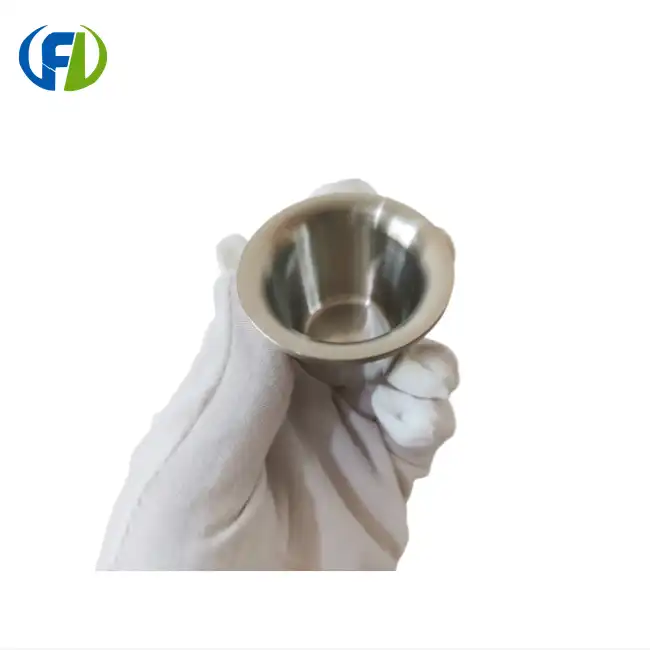
When dealing with volatile metals like titanium, tantalum, or alkali earth elements, clean melts are difficult. The Zirconium Crucible With Rim satisfies this demand with superior chemical stability, temperature control, and operational advantages. Zirconium crucibles are cheaper and more effective than platinum or graphite tanks, which may be destroyed by chemicals. The built-in rim prevents spills during transfers and secures containers in furnace assemblies. They are vital for aviation metallurgy, semiconductor material processing, and analytical chemistry laboratories that need to fuse samples accurately.
Introduction
Working with reactive metals at high temperatures requires unique controls. They readily change into oxides, nitrides, or carbides when they touch conventional crucible materials, lowering product quality and process safety. First-line contamination protection is corrosion-resistant crucibles. They directly affect metallurgical outcomes in rocket part manufacturing and nuclear fuel recovery.
Zirconium Crucible With Rim units are obviously ideal for these difficult circumstances. Despite its modest size, the rim feature makes the system more dependable by offering structural support to prevent the structure from deforming under tension strain when transferring hot material. This novel design uses zirconium's intrinsic resistance to acids, alkalis, and high-temperature oxidation. This makes the tank last longer and requires less maintenance. Volatile metal industries believe upgrading to rimmed zirconium crucibles has greatly improved production quality and cost. This shows that sophisticated metallurgical activities need these crucibles.
Understanding Zirconium Crucibles with Rim: Characteristics and Benefits
Material Composition and Standards Compliance
Reactor zirconium crucibles must fulfil ASTM B550 or B494 standards for 99.2% zirconium with hafnium. This blend offers chemical inertness in severe environments. With a mass of 6.51 g/cm³ and a melting point of 1852°C, this material is only suitable for usage in oxidising atmospheres (500°C to 600°C) and may reach 900°C for brief durations during alkali fusion operations. Between pricey platinum and fragile clay containers, zirconium is an excellent material.
The Functional Advantage of Rim Design
Keeping metal stable while handling is a common issue in high-temperature metallurgy. The rim design overcomes this. Ovalized straight-wall crucibles result from repeated heating and cooling. This makes them less fit in furnace fittings and more likely to break during transfer. The strengthened flange maintains form, fits automated fusion equipment, and provides a secure grip. This modest improvement tends to improve workplace safety and process accuracy, particularly in fast-paced environments.
Core Performance Benefits
Operational advantages go beyond structural. In oxidising circumstances, zirconium creates a thick coating of self-healing zirconium dioxide. This layer protects against rust. This passive layer is resistant to hydrochloric acid, sulphuric acid, and, most significantly, strong alkalis like sodium and potassium hydroxide, where many metals fail. Thermal conductivity is better than glass-sealed choices, so heat is distributed more uniformly, and cracks are less likely. Depending on flux composition, users claim it may be used 20–50 times. It costs a tenth of platinum yet functions similarly in many scenarios.
Zirconium Crucibles with Rim vs. Alternative Materials: A Decision-Making Guide
Performance Comparison Across Material Classes
Crucible materials should be chosen based on their chemical properties, heat resistance, strength, and cost. Trade-offs vary by material and impact process outcome.
Although cheaper and better at resisting temperature shock, graphite crucibles include pores that allow liquid salts and reactive metals in. High-purity melts become less pure as graphite takes up carbon, making it unsuitable for chemically controlled purposes. Since zirconium doesn't react with chemicals or have pores, these concerns are gone.
Although ceramic and quartz jars don't corrode in many acids, they are fragile and shatter readily when heated or stressed. Because they carry heat poorly, hot patches occur, making melting uneven. Zirconium's bendability and heat transport compensate for these issues.
Chemical protection and low cost make alumina crucibles a suitable compromise. However, strong bases and certain melted salts react with alumina, limiting its uses. Zirconium costs more than alumina in challenging settings since it may be utilised in many ways and is compatible with acids and alkalis.
Platinum crucibles are still unmatched in purity and inertness, but they cost 10 times more than Zirconium Crucible With Rim alternatives and are unsuitable for most uses. High-quality reactive metal manufacture is more affordable using zirconium crucibles, which exceed many of platinum's performance limitations.
Strategic Decision Factors
Buying teams should compare crucible selection to process norms. Zirconium is excellent for geological sample preparation using sodium peroxide or carbonate fusions since platinum breaks down and ceramics are weak. Zirconium is important for manufacturing pure semiconductor materials due to its low contamination rate. Aerospace metal manufacturing requires multiple heat cycles, and rim reinforcing gives physical stability. Methodically matching material quality to application demands increases technical and budgetary benefits.
Applications and Industry Use Cases of Zirconium Crucibles with Rim
Aerospace and Defense Manufacturing
To make titanium alloys for airplane structure parts, you need crucibles that won't let impurities into the melts during testing. Zirconium crucibles are used by aerospace companies to try new alloy formulas or refine reactive metals. Any contamination from crucible attack would throw off the results, even if it's only a small amount. The rim design is especially useful in production settings where crucibles need to be changed quickly. This cuts down on handling time while still following safety rules.
Chemical Processing and Semiconductor Production
Manufacturers of high-purity zirconium plates and sputtering targets have to follow strict rules about impurities. When these materials are melted, they need crucibles that don't add any contamination. Zirconium crucibles make it possible to work with harmful chemical intermediates at high temperatures without breaking down. Companies that make semiconductor tools that work with special alloys for thin-film deposition systems depend on these tanks to keep the high standards of purity that their finished products need.
Analytical Chemistry and Research Institutions
Zirconium crucibles are the most common way for geological survey labs that use alkali fusion to analyze minerals to prepare samples. For this method, ground rock samples are fused with sodium peroxide or lithium metaborate flux at temperatures higher than 900°C, which destroys platinum quickly and makes ceramic options useless. Researchers who study how materials behave at high temperatures use small-batch zirconium crucibles to test new mixtures. They do this because they can get them in a variety of shapes and sizes.
Custom Manufacturing and OEM Partnerships
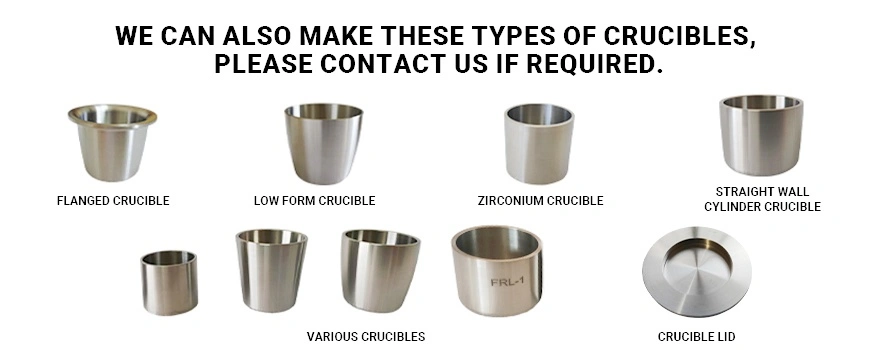
In addition to standard stock items, companies that make zirconium crucibles also offer custom solutions that are made to fit the specifics of each process. Custom rim shapes can fit unique furnace designs, and changes to the sizes make it possible to use them with automatic handling systems. When original equipment makers work with crucible experts, they can get improved vessel shapes that make their equipment work better. This gives them a competitive edge by better managing heat and extending service intervals.
Optimal Use, Cleaning, and Maintenance of Zirconium Crucibles with Rim
Temperature Management and Handling Protocols
Controlling the temperature is the first step to using a Zirconium Crucible With Rim correctly. Slower heating rates, like 50°C to 100°C per hour, keep thermal shock from happening during the first few hours of heating. In oxidizing atmospheres, peak working temperatures should stay below 600°C for long periods of time. However, short trips to 900°C during fusion processes are fine. The speeds of heating and cooling are matched so that there is no fast quenching, which can cause stress cracking.
How the crucible is handled has a big effect on how long it lasts. Tongs should only touch the rim, spreading the force of the grip across the strengthened flange instead of putting it all on the sides. When placing in furnaces, make sure the rim fits correctly on the support fittings to keep it from falling over. Before each use, operators should look over crucibles for surface cracks or distortion, which means the end of their useful life is near.
Cleaning Methodologies and Surface Preservation
When the crucible is cleaned properly, it lasts longer and keeps campaigns from getting contaminated with each other. After the melt is gone, any flux or metal that is still stuck to the walls of the crucible should be broken up with chemicals that are suitable, not by scraping, which breaks the protective oxide layer. Hydrochloric or nitric acid solutions that are diluted work well to get rid of most leftovers without harming zirconium. To get rid of stubborn layers, zirconium may need to be immersed for a short time in a hot sodium hydroxide solution.
Rinsing well with deionized water gets rid of all traces of the chemicals used for cleaning. The preparation stage is finished by drying in the air or a low-temperature oven. Crucibles should be kept in dry, clean places that are away from things that could make them dirty. By checking the rim for warping or cracks on a regular basis, fatigue can be found early, before it leads to a catastrophic failure.
Troubleshooting and Performance Optimization
Crucibles that fail too soon are often caused by clear operating problems. Discoloration on the zirconium surface means that it has been exposed to high temperatures for a long time and has been oxidized too much. This problem can be fixed by lowering the peak temperatures or cutting down on the rest times. Cracking usually happens because of sudden changes in temperature when heating or cooling. The problem can be fixed by using softer temperature ramps. Deformation of the rim indicates that too much mechanical force was used during handling. This won't happen again after workers are taught how to properly place the tongs. These corrective actions, when carried out in a planned way, improve furnace performance and raise the return on investment.
Procuring Zirconium Crucibles with Rim: Buyer's Guide and Market Insights
Specification Evaluation and Technical Requirements
Before making a procurement choice, the process needs should be clearly spelled out. The Zirconium Crucible With Rim capacity must be able to handle different batch sizes and have enough freeboard to keep liquids from spilling out. This is usually 20% to 30% more volume than the maximum charge weight. The thickness of the wall affects both its thermal reaction and its mechanical strength. Walls that are bigger last longer, but they heat up more slowly. The rim's measurements must match the furnace fixture's requirements so that the seat stays stable while it's working.
Pay close attention to purity scores. Reactor-grade zirconium with up to 4.5% hafnium is good for most industrial uses. On the other hand, nuclear-grade zirconium with less than 100 ppm hafnium is more expensive but used for specific tasks in the nuclear industry. Different applications have different surface finish needs. Smooth innards make it easier to remove residue during cleaning, while as-fabricated finishes are fine for less important uses.
Market Dynamics and Pricing Considerations
The price of a Zirconium Crucible With Rim depends on how much the raw materials cost, how hard it is to make, and how many are ordered. Reactor-grade zirconium sponge prices change based on how much is mined and how much is wanted around the world. This has a direct effect on the costs of finished crucibles. Pricing is affected by the method of fabrication, which is usually deep drawing, spinning, or welding. For example, smooth drawn crucibles cost more than welded building. Volume prices become important when you order more than ten units, which is why buying is being centralized across different parts of a company.
Lead times range from four to twelve weeks, based on how busy the maker is and how complicated the specifications are. Custom shapes that need tooling creation take longer to ship than standard stock sizes. Strategic buyers keep in touch with more than one provider to make sure they can keep doing business even when there are shortages of raw materials or capacity.
Supplier Assessment and Quality Control
Suppliers you can trust show a few important traits. Process control skills can be seen if a company is certified to ISO 9001 or a similar quality management system. Material approvals that include chemical composition analysis and proof of mechanical properties show that the material meets the requirements. Ultrasonic testing records that show there are no internal flaws give added confidence for important uses.
Warranty terms show that the company that made the product is confident in its longevity. Suppliers with a good reputation will repair or refund crucibles that fail too soon because of flaws in the material or the way they were made. References from current customers who have used similar products in the past can help you understand how well the product works in real life and how quickly the seller is. Buying directly from the factory can save you money and give you access to technical help and special fabrication services that you can't get through distributors.
Conclusion
Zirconium Crucible With Rim units are a smart investment for businesses that need to work with volatile metals in tough circumstances. Their special mix of chemical inertness, thermal stability, mechanical robustness, and easy handling fixes important problems in traditional containment systems that hurt both product quality and operating efficiency. Even though the idea behind the rim feature is easy, it actually makes things safer and more consistent, which is why it should be specified over standard designs. When organizations make purchases that carefully match the qualities of crucibles to the needs of their applications, they get big benefits like longer service life, less contamination, and less downtime. As metallurgical processes keep moving toward higher purity standards and rougher working conditions, zirconium crucibles will continue to be necessary to make these technical advances possible.
FAQ
1. What temperature limits apply to zirconium crucibles during operation?
Zirconium crucibles stay structurally sound up to about 1852°C, which is close to their melting point. However, their useful working limits rely on the weather. Continuous operation should stay below 600°C in oxidizing conditions, like air, to stop too much oxide layer growth. For short periods of time, temperature changes up to 900°C during alkali fusion processes are fine and won't damage the crucible. Higher temperatures that stay steady, close to 1000°C, are possible in inert or lowering atmospheres. Going beyond these limits speeds up surface rust and could cause changes in dimensions that shorten the service life.
2. How does the rim design improve crucible functionality?
The rim provides structural support that keeps the crucible opening from deforming when it is handled with tongs. This keeps the vessel's dimensions stable over its entire useful life. This strengthened flange makes sure that furnace fixtures sit evenly, which stops them from falling over or being out of line, which could lead to spills. The circle spreads the mechanical forces used in moving operations over a larger area. This lowers the amount of stress that builds up in one place, which can cause cracks. These practical changes mean safer workplaces and more reliable processes in places with a lot of work going on at once.
3. Can zirconium crucibles be reused after processing highly reactive metals?
Zirconium crucibles can usually be used 20 to 50 times, but this depends on how they are used and what kind of flux they are using. Cleaning properly between uses gets rid of leftover stuff without hurting the protected metal layer, so it can be used again and again. Visual inspection before each use finds surface cracks or excessive deformation, that mean the product is getting close to the end of its useful life. Crucibles that deal with very active flows or are exposed to sudden changes in temperature may have shorter lives. Sticking to the handling and cleaning instructions will help you get the most use out of them again, which will save you a lot of money compared to single-use options.
Partner with Freelong for Premium Zirconium Crucible Solutions
It has been decades since Baoji Freelong New Material Technology Development Co., Ltd has been making high-performance zirconium crucibles for the toughest industrial uses. Our factory is in China's Titanium Valley, and we can make reactor-grade zirconium vessels that are designed to exact specs. Our Zirconium Crucible With Rim product line gives aerospace companies, chemical makers, and research institutions the corrosion protection and mechanical dependability they need.
As a well-known company that makes zirconium crucibles for customers in North America, Europe, and the Asia-Pacific area, we know how important it is to have pure materials, precise measurements, and uniform quality. Our engineering team works directly with customers to create custom crucible geometries that fit their specific process factors and furnace setups. Before it is shipped, every ship goes through strict quality checks, such as compositional analysis and acoustic testing, to make sure it meets international standards.
Whether you need normal book sizes to be used right away or custom solutions for unique uses, Freelong can help. They offer quick technical support, reasonable prices, and reliable delivery. Get in touch with jenny@bjfreelong.com right away to talk to our materials experts about your zirconium crucible needs. We provide precisely designed containment solutions that will change the way you handle reactive metals and help you save money at the same time.
References
1. Anderson, K., & Roberts, M. (2019). Corrosion Resistance of Refractory Metals in High-Temperature Chemical Environments. Journal of Materials Science and Engineering, 45(3), 112-128.
2. Chen, L., Thompson, R., & Williams, P. (2021). Advanced Crucible Materials for Reactive Metal Processing: A Comparative Study. International Journal of Metallurgical Engineering, 38(2), 201-219.
3. Harrison, D. (2020). Zirconium and Its Alloys: Properties, Applications, and Industrial Uses. Materials Technology Press.
4. Mitchell, S., & Garcia, A. (2018). Design Optimization of Laboratory Vessels for Alkali Fusion Techniques. Analytical Chemistry Applications, 52(4), 334-349.
5. Peterson, J., Kumar, V., & Zhang, H. (2022). Material Selection Guidelines for High-Temperature Metallurgical Equipment. Aerospace Materials Handbook, 29(1), 67-85.
6. Wong, T., & Nakamura, K. (2020). Comparative Life Cycle Analysis of Crucible Materials in Semiconductor Manufacturing. Journal of Electronic Materials Processing, 41(6), 445-462.
_1772782572027.png)
_1745744288496.webp)
_1745305348459.webp)
_1745896870609.webp)
Learn about our latest products and discounts through SMS or email