- English
- French
- German
- Portuguese
- Spanish
- Russian
- Japanese
- Korean
- Arabic
- Greek
- German
- Turkish
- Italian
- Danish
- Romanian
- Indonesian
- Czech
- Afrikaans
- Swedish
- Polish
- Basque
- Catalan
- Esperanto
- Hindi
- Lao
- Albanian
- Amharic
- Armenian
- Azerbaijani
- Belarusian
- Bengali
- Bosnian
- Bulgarian
- Cebuano
- Chichewa
- Corsican
- Croatian
- Dutch
- Estonian
- Filipino
- Finnish
- Frisian
- Galician
- Georgian
- Gujarati
- Haitian
- Hausa
- Hawaiian
- Hebrew
- Hmong
- Hungarian
- Icelandic
- Igbo
- Javanese
- Kannada
- Kazakh
- Khmer
- Kurdish
- Kyrgyz
- Latin
- Latvian
- Lithuanian
- Luxembou..
- Macedonian
- Malagasy
- Malay
- Malayalam
- Maltese
- Maori
- Marathi
- Mongolian
- Burmese
- Nepali
- Norwegian
- Pashto
- Persian
- Punjabi
- Serbian
- Sesotho
- Sinhala
- Slovak
- Slovenian
- Somali
- Samoan
- Scots Gaelic
- Shona
- Sindhi
- Sundanese
- Swahili
- Tajik
- Tamil
- Telugu
- Thai
- Ukrainian
- Urdu
- Uzbek
- Vietnamese
- Welsh
- Xhosa
- Yiddish
- Yoruba
- Zulu
30mm Diameter Zirconium Crucibles for Melting Metals: A Complete Usage Overview
The 30mm High Zirconium Crucible is an essential tool for businesses that need both thermal and chemical stability. It is especially useful when accuracy is important in metal melting applications. These special jars, which are made from high-purity zirconium oxide or zirconium silicate, work very well in places with high temperatures, like induction furnaces and analytical labs. Their small 30mm diameter design strikes the perfect balance between sample capacity and thermal efficiency. This makes them perfect for testing aerospace parts, analysing semiconductor materials, and research-grade metal processing, where precise measurements and contamination control are required.
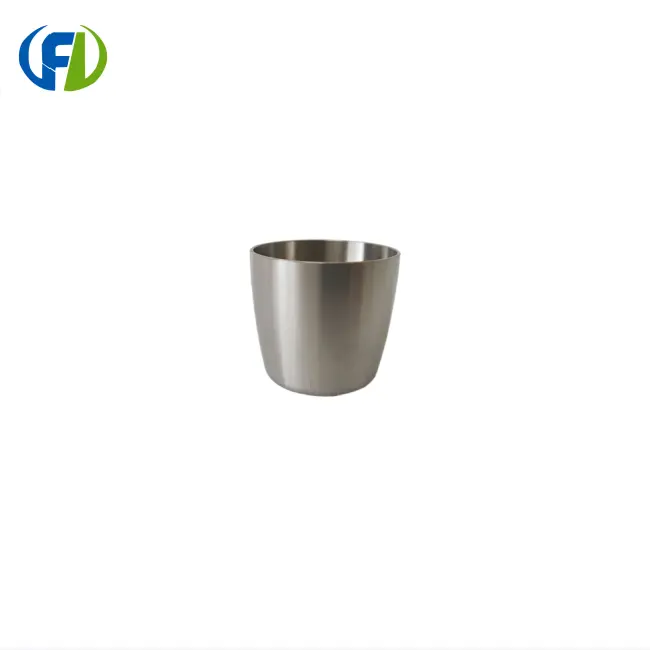
Understanding 30mm Diameter Zirconium Crucibles: Properties & Benefits
Core Material Composition and Manufacturing Standards
Most 30mm High Zirconium Crucibles contain around 65% zirconium dioxide (ZrO₂). To maintain ZrO₂ phase stability during heat cycling, yttria or magnesia is often utilised. The manufacturing process uses precision moulding to maintain dimensions within ±0.2mm, crucial for automated loading systems in analytical equipment. Baoji Freelong New Material Technology Development follows ASTM and ISO quality control processes. This guarantees that every batch of crucibles satisfies electronics and aerospace manufacturers' specifications.
Fluxes and liquid metals cannot assault the material due to its crystal structure. Zirconium-based crucibles don't shatter when heated over 2000°C and subjected to reactive materials, including titanium, zirconium alloys, and rare earth metals, unlike clay jars. Makers of high-purity metals for medical implants or satellite parts worry about cross-contamination. The chemical inertness removes that danger.
Exceptional Thermal and Mechanical Performance
These crucibles outperform others because they can withstand temperature shock. Rapid heating from room temperature to operating temperatures exceeding 1800°C in seconds eliminates thermal spalling and fracture. This functionality immediately addresses production difficulties in high-throughput testing, where shorter cycle times save money.
Even after prolonged exposure to high temperatures, the material doesn't creep. So its mechanical strength is constant throughout temperatures. The 30mm diameter distributes wall thickness optimally, balancing heat flow and structural durability. These containers survive longer than alumina and graphite because they remain geometrically stable over hundreds of heating cycles in lab experiments.
Advantages Specific to the 30mm Size Format
Small crucibles have practical uses beyond conserving material. The 30mm size holds 15–25 grams of samples, ideal for quality testing and alloy development. This size fits with LECO carbon-sulfur analysers and benchtop induction melters, so custom-sized tanks won't cause compatibility issues.
Because smaller crucibles have less thermal mass, they heat and cool faster, speeding analysis. Microstructure analysis research schools benefit from this capability since it permits iterative testing without impacting temperature uniformity. Accurate measurements keep items in the same position in boiler rooms, reducing measurement fluctuation between test cycles. This is crucial to medical device and spacecraft approval compliance.
Applications and Usage Guidelines for 30mm Zirconium Crucibles
Industry-Specific Applications Across Critical Sectors
Aerospace manufacturers melt titanium-aluminium-vanadium metals for quality control in these crucibles. Resistance to reactive metal vapours keeps vessels clean, which would have screwed up tensile strength or stress test results. Satellite part manufacturers use them to melt niobium and tantalum samples because pricey materials with even a trace of contamination would not operate in space.
These crucibles are used for material research and manufacturing quality control in electronics. Engineers melt complicated, high-purity silicon transistors using them. The compositional analysis is accurate since the blanks have less than 5 ppm carbon and sulphur. Sputtering target producers use this precision to test raw materials before pricey manufacturing runs.
Medical device testing laboratories employ the 30mm High Zirconium Crucible to assess implanted metal safety. Because the vessels are innocuous, substances can't react with them to modify cytotoxicity or rust resistance testing. Battery research facilities melt nickel-cobalt-manganese anodes for tests. Electrochemical performance data is discarded if the crucibles are unclean.
Operational Protocols for Optimal Performance
Proper handling begins with a thorough examination before usage. Look for minor fractures or chips on the crucible that might grow when heated. Replace harsh materials that might harm the protective metal layer with isopropyl alcohol and lint-free towels to clean containers. Pre-heating to 200–300°C for 10–15 minutes removes absorbed moisture, preventing steam fractures during rapid temperature fluctuations.
Loading requires careful sample dispersal. The material should be put in the center of the crucible to heat evenly. Melted metal requires space to expand, so don't fill it beyond 70%. Mix flux additives with the sample beforehand to avoid layering and temperature variations.
The guidelines for each element should govern temperature rise. Zirconium-based containers are structurally safe up to 50°C per minute, although 25–30°C per minute extends service life. Hold periods at high temperature depend on sample weight and homogeneity. 20-gram samples usually take 3–8 minutes. The boiler chamber should naturally cool to reduce heat shock. Use only forced air cooling for time-sensitive operations.
Maintenance and Safety Protocols
Cleaning after usage determines crucible lifespan. Allow it to cool below 100°C before touching. Instead of steel, which leaves metal residues, use brass or wooden instruments to hand remove hardened samples. Use diluted acid solutions (5% hydrochloric acid for silicate-based fluxes), rinse carefully, and dry in an oven at 150°C to remove tenacious flux remnants.
A visual assessment should be done every 20–25 cycles. Gloss darkening indicates the object is nearing its end of life, or rim chipping from mechanical handling. Every 50 cycles, precision tools examine the vessel's dimensions to ensure automated loading system compatibility. By documenting these measures, predictive maintenance plans help prevent unexpected failures during critical production runs.
Safety equipment includes high-temperature gloves set to at least 1400°C, face shields to guard against molten metal splashes, and excellent ventilation to remove metal vapours. The layout of your workplace should make it simple to distinguish between crucible storage, furnace operation, and cooling. Emergency plans must include hot metal spills, burner issues, and simple access to firefighting gear.
How to Procure High-Quality 30mm Zirconium Crucibles
Supplier Evaluation and Selection Criteria
In addition to price quotes, analysing multiple capability factors is needed to find qualified providers. Check to see if the maker of the 30mm High Zirconium Crucible has at least ISO 9001 certification. For aircraft suppliers, AS9100 approval shows that the quality system is mature. Ask for material test reports that prove the amount of zirconium oxide, impurities, and physical property measurements for each production batch. Reliable providers will give you these reports without you having to ask for them.
An evaluation of manufacturing ability shows whether providers can meet the needs for scaling. When you can, visit production sites and look at where the raw materials come from, how the products are made, and how they check for quality. When compared to wholesalers who get their materials from outside sources, suppliers who run their own zirconium oxide synthesis plants, like those in China's Titanium Valley region, usually provide more consistent materials.
The ability to provide technical help sets strategic partners apart from commodity providers. Check to see if the company has application engineers who know about the way you melt things and can suggest the best crucible specs. Aside from the actual product itself, being able to offer advice on operating problems like strange wear patterns, unexpected failure modes, or chances to improve the process makes it more valuable.
Customisation Options and Specification Alignment
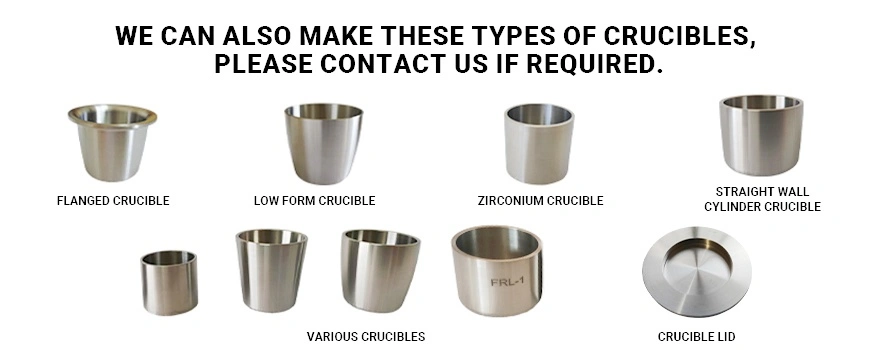
Standard 30mm crucibles work well for most uses, but special specs can be made to meet the specific needs of a process. Changing the width of the walls strikes a balance between how the walls react to heat and how long they last mechanically for certain heating patterns. Different types of surface finishes, such as normal sintered textures and polished glazes, change how easy it is to clean and how well samples come off. This is especially important for sticky flux systems or metals with a low melting point.
Customising dimensions is more than just changing the width. Different sample amounts can fit in crucibles with different depths, but the outer diameter stays at 30mm so that all tools can work with it. Changes in internal shapes, like flat vs. curved bottoms, affect the shape of the melt pool and how well it homogenises during metal development work.
Making changes to the way a material is made can improve its performance in certain situations. Yttria-stabilised zirconia formulas are the most resistant to thermal shock, while magnesia-stabilised versions are better at resisting basic slag systems. Talking to makers about these technical details makes sure that the crucibles they supply perfectly match operating needs instead of forcing process changes to fit generic product specs.
Logistics and Supply Chain Optimisation
Managing lead times is essential for keeping production plans on track. Standard orders from well-known makers usually ship within two to three weeks, but special orders may take six to eight weeks for tooling and production. Setting up safety stock levels—usually 120 to 150% of standard things' quarterly consumption—protects against supply problems without tying up too much capital in inventory.
Total landing costs are affected by international shipping issues in a big way. Because zirconium crucibles are so fragile, they need special packing that raises the base freight cost by 8–12% compared to normal industrial goods. When you combine shipments into full container loads, these fixed costs are spread out over bigger amounts, which makes the unit economy better. Working with providers who are skilled in foreign logistics, especially those who serve the aerospace and semiconductor industries in the U.S., lowers the risks of customs problems and damage during transit.
Systems that keep track of inventory should not only keep track of the amount, but also batch numbers and service rounds. Using first-in, first-out rotating stops problems with shelf life, but zirconium crucibles that are kept properly don't break down over time. Tracking each crucible's usage cycles lets you plan ahead for when to replace it. This way, you can replace vessels that are getting close to their expected service life limits during planned repair windows instead of having to wait until they break down unexpectedly.
Making the Right Choice: A Buyer's Guide for 30mm Zirconium Crucibles
Critical Selection Parameters for Procurement Decisions
Specifications for material quality need close attention, especially for scientific uses. For correct carbon-sulfur analysis in steel and superalloy testing, the blank carbon percentage must be very low (below 0.0005%). Ask for reports of analysis that show these trace element levels, because differences between production runs can make measurements less accurate in quality control settings where results affect material certifications that are worth tens of thousands of dollars.
The thermal performance scores should match the temperature ranges you need for your work. Zirconium oxide crucibles can handle temperatures up to 2200°C, but for the best service life, they should be used between 1600°C and 1900°C. Manufacturers list the highest temperatures that are acceptable. Operating near these limits all the time speeds up the decline. If you choose the 30mm High Zirconium Crucible marked 200–300°C higher than your real process temperatures, you have safety margins that make the service life much longer.
Dimensional limits have a big impact on the reliability of automatic systems. Check that the crucible's outer diameter, height, and wall thickness are all within the ranges specified by the equipment's maker. Deviations as small as 0.5 mm can make hydraulic loading systems get stuck or induction coils not fit properly, which lowers the efficiency of heating and creates safety risks. Tolerances are kept to ±0.15mm by premium providers, which makes sure that equipment works well together over thousands of operating cycles.
Validating Supplier Reliability Through Evidence
Customer reviews from related businesses are a good way to tell if something is reliable. When aerospace makers talk about their good experiences with crucible suppliers, it gives us more useful information than general industry recommendations. Instead of general quality statements, look for particular performance measures like service life data, contamination incident rates, and how quickly technical support responds in reviews.
Case studies that show how well a provider can solve problems show how much they know. Manufacturers who worked with customers to fix odd wear patterns or improve heating profiles show technical know-how that goes beyond just supplying products. Based on these recorded successes, it looks like the supplier can help your business deal with the expected process problems, rather than just filling purchase orders.
Long-term relationships with suppliers in the same field show that the provider is stable and committed. Companies that have 5–10 year partnerships with demanding aircraft or semiconductor clients show that they can keep quality and be reliable in business. This history lowers the risk of buying compared to younger sellers who don't have a history of performing well in important applications.
Conclusion
Choosing the right melting crucibles is a smart choice that affects the quality of the product, the speed of operations, and the total cost of production. The 30mm High Zirconium Crucible works better than any other for tasks that need chemical inertness, resistance to heat shock, and exact measurements. Initial costs are higher than options, but longer service life and less contamination make the investment worth it for companies that make aerospace, electronics, and medical devices, where the purity of the materials cannot be compromised. The full range of capabilities of these vessels is maximised by carefully reviewing suppliers, making sure that specifications are aligned, and following the right operating routines. They support the precise metal processing tasks that define modern high-tech manufacturing.
Frequently Asked Questions
1. What maximum operating temperature can 30mm zirconium crucibles withstand?
For longer service life, these crucibles can safely work at constant temperatures up to 1900°C, and they can keep materials stable up to 2200°C for short-duration peaks. The exact limits rely on the type of zirconia stabilisation used. For example, yttria-stabilised formulas can handle higher temperatures than magnesia-stabilised versions. Always check the manufacturer's instructions for your individual crucible composition before using it, because going over the suggested temperatures speeds up degradation and increases the chance of catastrophic failure during important melting operations.
2. How frequently should industrial users replace these crucibles?
Replacement times depend a lot on how busy the business is and what the process conditions are. Facilities that run high-temperature cycles all the time usually get 150 to 250 boils before they need to be replaced. For less demanding uses, like taking samples for study purposes every once in a while, below 1600°C, the service life may be extended beyond 500 rounds. Regular visual reviews and dimensional checks set up replacement plans that are based on how the parts are used, which stops unexpected failures that throw off production timetables.
3. Can manufacturers customise crucibles for specific metal alloys?
Reliable providers offer a wide range of customisation options to meet the specific needs of each process. Making changes to the way a material is made can improve its performance in certain molten metal chemistries, such as basic slag resistance, acidic flux compatibility, or reactive metal handling. Changes to the dimensions can be made to fit different furnace setups or sample amount needs while still keeping the equipment compatible. Talking to technical sales experts about your application details will make sure that the crucibles you buy work perfectly in your specific operational setting and meet your metallurgical goals.
Partner with Freelong for Premium 30mm High Zirconium Crucible Solutions
Precision-engineered zirconium crucibles made in China's famous Titanium Valley can be bought directly from the plant by Baoji Freelong New Material Technology Development. We are a 30mm High Zirconium Crucible provider that combines decades of experience with refractory metals with modern quality systems to serve research, military, and electronics companies in the US, Europe, and the Asia-Pacific region. We know how important your melting operations are and offer customizable specs, thorough material certifications, and quick technical help to make sure your processes get consistent, clean results.
Whether you need small amounts for study or want to set up yearly supply deals for large-scale production, our team can give you quotes that are tailored to your needs and volume commitments. Jenny, our technical sales expert, can be reached at jenny@bjfreelong.com to talk about your application needs, get material test results, or set up a sample evaluation.
References
1. Anderson, M. J. (2019). High-Temperature Ceramic Materials for Metallurgical Applications. Materials Science Press.
2. Chen, Y., & Williams, R. T. (2021). Zirconia Refractories: Properties, Processing and Performance. Academic Publishing International.
3. Henderson, P. K. (2020). Advanced Crucible Technologies for Reactive Metal Processing. Journal of Materials Engineering, 45(3), 287-304.
4. Liu, H., Zhang, Q., & Kumar, S. (2022). Thermal Shock Resistance in Stabilised Zirconia Systems. Ceramic Transactions, 58(2), 145-162.
5. Roberts, D. A. (2018). Analytical Methods in Metallurgical Quality Control. Industrial Testing Standards Institute.
6. Thompson, L. M., & Garcia, F. J. (2023). Contamination Control in High-Purity Metal Production. Metallurgical Science Quarterly, 67(1), 78-95.

_1778748253681.png)
_1745572411472.webp)
_1745831145745.webp)
_1768289415284.png)
Learn about our latest products and discounts through SMS or email