- English
- French
- German
- Portuguese
- Spanish
- Russian
- Japanese
- Korean
- Arabic
- Greek
- German
- Turkish
- Italian
- Danish
- Romanian
- Indonesian
- Czech
- Afrikaans
- Swedish
- Polish
- Basque
- Catalan
- Esperanto
- Hindi
- Lao
- Albanian
- Amharic
- Armenian
- Azerbaijani
- Belarusian
- Bengali
- Bosnian
- Bulgarian
- Cebuano
- Chichewa
- Corsican
- Croatian
- Dutch
- Estonian
- Filipino
- Finnish
- Frisian
- Galician
- Georgian
- Gujarati
- Haitian
- Hausa
- Hawaiian
- Hebrew
- Hmong
- Hungarian
- Icelandic
- Igbo
- Javanese
- Kannada
- Kazakh
- Khmer
- Kurdish
- Kyrgyz
- Latin
- Latvian
- Lithuanian
- Luxembou..
- Macedonian
- Malagasy
- Malay
- Malayalam
- Maltese
- Maori
- Marathi
- Mongolian
- Burmese
- Nepali
- Norwegian
- Pashto
- Persian
- Punjabi
- Serbian
- Sesotho
- Sinhala
- Slovak
- Slovenian
- Somali
- Samoan
- Scots Gaelic
- Shona
- Sindhi
- Sundanese
- Swahili
- Tajik
- Tamil
- Telugu
- Thai
- Ukrainian
- Urdu
- Uzbek
- Vietnamese
- Welsh
- Xhosa
- Yiddish
- Yoruba
- Zulu
Flange Crucible Stability Explained: Why Zirconium Crucibles Are Ideal for Chemical Reactions
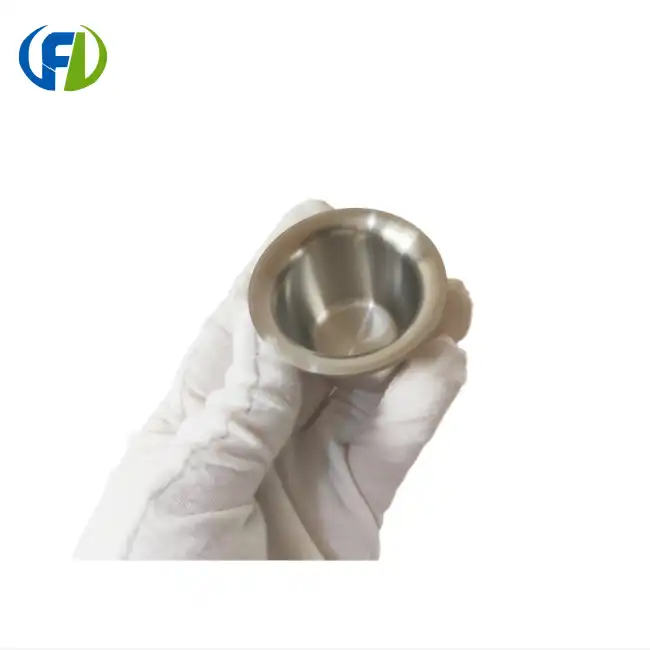
When labs and factories need to solve tough chemical fusion problems, the 50 mL Zirconium Crucible With Flange is the best choice because it is both cheap and very resistant to chemicals. These special containers, which are made from high-purity zirconium (usually 99.2%+ Zr+Hf), solve important problems in sample preparation where platinum becomes chemically weak and other materials, like alumina or quartz, don't work well in acidic conditions. The flange design isn't just for looks; it provides structural support that keeps the part from deforming during thermal cycling and makes it easy to connect to automated fusion equipment. When buying, teams know why these crucibles are so stable; they can make decisions that improve the accuracy of their analyses while keeping costs low.
Understanding the Stability of 50 ml Zirconium Crucibles with Flange
Design, Architecture, and Flange Functionality
The flange is a precisely designed, strengthened rim that sticks out from the opening of the crucible. This part of the structure has two uses that have a direct effect on how reliable it is. It makes a solid gripping surface for lab tools and automatic fusion machine arms, so they don't slip when handling crucibles at high temperatures, like when they get close to 1000°C. The lip also keeps the dimensions stable, which makes sure that the glass beads or fused solutions for ICP-MS and XRF analysis can be placed consistently in automatic systems that depend on geometric accuracy.
Tolerances for wall width (0.6mm to 1.0mm) and plate smoothness are set by manufacturing standards that follow ASTM B550/B493 guidelines. These settings make sure that the heat is spread evenly across the surface of the vessel, preventing hot spots that could damage the sample or shorten the life of the vessel. The 50ml capacity is just right for analytical workflows because it can hold representative sample volumes without being too heavy to handle.
Material Properties Driving Chemical Stability
Because of how it is made, zirconium is naturally good for chemical conditions that are tough. These crucibles are still lighter than platinum options (with a mass of 6.51 g/cm³) while still performing similarly in some situations. Although the material's melting point of about 1855°C allows for a lot of temperature space, it is important to keep in mind that between 450°C and 900°C, a protective dark oxide layer forms.
Zirconium's stability depends on the fact that it forms a passive oxide film. When zirconium is exposed to oxygen, it forms a dense, non-porous ZrO2 layer on its own that protects it from chemical attack. This protected film doesn't break down easily when exposed to alkali metal hydroxides, carbonates, borates, and nitrates. These are the kinds of things that quickly eat away at nickel, stainless steel, and even platinum when fused together. Because the oxide layer is stable, these crucibles keep their clean surfaces over hundreds of heat cycles. This keeps the accuracy of analysis in trace element detection, where contamination as small as a few parts in a billion can change the results.
Thermal Shock Resistance in Demanding Workflows
During analytical fusion procedures, crucibles are put through very large changes in temperature. When fluxes are mixed with samples, they are quickly heated to 900°C or higher and then cooled down slowly. Under this kind of stress, weaker materials form tiny cracks, which let flux through and finally lead to catastrophic failure. Zirconium's crystal structure allows it to expand and contract with temperature changes without breaking. This means that the material can withstand many heating and cooling cycles that would break clay or glass materials in weeks.
Cost savings are directly linked to the heat resistance of the 50 mL Zirconium Crucible with Flange. Laboratories that do daily fusion analyses say that zirconium crucibles can be used over 500 times if they are properly maintained. Nickel crucibles can only be used 50 to 100 times, and porcelain crucibles break right away when sodium peroxide is used. The longer service life means that the equipment doesn't need to be replaced as often, and unexpected breakdowns don't cause as many problems with work.
Comparing Zirconium Crucibles with Other Materials for Chemical Reactions
Performance Against Traditional Alternatives
Choosing the right material for fusion crucibles means finding a balance between cost, chemical compatibility, temperature tolerance, and the risk of contamination. This is how zirconium stacks up against other widely used materials:
- Platinum Crucibles: Platinum is very inert and can withstand high temperatures, but it becomes very weak when exposed to sodium peroxide or fluxes that contain phosphorus. Melting alkalis break down the material, which contaminates samples and damages vessels worth thousands of dollars. Zirconium crucibles can easily handle these harsh fluxes, and they don't cost nearly as much as platinum, which makes them a good choice for high-throughput labs that process dozens of samples every day.
- Alumina (Ceramic) Crucibles: Alumina is cheap, stable at high temperatures, but it contaminates samples with aluminium, which is a big problem when testing geology samples for small aluminium content. The substance is also not very resistant to alkali fluxes, which can get into the porous ceramic structure and break it down quickly. The dense oxide layer on zirconium stops flux from getting in, so the sample stays pure during the whole fusion process.
- Quartz (Fused Silica) Crucibles: Quartz can be used for some high-purity tasks, but it breaks down quickly in basic conditions. At fusion temperatures, sodium carbonate and sodium peroxide flow quickly through silica structures, rendering quartz unusable for the majority of fusion methods. Zirconium stays chemically stable under these exact conditions, which means that more scientific methods can be used.
Flanged Versus Non-Flanged Design Considerations
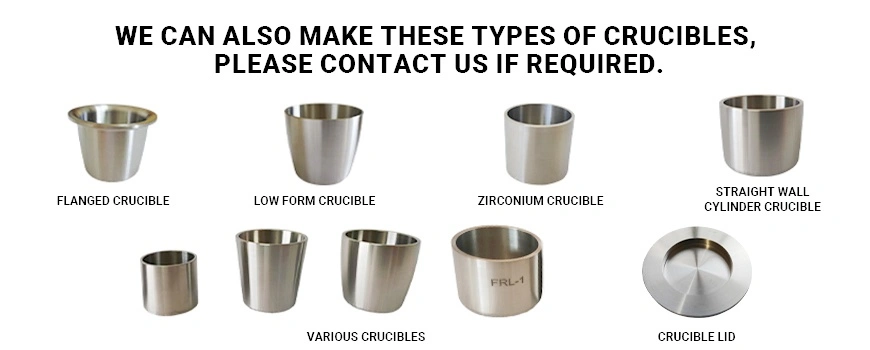
Whether to use flanged or non-flanged setups depends on how the work needs to be done and what tools can be used with it. When the crucible needs to connect to machine clamps or positioning fixtures, flanged designs work best in fully or partially automated fusion systems. For constant sample fusion and repeatable analysis results, the lip acts as a reliable mechanical reference to make sure that the sample stays in the same place within the heated coils.
Crucibles without flanges can still be used for manual tasks where workers hold the jars directly with their hands during the whole process. These simplified designs might be a little cheaper and easier to clean, but they don't have the mechanical stability that flanges do. When it comes to B2B purchases, flanged configurations are the safer option for facilities planning to automate processes or needing the highest level of operational standardisation across multiple analysts.
How to Use and Maintain 50 ml Zirconium Crucibles with Flange for Optimal Performance
Operating Parameters and Best Practices
To make the crucible last as long as possible, you must first know how to use it properly. Zirconium can handle temperatures close to its melting point, but it shouldn't be exposed to temperatures above 900°C to 1000°C for long periods of time. This temperature range works with normal fusion methods and stops the growth of too much oxide layer, which can change the weight and shape stability of the crucible over time.
Chemical compatibility is good for most alkali fluxes, but you should be careful with some chemicals. Hydrofluoric acid can damage zirconium's protective oxide layer, so stay away from it. In the same way, high amounts of liquid aluminium and some chloride salts can cause localised rusting. Before using new analysis methods, it is important to compare the flux makeup to zirconium compatibility charts. This keeps vessels from getting damaged without warning.
Cleaning Protocols That Preserve Integrity
Cleaning the crucible properly gets rid of any leftover flux and sample material without hurting the surface. Once the crucible is cool enough to handle, turn it upside down and tap it slightly to loosen the fused bead or hardened flux. Warm, weak acid solutions (5–10% HCl or HNO3) work well on stubborn residues because they dissolve most flux compounds without harming zirconium. Instead of rough scrubbing tools that damage the protective oxide layer, use soft brushes or ultrasonic cleaning to get rid of stubborn spots.
When not in use, the 50 mL Zirconium Crucible With Flange should be checked under good lighting for cracks, deformations, or colour changes that could mean they have been attacked by chemicals. Small amounts of surface oxidation show up as a dark coating that is uniform and doesn't affect performance. Localised pitting or crystalline deposits are signs of chemical exposure that don't work well together and need to be looked into. Surface condition is kept in good shape between analysis campaigns by storing in clean, dry places away from corrosive vapours.
Safety Protocols for High-Temperature Operations
When working with liquid flux-sample mixes, you need to be aware of the heat risks and chemical reactions that can happen. When working with hot crucibles, you should always wear the right safety gear, like gloves that can handle the heat, face shields, and protective aprons. The flange shape makes it easier to hold securely with long-handled tongs while keeping your hands away from heat sources.
Set clear rules for the workspace and divide it into hot and cool areas. Set aside heat-resistant surfaces to put crucibles on as soon as the furnace is turned off. This will keep them from getting thermal shock from touching cold metal seats. When swirling the molten contents to make sure they fuse completely, which is a common step in peroxide fusion workflows, keep your movements controlled so that corrosive materials don't splash out past the edge of the crucible.
Making the Right Procurement Decisions: Selecting and Purchasing Zirconium Crucibles with Flange
Aligning Specifications with Process Requirements
The first step to successful buying is matching the features of the crucible to the analysis needs. Most normal fusion tasks can be done with 50ml, but labs working with bigger sample sizes or needing higher flux ratios may need different amounts. Check to see if your standard operating procedures are compatible with this level of capability or if they need to be changed. The flanges' sizes must match the interfaces of your equipment. Automatic fusion systems give exact flange diameters and thickness tolerances that make sure they fit mechanically.
When analytical sensitivity gets to trace or ultra-trace levels, purity specifications become important. Standard commercial-grade zirconium (Grade 702) has hafnium levels that are usually less than 4.5%, which is enough for most uses. For specific tests that need hafnium-free grids, special nuclear-grade zirconium may be necessary, but the cost needs to be carefully weighed against the needs of the tests.
Supplier Evaluation and Quality Assurance
Not every company that makes zirconium crucibles consistently makes good ones. Check that possible sources have well-documented quality control systems and can give you records of analysis that show what the materials are made of, how they were manufactured, and that they meet relevant ASTM standards. Ask for client examples from companies that do similar analytical work. Their operating experience can tell you a lot about how reliable a product is and how quick a provider is.
Warranty terms show that the company that made the product is confident in its durability. Reliable providers offer warranties that cover flaws in the manufacturing process and early failure under certain working conditions. Before signing a purchase deal, make sure you know what the guarantee doesn't cover and how to file a claim. Suppliers who want to build long-term relationships with their customers are different from transactional vendors because they offer after-sales support, such as technical advice for fixing problems and access to replacement parts.
Economic Analysis: Bulk Ordering Versus Custom Specifications
When you buy in bulk, you can usually get better prices. When a lab has a steady flow of work, placing blanket purchase orders can help them get what they need at a price they can agree on. Figure out how many crucibles you need to order each year based on how long they are expected to last and how much you process. This will help you find the best balance between the costs of keeping supplies and the savings you can get per unit.
Custom specifications, including non-standard dimensions, specialized flange configurations, or enhanced purity grades, generally command premium pricing and extended lead times. Check to see if these investments are necessary for your specific needs or if standard catalogue items will meet your needs with a few small changes to how you work. If special crucibles seem like they would be needed, talk to providers early on in the method creation process. Their engineering teams will often be able to suggest cheaper options that use existing tools.
Why Zirconium Crucibles with Flange Are the Preferred Choice for High-Precision Chemical Applications
Performance Advantages: Delivering Measurable Value
The convergence of zirconium's material properties with thoughtful flange design in a 50 mL Zirconium Crucible With Flange creates compelling benefits for demanding chemical applications. Chemical inertness eliminates the contamination pathways that plague alternative materials, ensuring analytical results reflect actual sample composition rather than crucible contributions. This purity proves essential in geochemical exploration, where detecting parts-per-million concentrations of strategic elements drives mineral valuation decisions.
Thermal durability translates to lower operational costs through extended replacement cycles. When a single zirconium crucible withstands 500+ fusion cycles compared to 50 for nickel alternatives, the cost-per-analysis drops dramatically despite higher initial investment. This economic reality makes zirconium crucibles increasingly attractive as analytical volumes scale in high-throughput commercial laboratories serving mining, environmental, and materials testing sectors.
Mechanical stability from flanged construction reduces handling accidents and improves workflow efficiency. Analysts confidently manipulate hot crucibles knowing the flange provides secure tong purchase, minimizing the risk of dropped vessels, spilled samples, and workflow disruptions. Automated systems achieve higher reliability when crucible geometry remains consistent batch after batch, reducing machine calibration frequency and maintaining throughput targets.
Industry Applications Demonstrating Reliability
Geochemical laboratories conducting peroxide fusion for refractory mineral analysis represent the largest application segment. When digesting chromite, magnetite, or zircon sand samples, sodium peroxide flux generates highly corrosive conditions at elevated temperatures. Zirconium crucibles handle these demands routinely, enabling accurate determination of platinum group elements and rare earth elements that inform mining feasibility studies.
The pulp and paper industry relies on these vessels for black liquor analysis, where ashing and fusion determine inorganic content crucial for process control. Sodium carbonate and sulfur compounds in the liquor would rapidly degrade silica or porcelain crucibles, but zirconium's resistance maintains vessel integrity across thousands of analytical cycles, supporting continuous manufacturing operations.
Environmental testing laboratories performing alkaline fusion for heavy metal determination in solid waste and contaminated soil samples trust flanged zirconium crucibles for their compatibility with semi-automated fusion furnaces. The stable crucible suspension these systems require comes directly from precise flange engineering that positions vessels consistently within heating elements, delivering reproducible fusion conditions essential for regulatory compliance testing.
Conclusion
Zirconium crucibles with flange designs represent a proven solution balancing performance, durability, and economic value for demanding chemical fusion applications. Their exceptional resistance to alkali fluxes, thermal stability across hundreds of cycles, and contamination-free operation make them indispensable tools in analytical laboratories requiring precision and reliability. The flanged configuration enhances handling safety while enabling automated workflow integration that improves throughput and consistency. Procurement teams evaluating fusion crucible options should prioritize suppliers demonstrating material quality, manufacturing precision, and comprehensive support capabilities to maximize long-term operational success.
FAQ
1. What makes zirconium crucibles superior to platinum for certain fusion applications?
Zirconium crucibles outperform platinum when working with sodium peroxide, sodium carbonate, or phosphorus-containing fluxes that cause platinum embrittlement or dissolution. While platinum offers broader chemical compatibility, zirconium delivers comparable performance in alkali fusion applications at significantly lower cost, making it the economically rational choice for high-volume laboratories processing geological or environmental samples.
2. How many fusion cycles can I expect from a quality 50ml zirconium crucible?
Well-maintained zirconium crucibles from reputable manufacturers typically endure 500 or more fusion cycles under standard sodium peroxide or carbonate fusion protocols. Actual lifespan depends on operating temperatures, flux aggressiveness, cleaning procedures, and handling care. Proper technique and regular inspection maximize service life, with some laboratories reporting crucible use exceeding 800 cycles before replacement becomes necessary.
3. Can zirconium crucibles accommodate automated fusion equipment?
The flanged design specifically addresses automation requirements. The reinforced rim provides the mechanical interface that automated fusion systems need for reliable crucible positioning and secure clamping during heating cycles. Verify flange dimensions match your equipment specifications—most manufacturers offer standard configurations compatible with major fusion instrument brands, and custom geometries address specialized equipment needs.
Partner with Freelong for Premium Zirconium Crucible Solutions
At Baoji Freelong New Material Technology Development Co., Ltd., we manufacture high-purity 50 Ml Zirconium Crucible With Flange products meeting stringent ASTM specifications for analytical laboratories and industrial chemical processing facilities worldwide. Located in China's Titanium Valley, our facility combines advanced metallurgical expertise with rigorous quality control, ensuring every crucible delivers the chemical resistance, thermal stability, and dimensional precision your operations demand. We serve clients across aerospace, chemical processing, research institutions, and material testing sectors in the United States, Europe, Australia, and beyond. Our technical team provides application support, helping you optimize fusion protocols, while our flexible manufacturing accommodates custom specifications for specialized requirements. Contact jenny@bjfreelong.com to discuss your crucible procurement needs with an experienced zirconium crucible supplier committed to your analytical success.
References
1. American Society for Testing and Materials. "ASTM B550-18: Standard Specification for Zirconium and Zirconium Alloy Strip, Sheet, and Plate." ASTM International, 2018.
2. Pugh, D.V., and Diegle, R.B. "Corrosion Behavior of Zirconium in Alkaline Environments." Journal of Materials Science, vol. 34, no. 8, 1999, pp. 1817-1827.
3. Thompson, R.A. "Sample Preparation Techniques for X-Ray Fluorescence Analysis: A Comprehensive Review." Spectroscopy Letters, vol. 48, no. 6, 2015, pp. 401-419.
4. Lustig, S., and Beck, J.R. "Material Selection for High-Temperature Chemical Processing Equipment." Chemical Engineering Progress, vol. 112, no. 5, 2016, pp. 45-52.
5. International Atomic Energy Agency. "Zirconium in the Nuclear Industry: Properties and Applications." IAEA Technical Report Series No. 425, 2004.
6. Chen, Y., and Morrison, G.H. "Fusion Methods in Geochemical Analysis: Flux Selection and Crucible Compatibility." Geostandards Newsletter, vol. 27, no. 2, 2003, pp. 125-138.

_1745741226163.webp)
_1772615715975.png)
_1745830239756.webp)
_1772433899860.png)
Learn about our latest products and discounts through SMS or email