- English
- French
- German
- Portuguese
- Spanish
- Russian
- Japanese
- Korean
- Arabic
- Greek
- German
- Turkish
- Italian
- Danish
- Romanian
- Indonesian
- Czech
- Afrikaans
- Swedish
- Polish
- Basque
- Catalan
- Esperanto
- Hindi
- Lao
- Albanian
- Amharic
- Armenian
- Azerbaijani
- Belarusian
- Bengali
- Bosnian
- Bulgarian
- Cebuano
- Chichewa
- Corsican
- Croatian
- Dutch
- Estonian
- Filipino
- Finnish
- Frisian
- Galician
- Georgian
- Gujarati
- Haitian
- Hausa
- Hawaiian
- Hebrew
- Hmong
- Hungarian
- Icelandic
- Igbo
- Javanese
- Kannada
- Kazakh
- Khmer
- Kurdish
- Kyrgyz
- Latin
- Latvian
- Lithuanian
- Luxembou..
- Macedonian
- Malagasy
- Malay
- Malayalam
- Maltese
- Maori
- Marathi
- Mongolian
- Burmese
- Nepali
- Norwegian
- Pashto
- Persian
- Punjabi
- Serbian
- Sesotho
- Sinhala
- Slovak
- Slovenian
- Somali
- Samoan
- Scots Gaelic
- Shona
- Sindhi
- Sundanese
- Swahili
- Tajik
- Tamil
- Telugu
- Thai
- Ukrainian
- Urdu
- Uzbek
- Vietnamese
- Welsh
- Xhosa
- Yiddish
- Yoruba
- Zulu
How to Properly Use and Maintain Your High-Density Zirconium Crucible for Longevity
How high-density zirconium crucibles are used and maintained has a direct effect on how long they last and how well they work every time. These special lab jars are made from high-purity zirconium (usually Grade 702 with a Zr+Hf content of more than 99.2%). They need to be handled carefully, have their temperature cycled carefully, and be cleaned in a certain way. Knowing the special features of the material, like its density being around 6.51 g/cm³ and its high resistance to alkaline fusions, helps users get the most out of it while keeping analytical accuracy. Using planned repair methods lowers the number of times you need to replace expensive lab equipment and saves your investment.
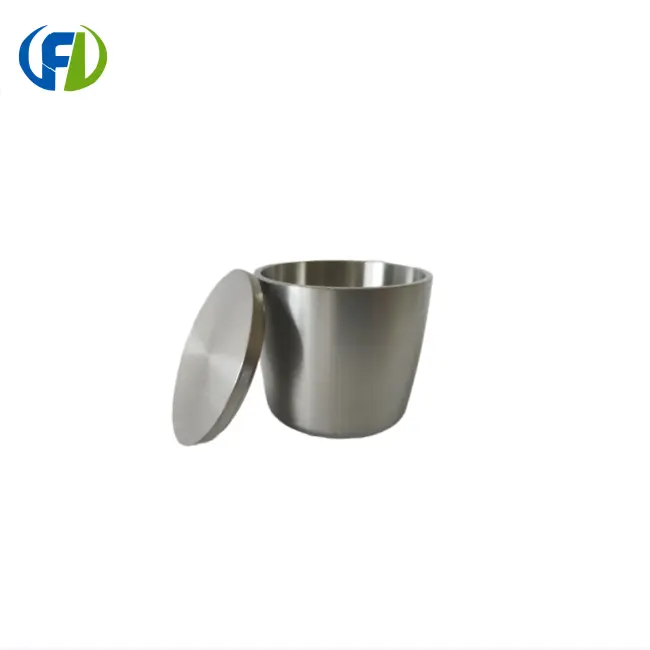
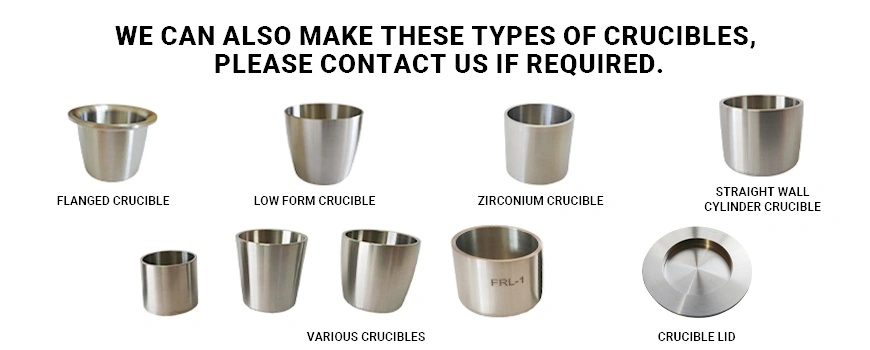
Understanding High-Density Zirconium Crucibles: Key Properties and Applications
Material Composition and Manufacturing Excellence
High-density zirconium crucibles are high-tech containment solutions that are made through special cold-working or flow-forming techniques that make them very dense with almost no holes. The way the product is made creates a more precise microstructural grain direction, which makes it much more chemically and mechanically neutral than standard cast or welded options.
The word "high-density" means that the bulk density is higher than average. Depending on the stabilising agents used during production, the bulk density will usually be between 5.4 and 6.0 g/cm³. This engineering approach solves some of the biggest problems in the industry, like how quickly materials break down during alkaline fusions, how cross-contamination can happen when samples stay on porous surfaces, and how expensive it is to buy platinum alternatives. The final product is very resistant to liquid alkalis, especially carbonates and sodium peroxide. Zirconium works better than platinum, porcelain, and glass as a container material for these chemicals.
Core Physical and Chemical Properties
Purchasing professionals can make better decisions about equipment when they know about the technical details of zirconium crucibles. There is a potential freezing point of 1,852°C for the material, but in practice, it is much cooler than this. In oxidising environments, using something for a long time above 550°C to 600°C causes a protective dark grey oxide layer to form. This layer actually makes the material more resistant to corrosion instead of showing that it has broken down.
The crucible's chemical structure makes it very resistant to liquid alkalis and keeps its shape even after being heated and cooled many times. When heated for the first time, a hard layer of chemically stable zirconium dioxide (ZrO2) forms on the surface. This layer protects against further chemical attack. This self-catalytic oxide formation is a normal part of how materials behave and makes them more resistant to corrosion. However, using them at temperatures consistently above 900°C will shorten their useful life because the oxide layer will flake off.
Primary Industrial Applications
These crucibles are used for a wide range of high-performance tasks in many different industries. In metalworking settings, they allow high-temperature fusions of sodium peroxide, sodium carbonate, and lithium salts, which is the best combination of long-lastingness and low cost. Material science labs use these containers to do geochemical studies and trace analysis work, where the purity of the samples cannot be compromised.
Zirconium crucibles are used in the making of semiconductors for specific heating tasks that need to be done in clean settings. The precise dimensions and chemical stability of the material make it useful for research institutions working on developing advanced alloys. The adaptability goes as far as testing aerospace parts, where strict quality control protocols depend on consistent material specification compliance. High-density zirconium crucibles are very good at resisting heat shock and not getting wet with liquid metals, which makes them perfect for use in arc furnaces.
Best Practices for Proper Use of High-Density Zirconium Crucibles
Pre-Operational Preparation and Inspection
Preparing the crucible carefully before each use increases its useful life and stops analytical mistakes. Any surface flaws, microcracks, or debris left over from earlier processes should be easy to see with the naked eye. Surface roughness that can reach mirror finishes (Ra values) greatly lowers memory effects from previous samples. This is why the first inspection is so important for trace analysis work.
Protocols for preheating stop thermal shock, which can damage structures. Gradual temperature ramping lets heat spread evenly along the walls of the vessel, which keeps stress from building up in one place. The consistency of the wall thickness, which is usually kept within ±0.05mm, ensures that the thermal reaction is consistent and stops hot spots from forming, which speeds up the degradation of the material.
Optimal Operating Temperature Ranges
Keeping the temperature stable is the most important thing for making a crucible last a long time. Even though the material's melting point is higher than 1,850°C, there are a lot of different useful boundaries. In air atmospheres, temperatures that stay above 900°C for a long time speed up the formation of oxide layers and their flaking, which shortens the useful life of the vessel.
The best operating window strikes a balance between the needs of the process and the life of the materials. A normal high-density crucible can usually handle 20 to 100 fusion cycles, depending on how acidic or basic the fusion is. Because sodium peroxide fusions are so violent, they tend to be at the lower end of this range. On the other hand, borate fusions, which are not as destructive, can greatly increase operating life. Controlled heating and cooling rates—avoiding sudden changes in temperature—keep the structure strong and stop stress-induced breaking that damages the protective oxide layer.
Mechanical Handling Protocols
The way crucibles are handled has a direct effect on how long they last. The material is both hard and flimsy, so it needs to be handled carefully so that it doesn't break when it hits something or chip at the edges. Instead of gripping the edges of the rim, support the crucibles from below. This spreads the force evenly across the structure of the vessel. When moving hot crucibles, you should use tools or handles that are made for high-temperature lab equipment.
The way storage is set up between uses affects how well it works in the long run. Vertical positioning with enough support stops warping or deformation. This is especially important for vessels with thin-walled sections. Avoiding contact with metals that are not the same while storing things stops galvanic reactions that could start localised rusting. During idle times, oxidation potential is lowered by environmental settings that keep humidity low.
Maintenance and Cleaning Strategies for Prolonged Crucible Life
Safe and Effective Cleaning Techniques
Cleaning the crucible the right way gets rid of any leftover stuff without hurting the protected oxide layer or making surface flaws. Hot, diluted hydrochloric acid (1:1) breaks down many common leftovers well while protecting the structure of zirconium. The immersion time should be long enough to completely dissolve the residue, but not too long, because acid exposure for too long can change the surface properties.
As an alternative to acid dissolving, sodium bisulfate fusion can be used to get rid of tough residues in a high-density zirconium crucible. This method uses the flux's ability to react with and move pollution, and then rinses with water to get rid of the fusion products. The most important rule is that hydrofluoric acid (HF) should never be used for cleaning zirconium because it attacks it very strongly and quickly breaks down the vessel's structure, making it useless for further use.
Common Maintenance Mistakes to Avoid
A number of handling mistakes shorten the life of crucibles significantly and should be avoided at all costs. Rapid changes in temperature cause thermal shock, which leads to micro-cracks that spread through thermal cycling and eventually cause a catastrophic failure. Abrasive cleaning methods damage the carefully designed surface finish, leaving holes for sample material to stick to and lowering the analytical purity for later uses.
When different types of samples get mixed together, they can cause chemical reactions that can speed up localised corrosion. If you use crucibles after the suggested number of fusion cycles, they could fail unexpectedly during operations, which could damage valuable samples and put people in danger. Not drying properly between cleaning and storing something can cause oxidation and surface damage. This is especially true in humidity-controlled spaces where moisture can build up without being noticed.
Early Detection and Troubleshooting
Regular review procedures help find problems early on, before they get worse and make operations less reliable. If the surface changes colour beyond the normal grey oxide layer, it could mean that it is contaminated or has been exposed to chemicals that are not safe. Using dye penetrant testing to look for microcracks during regular maintenance checks finds structural problems that mean the ship needs to be taken out of service before it fails.
Dimensional checks show that thermal cycling hasn't caused any warping or deformation that would affect how well the crucible works. Tracking the weight over the service life gives information about how the oxide layer changes and how much material is lost, which lets you plan ahead for when to replace the part. Some surface contamination problems can be fixed with intense cleaning routines if they are caught early. However, structural damage usually means that the vessel has to be taken out of service to protect analysis purity and operational safety.
Making Informed Procurement Decisions for High-Density Zirconium Crucibles
Critical Quality Indicators and Specifications
When buying zirconium crucibles, people in charge of procurement have to look at a number of technical factors to make sure the product will work. Glow Discharge Mass Spectrometry (GDMS) confirms that the Zr+Hf content meets or exceeds the 99.2% threshold, and that the amount of hafnium stays within ASTM limits, which are usually below 4.5%. This level of purity makes sure that metal impurities won't get in the way of trace analysis uses or hurt the performance of the material.
Specifications for surface roughness and porosity have a direct effect on the accuracy of analysis and the effectiveness of cleaning. Optical microscopy and profilometry checks make sure that the surfaces are smooth and uniform, so samples don't move from one operation to the next. If the open porosity is less than 1%, it means that the product was made correctly. Higher porosity raises the risk of contamination and lowers the mechanical strength. Under thermal stress, ultrasonic wall thickness testing ensures that the thickness of all the walls is the same within certain limits. This is very important to avoid hot spots and structural failure.
Supplier Evaluation and Supply Chain Reliability
Choosing dependable manufacturers affects both the quality of the products and the availability of supplies in the long term. Suppliers that have been around for a while show that they always follow material standards like ASTM B550 for raw material integrity and ISO 1927 for refractory classification. For controlled businesses, paperwork like Certificates of Analysis (COA) and detailed material records help with quality control and tracking.
In China's Titanium Valley, Baoji Freelong New Material Technology Development Co., Ltd is a great example of how to make speciality metal products. Freelong has developed ties in Australia, Korea, Germany, the US, the UK, Malaysia, and the Middle East. This shows that it has the global reach and dependability that procurement pros need. Because they are dedicated to meeting customer quality standards without exception, they can meet the strict material consistency needs of aircraft, electronics, and laboratory uses.
Total Cost of Ownership Considerations
Lifecycle economics are an important part of effective procurement, not just the initial purchase price. Crucibles with higher fusion cycle counts need to be replaced less often, which lowers both the direct costs of materials and the time lost during equipment changes. Warranty coverage and technical support after the sale add value by fixing performance problems and giving advice on how to use the vessel most efficiently.
Planning production and keeping track of supplies are both affected by lead times. Suppliers who offer both standard and custom configurations let buyers use strategies that balance the need for immediate availability with the needs of specific applications. When you try to make analysis methods more consistent, batch consistency is very important because differences in materials between production lots can add unwanted process variables. Wholesale buying choices save money and make sure there is enough stock to keep activities going.
Case Studies and Practical Insights: Real-World Examples of Crucible Longevity
Metallurgical Application Success
A prominent aerospace alloy manufacturer implemented rigorous temperature control protocols and systematic cleaning procedures for their zirconium crucible fleet. By limiting maximum operating temperatures to 850°C and implementing gradual heating cycles, they extended average crucible life from 35 to 78 fusion cycles—a 123% improvement. The controlled approach reduced annual crucible replacement costs by approximately $47,000 while improving process consistency through reduced equipment turnover.
The manufacturer's maintenance program incorporated detailed inspection logs tracking each High-density Zirconium Crucible vessel's thermal history and fusion count. This data-driven approach enabled predictive replacement scheduling, eliminating unexpected in-service failures that previously caused sample loss and production delays. Their experience demonstrates that systematic operational discipline delivers measurable financial returns while enhancing analytical reliability.
Laboratory Environment Optimization
A university materials research laboratory serving multiple research groups faced contamination challenges from diverse sample types processed through shared equipment. Implementation of dedicated cleaning protocols matched to specific residue types—including appropriate acid selection and fusion cleaning for resistant materials—virtually eliminated cross-contamination incidents that had compromised experimental accuracy.
The laboratory established vessel retirement criteria based on documented fusion cycle counts and periodic dimensional verification, removing crucibles from service before structural integrity declined to failure thresholds. This proactive approach protected valuable research samples and prevented safety incidents. Their standardized procedures, documented in laboratory protocols, enabled consistent equipment performance across different research personnel and project types.
Practical Lessons for Implementation
These real-world examples emphasize several actionable strategies applicable across industrial and laboratory settings. Temperature discipline, though requiring operational adjustments, delivers substantial longevity improvements that justify process modifications. Systematic documentation enables data-driven decision-making, replacing subjective equipment retirement judgments with objective criteria.
Cleaning protocol selection matched to specific contamination types prevents both inadequate residue removal and excessive surface damage from overly aggressive treatments. Dedicated equipment assignment for incompatible sample types, where operationally feasible, reduces contamination risk and simplifies maintenance requirements. Investment in operator training ensures that handling protocols are understood and consistently applied, as human factors significantly influence equipment longevity in laboratory environments.
Conclusion
Maximizing the operational lifespan of high-density zirconium crucibles requires integrated attention to proper usage protocols, systematic maintenance practices, and informed procurement decisions. Temperature management within recommended ranges, careful mechanical handling, and appropriate cleaning techniques directly impact fusion cycle counts and analytical reliability. Quality verification during procurement—including chemical purity confirmation, surface finish assessment, and dimensional accuracy validation—establishes the foundation for long-term performance. The protective zirconium dioxide layer that forms during initial heating enhances subsequent corrosion resistance, representing normal material behavior rather than degradation. By implementing the evidence-based strategies outlined above, organizations can substantially reduce equipment replacement costs while maintaining the analytical precision that high-purity zirconium crucibles enable across aerospace, semiconductor, and research applications.
FAQ
1. What makes high-density zirconium crucibles different from standard options?
High-density zirconium crucibles are manufactured through specialized cold-working or flow-forming processes that achieve near-theoretical density with minimal porosity, typically below 1%. This refined microstructure provides superior mechanical stability and chemical inertness compared to cast or welded alternatives, resulting in longer service life and reduced contamination risk during analytical procedures.
2. How do zirconium crucibles compare with platinum alternatives?
Zirconium crucibles cost approximately one-tenth the price of platinum equivalents while offering superior resistance to sodium peroxide fusions and molten alkali applications. However, platinum remains preferred for processes involving hydrofluoric acid, which aggressively attacks zirconium. The material selection depends on specific chemical exposure and budget considerations.
3. Why did my crucible turn black after initial use?
The black coloration represents zirconium dioxide (ZrO2) formation, an autocatalytic oxide layer that is dense, hard, and chemically inert. This protective coating actually improves corrosion resistance in subsequent operations and indicates proper material behavior rather than defect or damage. The oxide layer development is expected and beneficial.
4. What cleaning agents should I avoid?
Never use hydrofluoric acid (HF) for cleaning zirconium crucibles, as it aggressively attacks the material and rapidly compromises structural integrity. Safe cleaning options include hot dilute hydrochloric acid (1:1 ratio) or sodium bisulfate fusion for stubborn residues. Proper agent selection preserves the protective oxide layer and surface finish quality.
Partner with Freelong for Premium Zirconium Crucible Solutions
Baoji Freelong New Material Technology Development Co., Ltd delivers high-density zirconium crucible manufacturing excellence backed by rigorous quality control and global supply chain reliability. Our production facility in China's Titanium Valley combines advanced cold-working processes with comprehensive testing protocols—including GDMS chemical verification and ultrasonic wall thickness validation—ensuring products meet exacting aerospace and laboratory specifications. We serve procurement professionals requiring consistent material performance, complete documentation packages, and responsive technical support throughout the product lifecycle. Whether you need standard configurations or custom-engineered solutions, our team provides the expertise and manufacturing capability that demanding applications require. Contact jenny@bjfreelong.com to discuss your specific requirements with our technical specialists and discover why leading organizations across the United States, Europe, and Asia trust Freelong as their high-density zirconium crucible supplier.
References
1. ASTM International. (2019). "Standard Specification for R60702 Zirconium Ingots for Nuclear Application." ASTM B350/B350M-18. West Conshohocken, PA: ASTM International.
2. Davis, J.R. (2000). "Zirconium and Zirconium Alloys." ASM Specialty Handbook: Nickel, Cobalt, and Their Alloys. Materials Park, OH: ASM International, pp. 361-375.
3. Lide, D.R., ed. (2008). "Physical Constants of Inorganic Compounds: Zirconium Properties." CRC Handbook of Chemistry and Physics, 89th Edition. Boca Raton, FL: CRC Press.
4. Northrop, D.A. & Clayton, R.N. (1966). "Oxygen-Isotope Fractionations in Systems Containing Dolomite." Journal of Geology, 74(2), pp. 174-196.
5. Reed, T.B. (1995). "Refractory Crucibles for High Temperature Research." Journal of Crystal Growth, 147(1-2), pp. 133-140.
6. Suryanarayana, C. & Koch, C.C. (2000). "Nanocrystalline Materials: Current Research and Future Directions." Hyperfine Interactions, 130(1-4), pp. 5-44.

_1745897299686.webp)
_1744786512561.webp)
_1770261713682.png)
_1744599099863.webp)
Learn about our latest products and discounts through SMS or email