- English
- French
- German
- Portuguese
- Spanish
- Russian
- Japanese
- Korean
- Arabic
- Greek
- German
- Turkish
- Italian
- Danish
- Romanian
- Indonesian
- Czech
- Afrikaans
- Swedish
- Polish
- Basque
- Catalan
- Esperanto
- Hindi
- Lao
- Albanian
- Amharic
- Armenian
- Azerbaijani
- Belarusian
- Bengali
- Bosnian
- Bulgarian
- Cebuano
- Chichewa
- Corsican
- Croatian
- Dutch
- Estonian
- Filipino
- Finnish
- Frisian
- Galician
- Georgian
- Gujarati
- Haitian
- Hausa
- Hawaiian
- Hebrew
- Hmong
- Hungarian
- Icelandic
- Igbo
- Javanese
- Kannada
- Kazakh
- Khmer
- Kurdish
- Kyrgyz
- Latin
- Latvian
- Lithuanian
- Luxembou..
- Macedonian
- Malagasy
- Malay
- Malayalam
- Maltese
- Maori
- Marathi
- Mongolian
- Burmese
- Nepali
- Norwegian
- Pashto
- Persian
- Punjabi
- Serbian
- Sesotho
- Sinhala
- Slovak
- Slovenian
- Somali
- Samoan
- Scots Gaelic
- Shona
- Sindhi
- Sundanese
- Swahili
- Tajik
- Tamil
- Telugu
- Thai
- Ukrainian
- Urdu
- Uzbek
- Vietnamese
- Welsh
- Xhosa
- Yiddish
- Yoruba
- Zulu
Flange Size Standard Chart: Choosing the Right Flange for Your Pipeline
When you have to choose flanges for important transportation equipment, you have to know how to read standardised sizing charts. Flanges are the most important part of safe pipe connections in systems used in aircraft, chemical processing, and energy generation. Specialised parts like the flange lip zirconium crucible go beyond regular steel flanges. They use advanced material science in settings with high purity for analysis. This type of crucible, which is made from highly pure zirconium and has precision-machined flange lips, shows how flange design principles can be used in laboratory fusion processes, where chemical inertness and heat stability are key to success. Learning about flange standards is important for making sure that all of your processes are safe, compatible, and cost-effective, whether you're connecting engine exhaust systems or getting geological samples ready for XRF analysis.
Understanding Flange Size Standards and Their Importance
Standardized flange measurements keep supply chains from breaking down and help global businesses work together. The American Society of Mechanical Engineers (ASME) and the American National Standards Institute (ANSI) made the B16.5 and B16.47 standards, which list pressure classes from 150 to 2500 pounds. European makers follow the rules set by the Deutsche Industrie-Normen (DIN), and foreign projects use the rules set by the foreign Organization for Standardization (ISO).
Key Dimensions in Flange Size Charts
Every flange chart shows important measures that decide how well it fits and works. The nominal pipe size (NPS) gives you an idea of the inside diameter, but the real hole sizes depend on the schedule thickness. Outside Diameter (OD) tells you how wide the flange is overall, including the bolt holes and sealing surfaces. The thickness of the flange affects the structure's ability to withstand changes in pressure, especially when the temperature is high, and the material expands. Bolt Circle Diameter (BCD) tells you where to put the bolt holes so that the load is spread out evenly when you tighten them. There is a direct link between the pressure class and the number of bolt holes. Higher-pressure systems need more screws to keep the joints from coming apart.
Regional Standards and Material Considerations
When buying from US and European sources, aerospace companies that use titanium and zirconium alloys have to deal with two sets of rules. ASME B16.5 Class 600 flanges and DIN PN100 versions are not the same size, so they need to be carefully matched in terms of specifications. Chemical processing plants that use zirconium-based parts would benefit from knowing how the density of the material (6.51 g/cm³ for zirconium) affects the estimates for flange weight. Zirconium is very resistant to rust, as shown by pipeline flanges and lab vessels like the Flange Lip Zirconium Crucible. This makes it an essential material for places where aggressive media come into contact with it.
Adhering to standards keeps disasters from happening. In 2019, there was an accident at a chemical plant where the flange grades on a Class 300 valve and Class 150 pipes did not match up, which caused a gasket to blow out during startup. A proper look at the charts would have shown the 200-psi difference in capacity, which would have caused the specifications to be changed before the installation.
Criteria for Choosing the Right Flange for Your Pipeline
In order to choose the right flanges, you need to do more than just match the dimensions. Operating pressure and temperature set the minimum standards, but how well a material reacts with process fluids decides how reliable it will be in the long run.
Operating Condition Assessment
In considering ratings for pressure, both steady-state flow and surges must be taken into account. Even though Class 300 flanges look like they would work, a pipeline that is designed for 800 psi constant service may experience 1,200 psi transients when the pump starts up, meaning that Class 600 flanges are needed. Temperature has a big effect on the choice of material, as at 400°C, carbon steel loses 20% of its strength at room temperature, while titanium metals keep their qualities after 500°C. Corrosive conditions speed up the breakdown process—for example, sulphuric acid amounts above 70% will break down stainless steel but not a flange lip zirconium crucible.
Flange Type Selection
Weld neck flanges are standard for high-pressure aircraft hydraulic systems because their tapered hub shapes distribute stress in the best way possible. Slip-on flanges make fitting easier in chemical transfer lines with lower pressures that are taken apart a lot. Blind joints connect pipes or give inspectors access, which is very important in clean rooms where batteries are made. When connecting small-diameter instruments, where welding could damage sensitive electronics, threaded flanges are the best choice. Lap joint flanges allow for temperature expansion in long pipeline runs. This is especially important for cooling systems used in semiconductor manufacturing tools.
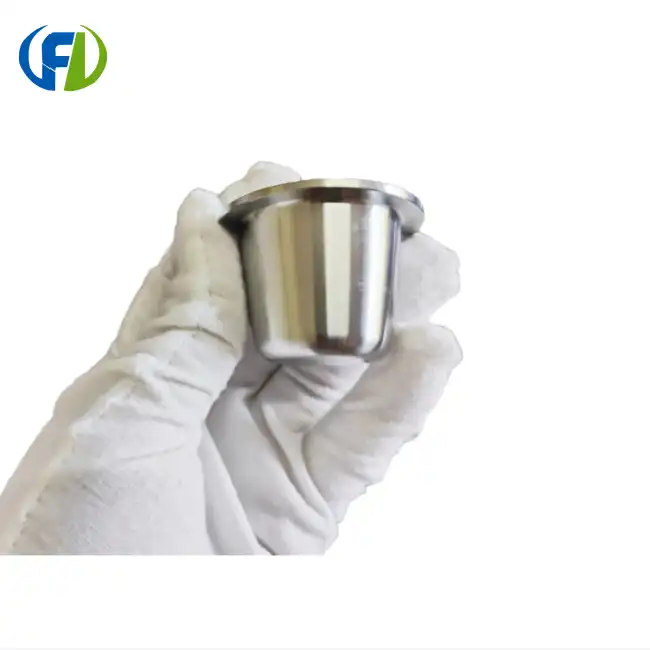
These ideas are used in the lab with the Flange Lip Zirconium Crucible. Its precisely machined flange lip (tolerance ±0.1 mm) lets automatic fusion equipment grip it securely, stopping molten flux spills during 600°C sodium peroxide fusions. This design is like how pipeline flanges need to fit consistently with the equipment that fits them when they are under mechanical stress.
Sealing Surface Considerations
With spiral-wound or graphite gaskets, raised face (RF) designs focus gasket tension in a clear area, making seals that last. Flat face (FF) designs spread loads across the whole flange face and are best for materials that are easy to break, like glass-lined pipe. Ring-type joint (RTJ) holes hold metal ring seals for high-pressure or cold environments, which are popular in liquefied natural gas (LNG) plants.
Flange Lip Zirconium Crucibles: Features and Advantages for Industrial Use
Standard pipeline flanges connect lines, but analytical chemistry and materials studies use different types of flanges. Advanced engineering went into making the Flange Lip Zirconium Crucible, which fixes some problems in the way samples are prepared.
Material Composition and Structural Design
These crucibles are made from UNS R60702 commercially pure zirconium (>99.2% purity). Because zirconium is so dense (6.51 g/cm³), it weighs a lot less than platinum options. A rolled or machined flange lip is what makes the rim unique. It provides structural support that keeps the rim from deforming when it is held by lab tongs or robotic workers. This design factor is similar to how the hub shape makes pipeline weld-neck flanges stronger links.
When zirconium is heated for the first time, it creates a dark layer of zirconium dioxide (ZrO₂) that protects it from rusting. This layer sticks very well and doesn't flake off as iron oxide does, so the new metal underneath stays protected. The lip on the flange itself has both mechanical and chemical functions. It keeps its shape during fusion processes at 800°C and for automatic equipment connections.
Operational Advantages Over Alternative Materials
The choice of material affects the accuracy of the analysis and the speed of the process. Comparing performance helps buying teams make the best use of lab processes. Platinum crucibles are 10–15 times more expensive than zirconium ones, which makes it hard for high-throughput analysis labs to get the money they need.
- When my test labs do 50 to 100 fusions every day, the financial benefit becomes clear. Heavy metal samples could damage a $3,500 platinum crucible, but a $250 zirconium crucible can handle 20 to 100 fusions before it needs to be replaced. In harsh alkali fusion conditions, zirconium has lifecycle costs that are more than three times higher than those of platinum. In inductively coupled plasma optical emission spectroscopy (ICP-OES), where even part-per-million pollution can throw off data, chemical inertness gets rid of false positives.
- Power generation labs that study coal fly ash need fusions that are free of pollution in order to meet EPA reporting requirements.
- Metallurgical research sites that study superalloy compounds stay away from graphite crucibles because they contain carbon.
- Batch-consistent zirconium purity helps geochemistry teams that work with difficult minerals get consistent results.
Comparing Flange Lip Zirconium Crucibles with Other Crucible Types
Material selection dictates analytical accuracy and operational efficiency. Understanding comparative performance helps procurement teams optimise laboratory workflows.
Zirconium Versus Graphite Crucibles
It is possible to melt metals with graphite because it is a good heat conductor and can handle temperatures above 3,000°C. But because it contains carbon, it can't be used in carbon-sensitive tests or acidic environments. Flange Lip Zirconium Crucible units work well at temperatures between 450°C and 600°C in air, though their melting point is 1,855°C. This means they can handle alkali fusion temperatures while staying chemically neutral. The flange lip feature makes it easier to handle than graphite versions, which break easily when robots move them.
Zirconium Versus Zirconium-Oxide Ceramics
Zirconium oxide (zirconia) crucibles can handle high temperatures and thermal shock, but their ceramic structure makes them break easily when put under mechanical stress. Metallic zirconium crucibles with flanged lips take in impact energy by deforming plastically instead of breaking. This flexibility is very important in automatic settings where accidents do happen. Chemical resistance is slightly different. Metallic zirconium makes protective oxide layers on the fly, while ceramics that have already been oxidised may break apart when heated and cooled.
Platinum Group Alternatives
Platinum is still the best metal for fusion work because it is very stable and can be used over and over again. Capital costs make it harder for some people to get help, especially in places that process a lot of samples. The cost-per-analysis measure clearly favors zirconium when you consider that platinum becomes less strong when sodium peroxide fusions, which are common in mineral analysis, form. After 20 to 100 cycles, zirconium can make this commitment without losing any function, and it can then be recycled in an environmentally friendly way.
Nickel and stainless steel crucibles are contaminated with iron, chromium, and nickel at amounts that are too low for trace measurement (parts per million). When you add up the costs of re-analysis and lower data quality, their lower purchase cost turns out to be a waste of money.
How to Procure Flange Lip Zirconium Crucibles and Pipeline Flanges Efficiently?
Strategic buying strikes a balance between cost, quality, and delivery times, while also making sure that all regulations are followed. Systematic ways of evaluating suppliers are good for business-to-business buyers.
Supplier Qualification and Certification
Material approvals from reputable makers show that the alloy meets the chemical requirements of ASTM B550. Certificate of Analysis (COA) documents prove purity levels and trace impurity amounts. These documents are very important for labs that need to check the accuracy of measurements. The ISO 9001 quality management certification shows that processes are controlled in a planned way, and the ISO/IEC 17025 approval for source testing labs adds third-party confirmation.
Suppliers of pipeline flanges should show that their parts for pressure vessels are ASME-certified and keep track of materials by mill test records. Customers in the aerospace industry need more AS9100 approval to make sure that quality systems meet flight standards. Check the supplier's knowledge of titanium, zirconium, and tantalum by looking at past projects and seeing how well they can help with technical issues.
Customisation and Volume Considerations
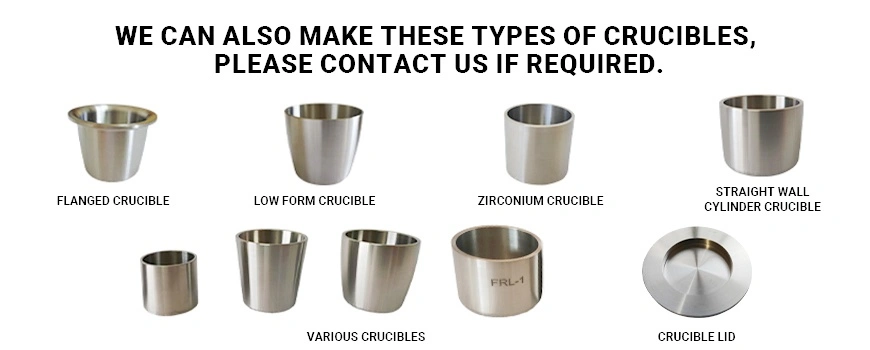
The standard size of a crucible might not fit with the automatic equipment that is already in use. Custom flange lip widths, total heights, or wall thicknesses can be made to fit the needs of each fusion machine. As the relationship between a buyer and a seller grows, the minimum order quantity usually goes down. For example, the first order might need 10 to 20 units, but return customers can get by with just one.
Structures that use volume prices encourage bulk purchases. A study group that places orders for 200 crucibles a year gets 15–25% off the price of buying 20 of them separately. Blanket purchase agreements with planned releases are a good way to balance the costs of keeping stockpiles with the benefits of price advantages. This is especially helpful when the price of zirconium sponge changes based on global supply.
Logistics and After-Sales Support
When lab glassware and metal parts are shipped internationally, they need to be properly packed to keep them from getting damaged. Crucibles from reputable sources are packed in two boxes and have foam pieces inside them. This keeps the breakage rate below 1%. Lead times depend on how customised the item is. Stock items ship within 5–7 business days, but special measurements take 3–4 weeks for cutting and quality control.
Technical help is what sets good providers apart from average ones. Having access to metallurgists who can suggest the best melting temperatures or figure out why some products are discoloured is valuable in and of itself, for example, with the Flange Lip Zirconium Crucible. The warranty should cover mistakes in the way the product was made, but it should also be clear what the limits are. For example, damage caused by bad handling is not covered, but premature oxide layer spalling due to impurities in the material is.
Conclusion
To choose the right flanges for pipeline systems or specialized lab equipment, you need to know a lot about the rules for sizes, the qualities of the materials, and how they should be used. Standards like ANSI, ASME, DIN, and ISO make sure that everything works together, and new materials like zirconium make performance better in harsh and hot settings. The flange-lip zirconium crucible is a good example of how flange design principles can improve usefulness in a wide range of situations, from keeping molten flux contained to allowing automated analytical processes. For procurement plans to work, they need to look at source certifications, weigh the need for customisation against the cost structure, and put long-term expert help at the top of the list. Whether you're connecting hydraulic systems in spacecraft or getting geological samples ready for trace element analysis, choosing the right flanges is important for both operating stability and analytical accuracy.
FAQ
1. What are the primary international flange standards?
ANSI/ASME B16.5 includes flanges with a diameter of up to 24 inches and pressure classes 150 to 2500. It is widely used in many North American businesses. Coverage for bigger widths is added by ASME B16.47. Manufacturers in Europe follow the DIN 2527–2536 standards, which have values for PN (pressure nominal). International alignment is provided by ISO 7005, which is especially useful for global projects that need to source parts from different regions.
2. How does flange lip design benefit zirconium crucibles?
The flange lip gives automatic fusion equipment and human tongs a safe place to grip without deforming the vessel wall. Precision cutting to ±0.1 mm standards makes sure that robotic systems can always be in the same place. This structural support keeps stress from building up at the rim, which means it will last 20 to 100 fusion cycles longer than straight-wall designs, which tend to crack.
3. Can zirconium crucibles replace platinum in all applications?
Zirconium works great in alkali fusion (sodium peroxide, sodium carbonate) where platinum becomes weak. Most fusion methods work well with temperatures between 450°C and 600°C in air. Platinum is still needed for hydrofluoric acid digestions because HF is very rough on zirconium. Also, uses that need to be used thousands of times are worth the investment in platinum, even though zirconium has a better cost-per-analysis ratio.
Partner with Freelong for High-Performance Zirconium Solutions.
Baoji Freelong New Material Technology Development Co., Ltd makes high-quality flange lip zirconium crucibles and other parts made of pure zirconium for study in analytical chemistry, aircraft, and advanced materials. We are located in China's Titanium Valley and strictly follow ASTM B550. We also offer customisation options that are in line with the requirements of automatic fusion equipment. As a zirconium crucible seller, we have long-term ties in Australia, Europe, North America, and the Middle East. We also offer full material clearances and technical advice services.
We know how important it is to find the right mix between accurate analysis and low operating costs. Our crucibles can withstand 20 to 100 fusion cycles in harsh alkaline conditions, and the flange lip limits are kept to ±0.1 mm so that robots can easily use them. Freelong makes titanium, tantalum, and niobium metals for use in medical devices, chemical processing, and battery production, as well as lab vessels. Email jenny@bjfreelong.com to talk about your unique needs, ask for certifications of materials, or get competitive quotes.
References
1. American Society of Mechanical Engineers. ASME B16.5: Pipe Flanges and Flanged Fittings. ASME International, 2020.
2. ASTM International. ASTM B550: Standard Specification for Zirconium and Zirconium Alloy Bar and Wire. ASTM Standards, 2018.
3. Deutsche Industrie-Normen. DIN 2527: Flanges and Their Joints—Flange Dimensions. German Institute for Standardization, 2017.
4. International Organization for Standardization. ISO 7005-1: Metallic Flanges—Part 1: Steel Flanges. ISO Standards Catalogue, 2019.
5. Thompson, R. J., & Martinez, L. K. Material Selection for Corrosive Environments in Chemical Processing. Industrial Chemistry Review, 2021.
6. Zhang, W., & Kumar, P. Advances in Refractory Metal Crucibles for High-Temperature Analytical Chemistry. Journal of Analytical Materials Science, 2020.

_1781506131870.png)
_1745226092154.webp)
_1745310805731.webp)
Learn about our latest products and discounts through SMS or email