- English
- French
- German
- Portuguese
- Spanish
- Russian
- Japanese
- Korean
- Arabic
- Greek
- German
- Turkish
- Italian
- Danish
- Romanian
- Indonesian
- Czech
- Afrikaans
- Swedish
- Polish
- Basque
- Catalan
- Esperanto
- Hindi
- Lao
- Albanian
- Amharic
- Armenian
- Azerbaijani
- Belarusian
- Bengali
- Bosnian
- Bulgarian
- Cebuano
- Chichewa
- Corsican
- Croatian
- Dutch
- Estonian
- Filipino
- Finnish
- Frisian
- Galician
- Georgian
- Gujarati
- Haitian
- Hausa
- Hawaiian
- Hebrew
- Hmong
- Hungarian
- Icelandic
- Igbo
- Javanese
- Kannada
- Kazakh
- Khmer
- Kurdish
- Kyrgyz
- Latin
- Latvian
- Lithuanian
- Luxembou..
- Macedonian
- Malagasy
- Malay
- Malayalam
- Maltese
- Maori
- Marathi
- Mongolian
- Burmese
- Nepali
- Norwegian
- Pashto
- Persian
- Punjabi
- Serbian
- Sesotho
- Sinhala
- Slovak
- Slovenian
- Somali
- Samoan
- Scots Gaelic
- Shona
- Sindhi
- Sundanese
- Swahili
- Tajik
- Tamil
- Telugu
- Thai
- Ukrainian
- Urdu
- Uzbek
- Vietnamese
- Welsh
- Xhosa
- Yiddish
- Yoruba
- Zulu
Using Zirconium Melting Pots for Small Scale Alloy Melting and Chemical Resistance
When we think about how precision melting is used in modern labs and factories, the material used for the crucible is very important. For tough conditions where regular materials don't work, the Laboratory Zirconium Crucible 25ml is a specially made option. This small analytical tank is made from commercial-grade zirconium (usually UNS R60702, >99.2% Zr+Hf), which solves problems that keep coming up in alloy melting on a small scale and violent chemical fusion processes. Instead of platinum alternatives that break when heated quickly or ceramic alternatives that damage budgets, zirconium crucibles are very resistant to rust from both liquid alkalis and mineral acids while still keeping their shape. More and more, labs that work with reactive metals, fusion breakdown, and high-purity sample preparation depend on this 25ml standard because it keeps reagents safe and makes sample handling quick and easy.
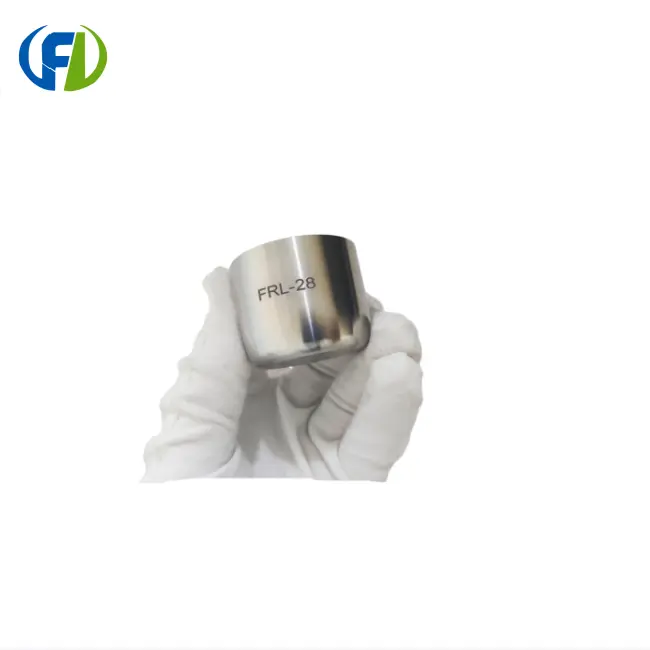
Understanding Laboratory Zirconium Crucible 25ml – Properties and Applications
There are amazing things about zirconium that make it a good material for melting pots. These crucibles meet ASTM B550 standards; they have a density of 6.51 g/cm³ and a melting point close to 1855°C. This theoretical limit is pretty high, but in practice, things are usually kept between 450°C and 600°C for a long time, and in controlled reduction atmospheres, they can handle short-term temperatures up to 900°C.
Material Composition and Standards
The success of zirconium crucibles depends on their exact metallurgical makeup. Zirconium is the main element, and small amounts of hafnium unite to make an amphoteric framework. Hydrochloric acid, sulfuric acid, and nitric acid, at amounts that would destroy normal channels, can't damage this chemical structure. When the material is exposed to oxidizing conditions, it forms a thick, self-healing oxide film (ZrO2) that acts as a barrier to stop further degradation.
Physical Specifications Tailored for Small-Scale Operations
The top width of the 25ml version is usually between 35 and 45 mm, the height is between 30 and 40 mm, and the wall thickness is between 0.6 mm and 1 mm. These measurements make sure that heat moves quickly during the fusion process and that the material stays strong during the cooling phase. The relatively thin walls speed up temperature balance, which cuts down on process time and energy use compared to options with thicker walls.
Chemical Resistance Profile
Zirconium is different from vitreous carbon and even platinum-gold metals because it is better at resisting boiling alkalis. The crucible keeps its shape and surface integrity when it is exposed to sodium hydroxide, potassium hydroxide, or sodium carbonate fluxes at high temperatures. In trace analysis uses where detection limits reach parts-per-billion levels, this resistance gets rid of metal contamination.
Application Spectrum Across Industries
Zirconium crucibles are used for fusion decomposition processes in labs that do spectrometric research. They are used by aerospace research facilities to make titanium alloys, by geological survey groups to prepare refractory material samples, and by pharmaceutical labs to make high-purity compounds. This makes it useful in places like reprocessing spent nuclear fuel, where resistance to concentrated nitric acid is important.
Comparing Zirconium Crucibles with Other Common Laboratory Crucible Materials
Procurement teams can make better choices when they know about the material options. Each type of crucible has its own pros and cons that depend on its makeup, how it is made, and what it is used for. The Laboratory Zirconium Crucible 25ml occupies a strategic middle ground in these considerations.
Alumina and Ceramic Crucibles
For everyday cooking tasks below 1600°C, alumina crucibles are a good choice because they are cheap and work well. When they are put in chemically hostile or thermally shock-prone situations, their weaknesses become clear. Heating and cooling alumina structures over and over again leads to microcracks, which gradually lower their performance. When chemicals combine with some alkaline flows, contamination risks arise that are too high for high-precision scientific work to be done. The operating lifespan is usually between 20 and 50 rounds before it needs to be replaced.
Quartz and Glass Variants
Quartz crucibles are clear, which makes it easier to see what's going on during processes. Their ability to handle high temperatures is still restricted, and for fused quartz types, the highest temperature at which they can work is around 1100°C. Alkaline substances break down the structure of silica, which contaminates the sample. Because glass is fragile, it is more likely to break when it is being handled or cleaned, which raises the total cost of ownership because it needs to be replaced more often.
Platinum and Platinum-Alloy Options
In the past, platinum crucibles were the standard for high-purity analytical chemistry. They are great for many fusion uses because they don't react with chemicals and have a high melting point (1768°C). The huge cost of capital equipment—often more than $2,000 for a 25ml capacity—makes it impossible for many labs to meet their budget needs. Platinum is also mechanically soft, so it needs to be handled carefully so it doesn't change shape. Some reducing agents and metallic contaminants can mix with platinum and damage the crucible forever.
Nickel Crucibles
Nickel is very resistant to alkaline conditions and doesn't conduct heat very well. Because it brings a lot of metallic distortion into trace element analysis, the material can't be used for tasks that need detection limits below parts-per-million. Nickel is more limited in its uses than zirconium options because it easily oxidizes at high temperatures.
Lifecycle Cost Analysis
When looking at the total cost of ownership, zirconium crucibles are in the middle. The starting cost is usually between 15% and 30% of platinum equivalents, but it has the same chemical protection for most uses. With proper care, it should last longer than 200 heating rounds, which is a lot longer than ceramic choices. The lower chance of contamination means that samples don't have to be redone or tests fail as often, which improves working efficiency.
How to Use and Maintain Laboratory Zirconium Crucible 25ml for Optimal Performance
Following the right steps for setting up, using, and maintaining a crucible is important for getting the most out of it. Use of the right methods increases the life of the product and ensures consistent results for the Laboratory Zirconium Crucible 25ml.
Pre-Use Preparation
Clean the crucible with diluted acid (5% HCl or HNO3) and then rinse it several times with deionized water before using it for the first time. It gets rid of surface oils and leftovers from making. To get rid of any wetness that might cause spattering during heating, dry the crucible at 105°C for at least an hour. Using a magnifying glass, check the inside surface for any flaws or dirt.
Temperature Control During Melting Operations
Thermal shock harm can be avoided by heating things slowly. Raise the temperature by no more than 100°C every five minutes until it reaches the desired melting temperature. When temperatures change quickly, they cause differential expansion forces that can weaken structures over time. Keep the fusion temperatures right for the flux system. For sodium carbonate or sodium peroxide uses, these temperatures are usually between 500°C and 900°C.
Handling Procedures
To keep things from getting dirty, use clean tongs or crucible handles that are made just for zirconium pots. Let crucibles cool down on their own until they are below 200°C before you handle them or quench them. When water or compressed air is used to cool something down quickly, they create temperature differences that can cause cracks. To keep temperature differences to a minimum, make sure the receiving box is already hot before moving molten materials into it.
Cleaning and Storage Protocols
Cleaning should be done right away after use to keep dust from sticking. Most flux leftovers can be broken down by diluted acids without harming the zirconium matrix. Do not scrub too hard because it damages the protected metal layer. Ultrasonic cleaning with the right chemicals gets rid of even the most stubborn spots completely. Keep cleaned crucibles in a special container, away from anything that could be harmful, and ideally in a desiccator to keep them from getting wet.
Troubleshooting Common Issues
The inside of the crucible turning different colors usually means that an oxide layer is forming normally and does not affect performance. Localized cracking or roughening is a sign of too much contact with chemicals that don't work well together or changes in temperature. Regular checking helps find early signs of wear and tear so that repair can be done before analytical failures happen.
Procurement and Supply Chain Insights for Zirconium Crucibles
In order to strategically source laboratory zirconium vessels, you need to know how to read quality signs, what the provider can do, and how to handle logistics. Buying things has an effect on both the short-term income and the long-term economy of operations.
Quality Certifications and Documentation
Reliable makers offer full material certificates that include chemical makeup analysis, dimensional standards, and proof of tracking. Compliance with ASTM B550 is the basic standard. Other certifications are needed depending on the business. Medical device makers may need proof that the product is ISO 13485-compliant, and aircraft sources usually need proof that the product is NADCAP-compliant so that they can track the materials they use. Ask for certificates of analysis (COA) with every sale to make sure that the purity levels of the materials meet the standards.
Customization Capabilities
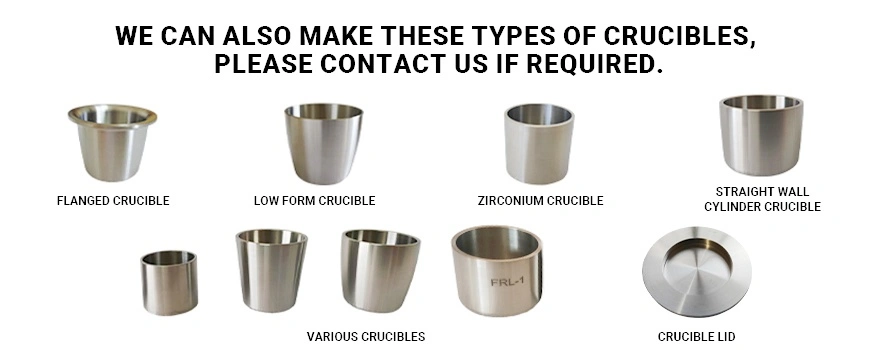
Standard Laboratory Zirconium Crucible 25ml units can be used for many things, but for special needs, the sizes or surfaces may need to be changed. Custom wall thickness meets special needs for thermal control, and changing aspect ratios makes melting processes work better. In ultra-trace analysis, the risk of contamination is lower when the surface is polished to a certain level of hardness. If a manufacturer has their own machining capabilities, it can usually meet unique requirements more quickly than wholesalers who use subcontractors.
Volume-Based Pricing Strategies
Unit costs go down a lot as the order number goes up. When you buy one crucible, it might cost 40 to 60 percent more than when you buy twenty or more. Most of the time, annual supply deals get better prices and make sure that goods are always available. To find the right balance between inventory holding costs and bulk savings, you need to be able to accurately predict how much will be used based on laboratory throughput.
Supplier Evaluation Criteria
Look at possible providers from a number of different angles. Having factories close to where the raw materials come from can often save money. When quality management systems are in place, it means that process control is mature. Performance claims are backed up by customer examples from similar businesses. When troubleshooting problems that are specific to an application or making new standards, technical help skills become very important.
Logistics and Lead Time Considerations
When you move unique materials across international borders, you have to deal with customs paperwork, export controls, and longer transit times. Standard wait times for stock items are between two and four weeks for local suppliers and between six and ten weeks for foreign sellers. This can take anywhere from four to eight weeks longer for custom fabrications. When there are problems with the supply chain, buffer stock plans keep enough inventory on hand to cover expected consumption between restocking rounds.
Case Studies and Successful Applications of Zirconium Melting Pots in Industry
Zirconium crucibles are useful in a wide range of working situations, as shown by their use in real life. These cases show how to measure changes in performance and cost benefits.
Geological Survey Laboratory Sample Preparation
A regional geological survey lab that was analyzing ore samples for rare earth elements had a lot of problems with their ceramic crucible inventory getting dirty over and over again. When zirconium crucibles were used for fusion breakdown, background contamination levels dropped by 85%, making it possible to identify levels below 0.1 ppm. Even though the unit costs went up, the number of times the crucible had to be replaced went from every 25 cycles to over 200 cycles, which cut annual costs by 62%. Because samples didn't have to be redone, analytical response time went up by 30%.
Aerospace Alloy Development Research
An aircraft materials research center that was making titanium-aluminum-vanadium alloys needed crucibles that could melt the metals over and over at 800°C without adding any impurities. Zirconium crucibles kept their compositional purity through more than 300 melting processes, while platinum choices became contaminated over time with metal vapors. The study program met the goals for the alloy six months ahead of plan, in part because the crucible worked reliably, removing any trial variability.
Pharmaceutical Compound Synthesis
A pharmaceutical development lab that was making very pure organometallic chemicals needed containers that could withstand strong acids and bases during multiple steps of the process. Zirconium crucibles didn't break down in the different chemical conditions, which helped reaction rates stay above 94%. Compared to the old platinum crucible process, the projected cost of equipment over its entire life cycle went down by 48%.
University Materials Science Department
Because of limited funds, a college's materials science department changed its old platinum crucibles to zirconium ones for use in undergraduate lab classes. Students now have easier access to fusion analysis methods, which helps with hands-on learning goals that were previously limited by expensive equipment. The faculty said that the quality of the analytical data did not change while the number of testing chances grew.
Conclusion
Zirconium melting pots are the best choice for melting small amounts of alloys and working in chemically harsh conditions where other materials don't do well. The Laboratory Zirconium Crucible 25ml meets the needs of current analytical laboratories by being more resistant to chemicals, more stable at high temperatures, and less expensive than platinum options. It's helpful for procurement teams to know about the qualities of materials, their comparative advantages, the right way to use them, and how to find them. Performance claims are backed up by real-world applications in the academic, military, pharmaceutical, and geological fields. These applications show measurable improvements in contamination control, operating lifespan, and total cost of ownership. Adopting zirconium crucibles strategically increases lab output while protecting the accuracy of the analysis.
Frequently Asked Questions
1. What temperature range is safe for the Laboratory Zirconium Crucible 25ml?
The suggested range for constant operation is between 450°C and 600°C. This range maximizes service life while keeping the structure's integrity. In controlled reducing atmospheres, short-term exposure up to 900°C is still fine. However, frequent trips to these high temperatures may speed up the formation of oxide layers and shorten the total lifespan. For uses that need temperatures to stay above 900°C for a long time, you might want to look at other refractory materials that are better at handling high temperatures.
2. How does zirconium's chemical resistance compare to platinum's?
When it comes to fusion temperatures, zirconium is better at resisting alkaline fluxes like sodium hydroxide, potassium hydroxide, and sodium carbonate than platinum. Both elements are good at resisting most mineral acids, but platinum can handle a wider range of oxidizing acid mixtures. When zirconium is used in situations with mostly alkaline chemistry or mixed acid-base cycles, it often works just as well or better than other materials and costs a lot less.
3. Can zirconium crucibles be used for organic sample decomposition?
Zirconium crucibles work great for fusing solid materials, but they aren't very good for oxidizing organic materials. Usually, nitric-perchloric acid mixes or high-pressure microwave digestion are used for breaking down organic matter, but PTFE or quartz tanks work better in some cases. Zinc's main uses are still breaking down hard minerals, making new alloys, and making chemicals at high temperatures that contain inorganic compounds.
Partner with Freelong for Premium Laboratory Zirconium Crucible 25ml Supply
From our sites in Baoji City, which is known around the world as China's Titanium Valley, Baoji Freelong New Material Technology Development Co., Ltd brings decades of specialized knowledge in making things out of explosive and refractory metals. Our Laboratory Zirconium Crucible 25ml goods are made to strict ASTM B550 standards and come with full material certifications and measurements checks. Manufacturers of aerospace parts, chemical processing plants, research institutions, and analytical labs in the US, Europe, and the Asia-Pacific area depend on us for steady quality and on-time delivery. Our engineering team collaborates with customers to optimize crucible specifications for specific applications, whether standard 25ml configurations or custom dimensions tailored to unique process requirements. As a well-known company that makes zirconium crucibles, we keep a lot of stock on hand so that we can fill orders quickly and offer low prices for large orders. Get in touch with our expert sales team at jenny@bjfreelong.com to talk about your lab crucible needs and get accurate quotes. These products are used in advanced materials studies and in industry.
References
1. Davis, J.R. (2000). Nickel, Cobalt, and Their Alloys. ASM International Materials Park, OH.
2. Lütjering, G., & Williams, J.C. (2007). Titanium: Engineering Materials and Processes. Springer-Verlag Berlin Heidelberg.
3. Moeller, T., & Schleitzer-Rust, E. (1993). Advanced Inorganic Chemistry: A Comprehensive Text. Academic Press, New York.
4. Petzow, G., & Aldinger, F. (1999). High Performance Non-Oxide Ceramics II: Structure and Bonding. Springer Berlin.
5. Schweitzer, P.A. (2004). Corrosion Resistance Tables: Metals, Nonmetals, Coatings, Mortars, Plastics, Elastomers, and Linings. Marcel Dekker, New York.
6. Smallman, R.E., & Ngan, A.H.W. (2014). Modern Physical Metallurgy. Butterworth-Heinemann Oxford.

_1778744123888.png)
_1769052115594.png)
_1744340451118.webp)
_1745895160898.webp)
Learn about our latest products and discounts through SMS or email