- English
- French
- German
- Portuguese
- Spanish
- Russian
- Japanese
- Korean
- Arabic
- Greek
- German
- Turkish
- Italian
- Danish
- Romanian
- Indonesian
- Czech
- Afrikaans
- Swedish
- Polish
- Basque
- Catalan
- Esperanto
- Hindi
- Lao
- Albanian
- Amharic
- Armenian
- Azerbaijani
- Belarusian
- Bengali
- Bosnian
- Bulgarian
- Cebuano
- Chichewa
- Corsican
- Croatian
- Dutch
- Estonian
- Filipino
- Finnish
- Frisian
- Galician
- Georgian
- Gujarati
- Haitian
- Hausa
- Hawaiian
- Hebrew
- Hmong
- Hungarian
- Icelandic
- Igbo
- Javanese
- Kannada
- Kazakh
- Khmer
- Kurdish
- Kyrgyz
- Latin
- Latvian
- Lithuanian
- Luxembou..
- Macedonian
- Malagasy
- Malay
- Malayalam
- Maltese
- Maori
- Marathi
- Mongolian
- Burmese
- Nepali
- Norwegian
- Pashto
- Persian
- Punjabi
- Serbian
- Sesotho
- Sinhala
- Slovak
- Slovenian
- Somali
- Samoan
- Scots Gaelic
- Shona
- Sindhi
- Sundanese
- Swahili
- Tajik
- Tamil
- Telugu
- Thai
- Ukrainian
- Urdu
- Uzbek
- Vietnamese
- Welsh
- Xhosa
- Yiddish
- Yoruba
- Zulu
How to Choose the Right Grade Titanium Round Bar for Your Industrial Project?
Think about where you work, what you need to do, and the type of titanium round bar you want to use to find the best one for your job. How well it works, how long it lasts, and how much it costs will depend on what you choose. Grade 2 titanium is good for the military and gun workers because it's not too strong or too weak and doesn't rust. Grade 5 metal is the best for making strong parts for planes that will last a long time. For all-around strength, Grade 4 is the best pick. People use good tools for the job, and the project goes well, whether they are pros or just want to buy things.
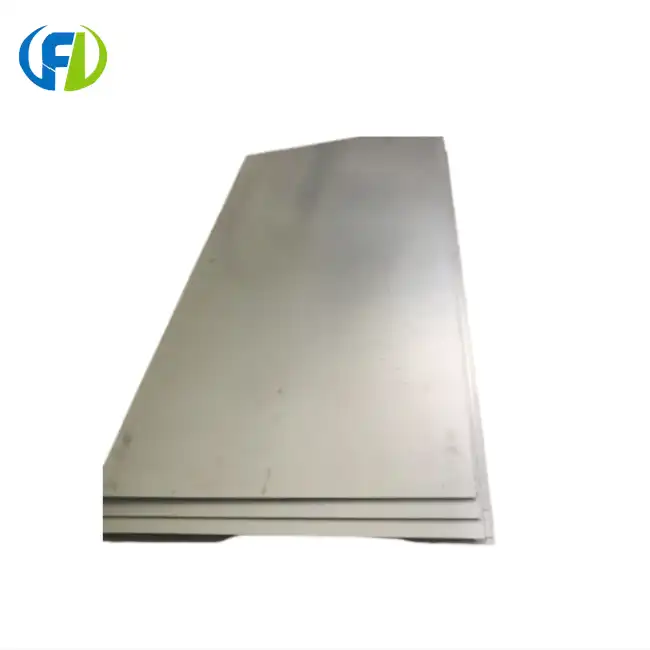
Understanding Titanium Round Bars: Properties and Grades
One of the most useful and sought-after products in current industrial making is titanium round bars. These cylinder-shaped metal goods have great strength-to-weight ratios and great rust protection, which makes them essential in many fields. Titanium is appealing because it has a unique chemical makeup and mechanical qualities that make it better than many other materials.
Chemical Composition and Mechanical Properties
The chemicals that make up different types of titanium round bars are very different, which has a direct effect on how they work. Better titanium has more vanadium, aluminum, and other things that make it better in some ways. Titanium in its lower grades doesn't have any elements that make it more alloyable. Grade 1 is 240 MPa strong, and Grade 5 is over 900 MPa strong. On the other hand, as strong as it is, it gets tougher and more flexible.
You should also think about how well the material can handle changes in temperature. There are many kinds of titanium that still work well at high temperatures. Some kinds work even better up to 600°C. It is very stable in both hot and cold temperatures. Because of this, it works well in places where the temperature changes a lot or where it will be very hot.
Common Grade Classifications
In the titanium business, there are a few common grades, and each one is made for a certain type of purpose. Grade 1 is the most flexible and resistant to rust, but it is also the weakest. Grade 2, which is commercially pure titanium, is the most common grade used in many businesses because it has a great mix of mild strength and resistance to rust. Grade 3 has more strength while still being easy to shape, and Grade 4 has the most power of all the widely pure grades.
Grade 5, also called Ti-6Al-4V, is a high-strength metal that doesn't wear down easily. Al and vanadium are used to make it. Palladium is added to Grade 7 to make it less likely to rust in places where reducing elements are found. Knowing the differences between the types helps you pick the right material for the job.
How to Select the Right Grade: Core Criteria for Industrial Projects?
A thorough look at working needs and weather factors is the first step to choosing the right grade of titanium round bar. When making a choice, many things are taken into account that have an immediate effect on the long-term success and financial viability of the project.
Load Conditions and Mechanical Requirements
When choosing a grade, mechanical pressure is the most important thing to think about. For static loads, the tensile strength and yield strength must be high enough, while for dynamic loads, the wear resistance must be very high. Because it has a very long wear life and doesn't let cracks spread, Grade 5 is the best material for aerospace parts that are loaded in complicated ways.
When it comes to chemical handling tools, rust resistance is often more important than pure mechanical strength. Grade 2 titanium is very good at working with chemicals and has good enough mechanical qualities for most process uses. Grade 2 titanium's mass of 4.51 g/cm³ also helps it weigh less than options made of stainless steel.
Environmental Factors and Corrosion Resistance
The environment has a big effect on how well materials work over their whole useful lives. Marine settings, chemical plants, and remote sites put things through very harsh conditions that can quickly break down common metals. Titanium's natural oxide layer protects it very well from chlorine attack, which makes it better than stainless steel for use in saltwater.
Because they work so well overall and don't rust, Gr2 titanium round bars do very well in these tough settings. For structural parts in ships, chemical reactors, and desalination plants, this material has been very useful. It will work well for a long time because it doesn't rust, pit, or crack in crevices or from stress corrosion.
Cost-Benefit Analysis
Even though titanium costs more up front than other materials, it is often the better choice in terms of overall economics. Less upkeep, longer service life, and less weight all add to the value of the project as a whole. Weight reduction is especially helpful in aerospace uses, where every kilogram saved means better fuel economy over the life of an airplane.
The cost-benefit relationship gets better as the project gets more complicated and runs for longer. Titanium's high price is worth it for industries that need it to be very reliable and need little upkeep, like chemical processes and power creation.
Procurement Essentials: Ensuring Quality and Reliability
To make sure of the quality of titanium purchases, suppliers' qualifications, material certifications, and production standards must be carefully looked over. Because handling titanium is so specialized, you need to work with makers who have a lot of experience and know how to deal with the unique problems that come up with titanium casting.
Supplier Certification and Standards Compliance
Titanium suppliers with a good reputation keep their licenses up to date with international standards like AMS4928, ASTM B348, ASTM F136, and ASTM F67. These standards spell out the maximum and minimum amounts of chemicals, the technical properties that must be met, and the ways that products must be made to ensure uniform quality. Getting ISO9001 approval is another way to make sure that a quality management system is being used correctly.
Another important part of quality checking is being able to track down materials. Legitimate providers give full records of the material's journey from the first melting to the final processing. Each package comes with a mill test certificate that has confirmed chemistry analysis and mechanical property data. This paperwork is very important for apps that need to follow rules or pass quality checks.
Customization and Processing Options
Many modern titanium providers can make changes to their products to meet the needs of any project. Precision cutting services make sure that measurements are correct and that as little material as possible is wasted. Heat treatment, surface cleaning, and grinding are all types of secondary processing that can be used to add value and lower the amount of processing the customer needs to do.
Lead times depend on the grade chosen, the size needed, and how complicated the work is. Standard grades, like Grade 2, usually keep stock on hand, so standard measurements can be delivered within 7 to 15 days. Custom specs may mean longer wait times, but they also mean better options for unique uses.
Supply Chain Risk Management
Diversified sourcing strategies for titanium round bars help mitigate supply chain disruptions common in specialty metal markets. Establishing relationships with multiple qualified suppliers provides flexibility during market volatility or capacity constraints. Long-term agreements can secure pricing stability while ensuring consistent material availability for ongoing projects.
Case Studies: Successful Applications of Titanium Round Bars
Titanium's flexibility and speed benefits can be seen in a wide range of real-world uses. These case studies show how choosing the right grade can help solve certain problems and give real rewards.
Aerospace and Defense Applications
Grade 5 titanium is used a lot in commercial aircraft for important structural parts like landing gear, engine mounts, and wing sections. A big airplane maker said that the materials were 15% lighter than steel versions and had better wear performance. The plane can take more goods and use less fuel over its full life because it has a high strength-to-weight ratio.
Planetary satellites are made of titanium because it is strong, doesn't rust, and stays the same size in space. Normal materials would change sizes when they went from very hot to very cold, which could affect precise tools and communication systems.
Chemical and Marine Industries
Titanium is very resistant to rusting in harsh sea settings, as shown by offshore oil platforms. Seawater, hydrogen sulfide, and other acidic chemicals quickly damage stainless steel parts, so they need to be replaced and maintained often. Grade 2 titanium parts have been used for over 20 years without any major rusting, which means they haven't had to be shut down for expensive upkeep.
Desalination plants all over the world use titanium for their heat exchanger tubes and structural parts because they are better at resisting salt. Stress-rust breaking doesn't happen in this material, so it works reliably and efficiently transfers heat over long periods of time.
Medical and Biomedical Applications
Titanium has changed the way medical implants are made since they were first used in patients in the 1960s. Titanium is more biocompatible than other major implant materials, such as stainless steel and cobalt-chromium-molybdenum alloys. Its mass and elastic stiffness are very similar to those of human bone. This means that it doesn't act as a stress shield, which can cause implants to come free.
Titanium's biocompatibility, radiopacity, and engineering qualities are used to make cardiovascular tubes. Because it isn't magnetic, it can be used safely for MRI scans and keeps its shape under normal metabolic loads.
Freelong's Premium Titanium Round Bar Solutions
Baoji Freelong New Material Technology Development Co., Ltd. brings decades of specialized experience in titanium manufacturing and global supply chain management. Located in Baoji City, known as China's Titanium Valley, our company leverages regional expertise and advanced manufacturing capabilities to deliver superior Titanium Round Bar products.
Product Portfolio and Quality Assurance
Our comprehensive product range covers all major titanium grades with particular expertise in Gr2 titanium round bars manufactured to ASTM B348, ASTM F136, ASTM F67, and AMS4928 standards. Each product undergoes rigorous quality control testing to verify chemical composition, mechanical properties, and dimensional tolerances. ISO9001 certification ensures consistent manufacturing processes and quality management systems.
The FRL metal brand represents our commitment to excellence in titanium manufacturing. Our Gr2 titanium round bars feature a density of 4.51 g/cm³ and deliver the high strength and corrosion resistance demanded by industrial applications. Advanced technology and equipment, combined with experienced personnel, enable processing according to international standards while maintaining competitive pricing.
Manufacturing Capabilities and Customization
Our integrated research, development, production, and sales system provides comprehensive solutions for industrial titanium requirements. Custom cutting and processing services accommodate specific dimensional requirements while maintaining material integrity. Secondary operations, including heat treatment and surface preparation, add value while reducing customer processing requirements.
Delivery reliability represents a core competitive advantage, with standard lead times of 7-15 days for most specifications. Careful inventory management and production planning ensure consistent availability while minimizing customer inventory requirements. Plywood case packaging protects materials during international shipping while meeting export requirements.
Global Partnership and Technical Support
Our established relationships with customers across Australia, Korea, Germany, the United States, the United Kingdom, Malaysia, and Middle Eastern markets demonstrate our commitment to international quality standards and customer service. Technical consultation services help customers optimize material selection and application engineering for improved project outcomes.
We maintain partnerships with leading aerospace manufacturers, chemical processors, and medical device companies who rely on our expertise and consistent quality. These relationships provide valuable feedback for continuous improvement while ensuring our products meet evolving industry requirements.
Conclusion
Selecting the right grade of titanium round bar requires a comprehensive understanding of material properties, application requirements, and supplier capabilities. Grade 2 titanium offers exceptional corrosion resistance and moderate strength for chemical processing and marine applications, while higher grades provide enhanced mechanical properties for demanding aerospace and defense uses. Successful procurement depends on partnering with experienced suppliers who maintain quality certifications, provide complete documentation, and offer reliable delivery schedules. The initial premium for titanium materials is typically justified by superior performance, extended service life, and reduced maintenance requirements over the project lifecycle.
FAQ
1. What are the key differences between Grade 2 and Grade 5 titanium round bars?
Grade 2 titanium represents commercially pure titanium with excellent corrosion resistance and moderate strength, typically reaching 345 MPa tensile strength. Grade 5 (Ti-6Al-4V) incorporates aluminum and vanadium alloying to achieve over 900 MPa tensile strength with superior fatigue resistance. Grade 2 offers better formability and corrosion resistance, while Grade 5 provides higher strength for structural applications.
2. How can I verify supplier certifications and material authenticity?
Legitimate suppliers provide Mill Test Certificates with each shipment, containing verified chemical analysis and mechanical property data. Look for ASTM B348, ASTM F136, and ISO9001 certifications from recognized testing laboratories. Material traceability documentation should track the product from initial melting through final processing. Independent third-party testing can verify material authenticity when required.
3. What factors influence titanium round bar pricing?
Primary pricing factors include grade selection, order quantity, dimensional tolerances, and market conditions. Higher grades like Grade 5 command premium pricing due to alloying additions and processing complexity. Larger order quantities typically reduce per-unit costs, while tight tolerances increase processing costs. Market volatility in titanium sponge pricing affects all grades, with supply-demand imbalances creating periodic price fluctuations.
4. Which applications benefit most from titanium round bars?
Aerospace components requiring high strength-to-weight ratios, chemical processing equipment exposed to corrosive environments, medical implants demanding biocompatibility, and marine applications facing saltwater exposure all benefit significantly from titanium properties. The material's combination of strength, corrosion resistance, and lightweight characteristics provides advantages over conventional materials in these demanding applications.
Partner with Freelong for Superior Titanium Round Bar Solutions
Ready to source premium titanium round bar materials that exceed your project requirements? Freelong combines decades of manufacturing expertise with comprehensive quality assurance to deliver certified titanium products worldwide. Our Gr2 titanium round bars meet ASTM B348 standards while providing the reliability and performance your industrial applications demand.
As a leading titanium round bar supplier, we offer competitive pricing, rapid 7-15 day delivery, and complete technical support for your procurement needs. Contact jenny@bjfreelong.com today to discuss your specific requirements and discover how our premium titanium round bar solutions can enhance your project outcomes while reducing total ownership costs.
References
1. Boyer, R., Welsch, G., & Collings, E.W. "Materials Properties Handbook: Titanium Alloys." ASM International, Materials Park, Ohio.
2. Donachie, Matthew J. "Titanium: A Technical Guide, 2nd Edition." ASM International Publishing.
3. American Society for Testing and Materials. "ASTM B348 Standard Specification for Titanium and Titanium Alloy Bars and Billets."
4. Leyens, C. & Peters, M. "Titanium and Titanium Alloys: Fundamentals and Applications." Wiley-VCH Publishers.
5. Lutjering, G. & Williams, J.C. "Titanium Engineering Materials and Processes." Springer-Verlag Berlin Heidelberg.
6. Peters, M., Kumpfert, J., Ward, C.H. & Leyens, C. "Titanium Alloys for Aerospace Applications." Advanced Engineering Materials, Materials Science and Engineering Research.

_1769675574590.png)
_1768986856686.png)
_1745742946705.webp)
Learn about our latest products and discounts through SMS or email