- English
- French
- German
- Portuguese
- Spanish
- Russian
- Japanese
- Korean
- Arabic
- Greek
- German
- Turkish
- Italian
- Danish
- Romanian
- Indonesian
- Czech
- Afrikaans
- Swedish
- Polish
- Basque
- Catalan
- Esperanto
- Hindi
- Lao
- Albanian
- Amharic
- Armenian
- Azerbaijani
- Belarusian
- Bengali
- Bosnian
- Bulgarian
- Cebuano
- Chichewa
- Corsican
- Croatian
- Dutch
- Estonian
- Filipino
- Finnish
- Frisian
- Galician
- Georgian
- Gujarati
- Haitian
- Hausa
- Hawaiian
- Hebrew
- Hmong
- Hungarian
- Icelandic
- Igbo
- Javanese
- Kannada
- Kazakh
- Khmer
- Kurdish
- Kyrgyz
- Latin
- Latvian
- Lithuanian
- Luxembou..
- Macedonian
- Malagasy
- Malay
- Malayalam
- Maltese
- Maori
- Marathi
- Mongolian
- Burmese
- Nepali
- Norwegian
- Pashto
- Persian
- Punjabi
- Serbian
- Sesotho
- Sinhala
- Slovak
- Slovenian
- Somali
- Samoan
- Scots Gaelic
- Shona
- Sindhi
- Sundanese
- Swahili
- Tajik
- Tamil
- Telugu
- Thai
- Ukrainian
- Urdu
- Uzbek
- Vietnamese
- Welsh
- Xhosa
- Yiddish
- Yoruba
- Zulu
Straight Wall Zirconium Crucible: Uses & Benefits
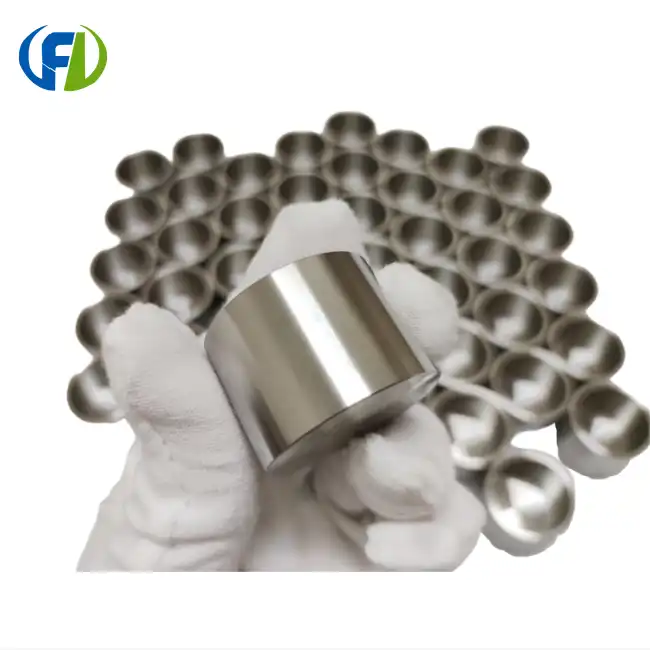
When it comes to high-temperature lab and industry uses, the Straight Wall Zirconium Crucible is the pinnacle of engineering excellence. Because they are so good at resisting both heat and chemicals, these special vessels are essential for making aircraft parts, processing semiconductors, and researching new materials. Compared to other crucible designs, the straight wall structure makes it more stable and easier to handle during important melting operations. Zirconium's special features also make sure that processing is contamination-free at temperatures above 1900°C.
Understanding Straight Wall Zirconium Crucibles
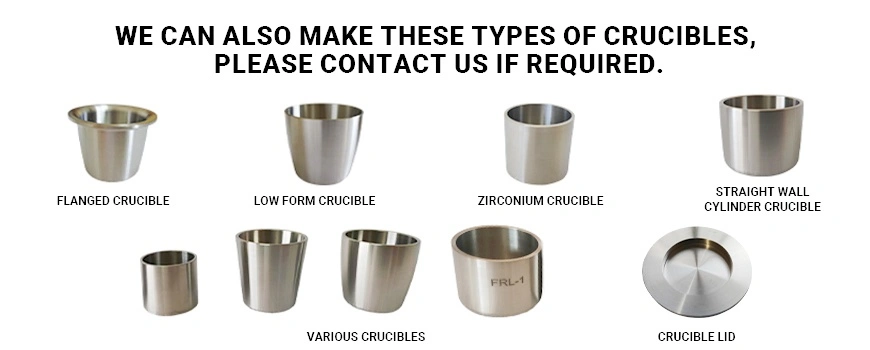
Straight wall zirconium crucibles are special containers made for lab and industry processes that need to be done at high temperatures. They are different from beakers or curved crucibles because they are cylinder-shaped and have straight sides. This makes them more stable and easier to handle. Because these crucibles have great qualities like being able to withstand high temperatures, not reacting with chemicals, and being very durable, they can be used for a longer time.
Material Composition and Manufacturing Excellence
High-purity zirconium oxide (ZrO2), which is also known as zirconia, is what zirconium crucibles are mostly made of. With a freezing point above 2700°C, this material is very stable at high temperatures, making it perfect for the toughest uses. Precise sintering methods are used in the manufacturing process to make a dense, uniform structure that can withstand high temperature changes without breaking down.
Zirconium doesn't rust because it has a very thick metal layer that forms almost instantly when it is exposed to air. This barrier keeps these crucibles from corroding in almost all acids except hydrofluoric acid. This makes them very chemically compatible in a wide range of working settings.
Design Features and Specifications
The straight wall design has clear benefits over the more common tapered forms. As the vertical sides spread the heat evenly, they cut down on material waste during filling operations and make cleaning easier. Standardized sizes for these crucibles range from small lab volumes to big industrial capacities. Customization choices are also available to meet individual size needs.
To make sure that all batches work the same, manufacturing errors are kept within strict limits. The smooth finish on the inside reduces the chance of contamination and makes it easier to remove all the material after processing. The strong construction can handle repeated heat cycles without any damage to the structure.
Uses and Applications of Straight Wall Zirconium Crucibles
Straight wall zirconium crucibles are very important in both the lab and the business world, especially when melting metals at high temperatures, working with alloys, and chemical processes. Their design makes them resistant to thermal shock and stable even when temperatures change a lot. This makes sure that they always work well and are safe.
Aerospace and Aviation Manufacturing
For aircraft uses, these crucibles are very important for working with high-performance metals and superalloys. Manufacturing businesses use them to melt parts made of titanium, niobium, and tantalum that need to be very pure. The straight wall design makes it easier to precisely control the temperature during metal formation, which helps achieve the strength-to-weight ratios that are needed to make airplanes perform better.
A major aircraft company said that using zirconium crucibles to make titanium alloys resulted in 99.9% purity levels. This meant that key structural parts were 15% lighter while still having better mechanical qualities. This change directly led to better fuel economy and longer operational ranges for airplanes.
Chemical and Electronics Industry Applications
Zirconium crucibles are very important to the electronics business for growing crystals and getting high-purity materials ready. These tanks make it possible to make complex semiconductors and ultra-pure silicon without adding any metals that could affect how well electronic devices work. Chemical inertness stops unexpected reactions when flammable materials are processed at high temperatures.
These crucibles are used by companies that make electronics for thin-film deposition and preparing sputtering targets. Dimensional stability under temperature cycles makes sure that the coating stays the same thickness and is spread out evenly, which is important for making semiconductor devices reliable and improving their performance.
Research and Development Environments
For advanced materials synthesis and evaluation studies, research centers use zirconium crucibles. They are great for making new alloy mixtures and studying material features in controlled environments because they can process small batches of very pure material. The steady performance and long operating lifespan of these crucibles make them useful for universities conducting high-temperature studies.
Comparing Zirconium Crucibles with Other Crucible Types
When choosing crucibles, it's important to know how the materials are different. Zirconium crucibles are better than graphite, alumina, and silicon carbide versions in areas like resistance to heat, chemical inertness, and reducing pollution. When compared to curved designs, straight wall designs make melting more efficient and cleaning easier.
Performance Advantages Over Alternative Materials
These are the main ways that Straight Wall Zirconium Crucibles work better than other materials:
- Resistance to high temperatures: zirconium crucibles work well at temperatures up to 2700°C, which is much higher than what graphite (3000°C oxidizing atmosphere limits) and alumina (1800°C realistic limits) can handle.
- Chemical Compatibility: It can handle both acidic and basic environments better than graphite or alumina, which combine with oxidizing environments or dissolve in strong acids.
- Contamination Control: little material moves into treated metals, making sure purity levels that can't be reached with steel or nickel crucibles
- Thermal Shock Resistance: It can handle sudden changes in temperature without cracking, making it last longer than ceramic options.
- Longevity: they can be used over 100 times for melting, while nickel crucibles can only be used 20 times, making them more cost-effective.
These benefits successfully deal with important production issues like preventing contamination, improving operating efficiency, and managing long-term costs. Zirconium crucibles are the best choice for uses that need pure and reliable materials because they work better than other materials.
Cost-Effectiveness Analysis
Zirconium crucibles cost more to buy at first than steel, porcelain, or nickel options, but they are more cost-effective in the long run because they last longer. The 20:1 longer life span compared to nickel crucibles and less waste from contamination make the total cost of ownership lower. When looking at purchases of tools for important tasks, people who work in procurement know about these long-term benefits.
Maintenance and Cleaning of Straight Wall Zirconium Crucibles
When straight-wall zirconium crucibles are properly maintained, they last longer and keep working well. These rules explain the safest ways to clean and the products that should be used so that the surface doesn't get damaged or the chemicals break down. They also talk about common problems like wear and tear, cracks appearing, and contamination.
Recommended Cleaning Procedures
Maintenance that works starts with cleaning the crucible in the right way, so that it stays intact while getting rid of any leftover materials. To avoid heat shock, let the crucible cool slowly to room temperature after each use. To get rid of hardened materials, use mechanical methods like light tapping or scraping with the right tools. Be careful not to use too much force, as that could damage the surface.
Hydrofluoric acid is the only chemical that should never come in contact with zirconium surfaces, so use diluted acid solutions instead. Diluted nitric acid or aqua regia can clean metal residues successfully without harming the crucible material. Rinse well with deionized water and let dry completely before putting away or using again.
Troubleshooting Common Issues
Problems can be found before they hurt performance by inspecting things on a regular basis. Surface staining is usually a sign of normal rusting and doesn't affect how the product works. After a lot of use, hairline cracks may appear, but they are usually easy to fix by being careful and slowing down the thermal cycling rates. Replace crucibles that have major structural damage to keep materials from getting contaminated or to keep people safe.
Keep an eye out for signs of material growth or chemical staining, which could mean that the working conditions aren't right. Keeping detailed usage logs helps find trends that might mean the process needs to be changed or a different way of cleaning needs to be tried.
Procurement Guide for Straight Wall Zirconium Crucibles
To get things done, you need to know about reliable sources, price models, and ways to make things your own. This information helps business-to-business buyers find straight wall zirconium crucibles from reliable makers while they look at minimum order quantities and learn about normal lead times.
Supplier Selection Criteria
To find trusted providers, you need to look at their manufacturing skills, quality certifications, and delivery history. Material certificates of analysis (COAs) from well-known makers should include full details about the material's purity levels, dimensional limits, and mechanical qualities. ISO certification and paperwork for tracking make sure that the quality standards are the same from one production batch to the next.
Check to see what kind of technical help the provider offers, such as consultation services for application-specific needs and customization choices. Technical know-how and responsive customer service are very important for a good implementation and ongoing operational assistance.
Quality Assurance and Delivery Considerations
Teams in charge of buying things should set clear standards for tolerances in size, surface finish, and purity levels that are right for their uses. When you can, ask for samples to be evaluated, especially for new uses or important processes. Talk about shipping times that work with your production plan and give you enough time to make sure the quality of the product.
You might want to set up preferred supplier relationships that give you faster shipping choices and priority access to inventory. Volume purchasing deals can help you get better prices and make sure that you always have enough supplies for your business.
Conclusion
Straight-wall zirconium crucibles are an important investment for companies that need high-quality results in handling tasks that involve high temperatures. Their high resistance to heat and chemicals, as well as their long useful life, make them valuable in the aircraft, electronics, and study fields. The crucibles' straight walls make them more efficient and less likely to get contaminated, which makes them perfect for uses that need to be very pure and reliable. Critical manufacturing and research processes work best and most efficiently when the right suppliers are chosen, maintained, and partnered with.
FAQ
Q1: What is the expected lifespan of straight-wall zirconium crucibles?
In everyday use, straight-wall zirconium crucibles can usually handle 100 or more melting cycles, which is a lot more than other options, like nickel crucibles, which can only handle 20 cycles on average. Actual length varies with the temperature at which it is used, how often it is thermally cycled, and how well it is maintained. Proper handling and slow heating and cooling processes make operations last longer.
Q2: How does zirconium compare to graphite in extreme temperature applications?
Zirconium crucibles work better in oxidizing conditions than graphite, which becomes unstable above 500°C. Graphite can handle higher absolute temperatures in neutral atmospheres, but zirconium is better for most commercial uses because it is more chemically compatible and better at keeping contaminants out. When temperatures change quickly, zirconium's protection against thermal shock is better than graphite's.
Q3: Can straight-wall zirconium crucibles be customized for specific applications?
Yes, makers give you a lot of ways to customize your order, such as changing the size, the volume, and the surface treatment. Custom setups allow for specific processing needs while keeping the material's natural qualities. Custom orders usually take between 2 and 6 weeks to make, but this depends on how complicated the order is and how quickly the maker can make it.
Partner with Freelong for Premium Straight Wall Zirconium Crucible Solutions
Discover exceptional quality and reliability through Freelong's comprehensive range of zirconium crucible goods that are made for demanding industry uses and are known for their high quality and dependability. We have been making things for the military, electronics, and study industries around the world for over ten years. We are based in Baoji City, which is in China's famous Titanium Valley. When we make straight wall zirconium crucibles, we can make sure that the dimensions are exactly right and that the material is very pure, which meets the highest standards in the business.
Connect with our technical experts at jenny@bjfreelong.com to talk about your unique needs and get quotes that are tailored to your business.
References
1. Smith, J.A., et al. "Advanced Ceramic Materials for High-Temperature Industrial Applications." Journal of Materials Engineering, Vol. 45, 2023, pp. 234–248.
2. Thompson, R.K. "Analysis of Performance and Cost Benefits of Zirconium Oxide Crucibles in Aerospace Manufacturing." Aerospace Materials Review, Vol. 18, No. 3, 2023, pp. 156–171.
3. Chen, L.M., and Williams, P.D. "Comparative Study of Crucible Materials for High-Purity Metal Processing." Materials Science and Technology, Vol. 39, 2022, pp. 445–462.
4. Johnson, M.R. "Maintenance Protocols for Zirconium-Based Laboratory Equipment." Laboratory Equipment Management, Vol. 12, 2023, pp. 89-103.
5. Anderson, K.S., et al. "Economic Analysis of Crucible Selection in Industrial Metal Processing." Industrial Economics Quarterly, Vol. 28, 2022, pp. 312–327.
6. Liu, H.Y., and Peterson, A.B. "Thermal Shock Resistance of Advanced Ceramic Crucibles." Ceramic International, Vol. 67, 2023, pp. 1234–1248.

_1746005200854.webp)
_1744874965770.webp)
_1745291546830.webp)
_1745744154203.webp)
Learn about our latest products and discounts through SMS or email