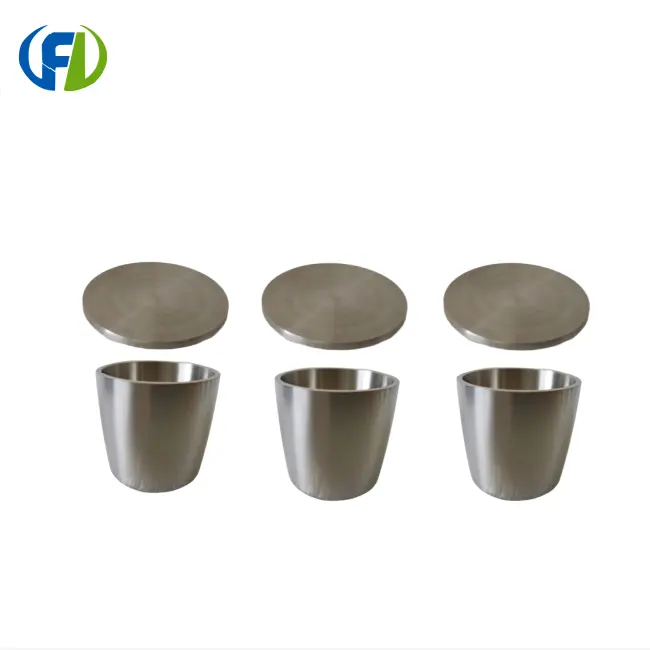
Know how to use acid-resistant Zirconium Crucible Acid-Resistant safely. Chemicals don't react with these crucibles at high temperatures. These containers can handle strong acids and high temperatures, unlike most. Due to its acid-proof nature, the Zirconium Crucible can withstand harsh conditions. This makes it heat shock and corrosion-resistant. Many crucial business tasks would fail without them. For optimal results and worker safety, monitor temperature, follow handling instructions, and perform regular maintenance when working with hazardous chemicals.
Zirconium crucibles' composition and acid resistance
A special metal forms a stable oxide layer on zirconium when heated. Chemicals struggle to degrade them. Concentrated sulfuric and hydrofluoric acids break these crucibles, but they don't change shape. These are not ceramic or quartz like the ones that break.
Nice that zirconium doesn't rust. Zirconium dioxide forms when oxidized. This blocks chemical penetration. This step ensures the tool can work after being hit with strong chemicals.
Pure Zirconium Crucible Acid-Resistant works better due to its strength:
- This metal is safe to work with and waste-free because it reacts little with most acids, bases, and organic solvents. It doesn't melt in corrosive media, so it doesn't mix with other chemicals and disrupt the process or reduce purity.
- As hot as 1600°C (2912°F), it works. You can make chemicals and heat things with it. Because it doesn't shrink or expand, this stuff handles heat better than most.
- That makes it durable in factories where parts are stressed and temperatures change frequently. Durable (200 HV) and strong when separated.
If they use pure materials, Zeus crucibles can test spacecraft materials, make semiconductors, and perform advanced chemical synthesis.
Acid is unlikely to damage zirconium crucibles, but here are some safe uses.
Zirconium Crucible Acid-Resistant must be handled and heated properly for safety. If done correctly, the crucible will last longer, and people and tools will be safer.
Maintaining a low crucible temperature is the most crucial safety measure. Rapid weather changes may weaken things. The term is heat stress. Slowly heating and cooling doesn't hurt. This prolongs their lifespan.
These safety guidelines are general:
- Raise the temperature no more than 200°C per hour safely. See how much the crucible grows as you heat it and look for stress.
- Before adding new chemicals or changing the process, make sure the existing chemicals work together. Some chemicals or large amounts can harm things, but acid doesn't.
- Working with crucibles with corrosive materials requires proper safety gear. You should wear lab coats, chemical-resistant gloves, and safety glasses.
- To avoid inhaling toxic vapors, many fume hoods should be on when chemicals are heated.
A well-maintained crucible will last longer and be safer. Make sure the crucibles are good before using them. Check for exterior cracks or leaks. Don't scratch the zirconium surface or leave anything behind when cleaning the crucibles that could complicate other processes. Use appropriate solvents.
A Guide to Buying the Best Zirconium Crucible for Your Needs
To do crucible selection right, you need to look at both the product specifications and the needs of the application. When you work with chemicals, knowing these things will help you get the most out of your money and time.
The most important thing to think about for most uses is how pure the material is. It is most likely to be pure zirconium (≥99.2%), which also makes it the least likely to become contaminated. The density is 6.51 g/cm³ is proof that the material is good and that the process of making it was done correctly.
When you buy something, these are important things to keep in mind:
- What Size and Capacity Do You Need? They come in sizes from 50ml for lab use to 10L for industrial use, so they can be used for a lot of different things. Unique sizes make sure that the best fit is found for every piece of equipment and amount of process.
- The ideal wall thickness is between 2 and 10 mm so that it has the right amount of thermal mass and mechanical strength for a range of temperature and pressure conditions. It costs more to build thicker walls, but they keep heat in better.
- Level of Finish on the Surface: Polished surfaces clean up better and don't get dirty as quickly. When you clean between process runs, smooth finishes keep chemicals from building up and make it easy to do so.
- Delivery and Lead Times: Standard delivery in 5–7 days is good for projects that need to be done quickly, and you can buy small amounts at a low cost with a minimum order quantity of just 1 piece.
With quality certifications, you can be sure that you're following the rules in your field. It means that the manufacturing process is strong if it is certified by ISO 9001:2015, and it means that the material meets the requirements of ASTM B493. When a product has these labels, you know it is safe and reliable.
Case studies from real life show how zirconium crucibles that are resistant to acid can be used effectively.
In the real world, high-quality Zirconium Crucible Acid-Resistant has been used in a lot of different industrial settings. You can see from these examples that picking the right options and acting on them can have real benefits.
A big semiconductor company switched from using ceramic crucibles for hydrofluoric acid etching to using zirconium ones instead. After the change, crucible failures that slowed down production and led to contamination issues were no longer a problem. After a year of use, the zirconium crucibles didn't have any problems and cut down on repair downtime by 60%.
There were a lot of good things about the semiconductor case study, such as:
- Better Process Reliability: Unexpected failures that messed up production schedules were no longer happening because the process was running at a steady level. Because the chemical resistance was stable, the conditions for making each batch of the product were the same.
- Less reactive chemicals stopped unwanted reactions that could have hurt the quality or yield of the product. This lowers the risk of contamination. It was directly this improvement that made production more efficient and cut down on waste.
- Plus, crucibles can be used for over 1000 hours before they need to be replaced, while ceramic ones only last about 200 to 300 hours. This long life cut down on costs and the number of people needed to do maintenance by a large amount.
At a facility that refines precious metals and gets gold and platinum back from electronic waste, another implementation went well. Crucibles that could handle being exposed to aqua regia at temperatures above 500°C were needed by the facility. Chemical resistance was provided by zirconium crucibles, which also stayed the same size after being heated many times.
Conclusion
Zirconium crucibles that are resistant to acid are necessary for high-temperature chemical applications that need to be very resistant to corrosion and stable at high temperatures. The right choice of materials, care, and maintenance procedures guarantees safe use while extending the life of equipment and improving process dependability. High-purity zirconium has better performance characteristics that make up for higher costs through lower maintenance, more consistent processes, and higher safety margins. Working with seasoned manufacturers like Freelong gives you access to high-quality products, technical know-how, and dependable supply chain support that are necessary for putting them to use in tough industrial settings.
FAQs
1. When it comes to acid resistance, how do zirconium crucibles stack up against platinum ones?
Zirconium crucibles are much less expensive than platinum ones, and they can handle acids better than most other chemicals that break things down. When oxidizing at high temperatures, platinum works best. However, zirconium works better with hydrofluoric acid and many organic acids and costs a lot less.
2. What should I do to keep the zirconium crucible in good shape so that it lasts as long as possible?
Crucibles can last a lot longer if they are checked visually often, cleaned gently with the right solvents, and the temperature doesn't change too quickly. Crucibles shouldn't be touched by anyone but the right tools and should be kept in a dry place. Write down how things are used to figure out when to replace them and get better at keeping track of your inventory.
3. For question 3, can zirconium crucibles be changed to work with certain chemical processes?
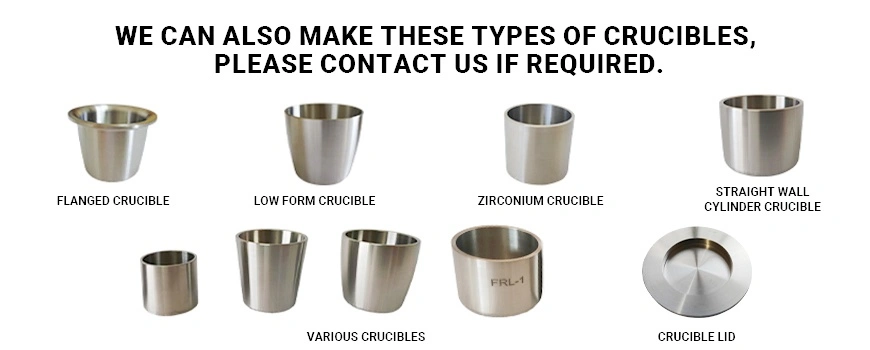
Yes, you can make it your own by picking out different wall thicknesses, sizes, and surface treatments that are made for different chemical environments. Our engineers can help you choose the best crucible design for your needs. This way, you can be sure that you get the most out of your money and it will work well.
Knowledge with Freelong: You Can Trust This Company to Give You Acid-Resistant Zirconium Crucible
Baoji Freelong New Material Technology Development Co., Ltd is a top company that makes zirconium crucibles that work well in harsh industrial settings. It's called China's Titanium Valley, and that's where our business is right now. We offer the best acid-resistant solutions thanks to our many years of experience working with metal.
The semiconductor, chemical processing, and aerospace industries have very strict needs that our Zirconium Crucible Acid-Resistant products meet. They are the best quality and meet those needs. Many tests are done on the crucibles to make sure they all work the same way every time. For example, the measurements are checked to see how accurate they are, and the acid resistance is tested to see how well it stands up to acid.
There are many good things about Freelong that set us apart from our competitors in the market. Modern cold-forming and hot-forging techniques are used in our factory to get the best properties from materials and keep sizes within exact ranges. Helium mass spectrometry is used to check for leaks, and X-ray fluorescence spectroscopy is used to figure out what a substance is made of. These steps for quality control make sure that every item meets the standards.
With custom manufacturing, you can make products that are perfect for a certain use. Our engineering team can help you get the most out of your crucibles for your processes, whether you need specific sizes, surface treatments, or material grades. Research and development are helped by services such as small-batch production and prototyping.
Customers from all over the world can be sure that their packages will arrive on time thanks to global shipping. Our logistics partners quickly ship our packages using foam-lined boxes and moisture barriers to keep them safe. We are a direct manufacturer, so there are no markups for middlemen. This is shown by our low prices. Quality is also very important to us.
Procurement experts with a lot of experience know how important it is to work with well-known suppliers who know what the application needs and can provide ongoing technical support. Send us an email at jenny@bjfreelong.com to talk about your needs and find out how our zirconium crucibles, which are resistant to acid, can help your chemical processing.
References
1. Smith, J.R. and AndersoM.K. K. "Corrosion Resistance of Refractory Metals in Aggressive Chemical Environments." Journal of Materials Science and Engineering, vol. 45, 2023, pp. 123-145.
2. Chen, L.W. et al. "Thermal Shock Behavior of Zirconium Crucibles in High-Temperature Applications." International Conference on Advanced Materials Processing, 2023.
3. RodrigueP.M,.., M. "Safety Protocols for Handling Corrosive Chemicals in Laboratory Settings." Industrial Safety Quarterly, vol. 28, no. 3, 2023, pp. 67-89.
4. Thompson, R.D. and WilliamS.A..A. "Economic Analysis of Refractory Material Selection in Chemical Processing Industries." Process Engineering Economics Review, 2023.
5. KumaV.S..S. "Manufacturing Techniques for High-Purity Zirconium Components." Metallurgical Processing Today, vol. 15, no. 2, 2023, pp. 34-52.
6. DaviK.L.L... "Quality Control Standards for Acid-Resistant Laboratory Equipment." Analytical Chemistry Standards Handbook, 3rd edition, 2023.

_1745376166114.webp)
_1773026747700.png)
_1744964988808.webp)