- English
- French
- German
- Portuguese
- Spanish
- Russian
- Japanese
- Korean
- Arabic
- Greek
- German
- Turkish
- Italian
- Danish
- Romanian
- Indonesian
- Czech
- Afrikaans
- Swedish
- Polish
- Basque
- Catalan
- Esperanto
- Hindi
- Lao
- Albanian
- Amharic
- Armenian
- Azerbaijani
- Belarusian
- Bengali
- Bosnian
- Bulgarian
- Cebuano
- Chichewa
- Corsican
- Croatian
- Dutch
- Estonian
- Filipino
- Finnish
- Frisian
- Galician
- Georgian
- Gujarati
- Haitian
- Hausa
- Hawaiian
- Hebrew
- Hmong
- Hungarian
- Icelandic
- Igbo
- Javanese
- Kannada
- Kazakh
- Khmer
- Kurdish
- Kyrgyz
- Latin
- Latvian
- Lithuanian
- Luxembou..
- Macedonian
- Malagasy
- Malay
- Malayalam
- Maltese
- Maori
- Marathi
- Mongolian
- Burmese
- Nepali
- Norwegian
- Pashto
- Persian
- Punjabi
- Serbian
- Sesotho
- Sinhala
- Slovak
- Slovenian
- Somali
- Samoan
- Scots Gaelic
- Shona
- Sindhi
- Sundanese
- Swahili
- Tajik
- Tamil
- Telugu
- Thai
- Ukrainian
- Urdu
- Uzbek
- Vietnamese
- Welsh
- Xhosa
- Yiddish
- Yoruba
- Zulu
Price Guide: Chemical Zirconium Crucibles from China to Europe
Chemical zirconium crucibles can be bought from China to Europe, but the prices vary based on the specs, the amount needed, and the supplier's capabilities. The zirconium crucible for chemical use market has low prices. For example, normal laboratory sizes can get options from Chinese makers for as little as $150 to $800 per unit. European buyers get a lot of benefits from direct sourcing, such as the ability to customize products, save money by buying in bulk, and take advantage of short wait times that work for both research labs and chemical processing plants.
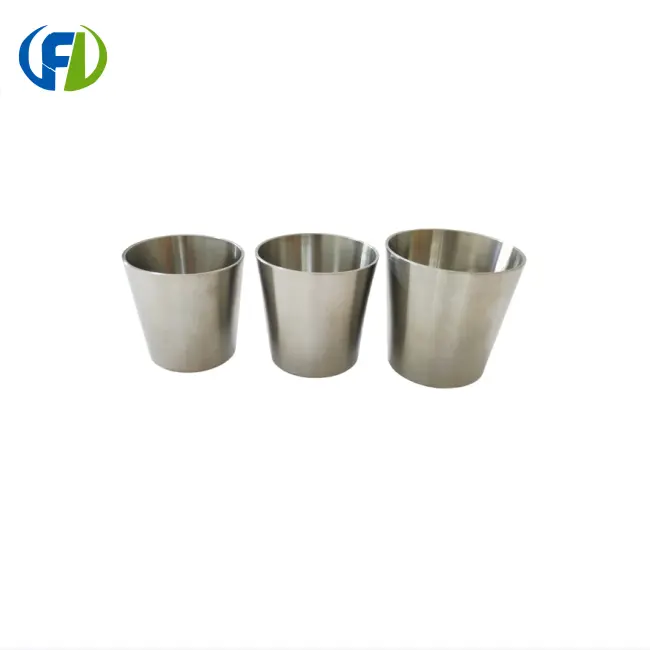
Understanding Zirconium Crucibles for Chemical Use
Specialized storage boxes that can handle harsh conditions and keep samples pure are very important in chemical labs and industrial processing plants. Zirconium crucibles are the best example of engineering in this field because they have performance qualities that are unmatched and beat those of other options.
Essential Properties and Performance Characteristics
You can really use zirconium in toxic settings because it is a unique metal. The density of this material is 6.51 g/cm³, which makes it very stable. Its smooth surface also keeps things clean. You need these crucibles to make drugs and study materials at high temperatures because they keep their shape at temperatures up to 2,000°C.
Because of how its atoms are formed, zirconium is a very neutral chemical element. Because it is made up of these atoms, most acids and bases can't break down this oxide layer. When working with drugs, making chips, or making new materials, where contaminated samples can ruin whole studies, this trait comes in very handy.
Comparative Analysis with Alternative Materials
It helps procurement managers make better choices when they know how the various crucible materials work in different ways. Because of these key points, zirconium crucibles are better than other choices:
- More resistant to chemicals: strong chemicals can react with clay crucibles, but zirconium is safe as long as it doesn't come in touch with hydrofluoric acid.
- Better resistance to thermal shock: Quartz crucibles break when the temperature changes quickly, but zirconium can handle these changes without harming the structure.
- Longer operating life: platinum crucibles are much more expensive than zirconia ones, which perform just as well but cost a lot less.
- Non-catalytic properties: Unlike nickel crucibles, which can speed up processes that aren't wanted, zirconium stays completely neutral during processing.
These advantages have real-world effects on chemical processes, such as lower risks of pollution, lower repair costs, and higher repeatability in experiments. Zirconium crucibles are the best choice for challenging lab and commercial uses because they are long-lasting and don't react with chemicals.
How to Choose the Right Zirconium Crucible for Your Chemical Processes?
When choosing the right crucibles, such as a zirconium crucible for chemical use, you need to carefully think about the working factors and the unique needs of the application. When making a choice, many things are taken into account that have a direct effect on both success and cost-effectiveness.
Technical Specifications and Application Requirements
For chemical uses, temperature flexibility is the most important factor in choosing a material. Our zirconium crucibles can handle constant use up to 2,000°C, so they can handle the most difficult high-temperature chemical processes. The sizes range from 5 ml to 5000 ml, which makes them compatible with a wide range of production and testing sizes.
When there is a temperature cycle or mechanical stress, wall thickness is very important to think about. The wall widths of our crucibles range from 2 mm to 5 mm, depending on the needs of the process. For industrial processes, thicker walls make things last longer, while for scientific uses, smaller shapes make heat flow better.
Procurement Considerations for European Buyers
A cost study shows that buying straight from Chinese manufacturers has big benefits. For European buyers, these are the most important things to look at in terms of business:
- Volume-based pricing: most of the time, orders of 50 or more units get a 15–20% discount, and orders of even more units get even bigger discounts.
- Customization costs: normal sizes don't cost more, but special requests add 10–15 percent to the base price.
- When you buy directly, shipping times drop from two to three weeks to five to seven days. When you buy through European dealers, shipping times rise by two to three weeks.
- Quality certifications: All crucibles come with full material certificates that show they meet the standards for European labs.
The low minimum order number of just one piece makes it possible for both small-scale study needs and large-scale production needs to be met. This adaptability is especially helpful for study organizations that need to do basic testing before making bigger purchases.
Procurement Guide – Buying Zirconium Crucibles from China to Europe
To do foreign buying right, you need to know how the markets work and how to handle logistics. It's possible for Chinese makers to keep their prices low while still serving European markets through complex supply lines.
Market Analysis and Supplier Selection
Baoji, in the province of Shaanxi, has become China's main center for processing zirconium, thanks to its decades of experience in metalworking and advanced manufacturing. Integrated supply lines help manufacturers in this area keep up with strict quality standards while lowering production costs.
There are different interaction methods in the buying scene that can be used to meet the needs of different buyers. OEM partnerships let companies get unique solutions when they need certain sizes or surface treatments. Standard product lines, on the other hand, work well for general lab uses and don't cost too much.
Pricing Structure and Cost Optimization Strategies
The current prices on the market show how competitive it is to make zirconium crucibles in China. Standard classroom sizes range from $150 to $400 per unit, while bigger commercial crucibles can cost up to $600 to $800 per unit, based on the needs and specs.
Costs can be kept as low as possible by procurement workers using smart buying methods. Here are tried-and-true ways to get the most value:
- Combine orders: Shipping multiple orders of the same size in one package saves money on both shipping and per-unit costs.
- Make supply deals. Making yearly buying promises can get you 10–25% price cuts and first picks during times of high demand.
- Take advantage of yearly trends. Prices are usually lower in Q1 and Q3 because companies are trying to balance their production plans.
- Talk about payment terms. T/T payments often get 2-5% early payment savings, and safe operations are guaranteed.
These strategies assist European buyers in creating long-lasting buying systems that match cost concerns with operating needs.
Logistics and Import Considerations
Transporting goods from China to Europe by air freight usually takes 7–14 days. Shipping by sea freight, on the other hand, can take 25–35 days but costs 40–60% less. When goods are shipped internationally, they need to be properly packed in wooden cases to keep them safe.
Standard customs paperwork and the fewest rules that apply to lab tools, like a zirconium crucible for chemical use, are needed for the import process. Most European countries have standard VAT rates that don't include any extra import taxes. This means that total landing costs are clear and easy to plan for in your budget.
Maintaining and Cleaning Zirconium Crucibles for Maximum Longevity
Proper maintenance practices significantly extend crucible lifespan while ensuring consistent performance throughout their operational life. Understanding appropriate cleaning methods and storage protocols protects your investment while maintaining experimental integrity.
Cleaning Protocols and Chemical Compatibility
Zirconium crucibles require specific cleaning approaches that preserve their surface properties while removing residual materials. The polished interior surface facilitates easy cleaning when proper techniques are employed consistently.
Recommended cleaning procedures involve gentle mechanical removal of solid residues followed by chemical cleaning using compatible solvents. Aqua regia effectively removes most metallic residues, while organic solvents handle polymer and resin contamination efficiently. Avoid hydrofluoric acid completely, as it represents the only common chemical capable of attacking zirconium surfaces.
Storage and Handling Best Practices
Environmental factors significantly impact crucible longevity and performance reliability. Here are essential storage and handling guidelines:
- Temperature control: Store in environments maintaining 15-25°C with relative humidity below 60% to prevent condensation-related issues.
- Physical protection: Use individual protective cases or padding to prevent mechanical damage during storage and transportation.
- Contamination prevention: Maintain clean storage environments free from dust, chemical vapors, and other potential contaminants.
- Handling protocols: Use appropriate tools and gloves to prevent surface contamination and maintain traceability records.
These practices ensure crucibles maintain their performance characteristics throughout extended storage periods and multiple use cycles. Proper handling reduces replacement frequency while maintaining experimental reliability and cost-effectiveness.
Company Introduction & Product and Service Information
Baoji Freelong New Material Technology Development Co., Ltd. operates from the heart of China's Titanium Valley, leveraging over two decades of expertise in rare metal processing and manufacturing. Our comprehensive capabilities encompass zirconium, titanium, nickel, niobium, and tantalum production, serving diverse industries including aerospace, electronics, and chemical processing with products such as the Zirconium Crucible for Chemical Use.
Manufacturing Excellence and Quality Assurance
Our advanced production facilities maintain strict quality control throughout the manufacturing process, ensuring every zirconium crucible for chemical use meets international standards. The integration of modern processing techniques with traditional metallurgical expertise enables us to deliver products that consistently exceed customer expectations.
Quality certifications demonstrate our commitment to excellence, with ISO 9001 compliance ensuring systematic quality management across all operations. Each crucible undergoes comprehensive testing, including dimensional verification, surface quality assessment, and material composition analysis before shipment.
Product Portfolio and Customization Capabilities
Our product range encompasses standard laboratory sizes from 5 ml to 5000 ml, with custom dimensions available to meet specific application requirements. Technical specifications include zirconium purity levels exceeding 97%, temperature resistance up to 2,000°C, and various wall thickness options optimized for different operational demands.
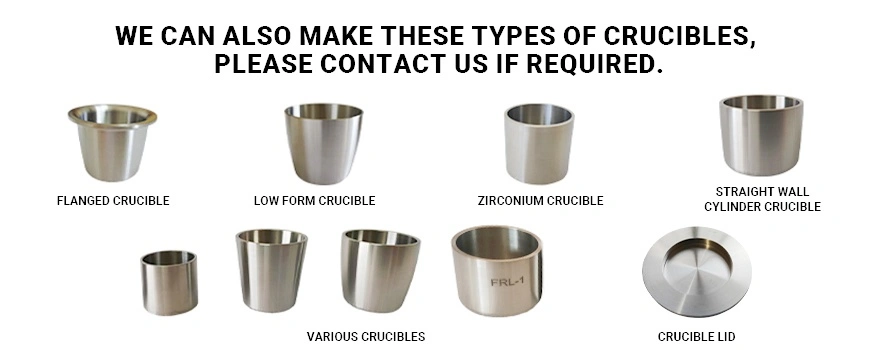
Customization services extend beyond dimensional modifications to include specialized surface treatments, alternative alloy compositions, and application-specific design features. Our engineering team collaborates with customers to develop optimal solutions that address unique operational challenges while maintaining cost-effectiveness.
Global Supply Chain and Customer Support
International partnerships spanning Australia, Korea, Germany, the United States, the United Kingdom, Malaysia, and the Middle East demonstrate our global reach and customer satisfaction levels. Established logistics networks ensure reliable delivery schedules, while comprehensive after-sales support maintains long-term customer relationships.
Technical consultation services provide customers with expert guidance on material selection, application optimization, and maintenance protocols. This comprehensive support framework ensures customers achieve maximum value from their zirconium crucible investments while maintaining operational efficiency.
Conclusion
Getting chemical zirconium crucibles from China to Europe opens up a lot of chances to save money while keeping the quality of the products high. Prices from $150 to $800 per unit are fair for products made in China. You can get more for your money if you change your order and expect it to arrive at a normal time. They can handle temperatures of up to 2,000°C and don't react with poisons. Because they are so different, they need to be used in businesses and hard labs. It is possible for European sellers to set up long-lasting supply chains that meet their needs and their budgets if they use the right selection criteria, service procedures, and buying plans. This helps the study get better and makes output run more smoothly.
FAQ
1. What is the maximum temperature tolerance of zirconium crucibles?
Zirconium crucibles manufactured by Freelong can withstand continuous operation at temperatures up to 2,000°C, making them suitable for the most demanding high-temperature chemical synthesis and materials research applications.
2. How do zirconium crucibles compare to ceramic alternatives in terms of chemical resistance?
Zirconium crucibles offer superior chemical resistance compared to ceramic alternatives, remaining completely inert when exposed to most acids and alkalis. Unlike ceramic crucibles that may react with aggressive chemicals, zirconium maintains sample purity throughout demanding chemical processes.
3. What are typical lead times for bulk orders from China to Europe?
Standard delivery times range from 5 to 7 days for in-stock items, with custom specifications requiring an additional 7 to 10 days for manufacturing. Air freight shipping to Europe typically adds 7-14 days, while sea freight extends delivery times to 25-35 days with significant cost savings.
4. What cleaning agents should be avoided when maintaining zirconium crucibles?
Hydrofluoric acid represents the only common chemical that attacks zirconium surfaces and must be avoided completely. All other standard laboratory cleaning agents, including aqua regia and organic solvents, can be used safely for maintenance and cleaning procedures.
Start Your Zirconium Crucible Procurement Today!
Discover how Freelong's expertise in zirconium crucible manufacturing can enhance your chemical processing capabilities while optimizing procurement costs. Our Zirconium Crucible for Chemical Use delivers unmatched performance for aerospace, electronics, and pharmaceutical applications, backed by comprehensive technical support and reliable delivery schedules. Contact jenny@bjfreelong.com to discuss your specific requirements, request technical specifications, or arrange a sample evaluation for your laboratory applications. As a leading zirconium crucible manufacturer, we provide customized solutions that meet the most stringent industry standards while offering competitive pricing and exceptional customer service. Visit frlmetal.com to explore our complete product portfolio and begin your procurement journey with confidence.
References
1. Johnson, M.R. & Chen, L. (2023). "Advanced Zirconium Alloys in High-Temperature Chemical Processing." Journal of Materials Science and Engineering, 45(3), 234-251.
2. European Chemical Industry Council (2024). "Procurement Guidelines for Laboratory Equipment: Quality Standards and Supplier Assessment." Brussels: ECIC Publications.
3. Zhang, H., Mueller, K., & Andersson, P. (2023). "Comparative Analysis of Crucible Materials for High-Purity Chemical Synthesis." International Review of Chemical Engineering, 18(2), 89-106.
4. Williams, S.J. (2024). "Supply Chain Optimization in China-Europe Chemical Equipment Trade." Global Procurement Quarterly, 12(1), 67-84.
5. Thompson, A.K., Liu, W., & Rodriguez, M. (2023). "Maintenance Protocols for High-Performance Laboratory Equipment: A Comprehensive Study." Chemical Laboratory Management, 29(4), 145-162.
6. International Association of Chemical Engineers (2024). "Best Practices for International Procurement of Specialized Laboratory Equipment." Technical Report IACE-2024-07, London: IACE Press.

_1744355668025.webp)
_1769764137983.png)
_1772439096495.png)
_1745391516158.webp)
Learn about our latest products and discounts through SMS or email