- English
- French
- German
- Portuguese
- Spanish
- Russian
- Japanese
- Korean
- Arabic
- Greek
- German
- Turkish
- Italian
- Danish
- Romanian
- Indonesian
- Czech
- Afrikaans
- Swedish
- Polish
- Basque
- Catalan
- Esperanto
- Hindi
- Lao
- Albanian
- Amharic
- Armenian
- Azerbaijani
- Belarusian
- Bengali
- Bosnian
- Bulgarian
- Cebuano
- Chichewa
- Corsican
- Croatian
- Dutch
- Estonian
- Filipino
- Finnish
- Frisian
- Galician
- Georgian
- Gujarati
- Haitian
- Hausa
- Hawaiian
- Hebrew
- Hmong
- Hungarian
- Icelandic
- Igbo
- Javanese
- Kannada
- Kazakh
- Khmer
- Kurdish
- Kyrgyz
- Latin
- Latvian
- Lithuanian
- Luxembou..
- Macedonian
- Malagasy
- Malay
- Malayalam
- Maltese
- Maori
- Marathi
- Mongolian
- Burmese
- Nepali
- Norwegian
- Pashto
- Persian
- Punjabi
- Serbian
- Sesotho
- Sinhala
- Slovak
- Slovenian
- Somali
- Samoan
- Scots Gaelic
- Shona
- Sindhi
- Sundanese
- Swahili
- Tajik
- Tamil
- Telugu
- Thai
- Ukrainian
- Urdu
- Uzbek
- Vietnamese
- Welsh
- Xhosa
- Yiddish
- Yoruba
- Zulu
Step-by-Step Guide: How to Clean a Zirconium Crucible With Flange Safely and Effectively
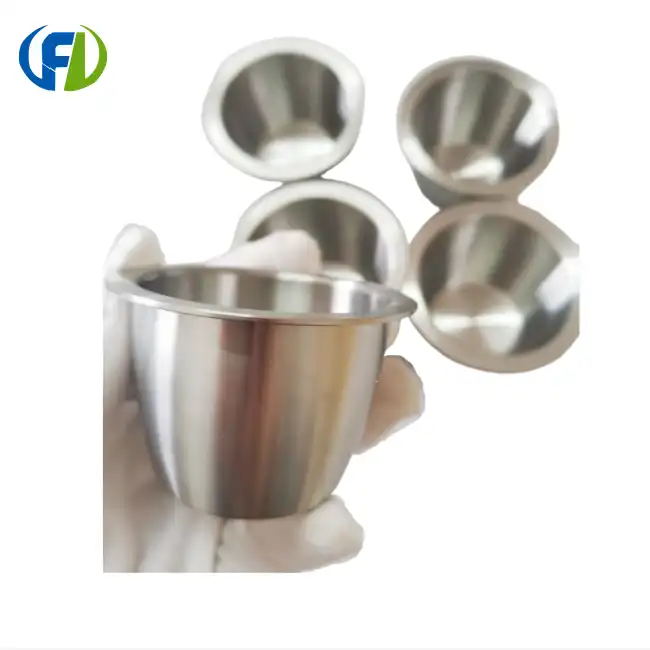
A zirconium crucible with a flange must be cleaned carefully to maintain its chemical resistance and structural integrity. The 50 ml zirconium crucible with flange must be cleaned to remove high-temperature residue, which may reduce analysis accuracy and equipment life. Maintenance protects your investment in aircraft alloy testing, semiconductor processing, and chemical synthesis. This article illustrates safe techniques to clean the crucible without damaging the protective oxide layer, flange stability, heat stress, or surface contamination.

Understanding the Zirconium Crucible With Flange
What Makes Zirconium Crucibles Unique
Zirconium crucibles improve high-temperature lab instruments. The substance works well where clay or platinum fails because it contains more than 99.2% zirconium and hafnium. These containers can withstand high temperatures since their melting point is about 1855°C. They also form a solid ZrO2 oxide layer that naturally resists chemicals.
Flanges distinguish these crucibles. The carefully machined rim, which protrudes 2–4 mm from the main body, makes grasping and positioning simpler mechanically. This feature helps engineers test flight components and produce semiconductors by reducing contamination during transfer procedures and allowing robotic handling devices to grab items firmly.
Critical Applications Across Industries
Zirconium crucibles with rings are utilised in numerous industries. They are used for liquid alkali fusion analysis in chemical processing facilities since sodium hydroxide and potassium carbonate would soon wear down weaker materials. Because even a little contamination may reduce thin-film production quality, semiconductor businesses utilise them to prepare pristine materials. How chemically harmless unstable metals and alloys are is important to advanced metallurgy laboratories.
The wall thickness, between 0.6 and 1 mm, provides enough thermal shock protection and structural strength. Since hard mechanical scrubbing or rapid temperature fluctuations might compromise the vessel's measuring precision, this technical element affects cleaning.
Why Proper Cleaning of Zirconium Crucibles With Flange Matters
Impact on Analytical Accuracy
Remains from previous projects make it difficult to complete others. Oxide scale, metal waste, and flux buildup modify crucible surface chemistry. These may introduce pollutants that skew analytical findings. Aerospace businesses that test titanium alloys hate this involvement. The strength-to-weight ratios that determine aviation part standards may be altered by even a little contamination.
Financial consequences go beyond analytical errors. Procurement managers realise that replacing crucibles too soon due to poor maintenance raises operational costs significantly. A well-maintained 50 ml zirconium crucible with a flange can endure hundreds of heat cycles. However, neglected equipment may fail after dozens of uses.
Protecting the Flange Integrity
The flange must be carefully washed since damage here affects the entire jar. If cleaning procedures generate rapid temperature or mechanical impact, fractures may spread at the flange-body junction, where stress is high. Deformation of flanges prevents them from fitting in furnace holders, say chemical processing specialists. This may compromise safety and warmth distribution.
Knowing these dangers affects cleaning. The following methods remove pollution while maintaining the crucible's design. This will assist in maintaining equipment reliability and lifespan.
Step-by-Step Guide to Cleaning Your Zirconium Crucible With Flange
Pre-Cleaning Safety and Inspection
Set up a safe workspace before cleaning. Wear safety eyewear and rubber or neoprene gloves and operate in a well-ventilated room or fume hood. Depending on their previous usage, high-temperature process waste may include reactive chemicals or dangerous compounds.
In well-lit areas, inspect the furnace. Look for lip cracks, chips, or deformation. When wearing gloves, check the edge for rough patches that may indicate stress damage. Look for deep holes or colour changes on the internal walls that indicate chemical damage beyond oxide formation. Document existing damage to monitor the 50 mL Zirconium Crucible With Flange over time. Let recently used crucibles cool naturally; thermal stress may cause microscopic fractures to evolve into catastrophic failures if items cool too quickly. Patience extends tool life.
Selecting Compatible Cleaning Agents
Zirconium can be cleaned with more chemicals than other lab materials; some are banned. Hydrofluoric acid and fluoride should not be used on zirconium. Despite its rust resistance, it will corrode swiftly. Use caution while picking industrial cleaning chemicals since zirconium's chemical stability is limited by this exception.
Dilutions of mineral acids, alkaline soaps, and complexing agents may safely remove oxides, organic waste, and metal pollutants. Your dust choice depends on your application. Most alkali metal remnants and oxide scale may be removed without damaging base zirconium using a warm 5–10% nitric acid solution. Regular cleaning following molten salt fusion analysis is possible with this. Deionised water prevents mineral contaminants from entering the solution. Hydrochloric acid works just as well, and it may be better when nitrate contamination influences downstream processes. Organic flux remnants benefit from alkaline cleansing. A hot solution with non-ionic detergent and 2–3% sodium carbonate removes carbonaceous residues and organic linkages. Commercial lab cleaners for glassware can clean zirconium surfaces.
Manual Cleaning Procedure
Start by removing free scale and dust by hand. To gently remove surface layers, use a nylon brush with soft bristles or a PTFE scraper. Do not use metal tools or rough pads on the protective oxide layer. These will scratch it and make places where rusting can start in the future. Start at the bottom inside and work your way up. Next, work on the outside areas and the flange area.
Put the 50 ml zirconium crucible with flange in the cleaning solution you chose and make sure it covers the whole thing, including the flange. Soaking at room temperature for 30 to 60 minutes softens most leftovers before you clean them. For tough layers, slowly heating the cleaning bath to 40–50°C may help. Be careful not to boil it, though, because that can make the solution splash on surfaces outside the tub and make it dangerous to handle. After letting it soak, use the soft brush to gently work any leftover deposits off in a circle. Keep a close eye on the flange joint, where dust tends to build up. The goal is to clean everything well without brushing too hard, which would damage the material. A single aggressive try doesn't work as well as several gentle rounds.
Ultrasonic Cleaning Enhancement
Ultrasonic cleaning is very helpful for zirconium crucibles that are dirty and won't come clean with normal methods. The cavitation process can get to rough spots on the surface and low areas that brushes can't reach. Ultrasonic baths that are small enough for crucibles can be bought from companies that sell lab supplies.
Put the right cleaning solution in the ultrasonic cleaner and set up the crucible so that the ultrasonic waves hit all surfaces equally. The ring design makes it easier to suspend holders that are covered with PTFE, which keeps them from touching the metal walls of the tank directly. At a modest power level, run the ultrasonic loop for 10 to 15 minutes. Through resonant shaking, too much ultrasonic energy can damage the thin-walled crucible frame. This method works especially well in the chip and electronics industries, where particulate pollution can mess up later steps. Chemical action and mechanical cavitation work together to get rid of submicron particles that hurt the quality of thin films in sputtering applications.
Thorough Rinsing Protocol
A common mistake that makes careful cleaning useless is not washing enough. The problems caused by residual cleaning products are just as bad as the problems caused by the original deposits. Set up an organized way to rinse the samples using high-purity water that meets your analysis needs.
To remove the bulk cleaning solution, start with a running tap water rinse. Then, proceed with multiple immersions in deionized water. After each rinse, fill the 50 mL Zirconium Crucible with Flange to the top with fresh water and drain completely. Perform at least five separate rinses with deionized water to ensure all cleaning agents are fully removed. Finish with ultrapure water with a resistivity of 18.2 MΩ·cm for ultra-high purity applications, such as medical device testing or electronics manufacturing. Inspect the final rinse water for any remaining contaminants; color changes, turbidity, or visible particles indicate that rinsing was insufficient and the process must be repeated. Pay extra attention to the flange area, where cleaning solutions tend to accumulate due to surface tension.
Drying Without Thermal Stress
Proper drying prevents water spotting and prepares the crucible for storage or immediate reuse. The thin-walled construction and flange geometry make zirconium crucibles particularly sensitive to changes in temperature during cooling because they have thin walls and a plate shape.
The best way to dry something is to let it dry in the air at room temperature. Place the crucible upside down on a clean, lint-free cloth or PTFE rack. Let the drying process continue for several hours with the help of gravity and air flow. This method removes all wetness without putting any heat stress on the material. If you need to dry something quickly, use a clean air stream or put the crucible in an oven with low heat. The oven shouldn't get hotter than 100–120°C, and it should heat up slowly, about 25°C every 10 minutes, to avoid thermal shock. If the temperature rises too quickly, the flange's higher thermal mass compared to the thin walls can cause differential expansion, which could lead to stress cracks at the joint.
Comparing Zirconium Crucible Cleaning With Flange vs. Other Crucible Types
Material-Specific Considerations
Because crucible materials have different chemical and mechanical qualities, the way they should be cleaned is very different. Ceramic crucibles, which are popular in labs, can't handle the acidic cleaners that are safe for zirconium. Their open structure lets in contaminants that can't be completely removed, which causes contamination to spread from one analysis run to the next. Because ceramic is so fragile, mechanical cleaning is also risky because even a small hit can break it completely.
Even though platinum crucibles are immune to chemicals, they need to be handled very carefully and should not come into contact with rough materials that could scratch the soft metal. Because they are so expensive, any damage is especially costly, and the fact that they don't have structural features like flanges makes them harder to handle when they are being cleaned with water. Zirconium is very strong, which is why the sturdy lip design makes it easier to move during the cleaning process. Another difference is quartz crucibles. Quartz is resistant to most acids, but at high temperatures, its surface devitrifies, making it rough and able to hold contaminants. Alkaline leftovers are very bad for quartz and need to be cleaned right away after use. Zirconium, on the other hand, doesn't react with chemicals, so this isn't necessary. Due to quartz's brittleness and the way it is made (fusion), the ring feature is still not physically useful.
Lifecycle Cost Advantages
Because flanged zirconium crucibles are easy to clean and last a long time, they are good for the economy. Material testing labs say that zirconium crucibles can withstand 300 to 500 full temperature cycles, while ceramic crucibles can only handle 50 to 100 cycles in the same situations. Zirconium can be cleaned with chemicals over and over again without losing its shape, which gives it a longer useful life.
When figuring out the total cost of ownership, purchasing managers should look at both the time it takes to clean the equipment and how often it needs to be replaced. The flange design cuts down on cleaning time by letting you use simple tools to safely handle the part instead of delicately manipulating it by hand. This level of speed is especially important in high-throughput testing settings, where analytical scientists work with dozens of samples every day. Aerospace and chemistry industry labs have found that flangeless designs cut the time it takes to handle crucibles by 20 to 30 percent.
Procurement and Supplier Selection Considerations for Zirconium Crucibles With Flange
Quality Indicators and Certification
To locate a reliable zirconium crucible vendor, consider many quality parameters. Reputable manufacturers provide comprehensive material certifications that list ASTM B550 and B493-compliant substances. These papers should include zirconium purity, hafnium quantity, and trace element analysis. Having a lot of documentation controls the production process. This ensures manufacturing batches behave similarly.
Wall thickness consistency affects thermal performance and cleaning durability. Specification sheets should provide precise dimensions. For 50 Ml Zirconium Crucible With Flange units, reputable manufacturers maintain ±0.05 mm wall thickness. The flange must be accurately fabricated to fit laboratory equipment. Ask potential vendors how they measure product sizes and request sample units for verification. Production location and transparency are critical to supply chain reliability. Baoji City, China’s Titanium Valley, is home to Baoji Freelong New Material Technology Development Co., Ltd., which has a concentration of reactive metal processing expertise. Partnerships with global aerospace, electronics, and medical device companies demonstrate their ability to meet stringent industry standards.
Technical Support and Customization
In addition to product quality, supplier assistance affects long-term satisfaction. Complex usage frequently needs modified crucible designs. For instance, proprietary equipment may need different flange dimensions, analytical techniques may require different capacity, or chemical conditions may require particular surface treatment. Middlemen who merely sell things can't satisfy these demands as well as manufacturers with engineering teams.
When comparing services, ask about post-delivery support. Can their technical team recommend application-specific cleaning? Do they assist in addressing unexpected pollution problems? Customers may use materials science specialists to maximise the crucible for battery cell testing and military alloys.
Conclusion
If you clean zirconium crucibles with a lip the right way, they will keep their great chemical resistance, structural integrity, and analytical accuracy for hundreds of heat cycles. The steps shown—careful inspection, choosing a cleaning agent that works well, removing waste in a planned way, thorough rinsing, and stress-free drying—will protect your equipment investment and make sure the process is reliable. The flange design makes it easier to handle, which lowers the risk of pollution and increases the service life compared to other types of crucibles. Working with providers with a lot of experience guarantees access to well-made tools backed by technical know-how and detailed quality records. This all-around approach to choosing tools and keeping them in good shape helps achieve reliable, high-quality results in tough aerospace, chemical, electronics, and research settings.
FAQ
1. How often should zirconium crucibles with flanges be cleaned?
How often you clean depends on how hard you use the product and what kind of dust it leaves behind. For molten salt fusion analysis, high-throughput labs should clean the crucibles every 5–10 uses so that waste doesn't build up and affect the accuracy of the analysis. Cleaning between material studies is helpful for research uses with different types of samples to avoid cross-contamination. Visual inspection is the best way to know what to do; clean any inner surfaces that show discoloration, scale, or dust. The right repair schedule strikes a balance between how long equipment lasts and how well it works.
2. Can I use commercial laboratory glassware cleaners on zirconium crucibles?
Most alkaline glassware cleansers are safe to use on zirconium surfaces and make it easy to clean up organic waste on a regular basis. Always check to see if the cleaner has any fluoride compounds in it, as these are the only chemicals that zirconium doesn't react well with. Formulations that use phosphate and those that use non-ionic surfactants usually work well together. Carefully read the labels, and if you're not sure what to do, test the cleaner on the outside of the crucible before submerging it all the way. Powder cleaners that are very rough can scratch the protected oxide layer, so stay away from them.
3. What signs indicate flange damage requiring crucible replacement?
Carefully look at the lip for cracks, chips along the edge of the rim, or warping that stops it from sitting flat. If you run your finger along the point where the lip meets the crucible body, and you find a sharp step or break, that means there is stress breaking. Patterns of discoloration that spread out from the flange joint could mean that there is damage from heat stress. When the crucible is put on a flat surface, it should wobble. This means that the lip has warped. Any of these problems makes the equipment less safe and less effective, so it needs to be replaced. Freelong offers fast delivery of replacement units to keep operations running as smoothly as possible.
Partner With Freelong for Premium Zirconium Crucibles With Flange
Baoji Freelong New Material Technology Development can help you with your high-temperature processing and analysis needs with carefully designed zirconium crucibles. Our 50 ml zirconium crucible with flange has very pure material, accurate measurements, and the functional benefits of a flanged design. We have decades of experience working with reactive metals and serve the aerospace, electronics, battery production, and research industries around the world from our location in China's Titanium Valley. Our dedication to quality control and quick expert support has helped us build long-lasting relationships with companies in Australia, Korea, Germany, the US, and other places. Whether you need standard setups or specs that are made just for you, our engineering team can make solutions that fit your needs perfectly. Contact jenny@bjfreelong.com right away to talk about your zirconium crucible needs with a seller who puts quality first and won't settle for less.
References
1. Davis, J.R. (2000). Corrosion of Zirconium and Zirconium Alloys. ASM International Handbook Series, Materials Park, Ohio.
2. Nielsen, R.H. & Wilfing, G. (2005). Zirconium and Zirconium Compounds. Ullmann's Encyclopedia of Industrial Chemistry, Wiley-VCH Verlag.
3. American Society for Testing and Materials (2019). ASTM B493-09: Standard Specification for Zirconium and Zirconium Alloy Forgings. West Conshohocken, Pennsylvania.
4. Cox, B. (1990). Pellet-clad Interaction (PCI) Failures of Zirconium Alloy Fuel Cladding. Journal of Nuclear Materials, Volume 172, Pages 249-292.
5. Lustman, B. & Kerze, F. (1955). The Metallurgy of Zirconium. McGraw-Hill Book Company, New York.
6. Takagi, I. & Yamamoto, M. (2012). High Temperature Oxidation Behavior of Zirconium in Air and Steam Environments. Journal of Nuclear Science and Technology, Volume 49, Issue 3, Pages 288-295.

_1774405769991.png)
_1774596094655.png)
Learn about our latest products and discounts through SMS or email