- English
- French
- German
- Portuguese
- Spanish
- Russian
- Japanese
- Korean
- Arabic
- Greek
- German
- Turkish
- Italian
- Danish
- Romanian
- Indonesian
- Czech
- Afrikaans
- Swedish
- Polish
- Basque
- Catalan
- Esperanto
- Hindi
- Lao
- Albanian
- Amharic
- Armenian
- Azerbaijani
- Belarusian
- Bengali
- Bosnian
- Bulgarian
- Cebuano
- Chichewa
- Corsican
- Croatian
- Dutch
- Estonian
- Filipino
- Finnish
- Frisian
- Galician
- Georgian
- Gujarati
- Haitian
- Hausa
- Hawaiian
- Hebrew
- Hmong
- Hungarian
- Icelandic
- Igbo
- Javanese
- Kannada
- Kazakh
- Khmer
- Kurdish
- Kyrgyz
- Latin
- Latvian
- Lithuanian
- Luxembou..
- Macedonian
- Malagasy
- Malay
- Malayalam
- Maltese
- Maori
- Marathi
- Mongolian
- Burmese
- Nepali
- Norwegian
- Pashto
- Persian
- Punjabi
- Serbian
- Sesotho
- Sinhala
- Slovak
- Slovenian
- Somali
- Samoan
- Scots Gaelic
- Shona
- Sindhi
- Sundanese
- Swahili
- Tajik
- Tamil
- Telugu
- Thai
- Ukrainian
- Urdu
- Uzbek
- Vietnamese
- Welsh
- Xhosa
- Yiddish
- Yoruba
- Zulu
High Purity Zirconium Crucible With Rim for Semiconductor Processing: What You Need to Know
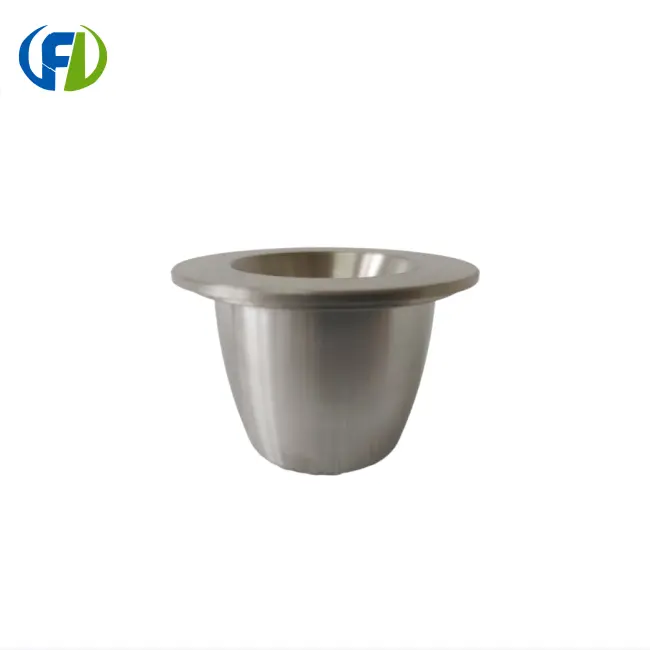
A precision-engineered zirconium crucible with rim is built from reactor-grade zirconium (typically Grade 702, UNS R60702) and has a reinforced top flange. This structural innovation addresses key semiconductor processing issues, such as mechanical stability at high temperatures and contamination in clean environments. Crucibles remain in mechanised processing equipment and don't distort when handled due to their spherical shape. They are necessary for crystal formation, melting pure metals, and creating sophisticated materials with minimal contamination tolerance.
Understanding Zirconium Crucibles With Rim: An Industrial Overview
Making semiconductors requires materials that can withstand extreme conditions and don't introduce impurities. Zirconium Crucible With Rim units use material science and novel real-world design to address this demand.
What Makes the Rim Design Essential?
Strengthened rims provide more than aesthetics. In semiconductor manufacturing, typical crucibles frequently expand in a condition engineers term "ovalization." This makes them difficult to fit in furnace racks and provides openings for airborne pollutants. The rim resists these stresses, stiffening the vessel's weakest spot.
When automated handling systems use mechanical hands to transport these crucibles between processing stations, the rim uniformly distributes pressure. This prevents tension from causing zirconium structural fractures. This functionality is important for silicon ingot and mixed semiconductor plants since one pollution incident might damage production runs.
Material Composition and Purity Standards
According to ASTM B550 and B494, semiconductor-grade zirconium crucibles must have at least 99.2% purity for zirconium + hafnium and no more than 4.5% hafnium. With a density of 6.51 g/cm³, this blend produces a robust yet lightweight material.
The material melts at 1852°C; acidic atmospheres limit its usage to 500–600°C. Some processing procedures include short-term contact at 900°C. When exposed to air, zirconium dioxide (ZrO₂) forms a deep, self-healing coating, distinguishing it from other materials. When dealing with unstable materials like silicon carbide or gallium arsenide, this passive coating prevents oxidation and maintains chemical inertness.
Common Applications in Semiconductor Manufacturing
Chip factories employ rimmed zirconium crucibles for certain functions. These vessels maintain a uniform temperature and prevent molten semiconductor materials from being contaminated by vessel walls during crystal growth methods like the Czochralski method. Zirconium's chemical stability prevents metallic contaminants from entering the melt and disrupting crystal formations.
Some thin-film deposition procedures employ these crucibles to melt source materials. The rim design allows accurate placement beneath substrate holds, maintaining vapour flux geometry. When making sputtering targets from pure metals, zirconium crucibles prevent cross-contamination that might affect subsequent covering procedures.
Performance Attributes: What Sets Zirconium Crucibles With Rim Apart
The technical benefits of these specialized tanks go beyond simple containment. They offer real improvements in the quality and speed of production.
Exceptional Temperature Resistance
Temperature control is always difficult in semiconductor operations. Zirconium Crucible With Rim products are ideal for rapid temperature changes between room and high temperatures. Due to its low coefficient of thermal expansion (5.7 × 10⁻⁶/°C), the material remains stable in size throughout heating and cooling.
This constancy is essential when the temperature fluctuates fast because materials with different growth rates incur thermal shock. The added bulk on the rim generates thermal inertia, slowing abrupt temperature fluctuations near the crucible opening. This protects delicate materials from heat gradients that might induce crystalline defects or composition alterations.
Unmatched Chemical Compatibility
When producing semiconductors, strong chemicals rapidly break down typical materials. Zirconium resists hydrochloric, sulphuric, and organic cleaning and cutting acids. Even better, it can withstand powerful alkalis like potassium and sodium hydroxide, which destroy typical crucible materials like graphite and many ceramics.
The self-healing oxide layer protects the crucible throughout its lifespan by growing back after injury. This feature reduces particle formation, which is significant for microelectronics materials since impurities as tiny as parts per billion may degrade device performance. When complicated electronics firms transition from alumina to zirconium crucibles for the same procedures, contamination lowers by over 40%.
Longevity and Maintenance Considerations
Well-maintained rimmed zirconium crucibles may last 20 to 50 working cycles, depending on the materials and environment. This lasts longer than graphite, which oxidises and wears out quickly. The economic gain becomes evident when you consider the cost of materials and the time wasted during production when changing the crucible and requalifying the tools.
Maintenance programs prevent mechanical and chemical breakdown. Between processing cycles, crucibles must be cleaned with mild acid solutions to remove residual components without damaging the oxide layer. Ultrasound cleaning removes stubborn contaminants without damaging the surface. Regular magnifying glass checks detect surface problems before they cause construction breakdowns.
Pay special care to rim cleaning and treatment. Sharp knocks may produce stress concentrations and fractures, thus facilities employ soft storage racks and handling ways to keep the rim off hard surfaces. These basic measures extend equipment life and maintain automation processing equipment measurement accuracy.
Zirconium Crucible With Rim vs Other Crucibles: Informed Decision-Making
When choosing the right containment vessels, you have to weigh a lot of performance factors against financial limits and the needs of the particular application.
Comparative Material Analysis
Graphite crucibles are cheaper and are less likely to crack when heated to high temperatures. They oxidise fast at 500°C in air and mix with numerous molten metals, adding carbon that semiconductor processes can't tolerate. Porous materials absorb process gases and moisture, which might produce outgassing during subsequent heating cycles.
Silicon carbide is better at conducting heat and withstanding high temperatures than zirconium, but it can't be used with some semiconductor materials because it reacts chemically with them. Flimsy silicon carbide crucibles are more likely to shatter when handled. Silicon carbide is cheaper for non-critical usage, but zirconium is the only metal that controls semiconductor crystal growth pollution.
Alumina and other ceramic crucibles withstand numerous chemicals and function well in acidic situations. Only zirconium resists alkalis and lasts mechanically. In modern semiconductor processes, rapid temperature changes may create thermal stress in ceramics due to their greater thermal expansion factors.
Cost-Performance Trade-Offs
Despite the fact that Zirconium Crucible With Rim units cost 8–12 times more than similar graphite vessels, the total cost of ownership estimate shows a different picture. More durable parts, less production loss due to contamination, and less process downtime usually pay for themselves within 6 to 12 months of being put in place.
This idea is especially appealing to semiconductor factories that work with valuable materials like gallium nitride or silicon carbide. When one event of pollution can destroy materials worth thousands of dollars, the extra cost of the furnace stops being worth it. Hybrid methods may work best in production settings that make low-value materials, saving zirconium crucibles for the most important high-purity steps and using other materials for less sensitive tasks.
Customization Options
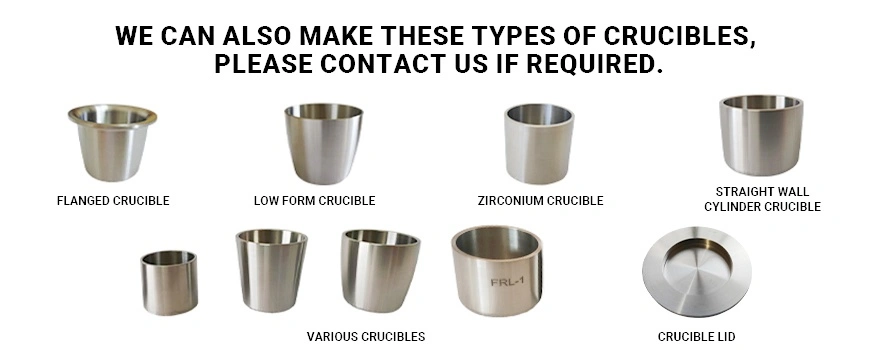
Standard crucible sizes work for many uses, but when working with semiconductors, they need to be set up in specific ways. At Baoji Freelong New Material Technology Development Co., we often change the wall thickness to get the best thermal mass for different heating profiles. We also changed the rim dimensions to make them work with different furnace designs and the total capacity to fit different batch sizes.
When uses need to keep contamination to an absolute minimum, purity levels above normal grades can be requested. Electropolishing is one way to finish the surface, which further reduces the production of particles for very clean working areas. These changes ensure the best performance without sacrificing the benefits of standardization, which makes buying things and keeping track of goods easier.
Procurement and Supply Chain Insights for Zirconium Crucibles With Rim
To strategically source these specific parts, you need to know what the suppliers can do, what certifications they need, and what the supply chain risks are.
Supplier Qualification Criteria
Some of the certifications that reputable makers keep up to date are ISO 9001 for quality management and, for example, AS9100 for aerospace uses or ISO 13485 for medical device manufacturing. These licenses show that the company has a method for quality control that includes checking the raw materials, keeping an eye on the production process, and keeping records of where the products came from.
Each package of crucibles comes with a material certification that lists the chemical makeup (using spectroscopic analysis) and mechanical qualities (such as tensile strength and elongation), as well as a statement that the materials meet certain standards. Third-party testing by separate labs adds another layer of assurance for important uses where the performance of a material has a direct effect on the quality or safety of a product.
Pricing Structures and Volume Considerations
Prices per unit are based on the cost of raw materials, the difficulty of production, and the number of orders. When you buy in bulk, you save a lot of money. Orders of more than 50 units often get 15–25% off the price of a single unit. Annual supply deals keep prices stable and make sure there is enough production capacity for when demand is high.
Lead times are very different depending on the details of the order. Standard setups from well-known makers usually ship within 4 to 6 weeks. Custom designs, on the other hand, need 8 to 12 weeks to allow for the preparation of tools and quality checks. Supply chain problems can be lessened by strategically stocking up on high-use items. This is especially true for production lines that use continuous processes, where the availability of Zirconium Crucible With Rim units has a direct effect on output.
Geographic and Logistic Factors
Baoji City is known as China's Titanium Valley and is a world hub for making things out of unstable metals, such as zirconium processing. Suppliers in this area can get access to a lot of specialized tools, a lot of experts, and integrated supply lines that keep quality standards high while cutting costs. Customers from Australia, Korea, Germany, the United States, the United Kingdom, Malaysia, and the Middle East come to our center to take advantage of these benefits.
To keep things from breaking during shipping, international packages need to be carefully packed. We use custom foam inserts inside rigid outer cases to protect them from damage and let you see what's inside without having to open the boxes. Each package comes with paperwork like commercial bills, certificates of origin, and material safety data sheets. This makes it easier to clear customs and follow the rules in the countries where the goods are going.
Manufacturing Process and Quality Assurance of Zirconium Crucibles With Rim
Understanding how products are made gives you a better idea of the quality factors that set good products apart from average ones.
Raw Material Selection and Preparation
The process starts with a zirconium sponge or crystal bar that meets certain quality standards. X-ray fluorescence spectroscopy and inert gas fusion analysis are two of the scientific methods that suppliers use to check the hafnium content, oxygen levels, and minor impurities. Material tracking systems keep track of each batch from the beginning of the refinement process to the delivery of the finished product. This lets problems with quality be found and fixed at their source.
The chosen zirconium is consolidated using either vacuum arc melting or electron beam melting. This makes ingots with a regular makeup and few holes. Then, these bars are mechanically processed, such as by casting or rolling, to improve the mechanical properties and fine-tune the grain structure. When working temperatures and deformation rates are carefully controlled, materials are made that are strong, flexible, and resistant to corrosion.
Forming and Rim Integration
Depending on the size and specifications needed, Zirconium Crucible With Rim production uses a number of different methods. For smaller crucibles, deep drawing is used to make a flat zirconium sheet into a cylinder shape. For bigger vessels, spinning or gradual forming may be used. To keep the material from work hardening and losing its properties, each method needs its own set of tools and process factors.
The rim is a very important production problem. Some manufacturers attach a different zirconium ring to the crucible body by welding it together. This makes a mechanical part that needs to be carefully put together to avoid weld flaws or weak spots caused by heat. Advanced makers incorporate the rim during the initial shaping steps, creating a single-piece structure without any parts that could become weak spots or places where contamination can gather.
Dimensional tolerances throughout fabrication remain tight—typically ±0.5mm for critical dimensions like rim diameter and wall thickness. Coordinate measuring machines check for conformance, and statistical process control keeps an eye on trends that could show tool wear or process drift before they lead to products that don't meet standards.
Quality Control and Testing Protocols
Finished crucibles go through several rounds of inspection. A visual study finds flaws on the surface, such as scratches, pits, or staining that shows contamination. Using precision measuring tools set to NIST-traceable standards for dimension checking makes sure that the product meets the requirements.
Non-destructive testing methods give you even more confidence. Ultrasonic analysis finds holes or other things inside that could weaken the structure. Dye penetrant testing finds flaws in the surface that can't be seen with the naked eye. These methods find possible failure modes before the crucibles are put to use. This keeps production from stopping, which costs a lot of money.
Destructive testing of sample units from each production batch verifies mechanical properties, including tensile strength and elongation. Chemical study proves that the makeup meets the requirements. This sample method strikes a balance between thorough testing and the fact that it would be too expensive to test every unit. Based on batch amounts and quality levels that are considered okay, statistical methods figure out the right sample sizes.
Conclusion
Zirconium crucible with rim units are a unique but necessary part of handling semiconductors because they keep out contaminants and stay stable at high temperatures better than any other material. The rim design solves practical handling problems and improves the structure's strength during tough heat cycles. Even though the starting costs are higher than those of other choices, a total cost analysis shows that the value is very high because the service life is longer, contamination losses are lower, and process efficiency is better. For better purchasing choices, it's helpful to know about the factors that affect production quality, the abilities of suppliers, and the customization options that are specific to the application. As semiconductor devices keep getting smaller and using new materials and shapes, the strict purity standards will make the benefits of these special vessels even clearer.
Frequently Asked Questions
1. What is the typical service life of a zirconium crucible with a rim in semiconductor applications?
If you keep rimmed zirconium crucibles in good shape, they will work 20 to 50 times under normal semiconductor working conditions. How long something will last relies on its highest operating temperature, how often it is heated and cooled, and how harshly it is exposed to chemicals. The upper part of this range is often reached by facilities that follow the cleaning guidelines and handle things carefully. By keeping an eye on changes in size and surface quality, you can replace things before they break. This keeps contamination from happening, which could ruin production runs.
2. How should these crucibles be cleaned between processing runs?
To clean something properly, you should soak it in a mix of 10-15% hydrochloric acid or nitric acid for 30 to 60 minutes. This will break down any leftover dirt, and then you should rinse it well with deionized water. Ultrasonic motion makes cleaning more effective without causing damage to the protected oxide layer through mechanical friction. Water spots can't form if the item is completely dry in a clean area. Do not use rough cleaning methods or chemical cleaners that are not made to work with zirconium. These can damage the surface or add contaminants.
3. How can buyers be sure that a material's approval is real?
Suppliers who are honest give you certificates of analysis from accredited testing labs that list the chemicals they use. Check the supplier's quality management system records against the certificate number. When buying crucibles for important uses, make sure they are checked by a third party through independent testing centers. Reputable makers like this kind of proof because it shows that they care about quality. Physically checking the crucible's surface for a consistent finish and exact size conformance gives you even more trust in the quality of the manufacturing process.
Partner With Freelong as Your Trusted Zirconium Crucible Manufacturer
For semiconductor work to be done well, the material providers must be trusted and know how to meet both technical needs and delivery obligations. At Baoji Freelong New Material Technology Development Co., we offer rimmed zirconium crucibles that are made to your exact specs by combining decades of experience with reactive metals with full customization options. Our position in Baoji City, China's Titanium Valley, gives us access to manufacturing facilities and technical knowledge that can't be found anywhere else in the world. During production, we keep a close eye on quality, and each crucible comes with full paperwork for material approval.
Whether your application requires standard configurations or custom dimensions, our engineering team collaborates with you to optimize design parameters for your specific processing conditions. We support research quantities for development in the lab and production volumes for scaling up production. Partnership pledges are rewarded by affordable price structures. Our long-term partnerships with aircraft, electronics, and advanced materials companies in Australia, Korea, Germany, the US, and other places show that we are reliable and skilled enough to support your chip operations. Get in touch with jenny@bjfreelong.com to talk about your needs with our application experts and find out how our Zirconium Crucible With Rim products can help you make your processing more reliable.
References
1. Davis, J.R. (2000). Nickel, Cobalt, and Their Alloys. ASM International Materials Park, OH.
2. International Atomic Energy Agency. (2012). Zirconium in the Nuclear Industry. IAEA Technical Reports Series No. 368.
3. Lütjering, G. & Williams, J.C. (2007). Titanium: Engineering Materials and Processes. Springer-Verlag Berlin Heidelberg.
4. Petzow, G. & Aldinger, F. (1999). Refractory Metals: Materials for Key Technologies. Deutsche Forschungsgemeinschaft.
5. Smallman, R.E. & Ngan, A.H.W. (2014). Modern Physical Metallurgy, Eighth Edition. Butterworth-Heinemann, Oxford.
6. Westbrook, J.H. & Fleischer, R.L. (2000). Intermetallic Compounds: Principles and Practice, Volume 3. John Wiley & Sons, Chichester.

_1768203062255.png)
_1744875980269.webp)
_1768380949469.png)
Learn about our latest products and discounts through SMS or email