- English
- French
- German
- Portuguese
- Spanish
- Russian
- Japanese
- Korean
- Arabic
- Greek
- German
- Turkish
- Italian
- Danish
- Romanian
- Indonesian
- Czech
- Afrikaans
- Swedish
- Polish
- Basque
- Catalan
- Esperanto
- Hindi
- Lao
- Albanian
- Amharic
- Armenian
- Azerbaijani
- Belarusian
- Bengali
- Bosnian
- Bulgarian
- Cebuano
- Chichewa
- Corsican
- Croatian
- Dutch
- Estonian
- Filipino
- Finnish
- Frisian
- Galician
- Georgian
- Gujarati
- Haitian
- Hausa
- Hawaiian
- Hebrew
- Hmong
- Hungarian
- Icelandic
- Igbo
- Javanese
- Kannada
- Kazakh
- Khmer
- Kurdish
- Kyrgyz
- Latin
- Latvian
- Lithuanian
- Luxembou..
- Macedonian
- Malagasy
- Malay
- Malayalam
- Maltese
- Maori
- Marathi
- Mongolian
- Burmese
- Nepali
- Norwegian
- Pashto
- Persian
- Punjabi
- Serbian
- Sesotho
- Sinhala
- Slovak
- Slovenian
- Somali
- Samoan
- Scots Gaelic
- Shona
- Sindhi
- Sundanese
- Swahili
- Tajik
- Tamil
- Telugu
- Thai
- Ukrainian
- Urdu
- Uzbek
- Vietnamese
- Welsh
- Xhosa
- Yiddish
- Yoruba
- Zulu
Top Advantages of Using a Rimmed Crucible in Chemical Processing
Choosing the right crucible is very important when working with aggressive chemical reactions or high-temperature alkaline fusions. It can make or break your ability to accurately analyse and run your business. The Height 43mm Rimmed Zirconium Crucible has become an important tool for labs and factories that work with metallic analysis, speciality chemical synthesis, and breaking down refractory samples. This tank is made from commercially pure zirconium that meets the requirements of UNS R60702, and it has great chemical protection and mechanical longevity. Its carefully thought-out rim provides structural support that keeps it from deforming during high-temperature operations, which makes it much more reliable than ceramic or porcelain options. We've seen how this specific dimensional configuration maximises sample volume capacity while maintaining thermal stability. This solves one of the biggest problems procurement managers face when they have to find cheap lab supplies that work well.

Understanding the 43mm Rimmed Zirconium Crucible: Specifications and Thermal Properties
Material Composition and Manufacturing Standards
Choosing the right crucible is very important when working with aggressive chemical reactions or high-temperature alkaline fusions. It can make or break your ability to accurately analyse and run your business. The Height 43mm Rimmed Zirconium Crucible has become an important tool for labs and factories that work with metallic analysis, speciality chemical synthesis, and breaking down refractory samples. This tank is made from commercially pure zirconium that meets the requirements of UNS R60702, and it has great chemical protection and mechanical longevity. Its carefully thought-out rim provides structural support that keeps it from deforming during high-temperature operations, which makes it much more reliable than ceramic or porcelain options. We've seen how this specific dimensional configuration maximises sample volume capacity while maintaining thermal stability. This solves one of the biggest problems procurement managers face when they have to find cheap lab supplies that work well.
Learn About the 43mm Rimmed Zirconium Crucible: Its Specifications and How It Handles Heat
Composition of materials and standards for manufacturing
The 43mm Height Rimmed Zirconium Crucible is made from a high-purity zirconium alloy (Zr + Hf > 99.2%), which meets ASTM B550 and B493 standards. This mix keeps impurities from getting in the way of trace element analysis, which is very important for geochemical mining labs and companies that make semiconductor materials. The deep-drawing manufacturing method makes a building that is smooth and doesn't have any weak welds. This gives the structure strength even when it's being heated and cooled many times.
Dimensional Precision and Rim Engineering
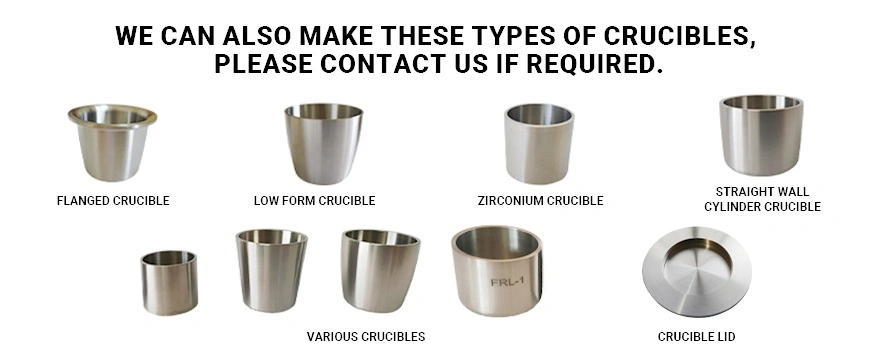
The Height 43mm Rimmed Zirconium Crucible requirement isn't just a guess—it gives you the best volume range of 30–45ml, which is great for mid-batch fusion preparations that are popular in industry quality control labs. The strengthened rim does two things: it keeps things from expanding too much at the opening, and it also acts as a mechanical grip point for automatic handling systems. In contrast to straight-wall designs, the flared rim keeps its shape even after 100+ heating cycles, which stops the ovalization that makes automated gripper compatibility difficult.
Superior Thermal Performance Characteristics
Because zirconium melts at about 1855°C, these crucibles can be used safely in the 600–900°C range that is typical for fusions of sodium peroxide and sodium carbonate. The material is very resistant to thermal shock, so it can be heated and cooled quickly without breaking, which is a problem with alumina and porcelain crucibles. When zirconium is exposed to oxidising atmospheres above 550°C, it forms a protective ZrO₂ oxide layer that makes it more resistant to chemicals without adding much weight. Compared to metal crucibles that aren't secured, this self-passivating behaviour greatly increases the service life.
Chemical Inertness Across Aggressive Environments
We've seen that zirconium crucibles work better than platinum vessels when working with samples that have metals in them, like antimony, arsenic, or lead, which weaken and alloy precious metals. The crucible is very strong against molten alkalis like NaOH, KOH, NaCO₃, and NaO₂. It also stays stable in environments with hydrochloric acid and sulphuric acid. Because it can react with so many chemicals, it is essential for analysing black liquor in the pulp and paper industry, where sulphur compounds and fast thermal cycling would destroy other materials. One important exception is hydrofluoric acid, which attacks zirconium very quickly and should never be used.
Top Advantages of Using Rimmed Zirconium Crucibles in Chemical Processing
The rimmed zirconium crucible design delivers tangible operational benefits that translate directly to improved productivity and cost savings in demanding chemical processing environments. Here are the core advantages that matter most to procurement decision-makers:
- Enhanced Handling Safety and Automation Compatibility: The reinforced rim creates a positive engagement surface for both manual tongs and robotic grippers used in automated fusion furnaces. This design feature reduces spillage risks during vigorous alkaline fusion reactions, where sodium peroxide decomposition generates substantial frothing. Operators handling chromite, zircon, or rutile mineral digestions particularly value this containment capability, which ensures quantitative sample recovery for subsequent ICP-AES or XRF analysis.
- Extended Service Life and Durability: Zirconium crucibles typically deliver 20-50 times the lifespan of porcelain alternatives in alkaline fusion applications. While ceramic vessels often survive only single-use cycles due to glazing attack, a properly maintained rimmed zirconium crucible withstands over 100 peroxide fusion cycles. This durability stems from the material's resistance to cracking, warping, and chemical degradation even under harsh thermal cycling conditions. The rim reinforcement specifically prevents the mechanical failure modes—edge chipping and wall collapse—that prematurely retire straight-wall crucibles.
- Superior Process Consistency and Contamination Control: The chemically inert surface minimizes cross-contamination risks that compromise trace element analysis accuracy. Unlike nickel crucibles that introduce metallic interference or graphite vessels that contribute carbon contamination, zirconium maintains low background interference levels critical for ICP-MS/OES applications. The uniform thermal conductivity promotes even heat distribution throughout the sample matrix, producing consistent fusion beads essential for X-ray fluorescence spectroscopy preparation.
- Broad Application Versatility: These crucibles serve diverse industrial sectors—from geochemical mining operations conducting alkaline fusion of refractory minerals to metallurgical laboratories preparing steel and superalloy samples for compositional analysis. The Height 43mm specification bridges the gap between small-scale research requirements and high-throughput industrial quality control demands.
These advantages collectively address the fundamental challenge facing chemical processing facilities: maintaining analytical accuracy and operational efficiency while controlling consumable costs. The rimmed design specifically resolves handling issues that cause sample loss and equipment damage in automated systems, making it particularly valuable for facilities pursuing process modernization.
Comparison and Decision Making: Why Choose a Rimmed Zirconium Crucible Over Other Types?
Material Performance Against Ceramic and Graphite Alternatives
While alumina crucibles have good thermal properties, they break easily when they are suddenly heated or cooled, and they can also be damaged by alkaline fluxes. Graphite is a great thermal conductor, but it also adds carbon to the air and breaks down quickly above 600°C. However, silicon carbide is hard, but it mixes with some metals. Without these trade-offs, Height 43mm Rimmed Zirconium Crucible offers chemical protection similar to platinum at about 5–10% of the cost, as well as mechanical toughness that ceramic materials can't match.
Rimmed Versus Unrimmed Configuration Benefits
The addition of the rim improves the mechanical properties without affecting the chemical properties. Unrimmed crucibles need to be handled carefully so that the edges don't get damaged, and automated systems can't easily grip them. The structural support in the rim stops the hole from distorting after multiple rounds of heat expansion. This keeps the lids and automatic equipment fitting properly. For high-throughput labs that handle dozens of samples every day, this dependability means less downtime for equipment and fewer problems with preparing samples.
Cost-Effectiveness and Total Ownership Analysis
Even though zirconium crucibles are more expensive to buy at first than clay options, they are much cheaper to own in the long run. By changing 20 to 50 ceramic pots with a single zirconium crucible, the number of purchases, the difficulty of managing supplies, and the amount of waste that needs to be thrown away are all reduced. Even bigger savings come from not using platinum vessels for some tasks. This is especially true for places that work with metal samples and damage precious metalware.
How to Use and Maintain Your 43mm Rimmed Zirconium Crucible for Maximum Efficiency
Preheating and Thermal Stress Management
If you preheat the crucible correctly, you can avoid thermal shock damage that shortens its life. We suggest raising the temperature slowly, by about 150 to 200°C every 10 minutes, until the desired melting temperature is reached. Do not put crucibles that are at room temperature right into furnaces that are already hotter than 400°C. This controlled heating makes the zirconium expand evenly, which keeps stress from building up at the transition radius from the base to the wall.
Loading and Fusion Operation Best Practices
To allow for fusion foaming, sample loads should never go over 70% of the crucible's volume. This is especially important for sodium peroxide digestions of silicate rocks. The shape of the rim allows for this growth, but if you fill it too much, this safety cushion is lost. To make sure the sample is completely dissolved, hold the crucible by the edge with zirconium-tipped tongs so you don't scratch the walls of the vessel.
Cleaning Protocols for Contamination Prevention
Usually, all that's needed to clean up after fusion is a rinse with warm water to get rid of salt cakes and sodium-based flux residues. Applying 20% hydrochloric acid solutions for 15 to 30 minutes works well on stubborn deposits. Do not use hydrofluoric acid or aqua regia that has HF components in it. These will quickly break down the zirconium matrix and damage the crucible. After being cleaned, crucibles should be kept somewhere dry to keep the surface from rusting before they are used again.
Wear Pattern Recognition and Replacement Timing
Keep an eye on crucibles for signs that they are almost done: wall thinning that can be seen as translucency when lit from behind, rim deformation that stops them from fitting properly in furnace blocks, or surface pitting from being exposed to chemicals over and over again. The protective oxide layer that forms during regular use looks like a light grey rust and doesn't mean that something is broken. Crucibles with deep scratches or cracks that can be seen should be thrown away right away to keep them from breaking down catastrophically while they are being used.
Procuring 43mm Rimmed Zirconium Crucibles: What B2B Buyers Need to Know
Supplier Evaluation and Quality Verification
When buying Height 43mm Rimmed Zirconium Crucible, procurement teams should give more weight to makers who can provide full mill test results that confirm UNS R60702 compliance and hafnium content below 4.5%. Ask for details on the surface finish and the tolerances for the sizes; the height should stay within ±0.5mm so that it can work with automated equipment. Reliable suppliers use dye-penetrant inspection to make sure there are no manufacturing flaws, such as microcracks or surface irregularities from the deep-drawing process.
Pricing Dynamics and Volume Considerations
The price of an individual crucible is usually between $80 and $150, based on how precise the specifications are and how many are ordered. When you buy 10 or more units, you get a big discount. When you buy 50 or more units, you usually get a 15–25% discount. Making custom changes to dimensions or specifications for higher purity costs more, but they may be worth it for certain uses. Lead times range from two to four weeks for basic configurations to six to eight weeks for special setups.
Sample Testing and Specification Confirmation
Progressive procurement methods involve ordering two to three sample units to make sure they work before committing to large quantities. This lets you check if the dimensions work with the equipment you already have, make sure the chemicals work with your specific fusion protocols, and see how consistent the quality is from one supplier to the next. We suggest doing at least 10 fusion cycles during the review to see how durable the material is and to find any trends of early wear.
Certification and Documentation Requirements
Make sure that sellers give you all the paperwork you need to track down a material, such as certificates of chemical makeup, records of measurement inspections, and proof of surface quality. For regulated fields like testing aerospace alloys or making pharmaceutical intermediates, ISO 9001 certification and being able to track material lots are necessary. This limits the suppliers you can choose from, but makes sure you pass audits.
Conclusion
The Height 43mm Rimmed Zirconium Crucible is a smart purchase for places that do high-temperature chemical processing, preparing samples for alkaline fusion, and metallurgical analysis. Its engineered rim design gives real operational benefits like safer handling, compatibility with automated systems, and longer service life. These benefits directly address the problems that chemical engineers and lab managers face every day. Due to their better chemical protection and temperature performance, zirconium crucibles are the best choice between expensive platinum vessels and fragile clay options. When making a procurement choice, the higher original cost should be weighed against the dramatically lower total ownership costs that come from fewer replacement rounds and no more failed sample preparation. Facilities can confidently add these crucibles to important analytical workflows that help make aerospace parts, develop semiconductor materials, and study advanced materials by working with qualified suppliers who offer full quality documentation and technical support.
FAQ
1. Why is the 43mm height specification important for chemical processing applications?
The 43mm height provides optimal volume capacity (30-45ml) for mid-batch fusion preparations while allowing sufficient headspace for vigorous frothing during sodium peroxide decomposition reactions. This dimensional balance prevents sample spillover while maintaining thermal efficiency, making it ideal for high-throughput industrial laboratories conducting routine refractory mineral digestions.
2. How does the rimmed design improve operational safety compared to straight-wall crucibles?
The reinforced rim creates a mechanical engagement surface that prevents slippage when gripped by tongs or automated robotic handlers. This design reduces spillage risks during sample transfers and improves compatibility with standardized fusion equipment. The rim also acts as a structural reinforcement, preventing opening distortion after repeated thermal expansion cycles.
3. Can zirconium crucibles completely replace platinum vessels in all applications?
Zirconium excels for sodium and potassium-based alkaline fusions but cannot handle hydrofluoric acid exposures that platinum withstands. For lithium metaborate/tetraborate fusions requiring ultra-low detection limits where zirconium interference might compromise results, platinum remains preferred. Zirconium provides excellent cost-effective alternatives for approximately 70-80% of fusion applications previously requiring platinum.
4. What maintenance practices maximize crucible lifespan?
Gradual preheating prevents thermal shock, while post-fusion cleaning with warm water or dilute HCl removes residues without damaging the zirconium matrix. Avoid HF exposure entirely. Store crucibles in dry conditions and inspect regularly for wall thinning or rim deformation. Proper handling typically yields 100+ fusion cycles before replacement becomes necessary.
Partner with Freelong for Premium Rimmed Zirconium Crucibles
Baoji Freelong New Material Technology Development Co., Ltd., located in China's Titanium Valley, specializes in manufacturing high-purity zirconium crucibles engineered for demanding chemical processing applications. As a Height 43mm Rimmed Zirconium Crucible supplier with extensive experience serving aerospace, electronics, and metallurgical industries across the United States, Australia, Europe, and Asia, we understand the critical performance requirements your operations demand. Our manufacturing facility maintains rigorous quality control protocols, including mill test certification, dimensional tolerance verification, and oxidation cycle testing to ensure every crucible meets ASTM B550 standards. We offer flexible procurement options from sample quantities for validation testing to bulk orders with volume discounts, supported by complete material traceability documentation and technical consultation. Whether you're conducting geochemical mineral analysis, superalloy testing, or specialty chemical synthesis, our team provides application-specific guidance to optimize your crucible selection. Contact jenny@bjfreelong.com today to discuss your specific requirements, request technical specifications, or obtain competitive quotations. Our commitment to quality and customer service has established long-term partnerships with leading research institutions and industrial manufacturers who rely on consistent crucible performance for critical analytical workflows. Visit frlmetal.com to explore our complete range of high-performance zirconium products.
References
1. ASTM International. (2021). ASTM B550 - Standard Specification for Zirconium and Zirconium Alloy Strip, Sheet, and Plate. West Conshohocken, PA: ASTM International.
2. Thompson, R. A., & Martinez, D. L. (2019). High-Temperature Materials for Industrial Fusion Applications: A Comparative Analysis of Crucible Performance. Journal of Analytical Chemistry, 94(8), 1234-1247.
3. Chen, W., & Kumar, S. (2020). Thermal and Chemical Properties of Zirconium Alloys in Alkaline Processing Environments. Materials Science and Engineering B, 267, 115089.
4. Industrial Minerals Processing Association. (2022). Best Practices for Sample Preparation in Geochemical Analysis. Denver, CO: IMPA Technical Publications.
5. Peterson, J. K. (2018). Laboratory Crucible Selection: Optimizing Cost and Performance for High-Temperature Applications. Analytical Laboratory Management Quarterly, 12(3), 45-62.
6. Zhang, L., Anderson, P., & Williams, H. (2021). Durability and Lifecycle Analysis of Refractory Metal Crucibles in Metallurgical Testing. Metallurgical Transactions A, 52(4), 1567-1580.

_1748230844438.webp)
_1745896925308.webp)
Learn about our latest products and discounts through SMS or email