- English
- French
- German
- Portuguese
- Spanish
- Russian
- Japanese
- Korean
- Arabic
- Greek
- German
- Turkish
- Italian
- Danish
- Romanian
- Indonesian
- Czech
- Afrikaans
- Swedish
- Polish
- Basque
- Catalan
- Esperanto
- Hindi
- Lao
- Albanian
- Amharic
- Armenian
- Azerbaijani
- Belarusian
- Bengali
- Bosnian
- Bulgarian
- Cebuano
- Chichewa
- Corsican
- Croatian
- Dutch
- Estonian
- Filipino
- Finnish
- Frisian
- Galician
- Georgian
- Gujarati
- Haitian
- Hausa
- Hawaiian
- Hebrew
- Hmong
- Hungarian
- Icelandic
- Igbo
- Javanese
- Kannada
- Kazakh
- Khmer
- Kurdish
- Kyrgyz
- Latin
- Latvian
- Lithuanian
- Luxembou..
- Macedonian
- Malagasy
- Malay
- Malayalam
- Maltese
- Maori
- Marathi
- Mongolian
- Burmese
- Nepali
- Norwegian
- Pashto
- Persian
- Punjabi
- Serbian
- Sesotho
- Sinhala
- Slovak
- Slovenian
- Somali
- Samoan
- Scots Gaelic
- Shona
- Sindhi
- Sundanese
- Swahili
- Tajik
- Tamil
- Telugu
- Thai
- Ukrainian
- Urdu
- Uzbek
- Vietnamese
- Welsh
- Xhosa
- Yiddish
- Yoruba
- Zulu
What Makes TA1 Titanium Plates Corrosion Resistant? Science Explained
Rust resistance is good for the TA1 Titanium Plate due to its passive coating of titanium dioxide (TiO₂) that is 1 to 10 nanometres thick. When this self-healing oxide layer is damaged, it grows back immediately, creating a chemical-resistant barrier. Unlike stainless steel, which relies on chromium content, TA1's 99.5% minimum purity titanium composition provides surface passivation. It provides outstanding protection in oxidizing acids, chloride solutions, and saltwater, while other alloys fail within months.
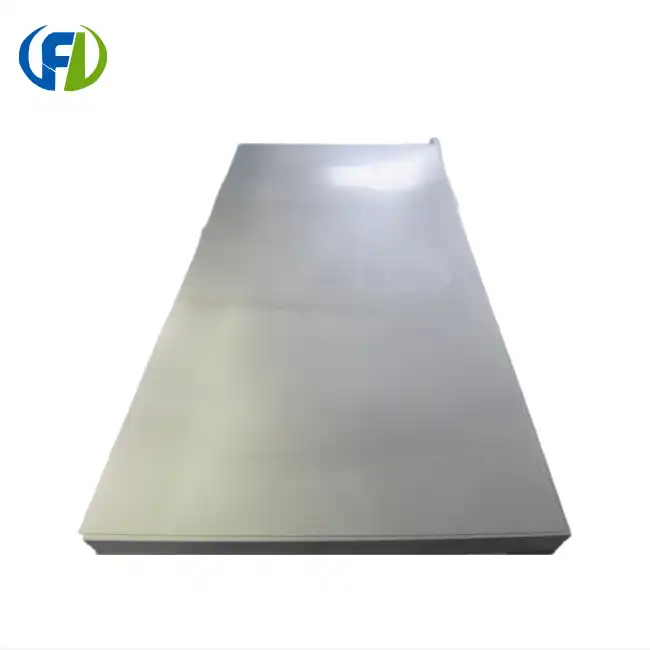
Understanding TA1 Titanium Plate: Chemical and Physical Properties
Chemical Composition Standards
The finest store-bought titanium metal is TA1. ASTM B265 Grade 1 requires properly regulated intermediate elements and 99.5% titanium. Oxygen, nitrogen, and carbon remain below 0.18%, 0.03%, and 0.08%. Iron and hydrogen impurities cannot exceed 0.20% and 0.015%, respectively. These high clarity criteria affect how the material may be moulded and respond to electricity in corrosive situations.
The absence of alloying elements distinguishes TA1 from higher-strength titanium. TA2 and TA3 kinds increase oxygen levels to promote tensile strength, whereas TA1 forms maximize flexibility. This chemical simplicity creates homogenous passive coatings and microstructures. Electrical connections between phases are ok.
Mechanical Properties and Microstructure
The yield strength of TA1 is normally 170 MPa, while its tensile strength is 240–370 MPa. This score is notable for its elongation capacity—it typically exceeds 24% on standard testing. It can withstand complex cold-forming procedures, including deep drawing, hydroforming, and explosive coating, without shattering because of its flexibility.
The hexagonal close-packed alpha phase crystal structure remains solid at ambient temperature. Grain width varies by annealing method, although mill-annealed plates typically have a grain width of 20–50 micrometres. Its fine-grained texture makes it simpler to form and robust enough for pressure vessels. The absence of phase transitions below 882°C ensures consistent dimensions throughout manufacturing and usage.
Manufacturing Impact on Corrosion Performance
The finished product's rust resistance depends on manufacturing procedures. Hot rolling at 700–900°C creates the initial plate form. After that, solution annealing removes internal stresses and improves grain structure. High-temperature processing creates alpha-case contamination layers, which surface treatment removes. Clean titanium is available for passive film formation.
Pickling surfaces with hydrofluoric and nitric acids provides optimal rust prevention by levelling the surface for TiO₂ development. Some businesses add passivation to oxidizing treatments before shipping to strengthen protection. Quality control ensures that each batch has the same chemical composition and surface condition throughout manufacture. This affects the material's corrosion resistance in harsh situations.
The Science Behind the TA1 Titanium Plate's Corrosion Resistance
The Titanium Dioxide Passive Layer Mechanism
The TA1 Titanium Plate resists corrosion due to titanium's thermodynamic affinity to oxygen. When exposed to air or water, surface titanium atoms react with oxygen molecules to form titanium dioxide. Titanium is only briefly unpassivated since this process proceeds swiftly. Covalent Ti-O bonds tightly adhere the small layer of TiO₂ to the base, creating a thick, impenetrable wall.
This oxide layer self-heals, which is wonderful. Fresh titanium reforms immediately in air or water. Chemical breakdown or mechanical scratching might produce this. Even as things change, the film regenerates in milliseconds to protect. Titanium's self-healing technique keeps its surfaces pristine after decades in salt water, whereas stainless steel pits.
Electrochemical Behaviour in Different Environments
TA1 is stable at several pH levels. The inert coating thickens and stabilizes when oxidizing acids like nitric acid touch it, protecting it up to boiling temperatures. In these conditions, electrochemical experiments indicate corrosion currents < 0.1 microamperes per square centimetre. Metal remains intact at over 70% and close to 100°C.
TA1 remains passive in saltwater and salt solutions permanently, unlike other alloys that pit in chloride. Compared to a calomel electrode, 3.5% sodium chloride solution pitting potentials exceed +8 volts. A localized assault is almost impossible in real life. This material is ideal for ship refrigeration and heat exchanges because it doesn't react above 260°C.
Getting rid of acidic surroundings requires planning. In mild sulphuric acid below 10% concentration, the TiO₂ layer remains solid. Higher concentrations or temperatures may promote active breakdown. In hostile conditions like hydrochloric acid, TA1 grades perform better than stainless steel classes. Engineers can determine the proper grades for each operation by knowing these electrical restrictions.
Comparative Analysis with Alternative Materials
Type 316L stainless steel is the corrosion-resistant alloy standard in many sectors. When compared directly, titanium is superior in critical conditions. 316L employs chromium oxide passivation; in chloride-containing environments over 60°C, it breaks down, rusting a tiny region. TA1's settings last for decades without maintenance.
Comparing titanium kinds shows modest variations. TA2 (Grade 2) has 345–510 MPa strength and somewhat poorer flexibility because of its increased oxygen content. TA1 and TA2 corrosion resistance are similar in most situations. Small pollutants reveal TA1's purity advantage. TA3 is stronger than TA2 but can't be cold-shaped. Thus, application demands determine material selection.
Nickel alloys like Hastelloy C-276 can withstand rigorous chemical processing. Though denser (8.9 g/cm³ vs. 4.5 g/cm³ for titanium), these materials handle reducing acids better than titanium. Aerospace and naval applications that need corrosion protection and low density commonly employ titanium because of its reduced weight.
Real-World Applications Driving the Demand for Corrosion-Resistant TA1 Titanium Plates
Aerospace and Aviation Structural Components
Demand for corrosion-resistant TA1 Titanium Plate is growing due to real-world uses in aircraft structural applications that need to reduce weight and fight corrosion at the same time. Titanium doesn't react with phosphate ester-based hydraulic fluids, which is good for parts of hydraulic systems like tubes, fittings, and reservoir linings. These systems work for 30 years without internal rust, so they don't need any expensive upkeep.
The usefulness of titanium is shown by fastener uses in seaside or marine settings. When a stainless steel gear is connected to an aluminum airframe, galvanic corrosion happens. But titanium is electrochemically compatible with aluminum and stronger. This compatibility makes parts last longer in salty environments where regular fasteners need to be replaced often.
Chemical Processing and Petrochemical Industries
Making Purified Terephthalic Acid (PTA) is one of the most difficult places for rusting to happen in the chemical industry. Reactor tanks that handle acetic acid at pressures and temperatures above 200°C would quickly destroy stainless steel. TA1 titanium clad plates are a cheap way to solve problems because they bond commercially pure titanium to carbon steel bases. The thin layer of titanium handles acidic process media, and the steel backing gives the structure strength at a lower cost than a solid titanium building.
Titanium's long-lasting benefits are shown by heat exchangers used in chlor-alkali plants. Tube sheets and pipes that are exposed to chlorine gas, sodium hydroxide solutions, and brine streams don't corrode for decades. The energy efficiency stays the same over the life of the product because the heat transfer surfaces don't get dirty or scale over, which happens with copper-nickel and stainless steel options.
Marine Engineering and Desalination Systems
A lot of the important parts in seawater filtration plants are made of titanium. For 25 years, Multi-Stage Flash (MSF) evaporator tube bundles made from commercially pure titanium will not rust or grow biofouling, so they will keep working efficiently. Because the material is resistant to microbiologically affected rust, there is no need to worry about bacteria growing on it and breaking down copper alloys.
Offshore oil and gas production sites have to deal with problems like being exposed to seawater and handling hydrocarbons at the same time. As cladding for riser lines and industrial equipment, TA1 plates keep carbon steel structures from rusting from the outside while keeping their functional integrity under high pressures. This method makes the platform lighter than using solid corrosion-resistant alloys, which increases its cargo capacity and lowers the cost of installation.
Medical Device Manufacturing
In medical implant uses, biocompatibility and corrosion protection work together. TA1 is not as strong as Ti-6Al-4V metal, so it can't be used for load-bearing hip implants. However, it can be shaped more easily, which makes it a good choice for cardiovascular devices. Physiologically salty conditions with proteins and chloride ions are very good at keeping vascular tubes and heart valve parts from wearing out.
Surgical instrument makers choose TA1 for special tools that need to be nonmagnetic and able to be sterilized in an autoclave. The material doesn't break down when sterilized repeatedly with steam at 134°C. It keeps its sharp edges and exact measurements for a long time. Surface oxide layers stay stable when they come into contact with bodily fluids, so there are no worries about metal ions leaking out, like there are with options like stainless steel.
How to Choose and Procure High-Quality TA1 Titanium Plates for Your Projects
Quality Certification and Material Verification
How to pick out and get a good TA1 Titanium Plate for your projects begins with a careful study of all the paperwork. Suppliers should give full test records on the materials they sell that confirm their chemical make-up using X-ray fluorescence analysis or optical emission spectrometry. Tensile test results that show agreement with ASTM B265 or a similar foreign standard must be included with mechanical property approvals. These records link materials to specific melt batches, making sure that everyone in the supply chain is responsible.
Third-party inspection services add extra layers of security to important apps. Samples from production lots are put through additional chemistry analysis and mechanical testing by separate labs. Ultrasonic testing that doesn't damage the object finds internal cracks that affect performance, and measures of surface roughness make sure the finish meets the requirements. This extra scrutiny keeps low-quality materials from getting into the production streams for aircraft or medical devices.
For tough jobs, mill test certificates aren't enough on their own. It shows that you are committed to consistent production practices by asking makers with ISO 9001:2015 and AS9100D quality system registrations for proof of conformance. Material tracking systems that connect each plate to its source of raw materials and the conditions of its production give customers faith in its long-term dependability.
Identifying Reliable Suppliers and Manufacturers
Being close to places that make titanium sponges is often a sign of established supply chains and industrial know-how. Manufacturers in areas where titanium industries are merged usually have faster lead times and better prices because they don't have to pay as much for shipping. When you visit a production facility, you can see how they do things like hot rolling, heating, pickling, and quality control that affect how the end product turns out.
Superior suppliers are different from commodity dealers because they can offer technical help. Engineers who know about the unique needs of an application choose the right materials, suggest the best grades, and suggest ways to improve the design. This advice is more useful than just fulfilling orders because it helps customers avoid making mistakes with specifications that are too expensive or don't work well.
Customization Options and Value-Added Services
Standard plate sizes include thicknesses from 0.5 mm to 60 mm, widths up to 2500 mm, and lengths up to 6000 mm. However, for many uses, unique sizes are needed. Services like water jet cutting, laser cutting, or slicing get rid of trash and speed up the making process. Suppliers with these features make buying easier by sending project-ready parts instead of oversized stock that needs to be processed by the customer.
There are more ways to finish the surface than just pickling it. For building uses, brushed finishes give surfaces a regular look, while electropolished surfaces make topographies that are very smooth for semiconductor processing equipment. Some makers put protected PVC films on surfaces during shipping to keep them from getting damaged during handling when they are going to be used in cleanrooms.
Customizing the heat process makes the properties work best for certain forming activities. Stress-relief heating at controlled temperatures gets rid of any remaining stresses from cold work, making the material more flexible for deep drawing uses. Suppliers who do their own heat treatment can change the annealing settings to meet the needs of the customer, providing material that is in the best shape for further manufacturing.
Cost-Performance Optimization Strategies
To compare the costs of titanium to other materials, you need to look at their lifecycles instead of just looking at the buy price. Even though TA1 may cost three to five times more per kilogram than stainless steel, it usually pays for itself in less downtime and longer use. Titanium is more cost-effective in corrosive settings when you look at the total cost of ownership, which includes installation, inspection, repair, and downtime costs.
Different providers have very different minimum order amounts. Distributors who sell regular sizes can meet smaller needs, but they usually charge more. Direct sales from mills lower unit costs by a lot, but they need bigger pledges for volume. The best way to buy things for a certain size job is to weigh the costs of keeping goods against the benefits of lower prices.
Conclusion
Because their titanium dioxide passive layers are self-healing, TA1 titanium plates have the best corrosion protection available. This makes them essential in the medical, chemical processing, aircraft, and marine industries. The material is 99.5% pure, very flexible, and stable electrochemically in harsh conditions. These qualities make it reliable over time, which lowers lifetime costs even though it costs more at first. Procurement professionals can firmly request titanium if they understand the science behind passive film formation, how to choose the right materials, and the best ways to keep them in good shape. As industries need lighter, longer-lasting materials for more difficult tasks, economically pure titanium plates keep taking market share away from traditional metals that can't match their performance profile.
Frequently Asked Questions About TA1 Titanium Plates
1. What thickness range is available for TA1 titanium plates?
TA1 plates can be made with thicknesses ranging from 0.5 mm to 60 mm, widths up to 2500 mm, and lengths up to 6000 mm. For specific electrical uses, foils that are as thin as 0.1 mm are available. If needed, thicker pieces up to 100 mm can be made. Standard mill standards are based on ASTM B265, which says that width differences should be no more than 10% for materials less than 5 mm thick and no more than 5% for thicker sizes.
2. Can TA1 titanium be welded to dissimilar metals?
When titanium is directly fused to steel or aluminum, weak intermetallic compounds are made that break when they are stressed. Explosive bonding or roll bonding, on the other hand, makes metallurgical links without melting. This makes titanium-coated plates that are strong and cheap, and they don't rust. A lot of chemical handling equipment uses these hybrid materials, and only one side of the equipment touches corrosive media.
3. How does TA1 perform in acidic versus alkaline environments?
TA1 is very good at reducing acids below 10% strength, such as nitric, chromic, and sulfuric acids. Below 100°C, alkaline liquids like sodium hydroxide up to a 50% concentration don't do much damage. Higher amounts of reducing acids like hydrochloric and sulfuric may destroy the inactive film, so it needs to be carefully looked at. You should ask the people who sell you the materials for specific rust rate data for your area, or you can get it from lab tests.
4. What is the expected service life in seawater applications?
Properly stated, TA1 parts can work for more than 30 years in saltwater without showing any signs of rust. Life stays the same in high-temperature uses up to 260°C. In chloride settings, the passive film stays stable forever, and devices have been used in marine environments for close to 50 years. Because it lasts so long, this material doesn't need to be replaced as often as copper-nickel and stainless steel alternatives, which do need to be replaced every 7 to 15 years.
Partner with Freelong for Premium TA1 Titanium Plate Supply
Baoji Freelong New Material Technology Development Co., Ltd stands as your trusted TA1 Titanium Plate manufacturer, strategically located in China's Titanium Valley, where raw material access and metallurgical expertise converge. Our vertically integrated production capabilities ensure strict control over chemical purity, mechanical properties, and surface quality from sponge to finished plate. With comprehensive certifications, including ISO 9001:2015 and material test reports traceable to individual melts, we deliver commercially pure titanium that meets ASTM B265 Grade 1 specifications consistently.
Our engineering team collaborates with aerospace manufacturers, chemical processors, and medical device companies worldwide, providing customized cutting, heat treatment, and surface finishing services that reduce your fabrication costs. Whether you require small prototype quantities for research or full production runs with multi-ton volumes, Freelong's flexible manufacturing systems accommodate projects of any scale. Contact jenny@bjfreelong.com to discuss your specific requirements and receive detailed quotations with transparent pricing, realistic lead times, and technical support throughout your procurement process.
References
1. Schutz, R.W. and Thomas, D.E. (2021). "Corrosion of Titanium and Titanium Alloys," ASM Handbook Volume 13B: Corrosion Materials, ASM International, Materials Park, Ohio, pp. 252-299.
2. Lutjering, G. and Williams, J.C. (2020). "Titanium: Engineering Materials and Processes," Second Edition, Springer-Verlag, Berlin, Germany.
3. ASTM International (2022). "ASTM B265-22: Standard Specification for Titanium and Titanium Alloy Strip, Sheet, and Plate," ASTM International, West Conshohocken, Pennsylvania.
4. Donachie, M.J. (2019). "Titanium: A Technical Guide," Third Edition, ASM International, Materials Park, Ohio.
5. Cotton, J.D. and Boyer, R.R. (2018). "Corrosion Resistance and Surface Treatment of Titanium," Advanced Materials & Processes, Volume 176, Number 5, pp. 18-24.
6. Bomberger, H.B., Cambourelis, P.J., and Hutchinson, G.E. (2017). "Titanium in Industrial and Marine Environments," Journal of Metals, Volume 69, Number 12, pp. 2843-2850.

_1745370794710.webp)
_1755509471954.png)
Learn about our latest products and discounts through SMS or email