- English
- French
- German
- Portuguese
- Spanish
- Russian
- Japanese
- Korean
- Arabic
- Greek
- German
- Turkish
- Italian
- Danish
- Romanian
- Indonesian
- Czech
- Afrikaans
- Swedish
- Polish
- Basque
- Catalan
- Esperanto
- Hindi
- Lao
- Albanian
- Amharic
- Armenian
- Azerbaijani
- Belarusian
- Bengali
- Bosnian
- Bulgarian
- Cebuano
- Chichewa
- Corsican
- Croatian
- Dutch
- Estonian
- Filipino
- Finnish
- Frisian
- Galician
- Georgian
- Gujarati
- Haitian
- Hausa
- Hawaiian
- Hebrew
- Hmong
- Hungarian
- Icelandic
- Igbo
- Javanese
- Kannada
- Kazakh
- Khmer
- Kurdish
- Kyrgyz
- Latin
- Latvian
- Lithuanian
- Luxembou..
- Macedonian
- Malagasy
- Malay
- Malayalam
- Maltese
- Maori
- Marathi
- Mongolian
- Burmese
- Nepali
- Norwegian
- Pashto
- Persian
- Punjabi
- Serbian
- Sesotho
- Sinhala
- Slovak
- Slovenian
- Somali
- Samoan
- Scots Gaelic
- Shona
- Sindhi
- Sundanese
- Swahili
- Tajik
- Tamil
- Telugu
- Thai
- Ukrainian
- Urdu
- Uzbek
- Vietnamese
- Welsh
- Xhosa
- Yiddish
- Yoruba
- Zulu
Why are nickel and nickel alloy rods the unsung heroes of metals?
One of the most important but undervalued parts of modern manufacturing is Nickel and Nickel, Alloy Rod. Titanium is often talked about in terms of its use in aircraft, and stainless steel is often talked about in terms of its use in building. However, Nickel and Nickel Alloy Rods quietly solve extreme environmental problems that would destroy regular metals. These cylinder-shaped bars of engineered metallurgy are used to make parts for jet engines that can handle temperatures of up to 1200°C and chemical processing equipment that can handle high concentrations of sulfuric acid. Because they are stable at high temperatures, don't rust, and are strong, these materials are essential for industries that are pushing the limits of material science.
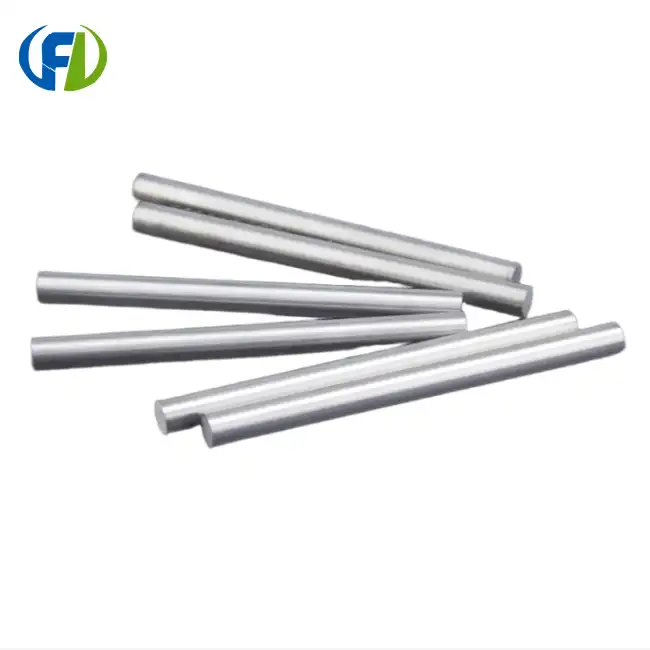
Understanding Nickel and Nickel Alloy Rods: Composition and Key Properties
Defining Pure Nickel versus Alloyed Variants
There is a big difference between commercially pure Nickel and Nickel Alloy Rods and alloyed forms that affects how they can be used. Pure nickel types, such as Nickel 200 and 201, have at least 99.0% nickel content, which makes them very flexible and resistant to acids. On the other hand, alloy families like Inconel (nickel-chromium-iron), Monel (nickel-copper), and Hastelloy (nickel-molybdenum-chromium) add certain elements in specific ways to improve their performance. Inconel 625, which is mostly nickel with chromium, molybdenum, and niobium added, has a Pitting Resistance Equivalent Number higher than 40, which means it works much better in chloride-rich marine settings than austenitic stainless steels.
Critical Physical and Chemical Characteristics
The melting points of these materials are between 1350°C and 1450°C, which means they can keep their shape at temperatures where steel melts and aluminum becomes useless. Tensile strengths range from 550 MPa to 760 MPa or more, based on the heat treatment conditions. Elongation percentages of 30 to 45 percent make sure that the metal can be shaped properly during the manufacturing process. Their face-centered cubic crystal structure makes them better for metallurgy because it stays steady at high and low temperatures, stopping the brittle phase changes that happen with ferritic steels in cold settings. Chemical passivity comes from chromium-rich oxide layers forming on their own. These layers can fix themselves when they get broken, protecting the material from oxidation and acid attack all the time.
Why These Properties Matter for Procurement Teams
When engineering managers look at material specs, they should know that Nickel and Nickel Alloy Rods can fail in three different ways at the same time: mechanical degradation under stress, chemical attack from process media, and microstructural instability during thermal cycling. One part made from Inconel 718 can be used instead of systems that need more than one type of material. This lowers the risk of joint failure and the time between repair visits. Because the strength stays the same at high temperatures, thinner wall sections can carry the same loads as stainless steel options. This means that aircraft users can save weight, which is important because every kilogram affects fuel economy and payload capacity.
The Industrial Applications and Advantages of Nickel and Nickel Alloy Rods
Aerospace and Defense Sector Demands
Aerospace companies use these Nickel and Nickel Alloy Rods to make turbine shafts, fasteners, and structural connections that work in gas turbine hot areas. The material's creep resistance—its ability to keep its shape under constant load at high temperature—ensures that its dimensions stay the same over thousands of thermal cycles. Nickel metals are resistant to atomic oxygen erosion and high temperature changes between -150°C and +150°C, which is good for satellite parts that are exposed to space. For defense purposes, materials need to keep their ballistic qualities after being welded. Inconel 718 and other precipitation-hardened versions meet this need. Inconel 718 age-hardens through controlled gamma-prime precipitate formation.
Chemical Processing and Petrochemical Industries
Hastelloy C-276 rods are required for internal parts in reactor vessels that deal with hydrofluoric acid, sulfuric acid amounts above 70%, and chlorinated chemicals. The molybdenum content makes the steel very resistant to localized corrosion processes like pitting and crevice attack, which cause catastrophic failures in stainless steel equipment. Monel 400 heat exchanger tubes have been used for decades in seawater cooling systems and have never had any problems with galvanic corrosion, which can happen when different metals are joined together. Process engineers figure out the total cost of ownership over 15 to 20-year lifecycles. The higher cost of the Nickel and Nickel Alloy Rods at first is balanced out by not having to pay for unplanned shutdowns and replacements.
Energy Production and Battery Manufacturing
In flue gas desulfurization units, power plants use Nickel and Nickel Alloy Rod fasteners and support structures. These are exposed to sulfur dioxide, chlorides, and high temperatures, which is a very corrosive environment. High-purity nickel strips are in high demand in the new energy sector for making lithium battery electrodes. These electrodes need to have steady electrical conductivity and electrochemical stability to get the most cycles out of their batteries. Manufacturers of batteries put a lot of emphasis on making sure that the makeup stays the same from batch to batch. Differences of more than 0.1% in trace elements can hurt the performance of thin-film electrodes and energy density goals that are needed to make electric vehicles competitive.
The benefits in real life can be directly linked to operational metrics. Aerospace OEMs say that in some situations, these parts are 40% lighter than titanium ones while still having the same fatigue life. Chemical makers report 3–5 times longer service intervals compared to super-duplex stainless options. This means less repair work and downtime for production. These proven performance benefits explain why, despite pressure from competitors, procurement budgets set higher prices for certified Nickel and Nickel Alloy Rod materials.
How Nickel and Nickel Alloy Rods Are Manufactured and Quality Controlled
Manufacturing Process and Custom Capabilities
To get ultra-high purity levels and few gaseous inclusions, production starts with vacuum induction melting or vacuum arc remelting. Hot forging or rotary piercing is used to shape the molten alloy into billets, which are then hot rolled to different Nickel and Nickel Alloy Rod diameters. Using smaller and smaller dies for subsequent cold drawing operations results in work hardening while tight dimensional tolerances are maintained. Solution annealing uses heat to get rid of unwanted phases and relieve internal stresses. Age-hardening cycles, on the other hand, bring out compounds that make certain alloy grades stronger. For example, the amount of chromium added to improve resistance to oxidation or the amount of molybdenum added to improve performance in acidic environments can be changed to make custom metal formulas.
Quality Standards and Certification Requirements
End applications are very important, so strict quality control procedures are needed. Optical Emission Spectroscopy is used to check stoichiometry against standards such as ASTM B164 (for Inconel rods) or AWS A5.14 (for welding supplies). Ultrasonic testing according to AMS 2631 class A/B guidelines can find holes, cracks, or other imperfections in the rock below the surface that are as small as 0.8 mm across. This keeps pressure vessels from breaking in terrible ways. Verification of mechanical properties includes tension tests at room temperature and higher temperatures, measuring hardness with the Rockwell or Brinell methods, and finding out how much the material has stretched. Grain size measurement according to ASTM E112 ensures that the microstructure is right for uses that need specific resistance to wear or creep.
Supplier Evaluation Criteria
Besides price, procurement managers should look at a supplier's skills in other areas as well. Aerospace AS9100 and nuclear ASME both require traceability systems that connect each rod to a melt approval and a test record. Lead times for manufacturing range from 4 to 6 weeks for standard grades in standard diameters to 12 to 16 weeks for custom chemicals that need new melt campaigns. The cost of specialty melting is reflected in the minimum order numbers, which start at 500 kg for standard metals and could go up to 2000 kg for custom formulations. Downstream machining efficiency is directly affected by how flexible the supplier is when it comes to custom lengths, centerless grinding to tight tolerances (h9/h11), and custom straightness specifications (<0.5mm/m deviation).
Comparing Nickel and Nickel Alloy Rods with Other Metals: What Buyers Need to Know
Performance Against Stainless Steel Alternatives
Austenitic stainless steels, like 316L, are less expensive and have good corrosion protection. However, they break down quickly above 600°C and show stress corrosion cracking in chloride conditions above 60°C. Nickel and Nickel Alloy Rods keep their protective oxide stability up to 1000°C and don't react with chloride at any concentration. Welding properties are very different. For example, stainless steels need careful control of the heat input to keep them from sensitizing (chromium carbide precipitation along grain boundaries), but niobium-stabilized Inconel 625 can be welded without any post-weld heat treatment. Due to the different thermal expansion coefficients of stainless steel and nickel alloys, it is important to be very careful when combining metals that are not the same to avoid fatigue failures at the weld surfaces.
Cost-Benefit Analysis Versus Titanium
Titanium alloys are very strong for their weight and are biocompatible, but they cost about two to three times more per kilogram than Nickel and Nickel Alloy Rods that are the same. Machinability is another important difference. Titanium's high work-hardening rate and low heat conductivity make tools wear out quickly, which raises production costs by 30–50% compared to nickel metals. Nickel alloys work better at high temperatures than titanium metals do above 400°C, where titanium quickly oxidizes and weakens. Aerospace engineers choose titanium for structural parts that won't be heated because it has a higher density. Nickel metals are saved for hot-section parts, where the ability to withstand high temperatures explains the extra weight.
Material Selection Decision Matrix
The best material to use is one that takes into account the working temperature, the corrosive climate, the mechanical loads, the weight limits, and the costs over the product's lifetime. Duplex stainless steels can save you 40% on costs and can be used in chemical processes below 300°C with mild acid concentrations. Even though they are more expensive, marine settings with chloride exposure above 80°C need Monel or high-Nickel and Nickel Alloy Rods. There is no good option to precipitation-hardened superalloys for gas turbine parts that work at 800–1000°C under rotational stress. Instead of going with the lowest price at first, procurement teams should use total cost modeling that takes into account the price of materials, the difficulty of the manufacturing process, the expected service life, and the costs of failure consequences to make smart choices.
Navigating the Procurement Landscape: Where and How to Buy Nickel Alloy Rods
Supply Chain Structure and Vendor Types
There are main makers, specialty mills, service centers, and OEM-approved wholesalers in the Nickel and Nickel Alloy Rod supply chain. Melt operations are controlled by primary producers, such as mills in specialized metallurgy regions, which also keep strategic alloy inventories. Service centers keep standard sizes and common grades in stock so that maintenance and repair work can be done quickly. OEM-approved distributors have certifications for the aerospace and nuclear industries, which makes sure that all paperwork and tracing can be done correctly. Global buying teams should build partnerships with all types of vendors, using primary mills for large-scale production needs and service center accounts for urgent small-scale needs.
Certification and Documentation Requirements
Certifications for materials must include thorough reports on their chemical makeup, the results of mechanical tests, records of their heat treatment, and the ability to be tracked back to their original melt numbers. Material Test Reports that meet AMS standards are needed for aerospace uses. These reports must include property testing at high temperatures. Medical device makers need to show proof of biocompatibility and make compliance claims to follow FDA rules. The NACE MR0175 certification shows that the material is suitable for use in sour oil and gas environments. It sets maximum hardness limits (usually less than 35 HRC) to stop sulfide stress cracking. To avoid delivery delays caused by sellers sending in incomplete certifications, procurement specs should clearly state what paperwork is needed.
International Trade Considerations
Export rules for Nickel and Nickel Alloy Rods depend on where they are going and what they will be used for. Some high-strength formulas are controlled for export and need special permission from the government to be sent to certain countries. Landed costs are affected by import taxes and tariff classifications. Preferential trade agreements may lower costs for certain sources. International shipments have lead times that include the time it takes to clear customs, which means that freight forwarders, customs brokers, and receiving facilities need to work together. Global buyers should work with suppliers who know how to handle international shipping and can offer delivered duty paid (DDP) prices or help with temporary import bonds for prototype projects.
Conclusion
Nickel and Nickel Alloy Rods are still the quiet heroes of technological progress in fields where regular materials have reached the end of their useful lives. Their special mix of being resistant to heat, corrosion, and mechanical strength helps engineers solve problems that would normally make things less safe, less efficient, or less reliable. Professionals in procurement who know the subtle differences between pure nickel and alloyed versions, see the overall cost benefits beyond the initial price, and work with reliable suppliers can help their companies make the most of these exceptional materials. These rods will become even more important from a strategic point of view as industries push for harsher working conditions and longer equipment lifecycles are needed for environmental reasons.
FAQ
1. What Factors Most Influence Corrosion Resistance in Nickel Alloys?
The amount of molybdenum and chromium in something mostly determines how resistant it is to rust. Molybdenum makes things stronger against reducing acids like hydrochloric acid and keeps them from cracking in chloride settings. Chromium forms oxide layers that protect it from oxidizing conditions. Hastelloy C-276, which has 15–17% molybdenum, is great for handling chemicals that are very corrosive. Inconel 625, which has middling molybdenum and high chromium, is good for both corrosion protection and high-temperature strength.
2. How Do I Select the Appropriate Grade for High-Temperature Applications?
Temperature capability depends on the alloy's makeup and how it was heated. Solution-annealed types, such as Inconel 600, can handle temperatures up to 1095°C for long periods of time with only mild stress. Precipitation-hardened versions, like Inconel 718, keep their high strength up to 650°C by strengthening with gamma-prime precipitates. Above 900°C, alloys like Haynes 230 that are strengthened by solid solutions don't become unstable, so they don't creep. When choosing grades for load-bearing uses, look at stress-rupture statistics at operating temperatures.
3. What Are Typical Lead Times for Customized Orders?
Standard grades in popular sizes usually ship between 4 and 6 weeks after stock is created. Custom alloy formulas that need specific melts make lead times 12 to 16 weeks long, which includes melting, forging, testing, and approval. Extra work, like centerless grinding or making lengths that aren't standard, takes two to three weeks longer. For extra fees, mill hot-work supplies may be able to handle rush orders, which could cut delivery time to 3–4 weeks for important needs.
Partner with Freelong for Premium Nickel and Nickel Alloy Rod Solutions
Baoji Freelong New Material Technology Development is a reliable company that makes Nickel and Nickel Alloy Rods for the aerospace, chemical processing, energy, and medical device industries around the world. Our factory is in Baoji City, which is known as China's Titanium Valley. We can make everything from pure nickel grades to advanced superalloys like the Inconel, Monel, and Hastelloy series. We have strict quality control that follows ASTM and AMS standards, and we provide full material certifications and documentation for tracking. Our engineering team works with sourcing experts to help you choose the best alloys for your needs, with the ability to offer unique formulations and tight tolerances. Freelong offers dependable supply with quick lead times to the US, Europe, and the Asia-Pacific regions, whether you need small amounts for study or large amounts for production. Get in touch with jenny@bjfreelong.com right away to talk about your Nickel and Nickel Alloy Rod needs and get personalized technical advice backed by our dedication to quality excellence.
References
1. Davis, J.R. (2000). Nickel, Cobalt, and Their Alloys. ASM International Handbook Committee, Materials Park, Ohio.
2. Donachie, M.J. & Donachie, S.J. (2002). Superalloys: A Technical Guide (2nd Edition). ASM International, Materials Park, Ohio.
3. Special Metals Corporation (2013). Inconel Alloy 625 Technical Bulletin. Special Metals Corporation, Huntington, West Virginia.
4. Rebak, R.B. (2000). "Corrosion of Non-Ferrous Alloys in Contact with Water and High Temperature Aqueous Solutions," in Corrosion: Fundamentals, Testing, and Protection, Volume 13A, ASM Handbook.
5. Bradley, E.F. (1988). Superalloys: A Technical Guide. ASM International, Materials Park, Ohio.
6. American Society for Testing and Materials (2020). ASTM B164-20: Standard Specification for Nickel-Chromium-Iron Alloys Rod, Bar, and Wire. ASTM International, West Conshohocken, Pennsylvania.

_1745891759914.webp)
_1745310805731.webp)
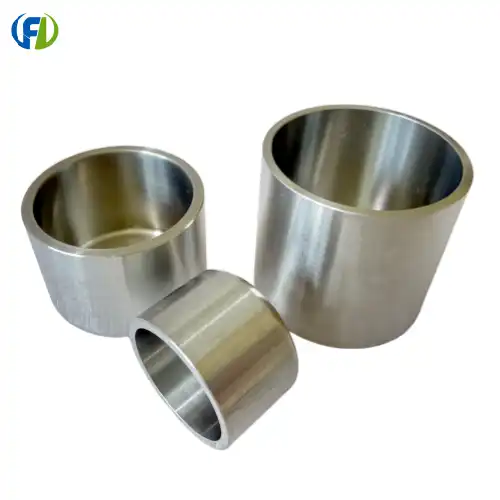
_1773991376487.png)
Learn about our latest products and discounts through SMS or email