- English
- French
- German
- Portuguese
- Spanish
- Russian
- Japanese
- Korean
- Arabic
- Greek
- German
- Turkish
- Italian
- Danish
- Romanian
- Indonesian
- Czech
- Afrikaans
- Swedish
- Polish
- Basque
- Catalan
- Esperanto
- Hindi
- Lao
- Albanian
- Amharic
- Armenian
- Azerbaijani
- Belarusian
- Bengali
- Bosnian
- Bulgarian
- Cebuano
- Chichewa
- Corsican
- Croatian
- Dutch
- Estonian
- Filipino
- Finnish
- Frisian
- Galician
- Georgian
- Gujarati
- Haitian
- Hausa
- Hawaiian
- Hebrew
- Hmong
- Hungarian
- Icelandic
- Igbo
- Javanese
- Kannada
- Kazakh
- Khmer
- Kurdish
- Kyrgyz
- Latin
- Latvian
- Lithuanian
- Luxembou..
- Macedonian
- Malagasy
- Malay
- Malayalam
- Maltese
- Maori
- Marathi
- Mongolian
- Burmese
- Nepali
- Norwegian
- Pashto
- Persian
- Punjabi
- Serbian
- Sesotho
- Sinhala
- Slovak
- Slovenian
- Somali
- Samoan
- Scots Gaelic
- Shona
- Sindhi
- Sundanese
- Swahili
- Tajik
- Tamil
- Telugu
- Thai
- Ukrainian
- Urdu
- Uzbek
- Vietnamese
- Welsh
- Xhosa
- Yiddish
- Yoruba
- Zulu
Why Engineers Prefer Straight Wall Zirconium Crucibles?
Engineers in many high-precision fields choose straight-wall zirconium crucibles over others because they work so well in harsh analysis settings. The straight-wall zirconium crucible is one of a kind because it is chemically inert, cheaper than platinum options, and has structure benefits that make lab work easier. These crucibles have become the standard for preparing XRF and ICP-MS samples because they are about a tenth the price of platinum and are better at resisting strong alkaline fluxes like sodium peroxide. Their vertical shape makes the best use of space and makes automated handling easier. This makes them essential for geological analysis, metallic quality assurance, and advanced materials research that must yield results that are free of contamination.
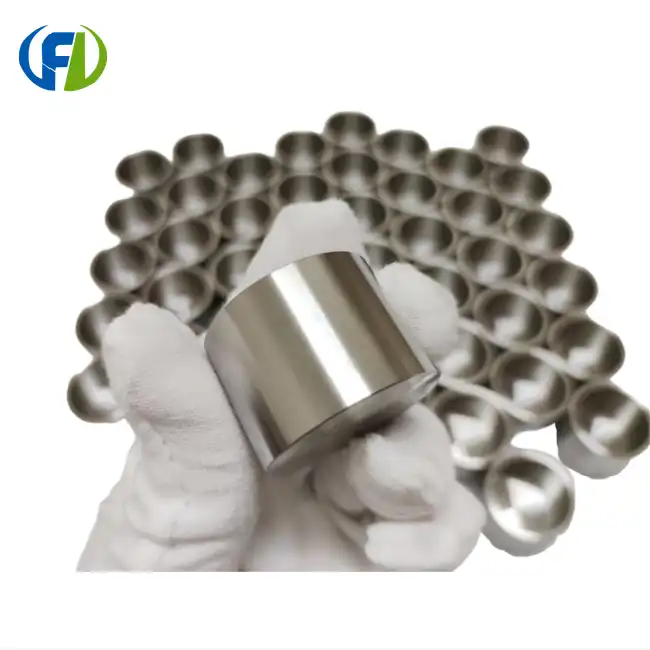
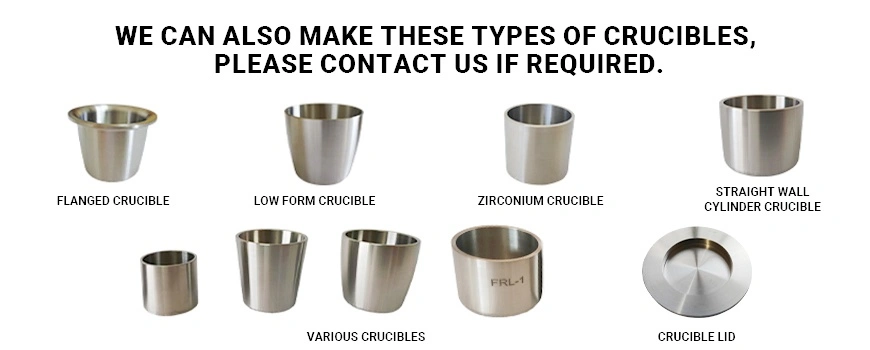
Understanding Straight Wall Zirconium Crucibles
The unique thing about this straight-wall zirconium crucible design is that its vertical sides are all the same length and shape, making a perfect cylinder that is perpendicular to the base. This is very different from curved or low-form versions with walls that are at an angle. It may not seem like a big deal, but the physical difference makes it easier to move materials and keep things cool in ways that even experienced engineers can see right away.
Structural Design and Material Properties
These tanks are made from industrial-grade zirconium (usually UNS R60702) and use the metal's natural strengths. At temperatures up to about 850°C for short periods of time, zirconium shows great strength. However, for the longest life, activities should stay below 600°C in air. The material is very resistant to chemicals, especially sodium peroxide and sodium carbonate fluxes. It is more resistant than platinum in some fusion uses and doesn't have the contamination problems that come with steel or porcelain options.
The construction with straight walls increases volume efficiency compared to footprint, which lets labs handle bigger batches of samples without adding more room for equipment. The vertical sides also reduce flux creep during high-temperature operations. Flux creep is when molten salts move up surfaces that are at an angle, which could weaken the fusion. Engineers who work with automatic fusion machines like the consistent dimensions because the cylinder shape works well with mechanical holding systems that are made for quickly preparing a lot of samples.
Core Applications Across Industries
The most common places to use these crucibles are geological and mine labs. For XRF and ICP-MS studies of refractory ores like chromite, magnetite, and complex silicates, strong fluxes must be used to completely dissolve the sample. The straight wall design makes it easier to make uniform fusion beads that give accurate spectroscopic readings without any metal disturbance. Metallurgical quality assurance teams also use these tanks to dissolve slag and analyse superalloys. The fact that cooled fusion products are easy to remove speeds up the testing process for large amounts of material.
Environmental testing labs use them to characterise fly ash and analyse ash from waste products, making sure they meet EPA and REACH standards. Heavy metals can't leach out of the zirconium substrate, so there are no fake results that make regulatory tests less accurate. The non-reactive tank environment that keeps the purity of the material during calcination and sintering processes is valued by research institutions that do solid-state synthesis of ceramic powders and electronic materials.
Why Choose Zirconium Over Other Crucibles?
To choose the right material for crucibles, you have to weigh a number of performance factors against the needs of the application. Knowing how zirconium stacks up against other materials helps engineers make business choices and get the best results from their processes.
Comparative Performance Analysis
Graphite crucibles work great in uses that need to handle high temperatures and are very resistant to thermal shock. But they combine with oxidising environments and can contaminate samples with carbon, which is a major problem for trace element research. Alumina or porcelain ceramic jars are reasonably priced and have good chemical resistance. However, they are brittle and can contain aluminium or silicon that can mess up scientific results.
While platinum crucibles are the best when it comes to inertness and temperature tolerance, they are also very expensive and can be poisoned by some elements and chemicals. Sodium peroxide is often used to break down samples that are hard to break down. It hits platinum very strongly and breaks it down permanently. Straight Wall Zirconium Crucibles solve this problem and have a lower cost per analysis than other options, which makes them a better choice for everyday tasks.
The straight-wall zirconium crucible choice can usually handle 20 to 100 fusion cycles, but this depends on how aggressive the flux is and the working conditions. This makes it a product rather than an investment that lasts a lifetime like platinum, but the huge price difference often means that the total cost of analysis is cheaper. Nickel crucibles, which are sometimes used for carbonate fusions, are very dirty and only last a tenth as long as zirconium options.
Real-World Performance Advantages
Zirconium can handle high temperatures and fast-burning cycles, which is useful for petrochemical plants that need to figure out how much ash is in petroleum products. Heating and cooling the material over and over again doesn't cause microfractures that weaken the vessel's structure. Electronics companies that make high-purity phosphors and ceramic powders like how the straight geometry maximises batch furnace volume efficiency while making it easier to remove synthesised material cakes. This is an important detail that has a direct effect on production yield in the high-value component manufacturing industry.
Mining companies that handle hundreds of rock samples every day say that the straight wall design cuts the time needed for fusion preparation by about 15% compared to tapered designs. Because the sides are all the same, techs can quickly flip over cooled crucibles and release the fusion beads without having to use force, which could contaminate the sample or damage the vessel. In high-throughput analytical settings, this improved process speed saves money on labour costs.
How to Select the Right Straight-Wall Zirconium Crucible?
In order to make a procurement choice, technical specs must be carefully matched with operational needs. The following factors give you a way to choose that balances performance goals with the reality of your budget.
Technical Specification Requirements
Being exposed to temperature is the main selection factor. The best conditions for zirconium to work are when it is fused with sodium peroxide at 750–850°C for 15–20-minute rounds. Long-term contact with air above 600°C absorbs oxygen and nitrogen, which speeds up decay and causes the surface to scale. Knowing your temperature profile helps you figure out how long your vessel will last and how often it needs to be replaced.
The next step is to evaluate chemical exposure. Zirconium is very resistant to alkaline fluxes like sodium peroxide, sodium carbonate, and potassium pyrosulfate, which are commonly used to prepare geology samples. Most importantly, it should never come into contact with hydrofluoric acid, because any percentage of that acid is very bad for metal. Instead of hot hydrochloric acid, cleaning instructions should call for diluted sulphuric acid. Lithium borate fluxes can be used, but graphite is often more useful for these kinds of jobs because it lets beads slide off more easily.
The size and capacity requirements must match the sample number needs and the limits of the tools. For automated fusion machines to work properly, the straight-wall zirconium crucible needs to be the right size so that it can fit with the heating elements and motorised moving systems. With customisable sizing choices, you can get the best throughput while still being able to use your current lab equipment.
Supplier Evaluation Criteria
Quality assurance measures tell the difference between makers you can trust and sellers of goods. While ISO certification is a good way to make sure that production is consistent, you should also ask for material test results that show the purity levels and mechanical qualities of each production batch. Hafnium as an alloying element (usually 2-4%) has a small effect on performance but shows that quality control was used during production.
When crucibles such as straight-wall zirconium crucibles are used up over and over again in continuous processes, delivery dependability is very important. Check the wait times, inventory practices, and transportation skills of your suppliers to make sure that your analytical process doesn't get interrupted. Distributors with a history of working with the aircraft, electronics, and research industries usually keep extra stock on hand and know how important it is for lab supply lines to be quick.
The full cost of ownership includes more than just the unit price. It also includes the cost of repairs, replacements, and lost output. Over time, a slightly less expensive crucible that breaks after 20 cycles costs more than a more expensive one that lasts 80 cycles. Before making large purchases, get performance data from current users who have used the product in similar situations. This will help you confirm the durability promises.
Procurement Insights: Buying and Customising Zirconium Crucibles
To find your way around the B2B market for specialised lab supplies, you need to know both what the products are and what the suppliers can do. Strategic ways of buying things get the most value for the money while lowering the risks in the supply chain.
Sourcing Strategies and Customisation Options
Reliable providers can make changes that go beyond the measurements shown in their catalogues. Changing the width of the walls can make them last longer in very harsh fusion conditions, but at the cost of less thermal response. Changes to the height and diameter make the capacity work best for certain sample amounts while still being compatible with the furnace's measurements. For some uses, polished inner surfaces that make it easier for straight wall zirconium crucible beads to release are better, while for others, normal finishes that don't cost much are more important.
Different providers have very different minimum order amounts. Established makers in metal hubs for industry can often fill smaller orders from research institutions that commercial sellers turn down. When looking at prices, keep in mind that buying in bulk usually means 15–25% less expensive items and a more efficient production schedule. To find the right balance between the costs of keeping inventory and the savings on each unit, you need to use analytical flow forecasts to estimate how much will be used each year.
When a seller is being qualified, the documentation standards should be taken into account. Certificates of analysis for materials should list their purity levels, trace element contents, and agreement with applicable standards. Full traceability paperwork is needed for businesses that are regulated, like aircraft and medical device manufacturing. Before you start working with a supplier, make sure that they have quality control methods that can ensure the necessary paperwork.
Logistics and After-Sales Considerations
The quality of the packaging keeps these fairly fragile ships safe during foreign shipping. Impact damage can be avoided with the right padding, and surface rust can be stopped with safe atmospheres or vapour-phase inhibitors. Suppliers who have exported fragile metal goods before know what these rules are and take the right safety precautions without needing specific instructions from customers.
Professional manufacturers are different from transactional vendors because they offer expert help after the sale. Access to mechanical experts can help figure out why something isn't working right or find the best way to run it for a new purpose. Some providers offer training on how to properly handle, clean, and maintain products so that they last longer, which adds value beyond the product itself.
Warranty terms usually cover problems with the way the product was made instead of normal wear and tear, but being clear avoids arguments. Knowing the difference between normal oxide layer growth and flaws that need to be fixed (including those related to the Straight Wall Zirconium Crucible) helps people set realistic goals. Suppliers who have been around for a while stand behind the quality of their goods and work with customers to solve problems, such as those involving the Straight Wall Zirconium Crucible. This helps build long-term relationships that are good for everyone.
Conclusion
People who work in engineering like straight-wall zirconium crucibles because they are chemically resistant, have structural benefits, and are inexpensive. These tanks solve certain mathematical problems that other materials can't, like how platinum can be damaged by peroxide, how ceramics can get dirty, and how graphite can't oxidise. The vertical wall shape makes sample preparation work more efficiently while also making the best use of space and making sure all the equipment works together.
To make a good procurement, you need to make sure that the technical specs match the needs of the application, that you don't just look at price when analysing suppliers, and that you think about the total cost of ownership over the projected lifecycle of the vessel. Straight Wall Zirconium Crucibles will keep changing to meet the needs of businesses that want higher output and lower detection limits as analytical needs grow. Engineers and procurement managers who know what these materials can do put their companies in a good situation to keep up their analytical excellence while lowering running costs.
FAQ
1. What temperatures can these crucibles safely handle?
Straight Wall Zirconium crucibles can handle short doses to temperatures up to 850°C for fusion processes that last about 15 to 20 minutes. The longest life is achieved when activities stay below 600°C in air. This is because higher temperatures speed up the uptake of oxygen and nitrogen, which leads to surface scaling. The application temps depend on the chemistry of the flow and the length of the cycle.
2. Why does the outside of my crucible turn black?
The black layer is made up of zirconium dioxide, which forms naturally when the metal is first heated. This attached oxide layer actually makes the material more resistant to rust and shows that it is behaving normally instead of being broken or defective. The layer doesn't react with chemicals and doesn't change the results of analyses.
3. How does service life compare to platinum options?
While platinum can last forever as long as it is kept away from poisons, zirconium can only be used 20 to 100 times, based on the circumstances. Zirconium is much cheaper than platinum—about a tenth of the price—so the cost-per-analysis is often lower even though each tank only lasts a short time. When used with sodium peroxide, zirconium works better than platinum because platinum is easily damaged by this flux.
4. Can I use any cleaning chemicals?
Stay away from hydrofluoric acid at all costs; it is very harmful to zirconium at any concentration. Boiling water, weak hydrochloric acid, or blank salt fusions are the right ways to clean. Never use liquids that contain aqua regia or HF. Following the right cleaning procedures keeps the vessel's performance and stops it from breaking down too quickly.
Partner with Freelong for premium zirconium crucibles.
For important analysis tasks, engineers trust Freelong's Straight Wall Zirconium Crucibles because they deliver consistent quality and reliable performance. Our factories are in Baoji City, which is known as China's Titanium Valley. They use advanced metalworking knowledge and strict quality control systems to make sure that every tank meets the highest standards. In the US, Europe, Australia, and other places, we work with companies that make aircraft parts, electronics, research facilities, and geological labs.
Our ability to customise means that we can meet specific needs for size, purity, and number, ranging from small study amounts to large production orders. Each crucible comes with full material approval paperwork that can be traced back to the groups of raw materials used to make it. This helps you meet quality assurance and legal requirements. As a Straight Wall Zirconium Crucible provider with a lot of experience, we keep a lot of stock on hand to keep wait times as short as possible and keep our prices low for bulk purchases. Email our technical sales team at jenny@bjfreelong.com to talk about your application needs and get personalised suggestions.
References
1. American Society for Testing and Materials. "Standard Specification for Zirconium and Zirconium Alloy Ingots for Nuclear Application." ASTM International, 2019.
2. Jenkins, R. "X-Ray Fluorescence Spectrometry: Principles and Practice in Sample Preparation." John Wiley & Sons, 2018.
3. Lide, D.R. "CRC Handbook of Chemistry and Physics: Properties of Zirconium and Its Compounds." CRC Press, 2020.
4. National Institute of Standards and Technology. "High-Temperature Materials Behavior: Zirconium in Oxidizing Environments." NIST Technical Report Series, 2021.
5. Potts, P.J. and Webb, P.C. "Analytical Chemistry of Silicate and Oxide Materials: Fusion Techniques for Geological Samples." Royal Society of Chemistry, 2017.
6. Zhang, W. and Wang, L. "Advanced Crucible Materials for Metallurgical Analysis: Comparative Performance Study." Journal of Analytical Atomic Spectrometry, 2022.

_1744944344867.webp)
_1745733854672.webp)
_1756088080569.png)
Learn about our latest products and discounts through SMS or email