- English
- French
- German
- Portuguese
- Spanish
- Russian
- Japanese
- Korean
- Arabic
- Greek
- German
- Turkish
- Italian
- Danish
- Romanian
- Indonesian
- Czech
- Afrikaans
- Swedish
- Polish
- Basque
- Catalan
- Esperanto
- Hindi
- Lao
- Albanian
- Amharic
- Armenian
- Azerbaijani
- Belarusian
- Bengali
- Bosnian
- Bulgarian
- Cebuano
- Chichewa
- Corsican
- Croatian
- Dutch
- Estonian
- Filipino
- Finnish
- Frisian
- Galician
- Georgian
- Gujarati
- Haitian
- Hausa
- Hawaiian
- Hebrew
- Hmong
- Hungarian
- Icelandic
- Igbo
- Javanese
- Kannada
- Kazakh
- Khmer
- Kurdish
- Kyrgyz
- Latin
- Latvian
- Lithuanian
- Luxembou..
- Macedonian
- Malagasy
- Malay
- Malayalam
- Maltese
- Maori
- Marathi
- Mongolian
- Burmese
- Nepali
- Norwegian
- Pashto
- Persian
- Punjabi
- Serbian
- Sesotho
- Sinhala
- Slovak
- Slovenian
- Somali
- Samoan
- Scots Gaelic
- Shona
- Sindhi
- Sundanese
- Swahili
- Tajik
- Tamil
- Telugu
- Thai
- Ukrainian
- Urdu
- Uzbek
- Vietnamese
- Welsh
- Xhosa
- Yiddish
- Yoruba
- Zulu
Why GR2 Titanium Plate Is the Most Widely Used Commercial Grade
Due to its excellent mix of strength, corrosion protection, and low cost, GR2 Titanium Plate is the commercial-grade titanium that is most commonly used. While still being easy to shape and weld, this commercially pure grade of titanium provides solid performance in the aircraft, medical, chemical, and marine industries. It is widely used because it can meet strict industry standards without the high costs that come with titanium alloys. This makes it an ideal choice for many industrial uses that need reliable material performance.
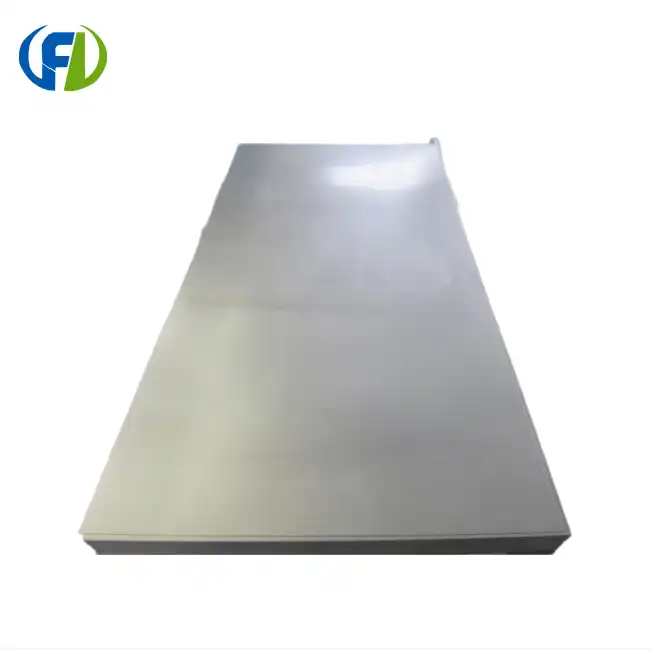
Understanding GR2 Titanium Plate: Composition and Properties
Grade 2 titanium is commercially pure titanium that has at least 99.2% titanium in it. Interstitial elements like 0.25% iron, 0.03% carbon, 0.20% oxygen, and 0.03% nitrogen are carefully controlled in the material. These minor elements make titanium stronger while keeping its natural resistance to rust, which is what makes it so useful in industrial settings.
By carefully controlling these alloying elements, the features of the material are kept the same from one production batch to the next. The amount of oxygen in the material has a big effect on its strength, while iron makes it easier to machine. GR2 has the right amount of each element to have the mechanical qualities it needs while also being very resistant to corrosion in a wide range of conditions.
GR2 titanium has a yield strength of 275 MPa (40 ksi) and a tensile strength of 345 MPa (50 ksi), which is strong enough for most business uses. The material shows 20% stretch, which means it is very flexible and easy to shape. It also lowers the chance of it breaking when stressed.
The density of GR2 titanium is 4.5 g/cm³, which makes it much lighter than steel while also making it more resistant to rust. The material keeps its mechanical qualities over a wide range of temperatures, so it can be used in places where temperatures change quickly. Its ability to prevent fatigue means that it will work well for a long time in settings like aircraft and the sea that are subject to dynamic loading.
GR2 titanium has great corrosion protection because it can form a steady, safe oxide layer when it is in an oxidizing environment. This inactive layer makes the material very resistant to chloride attack, which means that saltwater corrosion and chemicals that contain chlorine can't really hurt it.
Tests show that GR2 titanium corrodes at a rate of less than 0.002 mm/year in settings with wet chlorine and temperatures up to 80°C. Because it is so resistant to acids, bases, and organic chemicals, it can be used in places where stainless steel would break down quickly, like in chemical processing equipment.
Core Applications of GR2 Titanium Plate Across Industries
Aerospace companies use GR2 titanium plates for structural parts that aren't very important, heat shields, and exhaust systems, where resistance to rust is more important than strength. The material's high strength-to-weight ratio helps decrease fuel consumption, and its ability to fight corrosion promises long-term dependability in tough weather.
Aircraft makers use GR2 for parts that are exposed to salt spray in the ocean or exhaust fumes that are known to corrode metals. The material has been used successfully in aerospace uses and can be made using well-known methods, which makes it a popular choice for both business and military aircraft projects. It's easier to make things and fix things when it works with normal titanium welding methods.
Because GR2 titanium is biocompatible, it is used to make all kinds of medical devices, but especially implantable devices and surgery tools. The material is biocompatible with high standards, such as ISO 10993 and FDA guidelines for medical device materials. This makes sure that patients are safe when implants are used for a long time.
Medical device makers like GR2 because it is resistant to rust and has good mechanical qualities for orthopedic implants, dental fixings, and heart devices. The radiolucence of the material makes medical images clear, and the fact that it is not magnetic means that it can be used with MRI machines. The high level of wear resistance ensures that the implant works well for a long time under normal bodily loads.
GR2 titanium plates are used in the chemical processing industry for reactor tanks, heat exchangers, and pipe systems that deal with corrosive materials. Because it doesn't crack under salt stress, the material is necessary for chlor-alkali plants where stainless steel parts would break quickly.
Process equipment makers like GR2 because it can keep materials strong in acidic acids, wet chlorine, and other harsh chemicals. Because the material is so easy to weld, complicated pressure tanks and heat exchanges that meet ASME codes can be made. Because it is thermally conductive, it helps heat move quickly in thermal processing uses.
GR2 Titanium Plate Compared to Other Materials: Making the Right Choice
When looking at different types of titanium, GR2 is clearly better than both lower and higher strength options. When compared to Grade 1 titanium, GR2 is 40% stronger while still being very flexible and resistant to rust. Because of this increase in strength, smaller pieces can be used, which lowers the cost of materials and the weight of the parts.
When compared to Grade 5 (Ti-6Al-4V) titanium, GR2 is more flexible and easier to work with. While Grade 5 is stronger, GR2 is better for situations where middling strength is enough because it is easier to shape and costs less. Because GR2 is commercially pure, there are no worries about its aluminum or vanadium presence in sensitive uses.
In settings that are acidic, especially those with chlorides, GR2 titanium clearly performs better than 316 stainless steel. Even though stainless steel might be cheaper at first, GR2's better resistance to rust often makes it more cost-effective over its lifetime because it requires less upkeep and repair.
When reducing mass has an effect on efficiency or running costs, the lighter weight of GR2 titanium becomes important. GR2 is 43% lighter than stainless steel, which means it can be used in aircraft, marine, and portable tools without adding much weight. Titanium is useful in electronic and magnetic field-sensitive uses because it is not magnetic.
When choosing a material, you have to weigh the performance needs against the cost factors. GR2 titanium costs more than stainless steel but less than titanium alloys. This makes it a good choice for uses that need corrosion protection but not a lot of power. When upkeep, replacement cycles, and efficiency gains are taken into account, GR2 often has a lower total cost of ownership.
Environmental exposure, strength needs, fabrication complexity, and lifetime costs should all be taken into account when making the choice of GR2 Titanium Plate. The higher price of GR2 titanium plate is usually worth it for uses that need to be resistant to salt, sensitive to weight, or biocompatible. The material has been shown to be reliable, which lowers the risk in important situations where failure of the material could have big effects.
How to Source and Procure High-Quality GR2 Titanium Plates?
The price of titanium changes around the world because of changes in the supply of raw materials, the demand cycle in aircraft, and political issues. Knowing about these changes helps people who work in buying plan purchases and get good deals on prices. Long-term supply deals can keep prices stable and make sure that materials are available when demand is high.
Good titanium providers keep track of the chemistry, mechanical qualities, and processing records of their materials using traceability methods. This paperwork is very important for situations where the material needs to be certified or where aircraft and medical device rules need to be followed. Suppliers with well-established quality systems lower the chance of buying things and make sure that materials always work as expected.
GR2 titanium plates have to meet certain standards in the business, such as ASTM B265, AMS specs, and any other needs that the customer has. These guidelines spell out the chemical makeup, mechanical qualities, surface finish, and size ranges of a material to make sure it works well for its intended use. The certificate of compliance paper proves that the standard is being followed.
For medical device applications, you need extra certifications like biocompatibility tests and proof that you registered with the FDA. For aerospace uses, certain heat treatment certificates and records of nondestructive tests may be needed. Understanding these standards during the buying process keeps things on track and avoids delays.
For procurement to go well, suppliers need to be judged on their product, delivery, expert help, and financial security. Suppliers with complete testing facilities can fully describe the materials they offer, which lowers the need for arriving inspections. Technical support helps with choosing the right materials and figuring out how to use them.
Partnering up with dependable suppliers has benefits like giving you priority during times when supplies are tight, letting you make your own stocking plans, and letting you work together to solve problems. Suppliers can invest in skills that meet specific customer needs when they have long-term relationships with customers that guarantee a steady flow of business.
Best Practices for Handling and Using GR2 Titanium Plates
To get the best results and extend the life of your tools, you need to use certain techniques when machining GR2 titanium plate. Cutting tools that are sharp and have positive edge angles lower cutting forces and keep the work from getting too hard. Cutting continuously with enough coolant keeps the machine from burning and keeps the dimensions accurate throughout the process.
Because GR2 is very flexible, it can be shaped in many ways, such as by twisting, drawing, and hydroforming. When designing and lubricating tools correctly, galling can be avoided while still meeting the needed limits for size. When planning forming processes to get the finished measurements that are required, the material's springback properties must be taken into account.
GR2 titanium can be welded very well with tungsten inert gas (TIG) welding and the right amount of protective gas. Inert gas protection keeps the weld zone from getting contaminated while it is being welded and keeps its rust resistance. Proper preparation and fit-up of the joint ensures full entry and reduces warping during the welding process.
A post-weld checkup using the right nondestructive testing methods checks the soundness of the joint and makes sure it meets all the rules. When the right steps are taken, the welded parts usually have the same qualities as the base material. This feature makes it possible to make complicated structures that meet strict efficiency standards.
When GR2 titanium plates are stored correctly, they don't get dirty, which could weaken their resistance to rust. Keeping the items in clean, dry places keeps the surfaces from getting dirty, and treating them correctly keeps them from breaking. Keeping it away from steel and aluminum stops galvanic rust issues during storage and handling.
Material tracking systems make sure that products can be tracked all the way through the producing process. Labeling things correctly keeps them from getting mixed up with other materials and keeps records that connect finished parts to certifications for the original materials. These habits help with quality control programs and meeting the rules set by regulators.
Conclusion
Although there are other industrial grades, GR2 Titanium Plate is still the most popular because it is the most cost-effective and has the best corrosion protection. The material has been used successfully in aircraft, medicine, chemicals, and the marine industry, showing that it is flexible and reliable in harsh conditions. Its great formability and weldability make production processes more efficient and give it long-term performance benefits. GR2 titanium is being used in more and more new markets and uses because of the growing need for materials that are light and don't rust.
FAQ
1. What makes GR2 titanium superior to stainless steel in marine applications?
The rust and chlorine attack of seawater are very hard on GR2 titanium, but pitting and crevice corrosion happen to stainless steel parts. The material keeps its protective oxide layer even in salty seas, so it can be used for decades without breaking down. The lighter weight of titanium also makes the tank work better and use less fuel.
2. Can GR2 titanium plates be welded to other titanium grades?
Standard methods can be used to successfully weld GR2 titanium to other commercially pure titanium types (GR1, GR3, and GR4). When welding to titanium metals, changes in temperature expansion must be carefully considered, and special steps may need to be taken to keep the weld from cracking. The right choice of filler metal makes sure that the qualities of the joint meet the needs of the application.
3. What thickness ranges are available for GR2 titanium plates?
GR2 titanium plates are usually offered in thicknesses between 0.5 mm and 100 mm, but different thicknesses can be made to fit particular needs. Standard widths go up to 2000 mm and lengths go up to 6000 mm, but this depends on what the provider can do. Custom cutting services make the best use of materials and cut down on waste.
4. How does the biocompatibility of GR2 titanium compare to other medical materials?
GR2 titanium is better at working with living tissues than most solid medical materials. It has a long history of use in patients that shows it is very compatible with tissues. The material doesn't corrode in body fluids and keeps its mechanical qualities for long amounts of time after an implant. Because it is non-toxic and can fuse with bone, it is perfect for use in lifelong implants.
Choose Freelong as Your Trusted GR2 Titanium Plate Manufacturer
Freelong is your trusted partner for high-quality GR2 titanium plate solutions. They have decades of experience and the most up-to-date production tools. We use the benefits of being in Baoji City, China's Titanium Valley, and the country's modern production technologies to make sure that the titanium plates we sell meet strict international standards. Our strict quality control systems make sure that every plate exactly meets your needs, and our global supply chain makes sure that customers in the aircraft, medical, and chemical processing industries can always count on getting their orders.
Our dedication to excellence goes beyond the quality of our products and includes full expert help during the whole process of purchasing and using them. Whether you need standard sizes or specifics for a custom cut, our experienced engineering team can help you choose the best materials and set the right cutting settings for your needs. Get in touch with jenny@bjfreelong.com right away to talk about your GR2 titanium plate needs and find out how our proven skills can help your next project succeed.
References
1. Boyer, R., Welsch, G., & Collings, E.W. "Materials Properties Handbook: Titanium Alloys." ASM International, Materials Park, Ohio.
2. Donachie, Matthew J. "Titanium: A Technical Guide, 2nd Edition." ASM International Publication, Materials Park, Ohio.
3. Schutz, R.W. & Thomas, D.E. "Corrosion of Titanium and Titanium Alloys in Industrial Applications." Handbook of Materials Selection, John Wiley & Sons.
4. American Society for Testing and Materials. "ASTM B265 Standard Specification for Titanium and Titanium Alloy Strip, Sheet, and Plate." ASTM International, West Conshohocken, Pennsylvania.
5. Lutjering, G. & Williams, J.C. "Titanium: Engineering Materials and Processes." Springer-Verlag, Berlin Heidelberg.
6. Peters, M., Kumpfert, J., Ward, C.H. & Leyens, C. "Titanium Alloys for Aerospace Applications." Advanced Engineering Materials, Wiley-VCH Verlag.

_1745226092154.webp)
_1773822806826.png)
_1745572207921.webp)
_1774406900574.png)
Learn about our latest products and discounts through SMS or email