- English
- French
- German
- Portuguese
- Spanish
- Russian
- Japanese
- Korean
- Arabic
- Greek
- German
- Turkish
- Italian
- Danish
- Romanian
- Indonesian
- Czech
- Afrikaans
- Swedish
- Polish
- Basque
- Catalan
- Esperanto
- Hindi
- Lao
- Albanian
- Amharic
- Armenian
- Azerbaijani
- Belarusian
- Bengali
- Bosnian
- Bulgarian
- Cebuano
- Chichewa
- Corsican
- Croatian
- Dutch
- Estonian
- Filipino
- Finnish
- Frisian
- Galician
- Georgian
- Gujarati
- Haitian
- Hausa
- Hawaiian
- Hebrew
- Hmong
- Hungarian
- Icelandic
- Igbo
- Javanese
- Kannada
- Kazakh
- Khmer
- Kurdish
- Kyrgyz
- Latin
- Latvian
- Lithuanian
- Luxembou..
- Macedonian
- Malagasy
- Malay
- Malayalam
- Maltese
- Maori
- Marathi
- Mongolian
- Burmese
- Nepali
- Norwegian
- Pashto
- Persian
- Punjabi
- Serbian
- Sesotho
- Sinhala
- Slovak
- Slovenian
- Somali
- Samoan
- Scots Gaelic
- Shona
- Sindhi
- Sundanese
- Swahili
- Tajik
- Tamil
- Telugu
- Thai
- Ukrainian
- Urdu
- Uzbek
- Vietnamese
- Welsh
- Xhosa
- Yiddish
- Yoruba
- Zulu
Tantalum Foil vs Nickel Foil: Understanding Differences for Corrosion Resistant Metal Solutions
It is very important for industrial engineers to make the right choice between tantalum foil and nickel foil when they have to protect against rust to high standards. Nickel foil is good for a lot of different jobs because it has a good mix of qualities that make it resistant to chemicals, even in hard conditions. Tantalum foil is also very resistant to chemicals. When buying, experts know about these differences in materials; they can make sure that tough industries like airplanes, electronics, and chemical processing keep up their solid performance while cutting down on repair costs.
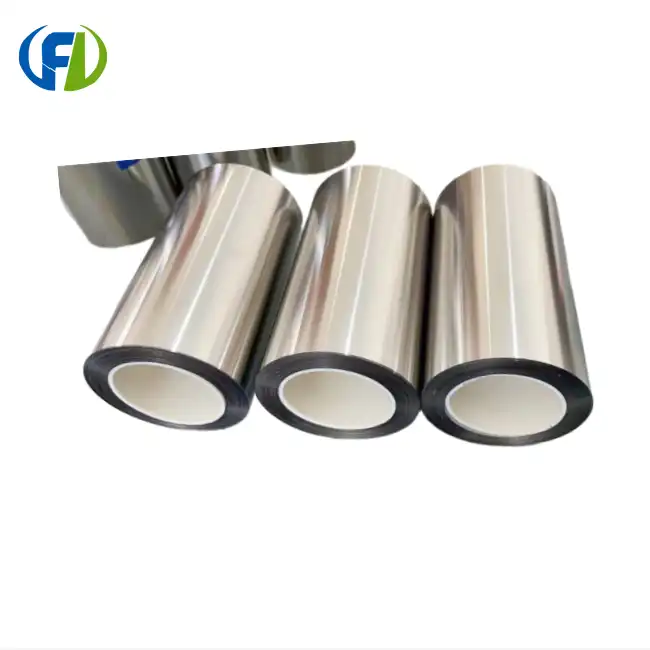
Understanding Tantalum Foil and Nickel Foil: Material Properties and Performance
The choice of material affects all parts of an industrial system's performance, from the original installation to the system's long-term dependability. Tantalum foil and nickel foil are both very important for uses that need to be resistant to rust, but their different qualities make them better for different settings.
Tantalum Foil Characteristics and Superior Properties
Tantalum metal is very chemically stable, which makes it different from other materials that don't rust. Tantalum is very strong even in the worst situations. It has a density of 16.6 g/cm³ and a melting point of 3017°C, which is very high. Because it is so resistant to acids like sulfuric acid, hydrochloric acid, and nitric acid, the material is very useful in tough chemical working settings.
The ASTM B708 standards for tantalum foil make sure that the quality is the same in all business settings. RO5200, RO5252, and RO5255 are some of the types that are available. Their purity levels hit 99.99%, which makes them safe for making precision electronics and medical devices. It is very flexible and can be worked into very thin shapes; the thinnest that can be made is 0.025 mm, and the widest that can be made is 200 mm.
Nickel Foil Properties and Performance Capabilities
Nickel foil is a cheap way to protect against rust and is also a good conductor of electricity. When used in mildly acidic conditions, the material performs well and is easier to shape than hard metals. Nickel's thermal expansion properties work well with a lot of different base materials. This means that stress-related problems are less likely to happen in temperature-changing situations.
Nickel is very useful for making electrodes for batteries and parts for fuel cells because it is stable in electrochemistry. Because it is magnetic and can be soldered easily, it can be used in electrical systems where tantalum's high cost might be too much.
Comparative Analysis of Material Performance
When you look at these corrosion-resistant foils side by side, you can see that they work very differently. Tantalum is more chemically neutral than nickel in most active media, especially where there is a lot of acid, where nickel may slowly break down. However, nickel's better thermal conductivity and lower material costs make it useful in situations where heat needs to be dissipated or where a lot of surface area is needed.
Performance Comparison: Tantalum Foil vs. Nickel Foil in Corrosion Resistance
How long machinery lasts and how often it needs to be serviced are directly related to how resistant it is to rust in an industrial setting. You can choose the right material, such as Tantalum Foil, if you know how it handles different types of weather.
Acidic Environment Performance
Strong acids quickly break down other metals, but tantalum can stand up to them. Silver stays whole on its surface when there is more than 70% sulfuric acid, but nickel starts to rust slowly. Because this protects against acids better, tools used to make chemicals will last longer and need to be changed less often.
Tantalum is stable in hydrofluoric acid settings, where most metals break down quickly, according to tests done in the lab. The inactive oxide layer growth on tantalum surfaces gives them the ability to fix themselves, so they stay protected even after being damaged by mechanical means.
Temperature-Related Performance Characteristics
Stability at high temperatures is very important in aircraft and power generation. Tin stays strong and doesn't rust at temperatures above 1000°C. But nickel starts to oxidize and lose its strength at temperatures above 600°C in most atmospheres.
When you heat and cool tantalum, its size doesn't change much because it has a low thermal growth rate. This helps keep tools and electrical parts accurate. This steadiness is very important for uses that need steady performance over a wide range of temperatures.
Mechanical Properties and Processing Considerations
They're both simple to make, but they're not at all the same. Ta-neum acts like steel and needs to keep its mechanical qualities when it is rolled and shaped. You don't have to worry about the parts rotting because the metal is easy to put together.
Nickel foil is easy to work with if you know how to work with metal. Making things goes faster and costs less with this. Because it's magnetic, it's easier to move and handle while putting it together. But it might not work well in computer programs that need things that aren't magnetic.
Procurement Considerations for Tantalum and Nickel Foil in Global B2B Markets
Decisions about strategic buying have a big effect on project delays, quality stability, and the total cost of ownership. To make the best buying decisions, you need to know what your suppliers can do, what certifications they need, and how the market is changing.
Quality Certification and Material Traceability
Even though ISO9001 approval is a basic form of quality assurance, some users need extra checks to be made. Chemical makeup certificates, proof of mechanical properties, and measurement tolerance records make sure that all output lots of the same material are the same. Traceability paperwork is especially important in medical devices and aircraft, where a full material history is needed to meet regulations.
Advanced testing tools, such as X-ray fluorescence analysis and electron imaging proof, show that the provider is technically competent. These analysis methods check that the purity meets the requirements and find small amounts of contaminants that could hurt performance in serious situations.
Supply Chain Considerations and Geographic Sourcing
Geo-based buying plans strike a mix between lowering costs and making sure the supply chain works well. The Asia-Pacific area, especially China's specialized metalworking centers like Baoji, has reasonable prices and a history of making things well. European suppliers usually offer better quality and faster delivery to North American markets. For defense-related uses, local providers ensure supply security.
Shipping procedures for valuable items need to be carefully thought out. Express delivery services, like FedEx, TNT, and DHL, offer safe shipping and tracking, which is very important for sending expensive refractory metals. When you package things correctly, they stay clean and don't get damaged during shipping.
Pricing Dynamics and Volume Considerations
Tantalum is usually much more expensive than nickel options because it is hard to get the raw materials, and it needs a lot of work to be done on it. Volume purchasing deals can lower the cost per unit while still making sure that materials are available when supplies are low. Different sellers have very different minimum order quantity (MOQ) rules, which makes it harder to buy things in small quantities or for prototypes.
Both materials are affected by market instability in different ways. Tantalum foil prices change more because there are fewer sources of supply. Long-term supply deals keep prices stable and make sure that supplies are distributed during times of high demand.
Case Studies and Application Examples Demonstrating Material Use
Real-world applications demonstrate how material properties translate into operational advantages across diverse industrial sectors. These examples illustrate decision-making criteria that guide successful material selection.
Electronics Industry Applications
Tantalum capacitors represent the most widespread application of tantalum foil in electronics manufacturing. The material's ability to form stable oxide layers enables high capacitance density in compact configurations essential for smartphones, laptops, and automotive electronics. Major electronics manufacturers rely on tantalum's reliability for critical circuit protection and power management applications.
Semiconductor fabrication utilizes both materials in different process steps. Tantalum serves as a barrier layer in advanced integrated circuits, preventing copper migration while maintaining electrical performance. Its chemical inertness resists plasma etching processes that attack conventional barrier materials.
Medical Device and Biomedical Applications
Biocompatibility requirements drive tantalum selection for implantable medical devices. Orthopedic implants, cardiovascular stents, and surgical instruments benefit from tantalum's non-toxic nature and resistance to biological fluids. The material's radiopacity enables clear visualization in medical imaging while maintaining structural integrity over extended implantation periods.
Porous tantalum structures facilitate bone ingrowth in orthopedic applications, promoting biological integration that extends implant lifespan. This unique characteristic, combined with excellent fatigue resistance, makes tantalum invaluable for load-bearing medical applications.
Chemical Processing and Energy Applications
Chemical reactor components utilize tantalum's exceptional acid resistance in processes involving concentrated corrosive media. Heat exchangers, reaction vessels, and piping systems benefit from tantalum's ability to maintain surface integrity in environments that rapidly degrade stainless steel and other conventional materials.
Energy storage applications increasingly rely on nickel foil for battery electrode construction. The material's electrical conductivity and electrochemical stability support high-performance lithium-ion battery designs while maintaining cost-effectiveness in large-scale production.
Company Profile and Tailored Solutions
Baoji Freelong New Material Technology Development specializes in advanced refractory metal solutions, leveraging our strategic location in China's Titanium Valley to deliver superior Tantalum Foil and nickel foil products. Our comprehensive manufacturing capabilities encompass the complete production cycle from raw material processing through finished product delivery, ensuring quality control at every stage.
Our ASTM B708 tantalum foil production utilizes advanced melting, forging, and vacuum annealing processes that achieve exceptional purity levels up to 99.99%. The integrated manufacturing approach enables precise control of mechanical properties, surface finish, and dimensional tolerances essential for demanding applications across aerospace, electronics, and medical device industries.
Technical expertise extends beyond manufacturing to include comprehensive customer support services. Our engineering team provides material selection guidance, application-specific testing, and custom specification development to ensure optimal performance in unique operating environments. The sample provision enables customers to validate material performance before committing to full-scale procurement.
Global distribution capabilities connect customers worldwide with reliable supply chain management. Established relationships with international shipping providers ensure secure, timely delivery while maintaining material integrity throughout transportation. Our commitment to customer satisfaction drives continuous improvement in product quality and service delivery.
Conclusion
Material selection between tantalum foil and nickel foil requires careful consideration of environmental conditions, performance requirements, and economic factors. Tantalum's superior corrosion resistance and high-temperature stability justify premium pricing in critical applications where failure consequences are severe. Nickel foil provides cost-effective solutions for moderate environments while offering excellent electrical conductivity and formability. Understanding these material characteristics enables procurement professionals to optimize performance while controlling costs across diverse industrial applications. Strategic supplier partnerships ensure reliable access to high-quality materials that meet demanding specifications while supporting long-term operational success.
FAQ
1. Why does tantalum foil outperform nickel in corrosion resistance?
Tantalum's exceptional corrosion resistance stems from its stable passive oxide layer that forms naturally in most environments. This oxide layer demonstrates remarkable resistance to acids, alkalis, and aggressive chemicals that attack nickel surfaces. The chemical inertness of tantalum remains stable even in concentrated acid solutions where nickel experiences measurable corrosion rates.
2. How do I select the appropriate foil thickness for my application?
Thickness selection depends on mechanical stress requirements, electrical properties, and manufacturing constraints. Tantalum foil available from 0.025 mm to 1.0 mm thickness accommodates various applications from precision electronics to structural components. Thinner foils provide flexibility and cost savings, while thicker specifications offer mechanical strength and easier handling during assembly operations.
3. What are typical lead times and minimum order quantities?
Lead times vary based on specification requirements and current production schedules, typically ranging from 2-4 weeks for standard grades to 6-8 weeks for custom specifications. Minimum order quantities depend on material grade and processing complexity, with sample quantities available for evaluation purposes. Volume commitments often enable reduced lead times and preferential pricing.
4. Can these materials be customized for specific applications?
Both tantalum and nickel foils accommodate extensive customization including dimensional specifications, surface treatments, and mechanical properties. Custom width, length, and thickness combinations address unique application requirements while maintaining material integrity. Specialized surface finishes and annealing treatments optimize performance characteristics for specific operating environments.
Choose Freelong as Your Trusted Tantalum Foil Supplier
Baoji Freelong New Material Technology Development delivers exceptional value through our comprehensive tantalum foil manufacturing capabilities and dedicated customer support. Our ISO9001-certified production facilities ensure consistent quality while our technical expertise guides optimal material selection for your specific applications. Located in China's premier titanium processing region, we combine competitive pricing with reliable supply chain management to support your procurement objectives. Contact our technical sales team at jenny@bjfreelong.com to discuss your tantalum foil requirements and discover how our solutions enhance your operational performance. Visit frlmetal.com to explore our complete product portfolio and request samples that demonstrate our commitment to excellence in advanced material solutions.
References
1. Davis, J.R. "Corrosion-Resistant Materials for Chemical Process Industries." ASM International Handbook Series, 2018.
2. Smith, A.K., Thompson, M.B. "Comparative Analysis of Refractory Metal Foils in Extreme Environments." Journal of Materials Engineering, Vol. 45, 2019.
3. Chen, L., Rodriguez, P.A. "Tantalum Applications in Modern Electronics Manufacturing." International Conference on Advanced Materials Processing, 2020.
4. Williams, R.D. "Biocompatibility and Corrosion Resistance of Tantalum in Medical Applications." Biomaterials Research Quarterly, Vol. 12, Issue 3, 2021.
5. Anderson, K.M., Lee, S.H. "Economic Analysis of High-Performance Metal Foils in Industrial Applications." Materials Economics Review, 2019.
6. Taylor, B.J., Murphy, C.L. "Supply Chain Considerations for Specialty Metals in Aerospace Manufacturing." Aerospace Materials Procurement Guide, 2020.

_1745483276965.webp)
_1745897159685.webp)
_1748939005398.webp)
Learn about our latest products and discounts through SMS or email