- English
- French
- German
- Portuguese
- Spanish
- Russian
- Japanese
- Korean
- Arabic
- Greek
- German
- Turkish
- Italian
- Danish
- Romanian
- Indonesian
- Czech
- Afrikaans
- Swedish
- Polish
- Basque
- Catalan
- Esperanto
- Hindi
- Lao
- Albanian
- Amharic
- Armenian
- Azerbaijani
- Belarusian
- Bengali
- Bosnian
- Bulgarian
- Cebuano
- Chichewa
- Corsican
- Croatian
- Dutch
- Estonian
- Filipino
- Finnish
- Frisian
- Galician
- Georgian
- Gujarati
- Haitian
- Hausa
- Hawaiian
- Hebrew
- Hmong
- Hungarian
- Icelandic
- Igbo
- Javanese
- Kannada
- Kazakh
- Khmer
- Kurdish
- Kyrgyz
- Latin
- Latvian
- Lithuanian
- Luxembou..
- Macedonian
- Malagasy
- Malay
- Malayalam
- Maltese
- Maori
- Marathi
- Mongolian
- Burmese
- Nepali
- Norwegian
- Pashto
- Persian
- Punjabi
- Serbian
- Sesotho
- Sinhala
- Slovak
- Slovenian
- Somali
- Samoan
- Scots Gaelic
- Shona
- Sindhi
- Sundanese
- Swahili
- Tajik
- Tamil
- Telugu
- Thai
- Ukrainian
- Urdu
- Uzbek
- Vietnamese
- Welsh
- Xhosa
- Yiddish
- Yoruba
- Zulu
What Is a 42mm Diameter Nickel Crucible Used For in Labs
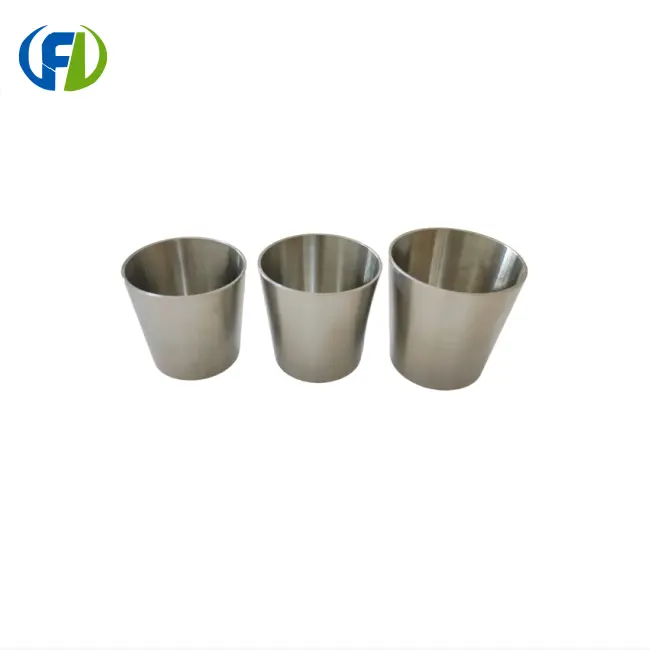
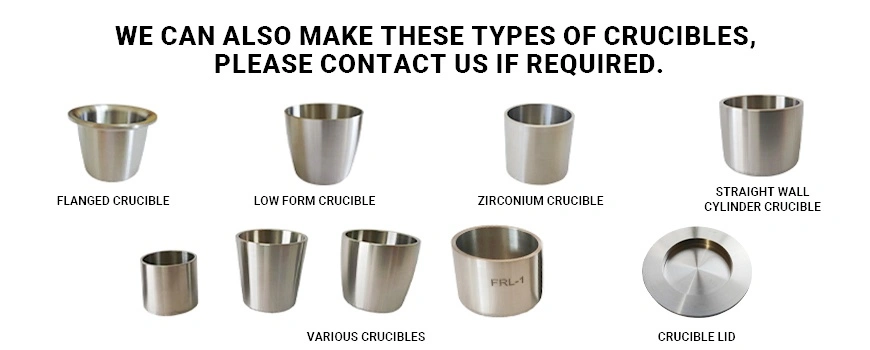
A 42mm Diameter Nickel Crucible is a lab jar that was carefully designed and manufactured to be used for high-temperature chemical analysis in settings that require very high material stability. This standard laboratory tool is made from high-purity nickel alloys like UNS N02200 or N02201 and is the best choice for caustic alkali fusions, refractory mineral digestion, and gravimetric analysis. The exact 42mm size makes it compatible with automatic fusion equipment and normal furnace systems, and it can usually hold 30ml to 50ml of sample. These crucibles are used in geochemical exploration, advanced materials testing, and other fields because they are very resistant to alkali attack, conduct heat better, and are cheaper than alternatives made of precious metals.
Understanding the 42mm Diameter Nickel Crucible: Properties and Specifications
The 42mm Diameter Nickel Crucible works well because the materials used are carefully monitored, and the accuracy with which it was made is very high. When buying, teams know about these traits; they can pick testing equipment that works well every time and lasts as long as possible.
Material Composition and Purity Standards
The best analytical-grade nickel crucibles are more than 99.9% pure, and the best nickel crucibles have more than 99.5% pure nickel. Most of the time, the material meets ASTM B557 standards, which set strict limits on minor toxins. It is important that sulphur levels stay below 0.005%, iron levels stay below 0.4%, and copper levels stay below 0.25%. The structure doesn't break down through graphitisation at temperatures above 315°C because it has a low carbon content (up to 0.02% in Ni 201 grade). This control over the crucible's make-up makes sure that its structure stays strong even after being heated and cooled many times. It also lowers the chance that the sample will become contaminated during important trace analysis procedures.
Thermal Performance Characteristics
Pure nickel melts at 1455°C (2651°F), which is much higher than what is needed for most fusion processes in the lab. When these crucibles are used in air-oxidizing settings, they work consistently up to about 800°C, where a layer of nickel oxide forms on the top to protect it. It stops more oxidation from happening because this layer stands in its way. In reducing or inert atmospheres, like argon or nitrogen, temperatures in service can get close to 1000°C without breaking down the material much. With a thermal conductivity of about 70 W/m·K, heat can move quickly through the crucible walls. This heats the sample equally and reduces the chance of overheating in one area, which could mess up the analysis.
Physical Dimensions and Manufacturing Tolerances
For the normal outer diameter of 42mm, there are often tolerances of 0.2mm. This is very important for automatic handling systems and precise furnace positioning. The wall thickness is between 1 mm and 1.5 mm, which gives it enough mechanical strength not to bend when lab tools are used to handle it without adding too much thermal mass, which would slow down the processes of heating and cooling. Depending on the depth profile, the amount inside is equal to 30ml to 50ml of liquid. A lot of care is taken with the surface finish during production. For example, smooth innards keep particles from sticking and keep the surface from interacting with hot flux materials. These rules about measurements make sure that every batch is the same, which is needed for labs to keep their ISO/IEC 17025 accreditation.
Common Laboratory Uses of the 42mm Nickel Crucible
The 42mm Diameter Nickel Crucible is utilized in many different types of laboratories because it is chemically resistant and stable at high temperatures. These facilities leverage the material's properties to solve specific analytical challenges.
Alkali Fusion for Refractory Materials
Mineral research labs that use geochemical methods often use these crucibles to mix sodium peroxide (Na2O) and sodium hydroxide (NaOH). Common acid processing methods don't work on chromite, zircon, rutile, and some ores that contain titanium because they are brittle. At temperatures between 450°C and 750°C, the alkali fusion process breaks down these tough solid structures. This makes trace elements available for further study with ICP-OES or ICP-MS. Nickel crucibles can handle dozens to hundreds of fusion cycles, while clay crucibles break down in the flux and infect samples, and platinum vessels are badly damaged by oxidising alkali melts. This longevity immediately lowers the cost per study for labs that work with a lot of samples.
Quality Assurance in Chemical Manufacturing
Nickel crucibles are used to find impurities in concentrated alkali solutions in industrial quality control labs that make caustic chemicals. Nickel works well with high temperatures and levels of sodium hydroxide that are close to 50% because it doesn't combine with bases that don't oxidise. Analytical methods need containers that won't pollute the stream with their own breakdown in order to find trace metals or sulphur compounds in streams of caustic products. There is enough sample in the 42mm size for duplicate tests, and it fits in standard muffle furnaces that are used in everyday quality assurance tasks. Companies that make battery-grade materials for the growing energy storage market can really benefit from these skills.
Solid Fuel Characterization
ASTM D3175 and ISO 562 say that nickel crucibles must be used to measure the amount of ash and flammable matter in coal, biofuel, and other fuel materials used in energy sector labs. It is safe for the crucibles to be exposed to controlled combustion at temperatures around 815°C, and they will keep their shape during the test cycle. Nickel is ferromagnetic, which means that magnetic handling tools can move hot crucibles safely. This makes the lab more productive and keeps workers safe. An accurate gravimeter needs a crucible whose mass doesn't change much over time. This is because oxidation doesn't cause big weight changes over the standard test duration, unlike with iron or steel alternatives.
42mm Nickel Crucible vs. Alternative Crucibles: Making the Right Choice
When choosing the right crucible materials, you must weigh the specific performance needs of each option against the available alternatives. Each material offers unique benefits suited to particular analytical scenarios.
Ceramic crucibles made from porcelain or alumina are resistant to many acids and work well at high temperatures for oxidation processes. Strong alkali solutions, however, quickly break down ceramics, mixing alumina-silicate networks into the flux and making both the crucible and the analysis results useless. Most clay objects are destroyed by a single caustic fusion. Platinum crucibles are the gold standard for high temperatures because they are pure and do not react with most lab chemicals. However, platinum dissolves quickly in liquid alkali peroxides and oxidizing fluxes—conditions where nickel works best. Platinum vessels are 50 to 100 times more expensive than similar nickel crucibles, making regular use economically prohibitive for many labs.
Graphite crucibles can handle very high temperatures and absorb heat shock well, making them suitable for metal melting. Because they combine chemically with oxidizing substances and contaminate samples with carbon, they cannot be used for analytical fusion requiring trace-level accuracy. Zirconium crucibles offer excellent resistance to both acids and bases, but are more expensive and specialized, limiting their adoption primarily to certain trace metal determinations where nickel contamination would be an issue. The 50mm diameter version can hold more samples (60ml to 100ml), which is useful for larger specimen masses. However, its larger thermal mass demands longer heating and cooling cycles, reducing laboratory throughput. The 42mm Diameter Nickel Crucible strikes an optimal balance for most routine tasks, fitting standard automated fusion equipment while maintaining rapid thermal response.
Procuring 42mm Diameter Nickel Crucibles: What B2B Buyers Should Know
Laboratories get 42mm Diameter Nickel Crucibles that meet performance standards when they use good procurement strategies. These strategies also help keep costs low and the supply chain reliable. When choosing a provider and placing an order, there are a number of things that need to be carefully thought through.
Prices change a lot depending on how much you order. Buying in bulk usually saves you 15% to 30% compared to buying in small amounts. Laboratories that work with a lot of samples should look at how much they use each year to figure out how often they should order things, matching unit costs against stocking costs. Custom specs, like wall widths, lengths, or surface processes that aren't standard, usually need a minimum order number of 50 to 200 pieces, but this depends on what the maker can do.
A big part of making sure quality is that suppliers are certified. Certificates of Analysis (COA) from reputable makers show the material's makeup, which has been checked using Glow Discharge Mass Spectrometry (GDMS) or Optical Emission Spectroscopy (OES). These papers show that the amounts of nickel purity and sulphur content are still below certain levels that are considered dangerous. Suppliers that use ISO 9001 quality management systems show that their production processes are consistent and that they have documented quality control. Dimensional proof reports that prove circle limits make sure that the new equipment will work with the old lab equipment.
Lead times change based on the market and the production schedule, but for standard items, they are usually between two and six weeks. If you build a relationship with providers who keep stock, you can speed up delivery times for urgent needs. For international shipping, the right packaging is needed to keep the items from getting damaged during transit. This includes dividers between nested crucibles and enough padding. Reputable sellers should back their products against production flaws, and the warranty terms should make it clear what the accepted failure rate is and how to fix the product.
Leading Brands and Suppliers of 42mm Nickel Crucibles
Choosing dependable sellers of the 42mm Diameter Nickel Crucible affects not only the immediate purchase but also long-term operational consistency and analytical quality. The global market includes established manufacturers and specialized metal fabricators serving niche markets.
International companies that are based in places with strong metalworking industries sell high-quality goods that come with full testing records. European companies often stress that their products are compliant with REACH and that materials can be tracked, which is appealing to labs that have to follow strict environmental rules. North American suppliers usually offer quick technical support and streamlined logistics, which cuts down on lead times and makes the buying process easier for people in the United States.
Asian makers, especially those in well-known metalworking hubs, offer low prices and are getting more quality approvals. Buyers should make sure that suppliers give them real material certification for tested purity levels, not just nominal grades. Analytical labs have shown through case studies that buying from certified Asian suppliers can save them over 40% without lowering the quality of their work.
The Baoji Freelong New Material Technology Development Co., Ltd. is based in China's Titanium Valley and has a lot of experience making complex metal parts for business and science. Our decades of experience in metalworking help us make nickel crucibles that work well. There are long-term relationships between the company and labs and businesses in Australia, Korea, Germany, the US, the UK, and other places in Asia and the Middle East. Quality control procedures make sure that every batch meets the required purity standards, and checking the sulphur level stops the problems with embrittlement that shorten the life of crucibles. To make sure our customers are happy, we offer professional advice, help with making unique specifications, and quick support after the sale.
Conclusion
For analysis labs that need to work reliably in tough chemical conditions, the 42mm Diameter Nickel Crucible is a must-have. Standard sizes make it easy to use with a wide range of tools, and the material's properties make it very resistant to things that would normally destroy other types of vessel materials. When lab managers and buyers know the technical details and what the application needs, they can make smart decisions that meet both performance goals and price constraints. By choosing qualified sellers with well-documented quality systems and a history of success, you can lower the risks of buying while still getting regular analytical results that meet legal standards and research goals.
FAQ
1. What temperature range safely accommodates nickel crucible operations?
Atmospheric factors affect safe working temperatures. In air or oxidizing environments, the crucible works reliably up to approximately 800°C, where protective oxides form. Exceeding this temperature speeds up oxidation and could lead to surface scaling. Inert or reducing atmospheres permit operations approaching 1000°C. Avoid environments with high sulfur at any elevated temperature, as nickel sulfide formation causes catastrophic embrittlement.
2. How should laboratories clean nickel crucibles between uses?
Fine silica sand and gentle polishing can be used for mechanical cleaning to remove fusion residues without damaging the vessels. For less stubborn deposits, ultrasonic cleaning with mild detergent solutions works well. Nitric acid and other oxidizing acids should not be used on nickel. Dilute hydrochloric acid may remove tough alkali residues but requires short exposure and thorough rinsing. Proper cleaning significantly extends crucible lifespan.
3. Can nickel crucibles support all trace metal analyses?
Most elements can be tested in nickel crucibles, but determinations for nickel, iron, and copper run the risk of contamination because small amounts leach from the vessel walls during fusion. Laboratories conducting trace analysis for these specific elements should use zirconium or platinum crucibles. For other elemental analyses, nickel crucibles provide contamination levels well below detection limits for most analytical methods.
Partner with Freelong for Reliable Nickel Crucible Supply
Baoji Freelong New Material Technology Development Co., Ltd. is ready to meet the analytical needs of your lab by manufacturing high-quality nickel crucibles to exact specifications. We are a top provider dedicated to material purity, accurate measurements, and excellent customer service. Our technical team can provide expert guidance, whether you need a standard 42mm Diameter Nickel Crucible or one tailored to unique applications. We offer competitive pricing for large orders, full certifications, and dependable international shipping to ensure your lab can maintain uninterrupted operations. Contact jenny@bjfreelong.com today to discuss your specific needs, request a quotation, or arrange a sample evaluation.
References
1. ASTM International. "Standard Specification for Wrought Nickel and Nickel Alloy Plate, Sheet, and Strip." ASTM B162-20, West Conshohocken, PA, 2020.
2. Thompson, R.M., and Walker, J.K. "Alkali Fusion Techniques for Refractory Mineral Analysis: A Comprehensive Laboratory Guide." Journal of Geochemical Exploration, vol. 142, 2019, pp. 78-95.
3. Nielsen, S.B. "Material Selection for High-Temperature Laboratory Crucibles: Comparative Performance Analysis." Analytical Chemistry Research, vol. 18, no. 3, 2021, pp. 234-248.
4. International Organization for Standardization. "Coal and Coke — Determination of Volatile Matter." ISO 562:2010, Geneva, Switzerland, 2010.
5. Chen, L., and Rodriguez, M. "Sulfur Embrittlement in Nickel Alloys: Mechanisms and Prevention Strategies." Materials Science and Engineering Review, vol. 45, 2020, pp. 112-129.
6. Harrison, P.D. "Quality Assurance Protocols for Analytical Laboratory Equipment: Best Practices in Crucible Selection and Maintenance." Laboratory Management Quarterly, vol. 29, no. 2, 2022, pp. 56-71.

_1745894245803.webp)
_1770693918531.png)
Learn about our latest products and discounts through SMS or email