- English
- French
- German
- Portuguese
- Spanish
- Russian
- Japanese
- Korean
- Arabic
- Greek
- German
- Turkish
- Italian
- Danish
- Romanian
- Indonesian
- Czech
- Afrikaans
- Swedish
- Polish
- Basque
- Catalan
- Esperanto
- Hindi
- Lao
- Albanian
- Amharic
- Armenian
- Azerbaijani
- Belarusian
- Bengali
- Bosnian
- Bulgarian
- Cebuano
- Chichewa
- Corsican
- Croatian
- Dutch
- Estonian
- Filipino
- Finnish
- Frisian
- Galician
- Georgian
- Gujarati
- Haitian
- Hausa
- Hawaiian
- Hebrew
- Hmong
- Hungarian
- Icelandic
- Igbo
- Javanese
- Kannada
- Kazakh
- Khmer
- Kurdish
- Kyrgyz
- Latin
- Latvian
- Lithuanian
- Luxembou..
- Macedonian
- Malagasy
- Malay
- Malayalam
- Maltese
- Maori
- Marathi
- Mongolian
- Burmese
- Nepali
- Norwegian
- Pashto
- Persian
- Punjabi
- Serbian
- Sesotho
- Sinhala
- Slovak
- Slovenian
- Somali
- Samoan
- Scots Gaelic
- Shona
- Sindhi
- Sundanese
- Swahili
- Tajik
- Tamil
- Telugu
- Thai
- Ukrainian
- Urdu
- Uzbek
- Vietnamese
- Welsh
- Xhosa
- Yiddish
- Yoruba
- Zulu
Why 702 Zirconium Crucible With Flange Is Popular?
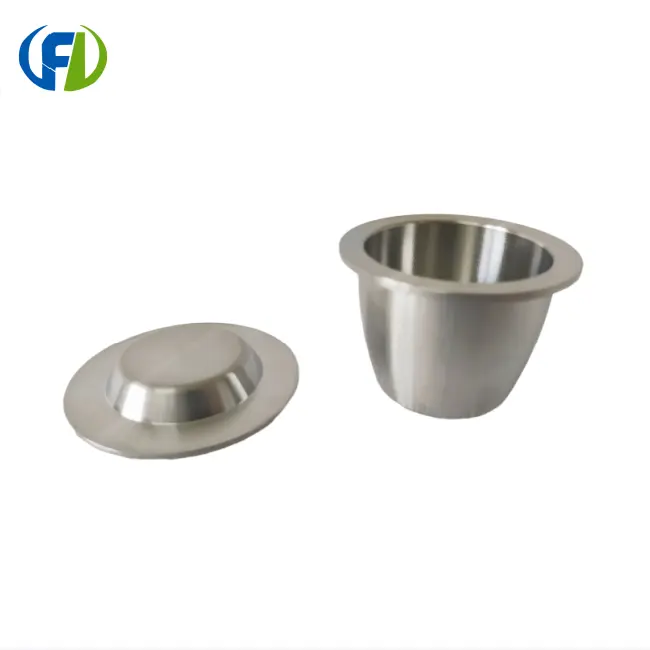
The 702 Zirconium Crucible With Flange is now the standard for businesses that need chemical protection and thermal stability that can't be compromised. This special tank is made from commercially pure zirconium alloy (UNS R60702) and combines the naturally anti-corrosion qualities of zirconium with an integrated flange design that makes fitting, sealing, and handling safe in high-temperature settings easier. The flange is an important mechanical interface that allows vacuum-tight operations and automatic processes to happen. The R60702 material can handle harsh acid and alkaline environments that would eat away at stainless steel or make platinum alternatives too expensive to use. This one-of-a-kind mix solves major problems in analytical chemistry, metal processing, and chip production, which makes it an important choice for smart B2B buyers.
Exceptional Chemical Compatibility
R60702 zirconium has a very high corrosion resistance because it can form a strong zirconium oxide (ZrO₂) passivation layer when it comes in contact with reactive media. This protective film is very stable in hot hydrochloric acid, sulphuric acid amounts of up to 70%, and strong caustic alkali solutions. This is in places where regular stainless steel grades quickly deteriorate. In chemical processing plants that use strong chemicals, zirconium crucibles keep their surface integrity over thousands of heat cycles, while nickel or glass options break down after just a few months. The substance is very resistant to organic acids and solutions that contain chloride, which makes it more useful for making pharmaceuticals and speciality chemicals. However, purchase requirements must make it clear that hydrofluoric acid is the only exception. This reagent targets zirconium quickly at all concentrations and temperatures, dissolving it right away.
Superior Thermal Performance Characteristics
With a melting point of about 1852°C, zirconium stays structurally stable at temperatures that are much higher than those used in lab crucibles. The weather has a big impact on operational limits. In normal air, being exposed to temperatures above 550°C to 600°C for a long time speeds up oxidation and nitrogen absorption. This makes the top layer brittle, which lowers the tensile strength. Controlled atmosphere furnaces with argon or helium inert gas blankets can work at much higher temperatures, which makes them useful for calcining rare earth oxides and making new speciality alloys. The material's thermal conductivity of about 22 W/m·K allows for even heating of the sample, and its relatively low thermal expansion coefficient of 5.8 µm/m·°C makes it more resistant to thermal shock than ceramic options. During rapid heating and cooling cycles, which are common in automated analytical processes, this trait comes in very handy.
Mechanical Durability and Lifecycle Economics
Zirconium crucibles have a mass of 6.51 g/cm³, which makes them feel strong without being too heavy. This makes them easier to handle by hand and gives them mechanical strength that keeps them from deforming during high-temperature operations. Surface finish standards that aim for roughness levels below 0.8 µm Ra reduce the amount of sample dust that sticks around, making cleaning easier and lowering the risk of cross-contamination between runs. The maintenance needs are still simple: cleaning them regularly with hot water, light detergents, or diluted hydrochloric acid is enough for most uses. When reacting materials are handled and reduced, zirconium builds up on the surface as a black waste. Heating the surface in air at 400°C reforms the protective oxide film and makes the surface passivate again. Because of these features, they have operating lifespans measured in years instead of months. This makes the total cost of ownership much lower than with ceramic or graphite crucibles that need to be replaced often.
Applications and Industry Use Cases
Analytical Chemistry and Geochemical Sample Preparation
For sodium peroxide fusion processes, geochemical labs all over the world use 702 Zirconium Crucible With Flange solutions as the norm. This strong breakdown method breaks down rocks and ores that don't dissolve easily with acid, which lets elements be studied later using ICP-MS or XRF spectroscopy. The flange design makes it possible to securely clamp the part inside automatic fusion machines. This keeps the part stable during the violent reaction phase, when temperatures go over 600°C and conditions are very oxidising. Other materials, like porcelain, platinum-gold alloys, and nickel, have major problems. For example, porcelain breaks when it is heated quickly, platinum alloys are expensive and have trouble keeping flux in place, and nickel quickly oxidises in peroxide melts. The R60702 composition can handle this oxidative climate, and the low-wettability surface keeps molten flux from sticking to the walls of the crucible. This makes it easier to collect samples and get more accurate results.
Speciality Chemical Synthesis and Pilot Plant Operations
702 Zirconium Crucible With Flange units are used as corrosion-resistant liners inside bigger pressure tank systems by chemical companies that make high-purity salts, pharmaceutical intermediates, and electronic-grade reagents. The flange makes a sealable connection between the volatile reactants inside the zirconium crucible and the steel pressure containment shell on the outside. This hybrid design keeps expensive metal pressure tanks safe from chemicals while still allowing them to stay structurally sound at high pressures. The chemical inertness of the material is good for pilot-scale batch reactors because it keeps out minor metal contamination that could change product specs in semiconductor or pharmaceutical uses. Being able to heat strong mineral acids over and over again without breaking down the material lowers costs and makes accuracy between batches better.
Rare Earth and Precious Metal Refining Operations
Large-format flanged crucibles are used for heating, cooling, and melting in metallurgical processes that work with volatile metal alloys, platinum group metals, and rare earth oxides. The lip lets these big vessels hang inside induction furnaces or resistance-heated rooms. This spreads the weight evenly across the supporting structures so that the weight doesn't just rest on the bottom of the crucible. Because zirconium surfaces don't easily absorb most liquid metals, products don't stick to them. This makes pouring easier and increases yield recovery rates. Australia's mining companies and rare earth makers have found that their systems produce 2-3% more rare earths than ceramic crucible systems. This means that they can make a lot more money because the materials they collect are so valuable.
Comparing the 702 Zirconium Crucible With Flange to Other Solutions
Performance Benchmarking Against Alumina Crucibles
Alumina (aluminium oxide) crucibles are the most popular high-temperature labware. They are inexpensive, offer great heat stability, and are compatible with a wide range of chemicals. But alumina has a lot of problems when it comes to strong acids, alkaline flows, and quick temperature changes. When there is a temperature shock, the ceramic structure becomes brittle, which causes cracks to form and the structure to break early. Zirconium crucibles are much better than alumina at resisting acid. They keep their surface structure in hot sulphuric and hydrochloric acid solutions, which quickly wear away alumina surfaces. Zirconium is a metal, so it is better at withstanding thermal shock than alumina. While alumina cracks when it cools down from high temperatures, zirconium can handle thermal loads by slightly stretching without breaking.
Evaluating Graphite Crucible Alternatives
Because they don't react badly to temperature changes, graphite crucibles are great for melting metals at high temperatures. They work well in neutral or reducing atmospheres and can handle temperatures above 3000°C in special ovens. When graphite is exposed to oxidising environments—above 500°C in air, carbon oxidation happens slowly, breaking down crucible walls—its limits become clear. Graphite doesn't have a lot of chemical protection either, since it combines with strong oxidising acids and alkali metal hydroxides. Zirconium crucibles are better for uses that need to work with reactive chemicals or avoid small carbon contamination because they are more chemically compatible across a wider pH range. Graphite is cheaper than zirconium and is better for high-temperature metal casting. Zirconium is more expensive but is worth it for chemically aggressive analysis and chemistry tasks.
Flanged Versus Non-Flanged Design Trade-offs
702 Zirconium Crucible With Flange: Straight-wall crucibles that don't have any flanges are easier to make and cost a little less because they don't need to be machined as much. In simple heating tasks where crucibles rest directly on furnace platforms or inside protection covers, they work fine. There are special operational perks of the flanged design that make up for the higher cost. The mechanical interface allows for vacuum sealing, which is necessary for controlled-atmosphere processing. It also makes automatic handling easier by using standard gripper contact points, and it allows for suspension mounting, which gets rid of bottom touch and the thermal stress that comes with it. When you buy in bulk, you should think about what you need it for. For example, flanged designs are much more efficient in high-throughput automatic labs, while non-flanged versions may be fine for human benchtop operations. Even though they cost 15–25% more per unit, flanged crucibles have lower lifetime costs in situations where vacuum integrity is needed or automated processes are needed.
Procurement Insights for 702 Zirconium Crucibles With Flange
Supplier Selection and Certification Requirements
To find suitable suppliers, you need to make sure they have a number of important skills beyond simple manufacturing knowledge. Material sourcing openness makes sure that zirconium feedstock comes from reputable smelters that make bars that meet ASTM standards and have chemical analyses that can be proven. Companies that make things should be able to show that they know how to use deep drawing or cutting techniques that are good for zirconium's work-hardening properties. Quality management systems that are in line with ISO 9001 standards make sure that the process is always the same, and experience working with customers in the analytical chemistry, semiconductor, or aerospace industries shows that you know how to meet strict requirements. Ask for test results on the material that includes ICP-OES elemental analysis, mechanical property proof, and data from a dimension check. Reliable sellers include Certificates of Analysis with every package, which show that the materials can be tracked back to their source batch numbers.
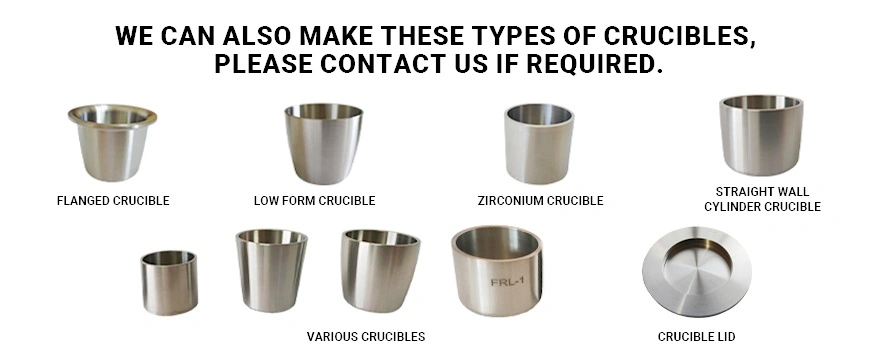
Customisation Options and Ordering Considerations
Standard crucible sizes range from small analytical crucibles (10 ml) to big industrial crucibles (5000 ml), with flange widths that are proportional to the sizes. Custom specs can be made to fit specific furnace shapes, closing needs, or equipment designs that aren't available from other companies. Changes to the flange's width, the inner diameter tolerances, and the surface finish are all typical requests for personalisation. The minimum order quantity (MOQ) for different suppliers and crucible sizes varies. For example, MOQs for smaller analytical units may be 5–10 pieces, while large industrial crucibles can support custom manufacturing of a single unit due to their high value per unit. Lead times are usually between 4 and 8 weeks for normal configurations and between 10 and 14 weeks for custom shapes that need special tools. When planning international shipping, make sure you include the right packaging to protect the surface. For example, wooden boxes or custom foam inserts can help keep flanges safe during transit.
Price Structuring and Negotiation Strategies
The main thing that affects prices is the cost of zirconium raw materials. Market prices are also affected by changes in supply and demand, which are caused by demand in the nuclear industry and mine output. Crucible prices depend on the amount of material used (found by multiplying measurements and wall thickness by the number of pieces needed), how hard it is to machine (flanged shapes like the 702 Zirconium Crucible With Flange need extra CNC operations), and how many pieces are ordered. Costs are lowered for volume buyers in a number of ways, including spreading setup costs out over longer production runs, talking with sellers to buy raw materials in bulk, and making framework agreements that ensure capacity sharing. Price stability and supply security are provided by annual contracts with delivery plans every three months. To find ways to negotiate, you should ask for thorough quotes that list the prices of materials, assembly, tests, and packaging. When you buy directly from a supplier, you don't have to pay the markups that distributors add on top of the price. This usually saves you 10-15% on similar specs. The warranty should include promises for dimensional tolerances, the accuracy of material certifications, and fixes for production flaws that are found during the first use.
Conclusion
Professionals in business-to-business purchasing have long loved the 702 Zirconium Crucible With Flange because it has excellent chemical protection, heat performance, and mechanical sturdiness. The R60702 material makeup offers the best defence against strong acids and alkalis, and the precision-machined flange makes vacuum-tight sealing, automatic handling, and suspension mounting possible, all of which are necessary for advanced industrial and laboratory uses. Comparative research shows that this material performs better than alumina and graphite options in chemically demanding settings. This makes the higher cost worth it by extending operating lifecycles and lowering the risk of contamination. Procurement teams can get high-quality products that meet exact specifications while lowering the total cost of ownership in analytical chemistry, speciality chemical synthesis, and metallurgical refining by learning about material certifications, customisation options, and how to choose a supplier.
FAQ
1. What temperature limits apply to flanged zirconium crucibles?
The weather has no effect on the highest temperature that can be used. Continuous operation above 550°C to 600°C in room air speeds up oxidation and nitrogen absorption, which weakens the structure of the material. Vacuum furnaces or settings with inert gases (argon and helium) can reach much higher temperatures, up to 1000°C, but testing for specific uses is still recommended. The freezing point of 1852°C gives you a lot of room for error when working at high temperatures in a controlled setting.
2. Can these crucibles withstand hydrofluoric acid exposure?
Without a doubt, not. Zirconium is very resistant to rust, but hydrofluoric acid is the only thing that can break it down. HF targets zirconium quickly at all concentrations and temperatures, breaking down the material right away and making it impossible to control. When fluoride chemistry is used, other materials are needed, like platinum or special fluoropolymer containers.
3. How does flange design improve vacuum furnace operations?
The flange surface is precisely machined to provide a sealing contact that can be used with O-rings or seals. This turns the crucible into a vacuum-tight retort or isolated chamber. This setup keeps flammable off-gases from processed materials from affecting furnace heating elements or lowering the quality of the vacuum. It also allows controlled-atmosphere processing, which is important for making high-purity materials and handling reactive metals.
Partner With Freelong for Premium 702 Zirconium Crucible With Flange Solutions
Baoji Freelong New Material Technology Development Co., Ltd is a reliable company that makes 702 Zirconium Crucible With Flange solutions. We take advantage of our location in China's Titanium Valley to provide certified high-performance refractory metal products to industries around the world, including aerospace, chemicals, electronics, and research. Our fully integrated production processes include finding materials, precise cutting, and strict quality control that meets ASTM B550/B551 standards. This makes sure that every crucible meets the strict requirements for chemical composition and size tolerances. We are experts at both standard configurations and custom specs that are made to fit your specific furnace geometry and process needs. Our minimum order quantities (MOQs) are open enough to accommodate both research-scale sampling and industrial bulk purchases. Customers in the US, Germany, Australia, and Korea count on our factory-direct prices, which are usually 10-15% less than what you'd pay through a distributor, as well as our reliable overseas shipping and quick technical support. Contact jenny@bjfreelong.com to talk about your application needs, get material certifications, or get detailed quotes. Our engineering team is ready to help you find the best crucible specifications that will improve your operational efficiency and save you money through longer service life and better chemical resistance.
References
1. ASTM International. (2021). ASTM B550-21: Standard Specification for Zirconium and Zirconium Alloy Bar, Billet, and Wire. West Conshohocken: ASTM International.
2. Davis, J.R. (Ed.). (2000). Corrosion of Zirconium and Hafnium. In ASM Specialty Handbook: Nickel, Cobalt, and Their Alloys (pp. 485-502). Materials Park: ASM International.
3. Pourbaix, M. (1974). Atlas of Electrochemical Equilibria in Aqueous Solutions (2nd ed.). Houston: National Association of Corrosion Engineers.
4. Reed-Hill, R.E., & Abbaschian, R. (1994). Physical Metallurgy Principles (3rd ed.). Boston: PWS Publishing Company.
5. Yamamoto, A., & Honma, K. (1992). Chemical Properties and Applications of Zirconium in Laboratory Equipment. Journal of Materials Science, 27(8), 2145-2158.
6. Zhang, W., & Li, M. (2018). High-Temperature Oxidation Behavior of Commercial Purity Zirconium in Different Atmospheres. Corrosion Science, 144, 310-321.

_1772435519769.png)
_1770177616453.png)
Learn about our latest products and discounts through SMS or email